
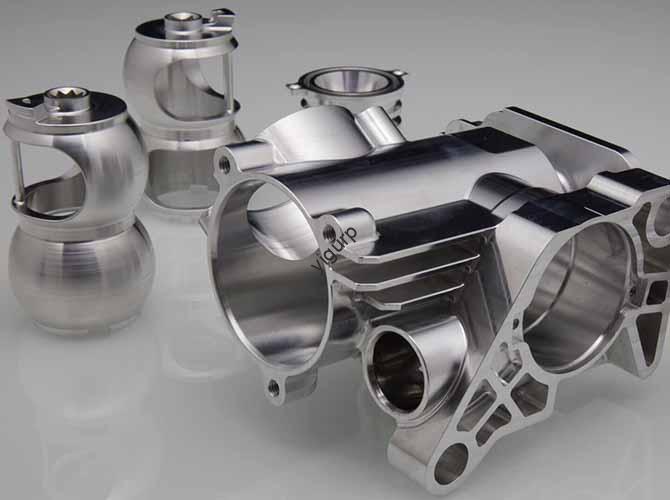
A desmoldagem da fundição sob pressão é a etapa final crítica no ciclo de fundição sob pressão - seu sucesso determina diretamente se uma peça fundida perfeitamente formada pode ser separada do molde com segurança e sem danos. Um processo de desmoldagem defeituoso pode causar deformação da peça fundida, arranhões de mofo, ou até mesmo interrupções na produção – custando aos fabricantes milhares de dólares em sucata e tempo de inatividade. Unlike simple manual demolding (por exemplo, prying with tools), modern die casting demolding relies on specialized release agents e precision-controlled operations to balance efficiency, casting quality, and mold longevity. This article systematically breaks down the core principles of die casting demolding, release agent selection, step-by-step operation guidelines, and troubleshooting strategies to help you master this essential process.
1. Core Definition & Key Functions of Die Casting Demolding
Before diving into optimization, it’s critical to clarify what die casting demolding entails and why it matters beyond just “taking the part out.” This section uses a 总分结构 with key terms highlighted for clarity.
1.1 Fundamental Definition
Die casting demolding refers to the process of smoothly separating a solidified casting from the mold cavity using a combination of release agents (to reduce friction) and mechanical forces (por exemplo, ejector pins, mold opening mechanisms). It is not a passive “separation”—but an active process that requires controlling three variables: friction between the casting and mold, thermal expansion differences, and mechanical force distribution.
Unlike in simple casting (where molds are often broken to retrieve parts), die casting demolding must preserve both the casting (for further use) and the mold (for repeated cycles)—making it far more technically demanding.
1.2 Four Non-Negotiable Functions
Effective demolding delivers value across the entire die casting workflow, not just at the final step:
- Casting Integrity Protection: Prevents deformation, scratches, or edge chipping. Por exemplo, a thin-walled aluminum phone frame (1mm thickness) can bend if demolding force is concentrated in one area—proper demolding ensures uniform force distribution, keeping rejection rates below 1%.
- Mold Lifespan Extension: Reduces wear and chemical corrosion on the mold cavity. A well-executed demolding process can extend mold life by 20-30%—critical for high-cost precision dies (which can cost $100,000+).
- Production Efficiency Maintenance: Shortens demolding time to 5-15 seconds per cycle—avoiding bottlenecks. A study by the Die Casting Association found that demolding delays account for 35% of unplanned production stops.
- Surface Quality Preservation: Minimizes post-processing needs. Demolding with high-quality release agents can achieve Ra 1.6-3.2 μm surface roughness—eliminating the need for sanding or polishing (saving 10-15 minutes per part).
2. Release Agents: O “Invisible Enabler” of Effective Demolding
Release agents are the backbone of die casting demolding—they form a protective barrier between the casting and mold, reducing friction and preventing adhesion. The table below compares the three main types of release agents, with selection criteria and application scenarios:
| Release Agent Type | Key Components | Core Advantages | Limitations | Ideal Applications |
| Water-Based Release Agents | – Modified silicone oil (5-15%: lubricity)- Emulsifier (3-8%: stabilizes emulsion)- High-temperature wax (2-5%: resistência ao calor)- Biocide (0.1-0.5%: prevents spoilage)- Water (balance: solvent) | – Environmentally friendly (low VOCs: <50g/L)- Cooling effect (water evaporation takes away heat)- Low residue (easy to clean)- Cost-effective (\(0.5-\)1.5 per liter) | – Poor high-temperature durability (>300°C may decompose)- Requires pure water dilution (hard water causes precipitation) | 80% of conventional die casting: aluminum alloy housings (ADC12), zinc alloy parts (ZAMAK 5), consumer electronics components |
| Oil-Based Release Agents | – Mineral oil/synthetic oil (70-90%: main lubricant)- Extreme pressure additives (5-10%: anti-wear)- Rust inhibitor (2-5%: mold protection) | – Excellent high-temperature stability (withstands 400-500°C)- Long-lasting film (reduces spraying frequency)- No water-related issues (works with any water quality) | – High VOC emissions (harmful to operators/environment)- Heavy residue (requires solvent cleaning)- High cost (\(3-\)5 per liter) | High-temperature die casting: magnesium alloy EV battery frames, copper alloy heat exchangers, peças de máquinas industriais |
| Powder Release Agents | – Inorganic powders (talc, mica: 90-95%: isolation layer)- Binder (2-5%: adhesion to mold) | – No volatile emissions (100% solid)- No residue (easily removed by vibration)- Suitable for complex cavities (fills narrow gaps) | – Uneven film formation (requires skilled application)- Dust pollution (needs ventilation systems)- Low lubricity (may increase ejector force) | Specialized scenarios: complex undercut parts, investment casting preforms, small-batch prototype demolding |
2.1 Critical Performance Requirements for Release Agents
Not all release agents are equal—effective ones must meet four strict criteria to avoid defects:
- Thermal Stability: Withstands the impact of high-temperature molten metal (por exemplo, 670-720°C for aluminum) without decomposing or releasing toxic gases. Por exemplo, a water-based release agent used for ADC12 aluminum must remain stable at 250-300°C (mold surface temperature) para 10-15 seconds.
- Film-Forming Uniformity: Sprays into a continuous, micron-scale film (5-15 μm thickness). Local thickening can cause carbon buildup (leading to black spots on castings), while thin spots cause sticking.
- Compatibility: Does not react with the mold material (por exemplo, H13 steel) or the casting alloy. Por exemplo, oil-based release agents should not contain sulfur (which causes corrosion of magnesium alloys).
- Environmental Safety: Meets global standards (por exemplo, EU REACH, US EPA) for low toxicity and emissions. Water-based release agents are preferred for this reason—their VOC content is 80-90% lower than oil-based alternatives.
3. Step-by-Step Demolding Operation Guidelines
Even with the right release agent, poor operation can ruin demolding. This section uses a linear 叙述 structure to outline the standardized workflow, with specific parameters and best practices.
3.1 Pre-Demolding Preparation (Mold & Release Agent Setup)
Proper preparation prevents 70% of demolding defects:
- Mold Cleaning:
- Remove residual release agent, oxide scales, and metal fragments from the cavity using a high-pressure air gun (0.5-0.8 MPa pressure). For stubborn residues, use a non-abrasive sponge (avoid steel wool, which scratches the mold surface).
- Check for micro-cracks or wear in the cavity—even a 0.1mm crack can cause casting sticking. Repair small cracks with TIG welding (using H13 steel filler).
- Release Agent Preparation:
- Dilute water-based release agents according to the manufacturer’s instructions (typical ratio: 1:10-1:30 with pure water). Use a hydrometer to verify concentration (specific gravity: 0.95-1.05 for optimal performance).
- Stir oil-based release agents thoroughly (2-3 minutos) to ensure uniform distribution of additives—settling can cause uneven lubrication.
- Mold Temperature Check:
- Ensure the mold surface temperature matches the release agent’s recommended range (por exemplo, 180-250°C for water-based agents, 250-350°C for oil-based agents). Use an infrared thermometer to measure 3-5 points in the cavity—temperature variation should be ≤±10°C.
3.2 Release Agent Spraying (The Most Critical Step)
Spraying technique directly impacts film quality—follow these rules:
- Equipment Selection:
- Use an automatic spraying robot for mass production (ensures consistent angle, distance, and pressure). For small batches, use a manual spray gun with a 0.5-1.0mm nozzle.
- Maintain a spray distance of 200-300mm from the mold surface—too close causes over-spraying, too far leads to uneven coverage.
- Spraying Parameters:
- Pressure: 0.3-0.5 MPa (water-based agents); 0.2-0.4 MPa (oil-based agents). Higher pressure for complex cavities (to reach deep areas).
- Time: 2-5 seconds per mold half (covers the entire cavity without pooling).
- Pattern: Use a “zig-zag” motion to overlap sprays by 50%—ensures no gaps.
- Drying Time:
- Allow water-based agents to dry for 10-20 seconds (until the surface is matte, not wet). Use a low-pressure air gun to speed up drying (avoids water spots).
- Oil-based agents require no drying time—proceed to mold closing immediately.
3.3 Mold Opening & Casting Ejection (Mechanical Force Control)
The mechanical phase requires precise force control to avoid damage:
- Mold Opening Speed:
- Use a two-stage speed profile: Slow opening (50-100 mm/s) for the first 10-20mm (breaks the initial adhesion), then fast opening (200-300 mm/s) to reduce cycle time.
- Avoid sudden speed changes—they cause vibration that can scratch the casting or mold.
- Ejector Pin Operation:
- Activate ejector pins 0.5-1 second after mold opening (gives the casting time to expand slightly).
- Use multiple pins to distribute force: For a 1kg aluminum casting, usar 4-6 alfinetes (5-8mm diameter) spaced evenly—each pin applies 150-200N of force (total force: 600-1200N).
- Retract pins immediately after ejection (avoids collision with the mold during closing).
- Casting Retrieval:
- Use robotic grippers or vacuum cups to lift the casting—avoid manual handling (which causes fingerprints or deformation).
- For parts with complex shapes (por exemplo, cortes inferiores), use a “tilt-and-lift” motion to prevent snagging on mold features.
3.4 Post-Demolding Maintenance
Preserve equipment and release agent effectiveness with these steps:
- Release Agent Storage:
- Store in a temperature-controlled room (5°C-35°C). Freezing damages water-based agents (breaks emulsions), while high temperatures cause oil-based agents to oxidize.
- Seal containers tightly after use—contamination with dust or water reduces performance.
- Mold Preservation:
- After production, clean the mold with acetone to remove residual release agent. Apply a thin layer of anti-rust oil (for steel molds) or silicone grease (for aluminum molds) to prevent corrosion.
- For long-term storage (≥1 month), wrap the mold in moisture-proof film.
- Spray Equipment Cleaning:
- Flush spray guns and hoses with water (for water-based agents) or mineral spirits (for oil-based agents) after use. Clogged nozzles cause uneven spraying—leading to demolding defects.
4. Common Demolding Defects & Troubleshooting Solutions
Even with proper operation, defects can occur. The table below uses a problem-cause-solution structure to help you resolve issues quickly:
| Defect Type | Main Causes | Step-by-Step Solutions |
| Casting Sticking to Mold | 1. Insufficient release agent (thin film or missed areas)2. Mold temperature too high (causes release agent decomposition)3. Casting alloy adhesion (por exemplo, aluminum reacts with steel mold) | 1. Increase release agent concentration by 20% (por exemplo, de 1:20 para 1:16) and re-spray—ensure full coverage.2. Lower mold temperature by 30-50°C (por exemplo, from 280°C to 230°C for water-based agents).3. Switch to a release agent with high-temperature wax additives (forms a stronger barrier) or apply a mold coating (por exemplo, titanium nitride). |
| Casting Deformation During Ejection | 1. Uneven ejector pin force (some pins apply too much force)2. Ejector pins misaligned (touch casting at an angle)3. Casting not fully solidified (soft and prone to bending) | 1. Use a force gauge to test each pin—adjust to ensure force variation ≤±10%.2. Realign pins using a laser alignment tool (ensure parallelism with mold surface).3. Extend cooling time by 2-3 seconds (wait until casting temperature drops below 200°C for aluminum). |
| Release Agent Residue on Casting | 1. Excessive release agent (thick film)2. Incomplete drying (water-based agents not fully evaporated)3. Low-quality release agent (high oil content) | 1. Reduce spray time by 30% (por exemplo, from 5s to 3.5s) and increase spray distance to 300mm.2. Use a high-pressure air gun (0.6 MPa) to dry the mold cavity after spraying.3. Switch to a low-residue release agent (por exemplo, silicone-free water-based formulations) or add a post-cleaning step (light wiping with isopropyl alcohol). |
| Mold Corrosion | 1. Release agent contains corrosive components (por exemplo, chlorine, enxofre)2. Moisture buildup in mold (from water-based agent drying)3. Post-production lack of anti-rust treatment | 1. Test release agent for corrosive elements—switch to a “corrosion-free” formulação (por exemplo, boron nitride-based for magnesium molds).2. Install mold heaters to keep the cavity dry (maintain 50-60% relative humidity).3. Apply anti-rust oil after each production run—focus on high-wear areas (por exemplo, ejector pin holes). |
5. Yigu Technology’s Perspective on Die Casting Demolding
Na tecnologia Yigu, we believe demolding is often the “forgotten link” in die casting optimization—many manufacturers invest in high-pressure machines and precision dies but overlook the impact of release agents and operation. This leads to avoidable defects and mold wear.
We recommend a systematic approach to demolding: 1. Match release agents to the alloy and mold (por exemplo, water-based for aluminum, oil-based for high-temperature magnesium). 2. Use automatic spraying robots to eliminate human error—our clients have seen a 40% drop in sticking defects after switching to automation. 3. Monitor mold temperature and release agent concentration in real time—small deviations (por exemplo, ±5°C temperature) can cause big problems.
Para produção de alto volume (por exemplo, 100,000+ parts/year), we also advocate predictive maintenance: Use sensors to track ejector pin force and mold wear—replace pins or reapply release agents before defects occur. By treating demolding as a critical process (not an afterthought), manufacturers can improve yield rates by 5-10% and extend mold life by 20%.
6. Perguntas frequentes: Common Questions About Die Casting Demolding
Q1: Can I mix different types of release agents (por exemplo, water-based and oil-based) to improve performance?
No—mixing release agents causes chemical incompatibility. Water-based agents are emulsions, while oil-based agents are solvents—mixing them breaks the emulsion, leading to clumps and uneven film formation. This increases sticking defects by 30-50%. Always use one type of release agent, and fully clean equipment before switching.
Q2: How often should I replace the release agent in the spray system?
For water-based release agents: Replace every 1-2 weeks—they are prone to bacterial growth (which causes odor and performance loss). For oil-based release agents: Replace every 4-6 weeks—oxidation and contamination reduce lubricity over time. Always filter the release agent before refilling the system (use a 50μm filter) to remove debris.
Q3: What should I do if a casting sticks to the mold and can’t be ejected?
Never force the mold open—this will damage the cavity. Instead: 1. Apply a small amount of release agent directly to the stuck area (use a spray bottle with a narrow nozzle). 2. Wait 2-3 minutes for the release agent to penetrate. 3. Use manual ejector pins (if available) to apply gentle, even force. 4. If it still sticks, disassemble the mold (only as a last resort) and use a plastic wedge to separate the casting—avoid metal tools that scratch the mold.