
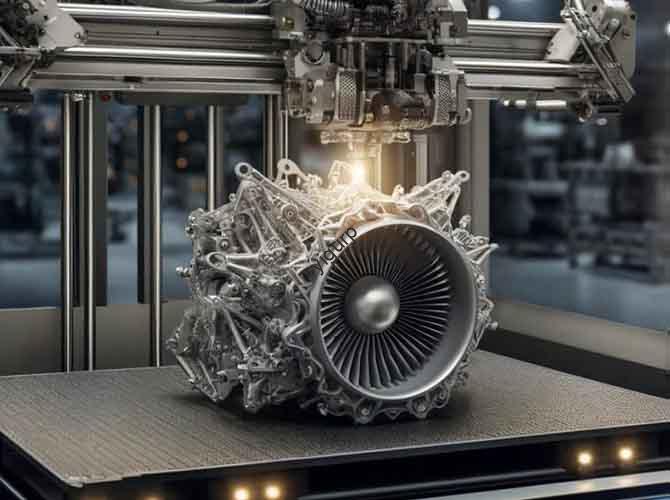
Se você estiver usando impressão 3D para peças de aço inoxidável, seja para componentes industriais, peças aeroespaciais, ou acessórios personalizados – compreender o custo por grama é fundamental para o orçamento. Ao contrário da impressão 3D em resina ou PLA, 3Impressão D em aço inoxidável é muito mais cara, com custos que variam de 60 RMB/gram for mass-produced parts para 400 RMB/grama para lotes pequenos, componentes de alta precisão. This guide breaks down the core cost drivers, provides practical price references, shares cost-saving tips, and answers common questions to help you make informed decisions.
1. 4 Core Factors That Impact the Cost Per Gram of 3D Printing Stainless Steel
The cost per gram of 3D printed stainless steel is shaped by tangible factors—from the printing technology used to the complexity of post-processing. Below is a detailed breakdown with real numbers to illustrate their impact:
(1) 3D Printing Technology Type
Technology is the biggest cost driver, as different methods vary drastically in precision, velocidade, and equipment costs. The three most common technologies for stainless steel 3D printing are:
| Tipo de tecnologia | Cost Per Gram (RMB/grama) | Key Characteristics | Typical Applications |
| Fusão seletiva a laser (SLM) | 130 ~ 400 | Precisão ultra-alta (tolerância ±0,02mm), suitable for complex structures; high equipment and material costs | Small-batch high-precision parts (por exemplo, implantes médicos, componentes aeroespaciais) |
| Electron Beam Fusion (EBM) | 80 ~ 250 | Ideal for large-scale industrial parts; lower cost than SLM but slightly lower precision (tolerância ±0,05 mm) | Mass-produced industrial components (por exemplo, robotic arm joints, corpos de válvula) |
| Binding Jetting | 60 ~ 200 | Lowest unit cost for mass production; but requires complex post-processing (por exemplo, debinding, sintering) | Bulk-produced small parts (por exemplo, custom fasteners, decorative accessories) |
Exemplo: A 50g stainless steel part printed via SLM costs 6,500 ~ 20,000 RMB. The same part printed via Binding Jetting costs 3,000 ~ 10,000 RMB—50% cheaper—though it needs extra post-processing.
(2) Stainless Steel Grade
The grade of stainless steel directly affects material costs, as specialized grades (por exemplo, resistente à corrosão, de alta resistência) are more expensive to produce:
| Stainless Steel Grade | Cost Per Gram (Material Only, RMB/grama) | Propriedades principais | Typical Applications |
| 304 Aço inoxidável | 10 ~ 30 | Boa resistência à corrosão, baixa resistência; most affordable grade | Peças industriais não críticas (por exemplo, simple brackets, peças decorativas) |
| 316L Stainless Steel | 20 ~ 50 | Alta resistência à corrosão (suitable for harsh environments), better ductility | Peças marítimas, chemical equipment components, ferramentas médicas |
| 17-4PH Stainless Steel | 30 ~ 100 | Martensitic steel with high strength and hardness; heat-treatable | High-load parts (por exemplo, fixadores de aeronaves, pressure vessel components) |
Key Note: Imported stainless steel powders (por exemplo, from EOS or Carpenter) custo 2 ~ 3x more than domestic powders (por exemplo, from Baosteel or TISCO). Por exemplo, imported 316L powder costs 40 ~ 50 RMB/grama, while domestic 316L powder costs 20 ~ 30 RMB/grama.
(3) Post-Processing Requirements
Nearly all 3D printed stainless steel parts need post-processing to meet strength, precisão, and appearance standards. Each step adds significantly to the total cost per gram:
| Post-Processing Step | Cost Per Gram (RMB/grama) | Propósito |
| Basic Polishing/Sanding | 10 ~ 50 | Remove surface roughness (Ra from 3.2μm to 1.6μm); eliminar linhas de camada |
| Usinagem de alta precisão (CNC Trimming) | 50 ~ 150 | Obtenha tolerâncias rigorosas (±0,01 mm); refine critical features (por exemplo, buracos, tópicos) |
| Electroplating/Coating | 30 ~ 200 | Adicione resistência à corrosão (por exemplo, cromagem) or aesthetic finish (por exemplo, matte black); aerospace-grade coatings cost the most |
| Tratamento térmico | 20 ~ 80 | Improve strength and hardness (por exemplo, annealing for 17-4PH steel); reduce internal stress |
Exemplo: A 100g part needing basic polishing costs 1,000 ~ 5,000 RMB in post-processing. The same part needing high-precision CNC trimming + electroplating costs 8,000 ~ 35,000 RMB—7x more.
(4) Order Volume
Order volume has a huge impact on cost, as fixed costs (por exemplo, equipment setup, programação) are spread across more parts. Small batches are exponentially more expensive than large-scale production:
| Order Volume | Cost Per Gram (Total, RMB/grama) | Discount vs. Single Piece | Exemplo: 50g 316L Part (SLM Technology) |
| Single Piece/Small Batch (<10 pedaços) | 250 ~ 400 | 0% (No Discount) | 50g × 300 RMB/gram = 15,000 RMB |
| Medium Batch (10 ~ 100 pedaços) | 150 ~ 250 | 20 ~ 40% | 50g × 200 RMB/gram = 10,000 RMB |
| Large Batch (>100 pedaços) | 60 ~ 150 | 40 ~ 70% | 50g × 100 RMB/gram = 5,000 RMB |
Exemplo: A single 50g robotic arm joint (SLM, 316L steel) custos 15,000 RMB. Ordering 100 of the same joints drops the cost to 5,000 RMB each—67% cheaper.
2. Typical Cost Per Gram: Scenario-Based Breakdown
To see how all these factors come together, below are three common scenarios for 3D printing stainless steel parts:
| Scenario | Tecnologia | Stainless Steel Grade | Pós-processamento | Cost Per Gram (RMB/grama) | Exemplo (10g Part Total Cost) |
| Small-Batch High-Precision Part | SLM | 17-4PH | CNC Trimming + Tratamento térmico | 250 ~ 400 | 2,500 ~ 4,000 RMB |
| Medium-Batch Industrial Part | EBM | 316eu | Basic Polishing + Tratamento térmico | 100 ~ 200 | 1,000 ~ 2,000 RMB |
| Large-Batch Mass-Produced Part | Binding Jetting | 304 | Lixar + Galvanoplastia | 60 ~ 120 | 600 ~ 1,200 RMB |
3. Practical Cost Reference for Common 3D Printed Stainless Steel Parts
To help you quickly gauge reasonable prices, below is a table of common part types and their typical costs:
| Part Type | Size/Weight | Tecnologia | Cost Per Gram (RMB/grama) | Total Part Cost (RMB) |
| Custom Keychain (Decorative) | 2cm / 10g | Binding Jetting | 60 ~ 100 | 600 ~ 1,000 |
| Medical Implant (por exemplo, Dental Abutment) | 1cm / 5g | SLM | 300 ~ 400 | 1,500 ~ 2,000 |
| Robotic Arm Joint (Industrial) | 10cm / 50g | EBM | 100 ~ 180 | 5,000 ~ 9,000 |
| Aerospace Fastener | 3cm / 8g | SLM | 250 ~ 350 | 2,000 ~ 2,800 |
| Mass-Produced Valve Body | 8cm / 40g | Binding Jetting | 80 ~ 120 | 3,200 ~ 4,800 |
4. 4 Practical Tips to Reduce the Cost Per Gram of 3D Printing Stainless Steel
While 3D printing stainless steel is inherently expensive, these strategies can help lower costs without sacrificing quality:
(1) Optimize Part Design to Cut Material Use
- Simplify geometry: Remove redundant features (por exemplo, unnecessary curves, thick walls) to reduce the part’s weight by 15 ~ 30%. Por exemplo, a 50g part optimized to 35g saves 15g of material—cutting costs by 30%.
- Use hollow structures: For non-load-bearing parts (por exemplo, decorative components), design hollow interiors with thin walls (≥1mm) to reduce material consumption by 20 ~ 40%.
(2) Choose Domestic Stainless Steel Powders
Domestic powders (por exemplo, from Baosteel, TISCO) são 50 ~ 60% cheaper than imported powders (por exemplo, EOS, Carpinteiro) and meet most industrial standards. Por exemplo, using domestic 316L powder (20 ~ 30 RMB/grama) instead of imported (40 ~ 50 RMB/grama) cuts material costs by half.
(3) Batch Orders to Unlock Discounts
Even small increases in order volume can lead to significant savings. If you need 50 parts over 6 meses, order all 50 at once instead of 10 per month—this can unlock a 20 ~ 30% discount, reducing the cost per gram by 20 ~ 30%.
(4) Simplify Post-Processing When Possible
- Skip unnecessary steps: If the part doesn’t need high precision (por exemplo, a decorative keychain), avoid CNC trimming and use basic sanding instead—saving 50 ~ 150 RMB/grama.
- Combine post-processing steps: Por exemplo, handle heat treatment and sanding in one facility to avoid shipping costs and reduce overall fees by 10 ~ 15%.
Yigu Technology’s Perspective on 3D Printing Stainless Steel Costs
Na tecnologia Yigu, we believe matching technology and material to project needs is the key to cost-effective 3D printing of stainless steel. Many clients overspend by using SLM for mass-produced parts or imported powders for non-critical components—for example, using SLM (300 RMB/grama) for a simple bracket that could be made with Binding Jetting (80 RMB/grama). Our team helps clients select the right solutions: for small-batch high-precision parts, we recommend SLM with domestic 17-4PH powder; para peças produzidas em massa, we suggest Binding Jetting with 304 or 316L domestic powder. We also optimize designs to reduce material use by 15 ~ 30% and negotiate bulk discounts with powder suppliers. Our goal is to help clients get high-quality 3D printed stainless steel parts at the lowest possible cost per gram.
Perguntas frequentes
- Why is 3D printing stainless steel so much more expensive than resin or PLA 3D printing?
3D printing stainless steel requires high-cost equipment (SLM/EBM machines cost 1 ~ 10 million RMB vs. 10 ~ 30,000 RMB for resin printers) and specialized metal powders (10 ~ 100 RMB/gram vs. 0.02 ~ 0.2 RMB/gram for resin). Adicionalmente, pós-processamento (por exemplo, CNC trimming, tratamento térmico) is far more complex and costly for stainless steel parts.
- Can I use 3D printing stainless steel for small decorative parts (por exemplo, chaveiros) without overspending?
Yes—use Binding Jetting technology with 304 stainless steel powder and basic sanding (no electroplating). A 10g keychain made this way costs 600 ~ 1,000 RMB, which is affordable for small-batch custom orders. Avoid SLM or high-grade powders (por exemplo, 17-4PH) para peças decorativas, as they will double or triple the cost.
- How much does post-processing add to the total cost per gram of 3D printed stainless steel?
Post-processing typically adds 10 ~ 350 RMB/grama, depending on the steps. Basic sanding adds 10 ~ 50 RMB/grama, while high-precision CNC trimming + electroplating adds 80 ~ 350 RMB/grama. For most industrial parts, post-processing accounts for 20 ~ 50% of the total cost per gram.