
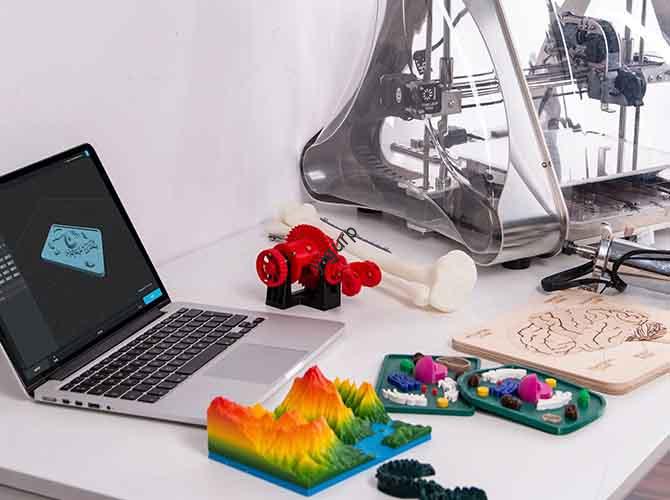
No desenvolvimento de produtos, a escolha do material de protótipo certo impacta diretamente a eficiência e a relação custo-benefício da validação do projeto. Nylon prototype models—made from materials like PA12 and PA6 via 3D printing or CNC machining—stand out for their unique combination of strength, flexibilidade, e adaptabilidade. Este artigo analisa suas principais vantagens usando comparações, exemplos do mundo real, and practical data to help you understand why they’re a top choice for functional prototypes.
1. Superior Material Properties: Beyond Basic Functionality
Nylon’s inherent material traits make it far more versatile than common prototype materials like resin or basic plastics. These properties directly solve pain points in functional testing and real-world simulation.
| Advantage | Specific Performance | Real-World Application Example |
| High Strength & Toughness | Withstands bending (até 15% deformation without breaking), stretching, e impacto. | A nylon prototype of a laptop hinge can be tested 10,000+ times without cracking—critical for verifying durability. |
| Exceptional Abrasion Resistance | Smooth surface reduces wear from frequent contact; 50% more wear-resistant than resin. | Nylon gear prototypes for small appliances (por exemplo, blenders) maintain smooth rotation after 500+ hours of testing. |
| High Temperature Resistance | PA12 melts at ~180°C; stable at temperatures up to 120°C (contra. resin’s 60°C limit). | A nylon prototype of a car engine bracket can endure under-hood heat without warping during performance tests. |
| Chemical Stability | Resistant to oil, mild acids, and alkalis—no corrosion or material degradation. | Nylon fuel line prototypes for motorcycles can be exposed to gasoline for months without leaking or weakening. |
Key Question: How do these properties benefit product development?
They let engineers simulate actual usage scenarios—a nylon prototype doesn’t just “look like” the final product; isto behaves like it, reducing the risk of design flaws being missed until mass production.
2. Flexible Production: 适配 Diverse Design Needs
Nylon prototypes support multiple manufacturing technologies, making them suitable for everything from simple parts to complex, low-volume custom components. This flexibility eliminates the need to switch materials for different prototype stages.
2.1 Compatibility with Core Prototyping Technologies
| Production Method | Advantages for Nylon Prototypes | Ideal Use Case |
| Impressão 3D SLS | Sintered nylon powder creates complex structures (por exemplo, hollowed parts, movable joints) com alta precisão (±0,1 mm). | Prototyping a robot finger with internal hinges—no assembly required. |
| Impressão 3D FDM | Low-cost nylon filament printing; retorno rápido (12–24 hours for small parts). | Creating 10+ phone case prototypes to test grip and button alignment. |
| Usinagem CNC | Achieves ultra-smooth surfaces (Ra 0,8μm) e tolerâncias apertadas (±0,05 mm) for high-precision parts. | Manufacturing a drone frame prototype that needs to fit electronic components perfectly. |
2.2 Low-Volume Production Capability
Unlike resin (which is fragile for repeated use) or metal (which is costly for small batches), nylon excels at low-volume custom production (1–100 units). Por exemplo:
- A medical device company used nylon prototypes to produce 50 custom prosthetic socket samples—each tailored to a patient’s leg shape—without investing in expensive molds.
- An outdoor gear brand created 30 backpack buckle prototypes in nylon to test different designs with users before finalizing mass production.
3. Custo-benefício: Balancing Performance and Budget
Nylon prototypes offer a “sweet spot” between cost and functionality—cheaper than metal, more durable than resin, and requiring less post-processing than both.
| Aspect | Nylon Prototypes | Resin Prototypes | Metal Prototypes (por exemplo, Alumínio) |
| Material Cost | Médio (\(20–\)50 per kg for PA12 powder) | Baixo (\(10–\)30 per kg for standard resin) | Alto (\(80–\)150 per kg for aluminum alloy) |
| Post-Processing Cost | Baixo (simple sanding or chemical polishing; 1–2 hours per part) | Alto (requires cleaning, lixar, and painting; 3–4 hours per part) | Very High (needs polishing, chapeamento, or heat treatment; 4–6 hours per part) |
| Total Cost Per Unit | \(50–\)200 (for small to medium parts) | \(30–\)150 (but less durable, requiring reprints) | \(200–\)800 (high upfront and processing costs) |
| Long-Term Value | Reusable for multiple tests (por exemplo, 10+ assembly trials) | Single-use (fragile; breaks after 2–3 tests) | Reusable but overkill for non-load-bearing parts |
Example: A electronics firm saved 40% on prototype costs by switching from aluminum to nylon for headphone compartment prototypes. The nylon parts were just as durable for fit tests, and each unit cost \(80 em vez de \)130.
4. Yigu Technology’s Perspective on Nylon Prototype Advantages
Na tecnologia Yigu, we’ve seen nylon prototypes become a go-to choice for clients across industries—from automotive to medical. A key insight is that nylon’s biggest advantage isn’t just its material properties, but its ability to “bridge gaps” in product development: it replaces resin when durability is needed, replaces metal when cost is a concern, and adapts to both 3D printing and CNC machining for fast iterations. Por exemplo, a client designing a smartwatch strap buckle initially used resin prototypes but switched to nylon after resin samples broke during stress tests. Nylon not only withstood 5,000+ wear cycles but also let us adjust the design via SLS printing in 24 horas. We recommend nylon for any prototype that needs to balance functionality, flexibilidade, e orçamento.
5. Perguntas frequentes: Common Questions About Nylon Prototype Advantages
Q1: Can nylon prototypes replace metal for load-bearing parts?
A1: It depends on the load. Nylon works for light to medium load-bearing parts (por exemplo, small gear sets, laptop hinges) but not for heavy-load components (por exemplo, car chassis parts). Por exemplo, a nylon drone propeller hub prototype can handle 5kg of force, but a metal one is needed for 10kg+ loads.
Q2: Why is nylon better than resin for functional testing?
A2: Resin is rigid and fragile—great for appearance models but prone to breaking during assembly or stress tests. Nylon’s toughness lets it endure bending, impacto, and repeated use (por exemplo, testing a movable joint 100+ times), making it ideal for verifying how the final product will perform.
Q3: Do nylon prototypes require special storage to maintain their advantages?
A3: Nylon absorbs moisture, which can reduce strength or cause printing defects. To preserve its properties, store nylon materials (powder or filament) in a dry environment (umidade <40%) and dry printed prototypes at 80–100°C for 2–4 hours if they absorb moisture. Proper storage ensures nylon retains its toughness and temperature resistance.