
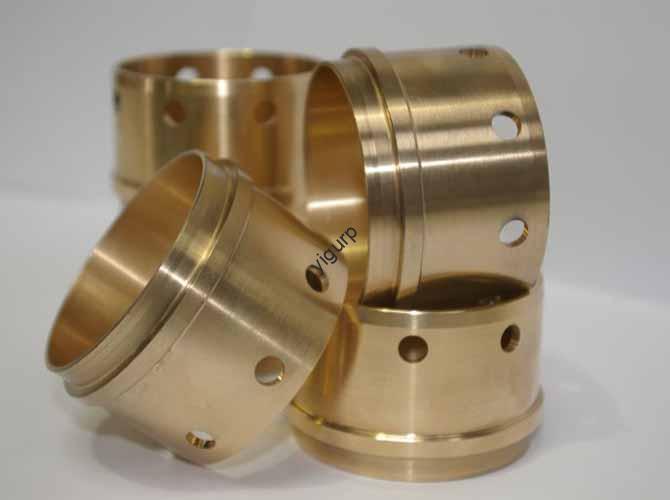
Os processos de usinagem são a espinha dorsal da fabricação, permitindo a transformação de matérias-primas (como metais, plásticos, e compósitos) em componentes de precisão usados em indústrias que vão desde aeroespacial e automotiva até dispositivos médicos e eletrônicos de consumo. Compreendendo o types of machining processes is critical for engineers, fabricantes, and procurement professionals to select the right method for their specific project requirements—whether it’s achieving tight tolerances, optimizing production efficiency, or reducing costs. This guide provides an in-depth overview of 9 essential machining processes, covering their working principles, aplicações, vantagens, limitações, and real-world use cases. We’ll also address common questions about machining processes and share insights from Yigu Technology on how to align these processes with project goals.
1. Fundamentals of Machining Processes
Before diving into specific types of machining processes, it’s important to establish a foundational understanding of what machining entails. Machining is a subtractive manufacturing technique that removes material from a workpiece to achieve the desired shape, tamanho, e acabamento superficial. Unlike additive manufacturing (por exemplo, 3Impressão D) que constrói peças camada por camada, machining relies on cutting tools to shear, abrade, or erode material away.
Key characteristics that differentiate various machining processes include: the type of cutting tool used, the relative motion between the tool and workpiece, the material compatibility, the achievable tolerances, and the production volume. According to industry data from the Association for Manufacturing Technology (AMT), subtractive machining accounts for approximately 65% of global precision component production, highlighting its enduring importance in modern manufacturing.
2. O 9 Essential Types of Machining Processes
The following sections break down the most widely used types of machining processes, each with detailed explanations of how they work, where they’re applied, and practical examples to illustrate their use. These processes range from traditional manual methods to advanced CNC (Controle Numérico Computadorizado) técnicas, catering to diverse project needs.
2.1 Virando
Turning is one of the most common machining processes, characterized by rotating the workpiece while a stationary cutting tool removes material from its outer or inner surface. This process is typically performed on a lathe machine, which can be manual or CNC-operated.
Working Principle: The workpiece is clamped in a chuck or collet and rotated at high speeds. A cutting tool (por exemplo, carbide or high-speed steel) is fed into the rotating workpiece, creating cylindrical, cônico, or threaded surfaces. Internal turning (also called boring) is used to create holes or internal features.
Principais aplicações: Peças automotivas (virabrequins, árvores de cames, rotores de freio), componentes aeroespaciais (eixos do motor), dispositivos médicos (surgical instrument shafts), e bens de consumo (bolt heads, acessórios para tubos).
Vantagens & Limitações: Advantages include high production speed for cylindrical parts, excellent surface finish (Ra values as low as 0.8 μm), and compatibility with a wide range of materials (metais, plásticos, madeira). Limitations include limited ability to produce non-cylindrical shapes and higher tool wear for hard materials.
Real-World Case: A leading automotive manufacturer partnered with Yigu Technology to optimize the turning process for aluminum crankshafts. By switching to a CNC lathe with precision tooling and adjusting cutting parameters (velocidade: 2500 RPM, taxa de alimentação: 0.2 mm/rev), we reduced production time by 30% and improved tolerance consistency (from ±0.05 mm to ±0.02 mm), meeting the strict requirements of modern engine designs.
2.2 Perfuração
Drilling is a machining process designed to create cylindrical holes in a workpiece using a rotating drill bit. It is one of the most fundamental processes in manufacturing, used in almost every industry that requires hole features.
Working Principle: The drill bit (which has cutting edges at the tip) rotates and is fed axially into the workpiece, removing material in the form of chips. The process can be performed on drilling machines, fresadoras, or CNC machining centers.
Principais aplicações: Gabinetes eletrônicos (furos de montagem), chassi automotivo (furos de parafusos), estruturas aeroespaciais (fastener holes), e móveis (assembly holes).
Vantagens & Limitações: Advantages include simplicity, baixo custo, and high speed for hole creation. Limitations include potential for hole deviation (if the drill bit is not properly aligned) and difficulty achieving very high aspect ratios (hole depth vs. diâmetro) without specialized tools.
Industry Data: According to a study by Gardner Business Media, drilling accounts for 28% of all machining operations in the metalworking industry, making it the most frequently used machining process for hole creation.
2.3 End Milling
End milling is a versatile machining process that uses an end mill (a cutting tool with cutting edges on the end and sides) to remove material from the workpiece. Ao contrário da perfuração, end milling can create a wide range of features, including slots, bolsos, contornos, e superfícies planas.
Working Principle: The end mill rotates around its own axis while being fed along multiple axes (X, S, e Z) relative to the stationary workpiece. This multi-axis movement allows for complex shapes and features.
Principais aplicações: Mold and die making (cavity machining), componentes aeroespaciais (complex contours), peças automotivas (blocos de motor), e máquinas industriais (caixas de velocidades).
Vantagens & Limitações: Advantages include versatility in feature creation, alta precisão (tolerances down to ±0.005 mm for CNC end milling), and compatibility with both metals and plastics. Limitations include higher tool costs compared to drill bits and slower feed rates for hard materials.
Comparison Table: End Milling vs. Perfuração
| Característica | End Milling | Perfuração |
|---|---|---|
| Primary Function | Create slots, bolsos, contornos, superfícies planas | Create cylindrical holes |
| Tool Type | End mill (multiple cutting edges on end/sides) | Drill bit (cutting edges at tip only) |
| Axis of Movement | X, S, Z (multieixo) | Primarily Z (axial) |
| Faixa de tolerância | ±0.005 mm to ±0.02 mm | ±0.01 mm to ±0.05 mm |
| Cost per Tool | Mais alto ($20–$150 per end mill) | Mais baixo ($5–$30 per drill bit) |
2.4 Moagem
Grinding is a precision machining process that uses an abrasive wheel (covered with small abrasive particles) to remove material from the workpiece. It is primarily used to achieve high surface finishes and tight tolerances, often as a finishing operation after other machining processes.
Working Principle: The abrasive wheel rotates at high speeds (typically 1000–5000 RPM) and is fed into the workpiece. The abrasive particles act as tiny cutting tools, shearing off small amounts of material. Grinding can be performed on surface grinders, cylindrical grinders, or centerless grinders.
Principais aplicações: Bearing components (high-precision raceways), peças de motor automotivo (sedes de válvula), lâminas de turbina aeroespacial, and medical implants (surgical pins).
Vantagens & Limitações: Advantages include excellent surface finish (Ra values as low as 0.025 μm), tolerâncias apertadas (±0,001mm), and ability to machine hard materials (por exemplo, hardened steel, cerâmica). Limitations include slow material removal rate, high tool (abrasive wheel) custos, and potential for thermal damage to the workpiece if parameters are not controlled.
Real-World Case: A medical device company required ultra-precise grinding of titanium surgical pins for orthopedic applications. Yigu Technology implemented a CNC cylindrical grinder with a diamond abrasive wheel and optimized cooling systems to prevent thermal damage. The result was a surface finish of Ra 0.05 μm and a diameter tolerance of ±0.002 mm, meeting the FDA’s strict requirements for implantable devices.
2.5 Planing
Planing is a machining process that removes material from the surface of a workpiece using a single-point cutting tool. The tool moves linearly relative to the stationary workpiece, creating flat surfaces (typically on large or heavy workpieces).
Working Principle: The cutting tool is mounted on a reciprocating ram that moves back and forth. On the forward stroke (cutting stroke), the tool is fed into the workpiece to remove material; on the return stroke, the tool is retracted to avoid damaging the workpiece.
Principais aplicações: Large machine bases, blocos de motor (superfícies planas), componentes do casco do navio, and structural steel parts.
Vantagens & Limitações: Advantages include ability to machine large workpieces, low equipment cost compared to large milling machines, and simplicity of operation. Limitations include slow production speed (due to reciprocating motion) and limited ability to create complex features.
2.6 Sawing
Sawing is a machining process that uses a saw blade (with multiple teeth) to cut workpieces into smaller pieces or to create straight cuts. It is often used as a primary machining operation to prepare raw material (por exemplo, estoque de barras, chapa metálica) for further processing.
Working Principle: The saw blade rotates (circular sawing) or reciprocates (band sawing, hacksawing) and is fed into the workpiece. The teeth of the blade shear off material, creating a clean cut.
Principais aplicações: Fabricação de metais (cutting bar stock), construção (cutting structural steel), fabricação automotiva (cutting exhaust components), and woodworking (cutting lumber).
Vantagens & Limitações: Advantages include fast material cutting, baixo custo, and ability to handle a wide range of material sizes. Limitations include relatively rough surface finish (requiring additional machining for precision parts) and limited cut complexity (primarily straight cuts).
Industry Trend: The adoption of CNC band sawing has increased by 45% over the past decade, according to AMT, due to its ability to automate cutting processes, improve cut accuracy, and reduce material waste.
2.7 Broaching
Broaching is a specialized machining process that uses a broach (a long, multi-tooth cutting tool) to remove material in a single pass. It is used to create complex internal or external features with high precision.
Working Principle: The broach is pushed or pulled through the workpiece. Each tooth on the broach is slightly larger than the previous one, removing a small amount of material with each tooth. This progressive cutting action creates the desired feature in one pass.
Principais aplicações: Gear manufacturing (rasgos de chaveta), automotive transmission parts (estrias), componentes aeroespaciais (internal grooves), and valve bodies (portos).
Vantagens & Limitações: Advantages include high precision, fast production speed (single pass), and ability to create complex features. Limitations include high tool costs (custom broaches for specific features) and limited compatibility with very hard materials.
2.8 Usinagem de Descarga Elétrica (Música eletrônica)
Usinagem de Descarga Elétrica (Música eletrônica) is a non-traditional machining process that uses electrical discharges (faíscas) to remove material from the workpiece. Unlike traditional machining processes, EDM does not require physical contact between the tool and workpiece, making it ideal for hard or brittle materials.
Working Principle: A tool electrode (made of copper, grafite, or brass) and the workpiece are submerged in a dielectric fluid (por exemplo, deionized water). An electrical voltage is applied between the electrode and workpiece, creating a spark that vaporizes and removes a small amount of material from the workpiece. The dielectric fluid cools the workpiece and flushes away debris.
Principais aplicações: Mold and die making (complex cavities), componentes aeroespaciais (turbine blades with intricate cooling holes), dispositivos médicos (microcomponentes), and tool and die manufacturing.
Vantagens & Limitações: Advantages include ability to machine hard materials (por exemplo, hardened steel, carboneto de tungstênio), no physical tool wear (since no contact), and ability to create complex, small-scale features. Limitations include slow material removal rate, high equipment cost, and the need for a dielectric fluid.
2.9 Electro Chemical Machining (ECM)
Electro Chemical Machining (ECM) is another non-traditional machining process that uses electrochemical reactions to remove material from the workpiece. It is similar to EDM in that it does not require physical contact between the tool and workpiece but uses chemical reactions instead of electrical sparks.
Working Principle: A peça de trabalho (anode) and a tool electrode (cathode) are submerged in an electrolyte solution (por exemplo, sodium chloride solution). An electrical current is passed through the electrolyte, causing metal ions to be dissolved from the workpiece and deposited on the tool or carried away by the electrolyte.
Principais aplicações: Componentes aeroespaciais (lâminas de turbina, carcaças de motor), peças automotivas (fuel injection nozzles), and medical implants (complex shapes in titanium).
Vantagens & Limitações: Advantages include no thermal or mechanical stress on the workpiece, high surface finish (Ra values as low as 0.1 μm), and ability to machine hard materials. Limitations include high equipment and electrolyte costs, limited material compatibility (only works with conductive materials), and potential environmental concerns (disposal of electrolyte).
3. How to Select the Right Machining Process
Selecting the appropriate type of machining process depends on several key factors. The following structured approach will help you make an informed decision for your project:
- Define Project Requirements: Clarify the workpiece material (dureza, condutividade, fragilidade), desired features (forma, tamanho, complexidade), tolerâncias, acabamento superficial, e volume de produção. Por exemplo, a high-volume production of cylindrical parts would favor turning, while a low-volume production of complex cavities would favor EDM.
- Evaluate Process Compatibility: Match the project requirements to the capabilities of each machining process. Refer to the earlier sections on advantages and limitations to narrow down options. Por exemplo, if machining a hardened steel workpiece, moagem, Música eletrônica, or ECM would be better choices than turning with traditional tools.
- Consider Cost Factors: Analyze the total cost of ownership, including equipment cost, tool cost, labor cost, e desperdício de materiais. Por exemplo, broaching has high tool costs but low labor costs for high-volume production, while manual planing has low equipment costs but high labor costs.
- Assess Lead Time: Determine the project timeline and select a process that can meet it. Por exemplo, sawing is fast for material preparation, while EDM is slow but may be necessary for complex features.
Real-World Example: A manufacturer of aerospace turbine blades needed to machine complex cooling holes in hardened nickel-based superalloys. After evaluating options, they selected EDM over traditional drilling because EDM can machine hard materials without causing thermal stress, and it can create the small, intricate holes required. Yigu Technology assisted in optimizing the EDM parameters (spark gap: 0.02 milímetros, pulse frequency: 50 kHz), reducing hole machining time by 25%.
FAQ About Types of Machining Processes
1. What are the 3 primary types of machining processes? The three primary machining processes are turning, fresagem (including end milling), e perfuração. These processes are the most widely used in manufacturing and form the foundation for many other specialized machining methods. They are used to create basic shapes (cilindros, superfícies planas, buracos) that are often refined with other processes.
2. What is the difference between traditional and non-traditional machining processes? Traditional machining processes (por exemplo, girando, fresagem, perfuração) use physical cutting tools to shear material from the workpiece and require contact between the tool and workpiece. Non-traditional processes (por exemplo, Música eletrônica, ECM) use alternative energy sources (elétrica, químico) to remove material and do not require physical contact. Non-traditional processes are typically used for hard, frágil, or conductive materials and complex features.
3. Which machining process is best for high-precision components? Grinding is ideal for high-precision components, as it can achieve tolerances as tight as ±0.001 mm and surface finishes as low as Ra 0.025 μm. EDM and ECM are also good options for high-precision complex features, especially in hard materials. CNC end milling can also achieve high precision (±0,005mm) para formas complexas.
4. Can the same workpiece be processed using multiple machining processes? Sim, most complex workpieces require multiple machining processes. Por exemplo, a crankshaft may go through sawing (material preparation), girando (cylindrical surfaces), fresagem (rasgos de chaveta), e moagem (acabamento) to meet all requirements. This combination of processes leverages the strengths of each method to achieve the desired shape, tamanho, e acabamento superficial.
5. What factors affect the cost of machining processes? Key cost factors include equipment cost (CNC machines are more expensive than manual machines), tool cost (custom broaches and EDM electrodes are costly), labor cost (skilled operators for CNC machines), desperdício de materiais (processes with high material removal rates may generate more waste), e volume de produção (high-volume production reduces per-unit costs for processes with high setup costs).
Discuss Your Projects Needs with Yigu
Na tecnologia Yigu, we have over 15 years of experience in optimizing and implementing various types of machining processes for clients across aerospace, automotivo, médico, and consumer electronics industries. Our team of product engineers and machining experts understands the unique challenges of selecting and optimizing machining processes to meet project requirements—whether it’s achieving tight tolerances, reducing production costs, or machining hard-to-process materials.
We believe that the right machining process is not just about technical capability but also about aligning with your project’s goals, linha do tempo, e orçamento. Our approach involves first understanding your specific requirements (workpiece material, características, tolerâncias, volume de produção) and then conducting a comprehensive analysis of available machining processes to recommend the most efficient and cost-effective solution. We also offer customized process optimization services, leveraging advanced CNC technology and proprietary tooling strategies to improve productivity and quality.
Whether you need assistance with selecting between turning and milling for a cylindrical part, optimizing EDM parameters for complex features, or implementing high-volume grinding processes, Yigu Technology is here to help. Contact our team today to discuss your project needs and learn how we can help you achieve your manufacturing goals with the right machining processes.