
Our TPU Vacuum Casting Services
Unlock precision, flexibility, and speed in manufacturing with TPU Vacuum Casting from Yigu Technology. Our expertise in Thermoplastic Polyurethane (TPU) combined with advanced vacuum casting technology delivers high-quality, custom parts—from rapid prototypes to large-volume production. Whether you need complex designs for automotive, medical, or consumer electronics, we ensure superior dimensional accuracy, durability, and cost-effectiveness, making us your trusted partner for all TPU casting needs.
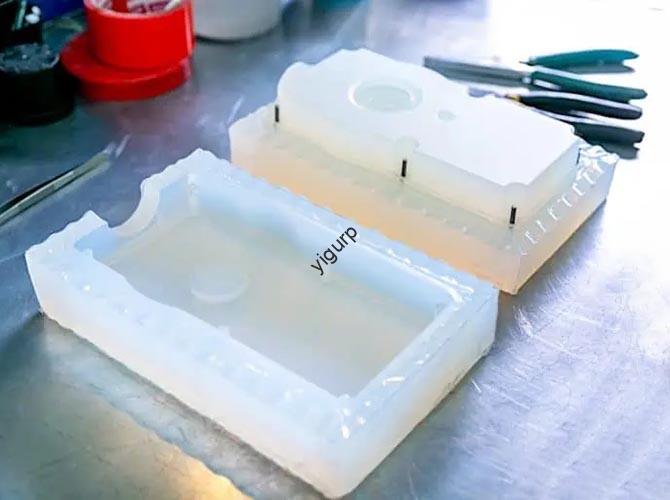
What is TPU Vacuum Casting?
TPU Vacuum Casting is a specialized polymer casting process that uses Thermoplastic Polyurethane (TPU)—a flexible, durable material—to create high-precision parts under vacuum conditions. Unlike traditional methods, vacuum molding eliminates air bubbles, ensuring smooth surfaces and consistent material distribution.
Key TPU properties that make it ideal for this process include:
- High flexibility and elasticity (retains shape after bending)
- Excellent resistance to oil, chemicals, and abrasion
- Temperature stability (performs well in -40°C to 120°C environments)
- Impact resistance and durability for long-lasting parts
The casting process definition for TPU vacuum casting involves melting TPU pellets, pouring the molten material into a mold within a vacuum chamber, and curing it to form the final part. This method balances precision and cost, making it suitable for both prototyping and low-to-medium production runs.
Yigu Technology’s TPU Vacuum Casting Capabilities
At Yigu Technology, we leverage decades of TPU material expertise and state-of-the-art equipment to meet diverse client needs. Our core capabilities include:
| Capability | Key Features | Typical Applications |
| Custom TPU Casting | Tailored to specific size, shape, and material requirements | Medical device components, custom sports equipment |
| High Precision Casting | Achieves tight tolerance levels (±0.1mm for small parts) | Consumer electronics parts (e.g., phone cases, sensor housings) |
| Large Volume Production | Scalable to 10,000+ units/month with consistent quality | Automotive interior parts, home appliance components |
| Complex Design Casting | Handles undercuts, thin walls (down to 0.5mm), and intricate details | Industrial gears, toy prototypes |
| Rapid Prototyping | Turns designs into physical parts in 3–5 business days | Product development cycles, market testing samples |
Our vacuum casting capabilities are backed by rigorous quality control processes, ensuring every part meets or exceeds industry standards.
The TPU Vacuum Casting Process Step-by-Step
The TPU vacuum casting process involves 7 key stages, each critical to achieving high-quality results:
- Casting Mold Preparation: We use high-grade silicone molds (from 3D-printed masters) for flexibility and detail retention. Molds are inspected for cracks or defects to avoid part flaws.
- TPU Mixing Process: Thermoplastic Polyurethane (TPU) pellets are mixed with optional additives for TPU (e.g., UV stabilizers, colorants) in a heated mixer. The mixture is melted to a viscosity of 500–800 cP for optimal pouring.
- Vacuum Chamber Operation: The mold is placed inside a vacuum chamber, which is evacuated to -95 kPa to remove air. This prevents bubbles in the final part.
- Pouring Technique: Molten TPU is poured into the mold at a controlled rate (10–15 mL/s) to avoid splashing and ensure even filling.
- Curing Process: The mold is heated to 80–100°C for 20–30 minutes (depending on part thickness) to cure the TPU. Post-curing at 120°C for 1 hour may be used for enhanced durability.
- Post-processing Steps: Parts are demolded, trimmed to remove excess material, and cleaned. Additional steps like polishing techniques or painting and coating may be applied.
Quality Control in Casting: Each part undergoes dimensional measurement (using calipers and 3D scanners) and visual inspection to check for defects, ensuring compliance with tolerance specifications.
Materials Used in TPU Vacuum Casting
Choosing the right materials is essential for successful TPU vacuum casting. Below is a breakdown of key materials and their roles:
| Material Category | Examples | Purpose |
| Base Material | Thermoplastic Polyurethane (TPU) (e.g., Shore A 60–95) | Provides flexibility, durability, and core part structure |
| Molds | Silicone molds (platinum-cure silicone) | Captures fine details and allows easy demolding |
| Additives | UV stabilizers, flame retardants, color pigments | Enhances part performance (e.g., UV resistance) or aesthetics |
| Reinforcement Materials | Glass fibers, carbon fibers | Improves strength and rigidity for high-stress parts |
| Release Agents | Silicone-based sprays | Prevents TPU from sticking to the mold during demolding |
| Casting Resins | Polyurethane resins (for prototype molds) | Used to create master patterns for silicone mold making |
We prioritize material compatibility to ensure additives and reinforcements work seamlessly with TPU, avoiding issues like material separation or reduced performance.
Surface Treatment for TPU Cast Parts
Surface treatment enhances the aesthetics, functionality, and durability of TPU cast parts. Common treatments include:
- Surface Finishing: Achieves smooth (Ra 0.2–0.8 μm) or matte surfaces to meet design requirements.
- Polishing Techniques: Mechanical polishing (using sandpaper or buffing wheels) for a glossy finish, ideal for consumer electronics.
- Painting and Coating: Application of acrylic or urethane paints to add color or protect against scratches.
- Texturing: Creates patterns (e.g., grippy surfaces for tools) using textured molds or post-processing.
- Surface Hardening: Coating with ceramic or polyurethane films to increase surface hardness (from Shore A 70 to Shore D 50).
- Vacuum Metallization: Depositing a thin metal layer (e.g., aluminum, chrome) for a metallic appearance, used in automotive trim parts.
Surface Protection: Application of anti-UV or anti-chemical coatings to extend part life in harsh environments.
Tolerances and Precision in TPU Vacuum
Dimensional accuracy is a hallmark of our TPU vacuum casting services. We adhere to strict tolerance levels to meet industry standards:
| Part Size | Typical Tolerance | Measurement Technique |
| Small (<50mm) | ±0.1mm | Digital calipers, optical comparators |
| Medium (50–200mm) | ±0.2mm | 3D scanners (accuracy: ±0.05mm) |
| Large (>200mm) | ±0.5mm | Coordinate Measuring Machines (CMM) |
Our precision casting process, combined with advanced quality assurance measures (e.g., SPC—Statistical Process Control), ensures consistent tolerance control across all parts. We work with clients to define custom tolerance specifications based on their application needs.
Advantages of TPU Vacuum Casting
TPU Vacuum Casting offers numerous benefits over other manufacturing methods (e.g., injection molding, 3D printing):
- High Flexibility: TPU parts retain elasticity, making them ideal for gaskets, seals, and wearable devices.
- Durability: Resists wear, impact, and chemicals, ensuring long part life (up to 5+ years in non-abrasive environments).
- Cost-effectiveness: Lower tooling costs than injection molding (silicone molds cost 70–80% less than metal molds), perfect for small batches.
- Rapid Production: Faster turnaround than 3D printing for large batches (produces 100+ parts/day vs. 10–20 for 3D printing).
- Customizability: Easily adapts to complex designs, colors, and surface finishes without retooling.
- Environmental Resistance: TPU parts perform well in moisture, oil, and temperature extremes (-40°C to 120°C).
Aesthetic Appeal: Smooth surfaces and consistent coloring make parts suitable for end-use products (no post-processing needed for many applications).
Industry Applications of TPU Vacuum Casting
TPU Vacuum Casting is widely used across industries due to its versatility. Key applications include:
| Industry | Common Parts | Why TPU Vacuum Casting? |
| Automotive Parts | Gaskets, seals, cable jackets, interior trim | Resists oil, temperature changes, and vibration |
| Consumer Electronics | Phone cases, earbud tips, remote control buttons | Flexible, durable, and customizable for branding |
| Medical Devices | Surgical instrument grips, catheter tips, orthopedic inserts | Biocompatible (meets FDA standards) and easy to sterilize |
| Industrial Components | Gears, O-rings, conveyor belt rollers | Handles high stress and abrasion |
| Sports Equipment | Yoga mat grips, shoe insoles, protective padding | Flexible, shock-absorbent, and lightweight |
| Toys and Hobby Items | Action figure joints, doll accessories | Safe (non-toxic) and durable for child use |
| Home Appliances | Vacuum cleaner seals, blender gaskets, iron handles | Resists heat and chemicals from cleaning products |
TPU Vacuum Casting vs. Other Manufacturing Techniques
Understanding how TPU Vacuum Casting compares to other methods helps clients choose the right solution:
| Technique | Key Difference | Best For | Cost (Per Part, 1000 Units) |
| Vacuum Casting Method | Uses silicone molds, low tooling cost | Prototypes, small-to-medium batches | 2–5 |
| Injection Molding | Uses metal molds, high tooling cost | Large batches (>10,000 units) | 0.5–2 |
| 3D Printing | Layer-by-layer construction, no molds | Complex prototypes (1–100 units) | 5–15 |
| CNC Machining | Removes material from solid blocks | High-precision metal or plastic parts | 10–30 |
At Yigu Technology, we often integrate 3D printing (to create mold masters) and CNC machining (for post-processing) with vacuum casting to optimize efficiency. We also offer assembly methods and post-molding processes (e.g., bonding, drilling) to deliver fully finished parts.
Success Stories: TPU Vacuum Casting Case Studies
Our TPU vacuum casting solutions have solved unique challenges for clients across industries:
Case Study 1: Automotive Gasket for a Leading OEM
- Challenge: The client needed a flexible, oil-resistant gasket for engine compartments with a 2-week turnaround.
- Solution: We used Shore A 80 TPU and rapid silicone mold making to produce 500 gaskets in 10 days.
- Result: Gaskets met all performance tests (withstood 120°C and oil exposure for 1000 hours) and reduced costs by 40% compared to injection molding.
Case Study 2: Medical Device Grips for a Healthcare Startup
- Challenge: The startup required biocompatible, ergonomic grips for surgical tools with tight dimensional accuracy (±0.1mm).
- Solution: We used FDA-approved TPU, implemented vacuum metallization for grip texture, and applied strict quality control in casting.
- Result: 1000 grips were delivered in 5 days, with zero defects—client testimonials praised the “perfect fit and durability.”
Case Study 3: Consumer Electronics Prototypes for a Tech Company
- Challenge: The company needed 200 prototype phone cases to test a new design, with custom colors and a matte finish.
- Solution: We used custom TPU casting with color additives and surface finishing to match the client’s specifications.
Result: Prototypes were delivered in 3 days, allowing the client to accelerate their product launch by 1 month.
Why Choose Yigu Technology for TPU Vacuum Casting?
When you partner with Yigu Technology, you get more than just parts—you get a dedicated team focused on your success. Here’s why clients choose us:
- Expertise in TPU: Our engineers have 15+ years of experience working with Thermoplastic Polyurethane (TPU), ensuring optimal material selection and process design.
- Advanced Technology: We use state-of-the-art vacuum chambers, 3D scanners, and automated mixing systems for consistent quality.
- Quality Assurance: Every part undergoes 10+ quality checks, from material testing to final inspection, ensuring compliance with international standards (ISO 9001, FDA).
- Custom Service: We work closely with clients to understand their needs, offering tailored solutions for complex design casting or unique material requirements.
- Fast Turnaround: Our rapid prototyping service delivers parts in 3–5 days, and large-volume production is scalable to meet tight deadlines.
- Cost Savings: Low tooling costs and efficient processes reduce overall project costs by 20–50% compared to competitors.
Client Satisfaction: We maintain a 98% client retention rate, with 95% of projects delivered on time and within budget.