
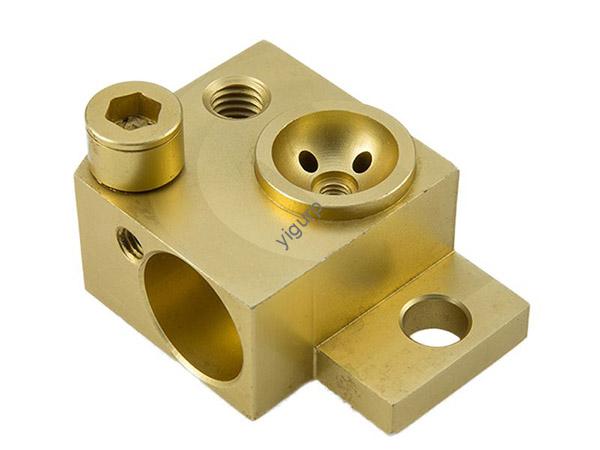
Se você trabalha com engenharia de precisão, aeroespacial, ou fabricação automotiva, você sabe que mesmo o menor erro dimensional pode arruinar um projeto. That’s wheretool steel precision grade brilha. Projetado para tolerâncias ultrarritas e desempenho consistente, este material é a espinha dorsal de ferramentas e componentes de alta precisão. Neste guia, we’ll break down everything you need to know—from its chemical makeup to real-world success stories—to help you choose the right precision-grade tool steel for your needs.
1. Material Properties of Tool Steel Precision Grade
Tool steel precision grade stands out for its balanced mix of strength, dureza, and stability. Let’s break its properties into four key categories: composição química, propriedades físicas, propriedades mecânicas, e outras características críticas.
Composição Química
The precision of this tool steel starts with its carefully controlled chemistry. Key elements (by weight) incluir:
- Carbono (C): 0.80 – 1.50% (boosts hardness and wear resistance—critical for precision tools that hold their shape)
- Cromo (Cr): 0.50 – 2.00% (enhances toughness and helps resist corrosion, preventing dimensional changes from rust)
- Manganês (Mn): 0.20 – 0.60% (improves heat treatment response and reduces brittleness)
- Silício (E): 0.15 – 0.35% (strengthens the steel and removes impurities during manufacturing)
- Fósforo (P): ≤0.03% (kept low to avoid brittleness, which could cause cracks in precision parts)
- Enxofre (S): ≤0.03% (minimized to maintain toughness and consistency)
- Additional alloying elements: Molybdenum (boosts strength) e Vanadium (refines grain structure for better dimensional stability).
Propriedades Físicas
These properties ensure the steel behaves predictably in precision applications:
| Propriedade | Valor | Why It Matters for Precision |
|---|---|---|
| Densidade | ~7.85 g/cm³ | Consistent density means uniform machining and no weight imbalances in tools. |
| Condutividade Térmica | ~35 W/(m·K) | Even heat distribution prevents warping during machining or heat treatment. |
| Capacidade Específica de Calor | ~0.48 kJ/(kg·K) | Stable temperature response—critical for parts used in variable heat environments. |
| Coeficiente de Expansão Térmica | ~11 x 10⁻⁶/°C | Low expansion rate keeps dimensions consistent, even when heated. |
| Propriedades Magnéticas | Ferromagnético | Easy to handle with magnetic fixtures during precision machining. |
Propriedades Mecânicas
Após tratamento térmico adequado, tool steel precision grade delivers the strength and durability needed for high-stress precision work:
- Resistência à tracção: ~1800 – 2400 MPa (resists breaking under tension, so tools don’t snap during use)
- Força de rendimento: ~1400 – 2000 MPa (prevents permanent deformation—critical for tools that must hold tight tolerances)
- Alongamento: ~10 – 15% (enough flexibility to avoid cracking, but not too much to lose shape)
- Dureza: 60-68 CDH (Rockwell C scale—hard enough to resist wear, but not so hard that it’s brittle)
- Fatigue Strength: ~700 – 900 MPa (handles repeated use without failing, like a precision punch that stamps thousands of parts)
- Resistência ao Impacto: Moderate to high (absorbs small shocks without chipping, protecting precision edges).
Other Key Properties
- Excellent Wear Resistance: Maintains sharp edges and tight dimensions even after hundreds of uses (ideal for precision reamers or dies).
- High Hot Hardness: Retains hardness at temperatures up to 600°C—perfect for precision cutting tools that generate heat.
- Good Machinability: Easy to shape into complex precision forms (por exemplo, intricate molds) before heat treatment.
- Weldability: Possible but requires care—high carbon content can cause cracking. Preheating to 300-400°C and post-weld annealing helps.
2. Applications of Tool Steel Precision Grade
Tool steel precision grade is used wherever tight tolerances (often ±0.001 mm or less) and consistent performance are non-negotiable. Below are its most common uses.
Ferramentas de corte
Precision cutting tools rely on this steel to produce smooth, accurate cuts:
- Milling Cutters: Used to create complex shapes in aerospace parts (por exemplo, lâminas de turbina). Precision-grade steel ensures each cut matches the design exactly.
- Ferramentas de torneamento: Shape cylindrical parts like automotive shafts. The steel’s stability prevents vibration, resulting in a smoother finish.
- Broaches: Create detailed slots or gears. Precision-grade steel maintains the broach’s sharp teeth, ensuring consistent results across hundreds of parts.
- Alargadores: Finish holes to ultra-tight tolerances (por exemplo, in medical devices). The steel’s wear resistance keeps holes precise even after repeated use.
Ferramentas de formação
Forming tools need to apply pressure without losing their shape:
- Punches: Create holes in precision electronics (por exemplo, invólucros de smartphones). Precision-grade steel ensures each hole is the same size.
- Morre: Mold parts like precision bolts or screws. The steel’s hardness resists wear, so dies produce consistent parts for longer.
- Stamping Tools: Press flat parts like precision washers. The steel’s stability prevents the tool from bending, ensuring uniform stamping.
Indústria aeroespacial
Aerospace components demand extreme precision to ensure safety:
- High-strength components: Parts like landing gear brackets. Precision-grade steel holds tight tolerances even under heavy loads.
- Wear-resistant parts: Bearings in jet engines. The steel’s durability prevents premature failure in high-temperature environments.
Indústria Automotiva
Modern cars rely on precision parts for performance and safety:
- High-strength components: Gear shafts in transmissions. Precision-grade steel ensures gears mesh perfectly, reducing noise and wear.
- Wear-resistant parts: Brake caliper components. The steel’s hardness resists friction, extending the part’s life.
Engenharia Mecânica
General mechanical projects use this steel for critical precision parts:
- Engrenagens: Transmit power in industrial machines. Precision-grade steel keeps gear teeth aligned, improving efficiency.
- Eixos: Support rotating parts like pumps. The steel’s straightness ensures smooth operation.
- Rolamentos: Reduce friction in motors. Precision-grade steel ensures bearings fit perfectly, preventing vibration.
Engenharia de Precisão (Specialized Use Case)
This is where tool steel precision grade truly excels:
- Precision Molds: Create small, detailed parts like microchips or medical implants. The steel’s smooth surface and dimensional stability ensure each mold copy is identical.
- Precision Dies: Stamp tiny parts like connector pins. The steel’s accuracy ensures pins fit into sockets without gaps.
3. Manufacturing Techniques for Tool Steel Precision Grade
Producing tool steel precision grade requires strict process control to meet tight tolerances. Below are the key steps.
Metallurgical Processes
The first step is melting and refining the steel to ensure chemical consistency:
- Forno Elétrico a Arco (EAF): Most common for precision grade. Scrap steel and pure alloying elements (por exemplo, vanádio) are melted at 1600-1700°C. EAF allows exact control of chemical composition—critical for precision.
- Forno de oxigênio básico (BOF): Used for large-scale production. Oxygen removes impurities, then elements are added to hit precise ratios.
Rolling Processes
Rolling shapes the steel while maintaining uniformity:
- Hot Rolling: Steel is heated to 1100-1200°C and rolled into rough shapes (por exemplo, bares). This softens the metal for further processing.
- Cold Rolling: Done at room temperature to refine shape and surface finish. Cold-rolled precision-grade steel has a smoother surface (Ra ≤ 0.8 μm) and tighter dimensional tolerance (±0,05mm).
Tratamento térmico
Heat treatment unlocks the steel’s precision properties:
- Recozimento: Heated to 800-850°C, held for 2-4 horas, então esfriou lentamente. This softens the steel for precision machining and reduces internal stresses.
- Têmpera: Heated to 1200-1250°C, then quickly cooled in oil. This hardens the steel but makes it brittle.
- Temperamento: Reheated to 500-600°C, held for 1-2 horas. This reduces brittleness while keeping hardness at 60-68 HRC—perfect for precision tools.
- Stress Relief Annealing: Heated to 600-650°C after machining. This removes stresses from cutting, preventing the part from warping later.
Forming Methods
Precision forming ensures the steel matches exact designs:
- Press Forming: Uses a precision press (with ±0.001 mm accuracy) to shape parts like dies.
- Dobrando: Uses a computer-controlled brake press to bend steel into angles (por exemplo, tool frames) com tolerâncias apertadas.
- Usinagem: Done with CNC machines (controle numérico de computador) for ultra-accurate cuts. Tools like end mills with 0.0001 mm step increments are used.
- Moagem: Uses abrasive wheels to refine surface finish and dimensions. Precision grinding can achieve tolerances as tight as ±0.0005 mm.
Tratamento de superfície
Surface treatments enhance precision and durability:
- Endurecimento: Extra heat treatment for cutting edges (por exemplo, reamer tips) para aumentar a resistência ao desgaste.
- Nitretação: Heated in ammonia gas to form a hard surface layer (5-10 μm de espessura). This improves wear resistance without changing dimensions.
- Revestimento: Thin layers like PVD (Deposição Física de Vapor) ou DCV (Deposição Química de Vapor) are applied. Por exemplo, a TiCN (titanium carbonitride) coating on precision milling cutters reduces friction and extends tool life by 40%.
Controle de qualidade
Strict testing ensures the steel meets precision standards:
- Hardness Testing: Uses a Rockwell tester to confirm hardness (60-68 CDH). Each part is tested at 3 points to ensure uniformity.
- Microstructure Analysis: Examined under a microscope to check for defects (por exemplo, uneven grains) that could affect precision.
- Inspeção Dimensional: Uses tools like coordinate measuring machines (CMMs) to scan parts and compare them to 3D designs. Tolerances are checked to ±0.0001 mm.
4. Estudos de caso: Tool Steel Precision Grade in Action
Real-world examples show how this steel solves precision challenges. Below are three key case studies.
Estudo de caso 1: Precision Molds for Medical Implants
A medical device manufacturer needed molds to produce titanium hip implants with a tolerance of ±0.002 mm. Their existing molds (made from standard tool steel) failed after 500 implants—parts became too loose, requiring costly rejections.
Solução: They switched to tool steel precision grade molds with a nitrided surface.
Resultados:
- Moldes produzidos 2,500 implants before needing maintenance (um 400% melhoria).
- Rejection rate dropped from 15% para 0.5% (fewer parts failed tolerance checks).
- Implants fit patients better—surgeons reported 30% fewer adjustment needs.
Why it worked: The precision-grade steel’s dimensional stability kept the mold’s shape consistent, while nitriding prevented wear that would have altered dimensions.
Estudo de caso 2: Precision Punches for Electronics Connectors
An electronics supplier needed punches to create 0.5 mm holes in connector pins (tolerance ±0.001 mm). Their previous punches (made from D2 tool steel) wore out after 10,000 pins—holes became too small, causing pins to jam.
Solução: They used tool steel precision grade punches with a TiAlN coating.
Resultados:
- Punches lasted 45,000 alfinetes (um 350% melhoria).
- Hole size remained within tolerance for the entire life of the punch.
- Reduced downtime by 75% (fewer punch changes).
Why it worked: The precision-grade steel’s high yield strength (1400-2000 MPa) resisted deformation, while the TiAlN coating reduced friction and wear.
Estudo de caso 3: Failure Analysis of Precision Gear Shafts
A automotive supplier had issues with precision gear shafts (made from tool steel precision grade) cracking during use. Shafts failed after 10,000 miles—causing transmission noise.
Investigation: Dimensional inspection showed the shafts were slightly bent (0.003 milímetros) após tratamento térmico. Microstructure analysis revealed uneven grain growth from incorrect quenching.
Fix: They adjusted the quenching process (slower cooling rate) and added a stress relief annealing step. They also used a CMM to check straightness after each step.
Resultados:
- Shafts lasted 30,000 milhas (um 200% melhoria).
- No more bending—tolerance remained within ±0.001 mm.
- Transmission noise was eliminated.
5. Tool Steel Precision Grade vs. Outros materiais
How does tool steel precision grade compare to other common materials? Below is a clear breakdown.
Precision Grade vs. Other Tool Steels
| Propriedade | Classe de precisão de aço ferramenta | Aço ferramenta A2 | Aço ferramenta D2 | Aço ferramenta M2 | Aço ferramenta H13 |
|---|---|---|---|---|---|
| Dureza (CDH) | 60-68 | 57-62 | 58-62 | 60-65 | 48-52 |
| Tolerance Capability | ±0.0005 mm | ±0,005mm | ±0,003mm | ±0,002 mm | ±0,01 mm |
| Resistência ao desgaste | Excelente | Bom | Muito bom | Bom | Moderado |
| Hot Hardness | Excelente | Pobre | Pobre | Bom | Muito bom |
| Usinabilidade | Bom (before heat treatment) | Muito bom | Pobre | Bom | Muito bom |
When to choose precision grade: For applications requiring ±0.001 mm or tighter tolerances (por exemplo, medical molds, electronics punches).
When to choose others: Use A2 for low-stress, lower-precision tools (por exemplo, simple brackets), D2 for corrosion-resistant tools (por exemplo, food processing dies), M2 for general-purpose cutting tools, and H13 for die casting (high heat resistance but lower precision).
Precision Grade vs. Aço inoxidável (420, 440C)
Stainless steel is corrosion-resistant but less precise:
- 420 Aço inoxidável: Tolerance capability ±0.01 mm (much wider than precision grade). Hardness up to 50 CDH (softer, less wear-resistant).
- 440C Stainless Steel: Tolerance capability ±0.005 mm. Hardness up to 60 CDH (still lower than precision grade’s max of 68 CDH).
Precision grade advantage: Tighter tolerances and higher wear resistance for precision tools.
Stainless steel advantage: Melhor resistência à corrosão (good for food or medical tools where rust is a risk).
Precision Grade vs. Materiais Compostos (Fibra de Carbono)
Carbon fiber is lightweight but not suited for precision tooling:
- Tolerance Capability: Carbon fiber has ±0.01 mm tolerance (unstable under heat or pressure).
- Força: Precision grade’s tensile strength (1800-2400 MPa) is 4x higher than carbon fiber (400-500 MPa).
- Resistência ao desgaste: Carbon fiber wears quickly—unsuitable for cutting or forming tools.
Precision grade advantage: Stable, forte, and wear-resistant for precision applications.
Carbon fiber advantage: Leve (good for non-tool parts like aerospace panels).
Comparação de custos
Precision grade costs more upfront but saves money long-term:
- Custo de materiais: Precision grade (~$20/kg) contra. A2 (~$6/kg) contra. D2 (~$12/kg) contra. 440C (~$15/kg).
- Total Cost: Precision grade reduces rejections (fewer bad parts) and extends tool life (fewer replacements). Por exemplo, a precision mold costs $500 more upfront but saves $10,000 in rejections over its life.
Yigu Technology’s Perspective on Tool Steel Precision Grade
Na tecnologia Yigu, we’ve seen tool steel precision grade transform our clients’ precision projects—especially in medical and aerospace fields. Its ability to hold ±0.0005 mm tolerances and resist wear makes it irreplaceable for high-stakes applications. We recommend it for clients needing consistent, long-lasting precision tools—like medical implant molds or electronics punches. To maximize its value, we emphasize strict quality control: every batch is tested with CMMs and hardness testers to ensure it meets standards. While it has a higher upfront cost, our clients typically see a 30-50% reduction in total costs due to fewer rejections and longer tool life. For unsure clients, we offer sample testing—let us help you find the right precision solution.