
Our Thermosetting Plastics CNC Machining Services
Need parts that stand up to high temperatures, harsh chemicals, and heavy loads without compromising precision? Our Thermosetting Plastics CNC Machining services turn durable, heat-resistant polymers into custom components—from prototypes to high-volume production. Whether for aerospace electrical insulators, automotive parts, or medical devices, we deliver parts that meet strict quality standards, turning your toughest design challenges into reliable solutions.
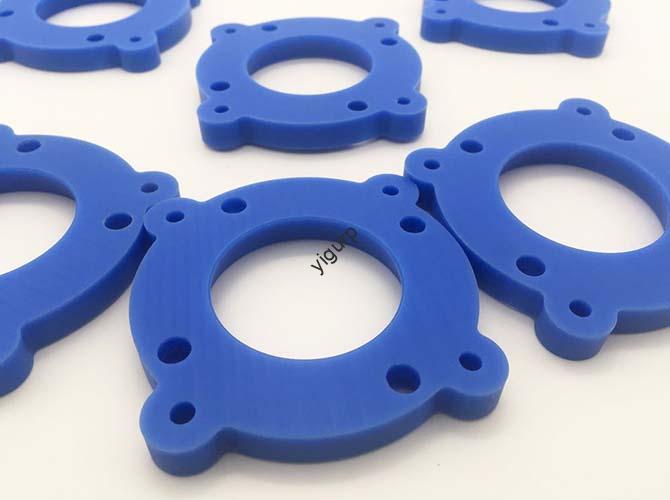
What Is Thermosetting Plastics CNC Machining?
Thermosetting Plastics are a class of engineering polymers defined by their unique polymer chemistry—they undergo cross-linking during curing, creating a rigid, permanent structure that cannot be melted or reshaped once set (known as irreversible hardening). This process gives them exceptional thermal stability, high strength, and resistance to chemicals, making them ideal for applications where standard plastics fail.
CNC Machining (Computer Numerical Control Machining) is a precision subtractive manufacturing process that uses computerized tools to shape materials with minimal error. When combined, Thermosetting Plastics CNC Machining leverages the polymer’s robust traits to create complex, dimensionally stable parts for industries requiring durability in extreme conditions. Below is a breakdown of key properties that make thermosetting plastics ideal for CNC machining:
| Property Type | Typical Value (ASTM Standard) | Key Benefit for CNC Machining |
| Tensile Strength | 80–150 MPa (ASTM D638) | Enables creation of strong, load-bearing parts |
| Continuous Use Temperature | 150–300°C (ASTM D648) | Maintains performance in high-heat environments |
| Flexural Modulus | 5.0–8.0 GPa (ASTM D790) | Ensures rigidity in precision components |
| Coefficient of Thermal Expansion (CTE) | 8–15 ppm/°C (ASTM D696) | Minimizes dimensional changes with temperature shifts |
| Chemical Resistance | Resistant to oils, solvents, and acids (ASTM D543) | Withstands harsh substances in industrial/medical use |
| Electrical Insulation | Volume Resistivity >10¹⁴ Ω·cm (ASTM D257) | Ideal for electrical components in aerospace/electronics |
Our Capabilities: Precision for Thermosetting Plastics
At Yigu Technology, our Thermosetting Plastics CNC Machining capabilities are tailored to handle the unique challenges of working with these rigid, heat-resistant polymers. We combine advanced equipment, deep technical expertise, strict quality control, and industry-recognized ISO Certification (ISO 9001, ISO 13485 for medical) to deliver parts that meet even the most demanding specifications. Here’s what we offer:
| Capability | Description | Ideal For |
| Precision Machining | Achieve tight tolerances (down to ±0.004 mm) for complex geometries, critical for high-performance applications | Aerospace electrical insulators, medical device components |
| Custom Parts Manufacturing | Create fully customized thermosetting plastic parts—from intricate designs to large-scale components—aligned with your exact needs | Industrial equipment gears, electronic enclosures |
| High Volume Production | Efficiently produce thousands of parts with consistent quality, using optimized tool paths and process controls | Automotive under-the-hood parts, consumer goods components |
| Prototyping | Rapidly develop functional prototypes for testing and validation, accelerating your product development cycle | New aerospace/medical product launches, design iterations |
| Quality Control | Implement multi-step inspection (including CMM testing, thermal stability checks, and electrical insulation verification) to ensure compliance with industry standards | Critical applications like aerospace and medical devices |
| Technical Expertise | Our engineers provide guidance on thermosetting plastic selection, design optimization, and machining best practices for high-performance results | Complex projects requiring specialized polymer knowledge |
Process: How We Execute Thermosetting Plastics CNC Machining
Working with Thermosetting Plastics requires specialized machining techniques due to their rigidity and brittleness (compared to thermoplastics). Our Thermosetting Plastics CNC Machining process follows a structured, detail-oriented approach to ensure precision and minimize material waste:
- Design & Programming: Our team converts your 3D models into CNC-compatible code, optimizing programming for thermosetting plastics’ unique machinability. We adjust tool paths to reduce vibration (critical for avoiding cracking) and optimize cutting speeds.
- Setup: We prepare CNC turning or CNC milling machines with high-wear-resistant tooling (e.g., carbide or diamond-coated tools) specifically suited for rigid polymers. Proper setup—including tool alignment and coolant control—is key to achieving dimensional accuracy.
- Machining: The machine executes the program, performing drilling, cutting, and shaping operations at controlled speeds to prevent material damage. We monitor the process in real time to address any issues and ensure consistent quality.
Inspection: Post-machining, parts undergo rigorous measurement using precision tools (e.g., CMMs, thermal testers, and electrical insulation meters) to verify adherence to tolerances and performance standards.
Materials: Choosing the Right Thermosetting Plastic for Your Project
Not all Thermosetting Plastics are the same—selecting the right variant is critical to ensuring your part performs in its intended environment. We offer a range of high-performance options, each with unique properties suited to specific applications:
| Material Type | Key Properties | Ideal Applications |
| Epoxy Resins | Excellent electrical insulation, high strength, and chemical resistance | Aerospace electrical components, electronic circuit boards, medical device housings |
| Phenolic Resins | High temperature resistance (up to 200°C), low cost, and good mechanical strength | Automotive brake pads, industrial equipment handles, consumer goods (e.g., appliance parts) |
| Polyester Resins | Good thermal stability, corrosion resistance, and dimensional stability | Marine components, industrial tanks, electrical enclosures |
| Polyurethane | High impact resistance, flexibility (varies by grade), and chemical resistance | Medical padding, industrial seals, consumer goods (e.g., footwear components) |
Our team provides expert material selection guidance, helping you choose the best thermosetting plastic based on your project’s requirements (e.g., temperature exposure, electrical needs, or cost targets).
Surface Treatment: Enhancing Thermosetting Plastic Part Performance
While Thermosetting Plastics already offer strong natural properties, surface treatment can further enhance their functionality, durability, or aesthetics. We offer specialized finishing options tailored to these polymers’ unique characteristics:
| Surface Treatment | Purpose | Benefits |
| Polishing | Improve surface smoothness and reduce friction | Ideal for moving parts (e.g., gears), enhances hygiene in medical use |
| Coating (e.g., PTFE or ceramic coating) | Boost chemical resistance or thermal insulation | Protects parts in extreme chemical environments, extends service life |
| Painting | Add color, branding, or additional chemical protection | Suitable for consumer goods or parts requiring visual identification |
| Plating (e.g., nickel or copper plating) | Enhance conductivity or corrosion resistance | Ideal for electronic components needing electrical contact |
| Surface Hardening | Increase surface wear resistance | Extends the life of high-friction parts like industrial gears |
| Texture (e.g., matte or grooved finish) | Improve grip or hide surface imperfections | Useful for hand-held tools or consumer goods |
We collaborate with you to determine if surface finishing is necessary, ensuring the treatment aligns with your part’s end-use and performance goals.
Tolerances: Meeting the Strictest Precision Standards
In industries relying on Thermosetting Plastics CNC Machining—like aerospace and electronics—precision tolerances and precision engineering are critical. Our processes are optimized to deliver exceptional dimensional accuracy, adhering to global quality standards and exceeding industry averages. Below is a comparison of our typical tolerances versus industry benchmarks:
| Tolerance Type | Our Typical Capability | Industry Average | Quality Standard Compliance |
| Dimensional Tolerance | ±0.004 mm (for small parts) | ±0.010 mm | ISO 9001, ISO 13485 (medical), AS9100 (aerospace) |
| Geometric Tolerance (e.g., flatness) | 0.006 mm/m | 0.012 mm/m | ISO 1302 |
| Position Tolerance | ±0.006 mm | ±0.012 mm | IATF 16949 (automotive), AS9100 |
We use advanced inspection tools—including laser scanners, thermal stability testers, and electrical insulation meters—to verify that every part stays within tolerance limits, ensuring consistent performance in critical applications.
Advantages: Why Choose Thermosetting Plastics CNC Machining?
Thermosetting Plastics CNC Machining offers a unique set of advantages that make it the top choice for industries where durability in harsh conditions is essential. Here’s why it stands out:
- High Temperature Resistance: Thermosetting plastics maintain strength at temperatures up to 300°C (continuous use), outperforming many thermoplastics and metals in high-heat environments.
- High Strength: With tensile strengths ranging from 80–150 MPa, they create parts that can handle heavy loads without deformation—critical for industrial and aerospace use.
- Chemical Resistance: Resists oils, solvents, acids, and bases, making them ideal for medical devices (exposed to disinfectants) and industrial equipment (exposed to harsh fluids).
- Dimensional Stability: Their low coefficient of thermal expansion (8–15 ppm/°C) minimizes dimensional changes with temperature shifts, ensuring precision over time.
- Electrical Insulation: Exceptional insulating properties (volume resistivity >10¹⁴ Ω·cm) make them perfect for electrical components in aerospace and electronics.
- Wear & Corrosion Resistance: Resists abrasion and corrosion, extending part life and reducing maintenance costs for industrial applications.
Cost-Effective: Many thermosetting plastics (e.g., phenolic resins) offer high performance at a lower cost than premium thermoplastics or metals.
Applications Industry: Where Thermosetting Plastics CNC Machined Parts Excel
The exceptional properties of Thermosetting Plastics CNC Machined parts make them indispensable in industries where performance under stress is non-negotiable. Below are key sectors we serve and their common applications:
| Industry | Common Thermosetting Plastic CNC Machined Parts | Key Requirements Met |
| Aerospace | Electrical insulators, sensor housings, engine components | High temperature resistance, electrical insulation, tight tolerances |
| Automotive | Brake pads, under-the-hood parts, electrical connectors | Heat resistance, durability, cost-effectiveness |
| Electronics | Circuit board substrates, electronic enclosures, insulator parts | Electrical insulation, dimensional stability, chemical resistance |
| Medical Devices | Surgical instrument handles, device housings, insulation components | Biocompatibility, chemical resistance (to disinfectants), precision |
| Industrial Equipment | Gear parts, pump components, tank liners | Wear resistance, chemical resistance, high strength |
| Consumer Goods | Appliance parts, tool handles, footwear components | Durability, cost-effectiveness, aesthetics |
| Electrical Insulation | Transformer parts, cable insulation, switch components | Electrical insulation, thermal stability, fire resistance |
Case Studies: Real-World Success with Thermosetting Plastics CNC Machining
Our Thermosetting Plastics CNC Machining services have helped clients overcome unique challenges in high-stakes industries. Here are two standout examples:
Case Study 1: Aerospace Electrical Insulator
- Client: A leading aerospace manufacturer
- Challenge: Need for a lightweight, high-temperature-resistant electrical insulator that could withstand 250°C in engine compartments and meet strict electrical insulation standards.
- Solution: We used epoxy resin (excellent insulation, high heat resistance) and CNC milling to create 500 insulators. Implemented strict quality control (CMM testing and electrical insulation checks) to ensure ±0.004 mm tolerance.
- Result: 100% part compliance with aerospace standards (AS9100), 20% weight reduction compared to metal alternatives, and improved electrical performance for the client’s engines.
Case Study 2: Medical Device Housing
- Client: A medical technology startup
- Challenge: Rapid prototyping of a biocompatible device housing requiring chemical resistance (to disinfectants) and dimensional stability.
- Solution: Used biocompatible epoxy resin and CNC turning to create 12 prototypes. Added a polishing surface treatment for hygiene and aesthetics.
Result: Prototypes validated in 7 days (40% faster than expected), met ISO 13485 medical standards, and enabled the client to launch their product 2 months early.
Why Choose Us for Your Thermosetting Plastics CNC Machining Needs?
When it comes to Thermosetting Plastics CNC Machining, Yigu Technology stands out as a trusted partner for industries demanding excellence. Here’s why clients rely on us:
- Expertise: Our team has 12+ years of experience working with thermosetting plastics, with specialized knowledge of their machining nuances and industry-specific requirements (e.g., aerospace electrical standards).
- Quality: We hold ISO 9001, ISO 13485 (medical), and AS9100 (aerospace) certifications, ensuring every part meets global standards.
- Reliability: 99% on-time delivery rate—even for complex, high-volume orders—thanks to our optimized processes and redundant equipment.
- Customer Service: Dedicated project managers provide end-to-end support, from initial design consultation to post-delivery performance checks.
- Innovation: We invest in the latest CNC equipment (e.g., 5-axis mills) and machining techniques to handle thermosetting plastics’ unique challenges (e.g., brittleness).
- Value: Competitive pricing without compromising on quality—we optimize material use and process efficiency to reduce costs for our clients.
- Custom Solutions: We tailor our services to your specific needs, whether it’s electrical insulation testing for aerospace parts or biocompatibility checks for medical devices.
Industry Leadership: We stay ahead of industry trends, ensuring our thermosetting plastics machining processes align with the latest standards and technologies.