
Our Thermoset Injection Molding Services
Unlock unmatched durability, heat resistance, and precision for your components with thermoset injection molding from Yigu Technology. Our expertise in custom tooling, high-volume production, and advanced resin systems delivers cost-effective, high-performance solutions tailored to automotive, aerospace, electronics, and medical industries. Partner with us to turn complex designs into reliable, consistent parts—every time.
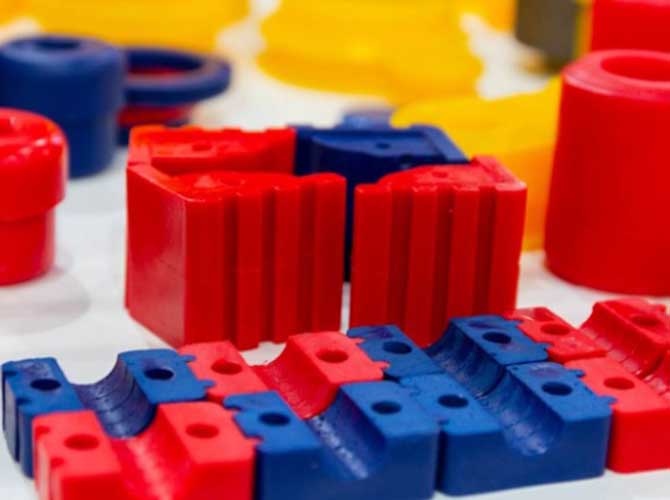
What Is Thermoset Injection Molding?
Thermoset injection molding is a manufacturing process that shapes thermoset materials into durable components using heat and pressure. Unlike thermoplastics, which soften when reheated, thermoset plastics undergo irreversible cross-linking during curing, creating rigid, heat-resistant parts. This process relies on polymer chemistry and specialized resin systems to achieve properties like chemical resistance and dimensional stability.
Key stages of the reaction include:
- Hardening: Triggered by heat or catalysts, turning liquid resin into solid parts.
- Curing: The cross-linking phase that locks in the material’s final properties.
- Thermosetting compounds: Pre-mixed resins with fillers or reinforcements to enhance performance.
Table 1: Thermoset vs. Thermoplastic Materials
| Feature | Thermoset Materials | Thermoplastic Materials |
| Reheat Behavior | Do not soften (irreversible cross-linking) | Soften and reflow (reversible) |
| Heat Resistance | High (withstand 150–300°C) | Moderate (typically <150°C) |
| Chemical Resistance | Excellent (resist oils, solvents) | Good (varies by material) |
| Dimensional Stability | Superior (minimal shrinkage after curing) | Lower (prone to warping when heated) |
| Common Uses | Electrical components, automotive parts | Packaging, toys, consumer goods |
Our Capabilities: Delivering Precision and Reliability
At Yigu Technology, we combine decades of injection molding expertise with state-of-the-art equipment to meet your unique needs. Our thermoset molding capabilities cover every step from design to delivery, ensuring quality and efficiency.
Table 2: Core Capabilities Overview
| Capability | Details |
| Precision Molding | Achieve tight tolerances (±0.001 in) for critical components. |
| Custom Tooling | Design and manufacture molds for complex geometries (lead time: 2–4 weeks). |
| High-Volume Production | Capacity to produce 100,000+ parts monthly with consistent quality. |
| Quality Control | In-line inspection using laser measurement and automated testing. |
| Material Selection | Partner with leading suppliers to source thermoset resins (phenolic, epoxy) and additives. |
| Process Optimization | Use AI-driven software to reduce cycle times by 15–20%. |
| Part Design Support | Offer DFM (Design for Manufacturability) advice to minimize costs. |
| Secondary Operations | Provide assembly, coating, and packaging for turnkey solutions. |
Process: How Thermoset Injection Molding Works
The thermoset processing cycle is a structured sequence of steps, each critical to producing high-quality parts. Unlike thermoplastic molding, curing happens during the process, not after.
Step-by-Step Process Breakdown:
- Material Feeding: Thermoset compounds (resin + fillers) are loaded into a hopper and fed into a heated barrel.
- Heating and Mixing: The barrel heats the material to a viscous state (not melted) while screws mix in additives or reinforcements.
- Injection: High pressure (1,000–5,000 psi) forces the material into a custom mold cavity.
- Curing: The mold is heated (120–180°C) to trigger cross-linking—this takes 30 seconds to 5 minutes, depending on part size.
- Ejection: Once cured, the mold opens, and ejector pins remove the solid part.
- Post-processing: Trimming excess material, surface finishing, or quality checks (e.g., dimensional measurement).
- Process Automation: Robotic arms handle material feeding and part ejection, reducing labor errors by 25%.
Figure 1: Typical Thermoset Injection Molding Cycle Time
| Part Size (in³) | Feeding Time (s) | Heating Time (s) | Injection Time (s) | Curing Time (s) | Ejection Time (s) | Total Cycle Time (s) |
| <1 | 5 | 10 | 8 | 30 | 5 | 58 |
| 1–5 | 8 | 15 | 12 | 60 | 8 | 103 |
| >5 | 12 | 20 | 18 | 120 | 12 | 182 |
Materials: Choosing the Right Thermoset Resin
Selecting the right thermoset resins is key to part performance. Yigu Technology works with a range of materials, each optimized for specific applications.
Table 3: Common Thermoset Resins and Their Properties
| Resin Type | Key Properties | Typical Applications |
| Phenolic Resins | High heat resistance, low cost, good electrical insulation | Electrical switches, automotive brake pads |
| Epoxy Resins | Excellent adhesion, chemical resistance, high strength | Aerospace components, medical devices |
| Polyester Resins | Lightweight, corrosion-resistant, low viscosity | Boat hulls, industrial tanks |
| Vinyl Ester Resins | Superior impact resistance, heat resistance | Chemical storage containers, wind turbine blades |
| Silicone Resins | Flexibility, extreme temperature resistance (-60–250°C) | O-rings, electrical connectors |
We also enhance resins with:
- Fillers: Talc or calcium carbonate to reduce cost and improve rigidity.
- Reinforcements: Glass fibers or carbon fibers to boost strength (increases tensile strength by 30–50%).
- Additives: Flame retardants, UV stabilizers, or colorants for custom needs.
Thermoset Injection Molding Surface Treatment
Surface treatment improves a part’s appearance, durability, or functionality. Our secondary operations include:
| Treatment Type | Purpose | Benefits |
| Coating | Protect against corrosion or chemicals | Extends part life by 2–3 years |
| Painting | Aesthetic enhancement or branding | Custom colors matching Pantone standards |
| Plating | Add conductivity or wear resistance | Used for electrical connectors (e.g., copper plating) |
| Texturing | Improve grip or hide surface defects | Common in automotive interior parts |
| Polishing | Create a smooth, glossy finish | Ideal for consumer goods or medical devices |
| Sanding | Remove excess material or rough edges | Prepares parts for coating or assembly |
| Adhesive application | Enable bonding to other components | Reduces assembly time by 40% |
| Surface modification | Alter chemical properties (e.g., hydrophobicity) | Used in medical devices to repel liquids |
Thermoset Injection Molding Tolerances: Ensuring Dimensional Accuracy
Tight tolerances are critical for parts that fit with other components. Our precision molding processes achieve industry-leading accuracy through:
- Dimensional accuracy: Typical tolerances of ±0.001 in for small parts, ±0.005 in for large parts.
- Measurement techniques: Coordinate Measuring Machines (CMM) and laser scanners to verify dimensions.
- Tooling precision: CNC-machined molds with tolerances of ±0.0005 in to ensure consistency.
- Process repeatability: Statistical Process Control (SPC) monitors key parameters (temperature, pressure) to keep variation below 0.5%.
Table 4: Tolerance Levels by Part Type
| Part Type | Typical Tolerance Range | Quality Control Checks |
| Electrical Connectors | ±0.001–±0.002 in | 100% visual inspection + CMM sampling |
| Automotive Gaskets | ±0.003–±0.005 in | Automated vision systems for edge detection |
| Medical Implants | ±0.0005–±0.001 in | Full CMM inspection + material certification |
Advantages: Why Choose Thermoset Injection Molding?
Thermoset injection molding offers unique benefits that make it ideal for demanding applications:
- Durability: Parts resist wear, impact, and aging—last up to 10x longer than thermoplastic alternatives in harsh environments.
- Heat resistance: Withstand temperatures up to 300°C, making them suitable for engine components or electrical systems.
- Chemical resistance: Resist oils, solvents, and acids—used in chemical processing or automotive fuel systems.
- Dimensional stability: Minimal shrinkage (0.1–0.5%) after curing, ensuring parts fit consistently.
- High strength: Reinforced resins (e.g., glass-filled epoxy) have tensile strength up to 10,000 psi.
- Cost-effectiveness: High-volume production reduces per-unit costs by 15–20% compared to machining.
- Customizability: Complex geometries (e.g., undercuts, thin walls) are easy to produce with custom tooling.
Part consolidation: Replace multiple assembled parts with one molded component, cutting assembly time by 50%.
Applications Industry: Where Thermoset Parts Excel
Our thermoset injection molding solutions serve a wide range of industries, each with unique requirements:
Table 5: Industry Applications and Material Choices
| Industry | Common Applications | Preferred Resins | Key Benefits |
| Automotive | Brake pads, sensor housings, engine gaskets | Phenolic, epoxy | Heat resistance, durability |
| Aerospace | Structural components, electrical connectors | Epoxy, silicone | High strength, lightweight |
| Electronics | Circuit boards, switch housings | Phenolic, epoxy | Electrical insulation, flame resistance |
| Medical Devices | Surgical instruments, implant components | Epoxy, silicone | Biocompatibility, chemical resistance |
| Consumer Goods | Handle grips, appliance parts | Polyester, vinyl ester | Aesthetics, cost-effectiveness |
| Industrial | Pump parts, valve seats | Phenolic, epoxy | Wear resistance, chemical resistance |
Manufacturing Techniques: Driving Efficiency and Quality
At Yigu Technology, we use advanced manufacturing techniques to optimize every stage of production:
- Injection molding technology: Servo-driven machines for precise pressure control (reduces material waste by 10%).
- Tooling design: Hot-runner molds to minimize material waste and speed up cycles.
- Molding parameters: AI software adjusts temperature and pressure in real time to reduce defects (defect rate <0.1%).
- Automation: Robotic arms for material handling and part sorting (increases production efficiency by 30%).
- Lean manufacturing: 5S and Kaizen practices to eliminate waste and reduce lead times.
- Continuous improvement: Regular process audits and customer feedback to refine techniques (cycle time reduced by 15% annually).
Quality assurance: ISO 9001 and IATF 16949 certifications ensure compliance with global standards.
Case Studies: Success Stories from Our Clients
Case Study 1: Automotive Brake Pad Manufacturer
- Challenge: The client needed a high-volume supplier for brake pads with tight tolerances (±0.003 in) and heat resistance up to 250°C.
- Solution: We used phenolic resins with glass fiber reinforcements and custom tooling. Our process optimization reduced cycle time from 2 minutes to 1 minute 30 seconds.
- Results: 20% lower production costs, 99.9% part consistency, and a 3-year supply contract renewal.
Case Study 2: Medical Device Company
- Challenge: The client required biocompatible epoxy resin parts for a surgical tool, with strict surface finish (Ra <0.8 μm) and dimensional accuracy (±0.001 in).
- Solution: We implemented precision molding with in-line CMM inspection and polishing as a secondary operation. We also provided material certification for biocompatibility.
Results: Parts passed FDA testing, lead time reduced by 2 weeks, and the client expanded their order by 50%.
Why Choose Us: Partner with Yigu Technology
When you choose Yigu Technology for thermoset injection molding, you get more than a supplier—you get a reliable partner:
- Expertise: 15+ years of experience in thermoset materials and molding processes.
- Experience: Served 200+ clients across automotive, aerospace, and medical industries.
- Quality service: Dedicated account managers and 24/7 support for urgent requests.
- Custom solutions: Tailored tooling, material selection, and process design for your unique needs.
- Reliable partner: On-time delivery rate of 98.5% and a 95% customer retention rate.
- Innovation: Invest 10% of annual revenue in R&D to adopt new technologies (e.g., AI process control).
- Competitive pricing: Cost savings of 10–15% compared to European or North American suppliers.
- Quick turnaround: Tooling lead time as short as 2 weeks, and production lead time of 1–4 weeks.
- Strong customer support: Free DFM advice and post-delivery technical assistance.
Commitment to excellence: ISO 9001, IATF 16949, and ISO 13485 certifications for quality and compliance.