
O aço para ferramentas T1 é um aço com alto teor de carbono, aço rápido à base de tungstênio (HSS) renowned for its exceptional resistência ao desgaste, dureza vermelha, e estabilidade térmica—traits driven by its alloy-rich composition (tungstênio, cromo, vanádio) e tratamento térmico preciso. Ao contrário dos aços para ferramentas de baixa liga, T1 é excelente em corte de alta velocidade e aplicações de ferramentas pesadas, tornando-o a melhor escolha para fabricação de ferramentas, Engenharia Mecânica, fabricação automotiva, and mold production where extreme durability and heat resistance are critical. Neste guia, vamos detalhar suas principais propriedades, usos no mundo real, processos de fabricação, e como ele se compara a outros materiais, helping you select it for projects that demand uncompromising performance.
1. Key Material Properties of T1 Tool Steel
T1’s performance lies in its optimized alloy composition and heat-treatable nature, which balance hardness, resistência, and heat resistance for high-stress, aplicações de alta temperatura.
Composição Química
T1’s formula prioritizes high-speed cutting performance and wear resistance, with strict ranges for key alloying elements:
- Carbono (C): 0.70-0.80% (high enough to form hard carbides with tungsten/vanadium, crítico para resistência ao desgaste)
- Manganês (Mn): 0.15-0.40% (modest addition enhances hardenability without compromising thermal stability)
- Silício (E): 0.20-0.40% (aids deoxidation during steelmaking and stabilizes high-temperature mechanical properties)
- Enxofre (S): ≤0.030% (ultra-low to maintain resistência and avoid cracking during heat treatment or high-speed cutting)
- Fósforo (P): ≤0.030% (strictly controlled to prevent cold brittleness, essential for tools used in low-temperature environments)
- Cromo (Cr): 3.75-4.50% (enhances hardenability and resistência à corrosão, ensuring uniform heat treatment results)
- Molybdenum (Mo): ≤0.60% (trace addition boosts red hardness and fatigue resistance for high-speed applications)
- Vanadium (V): 1.00-1.50% (refines grain size, melhora impact toughness, and forms ultra-hard vanadium carbides for wear resistance)
- Tungsten (C): 17.50-19.00% (core element for dureza vermelha—retains hardness at 600°C+ during high-speed cutting, avoiding softening)
Propriedades Físicas
| Propriedade | Typical Value for T1 Tool Steel |
| Densidade | ~8.70 g/cm³ (higher than low-alloy steels, due to tungsten content—no impact on tool performance for most applications) |
| Ponto de fusão | ~1420-1480°C (lower than pure metals but suitable for hot working and heat treatment) |
| Condutividade térmica | ~25 W/(m·K) (at 20°C—lower than carbon steels, but sufficient for heat dissipation during cutting) |
| Specific heat capacity | ~0.45 kJ/(kg·K) (a 20ºC) |
| Electrical resistivity | ~200 Ω·m (at 20°C—higher than low-alloy steels, limiting use in electrical applications) |
| Magnetic properties | Ferromagnético (retains magnetism in all states, simplifying non-destructive testing for tool defects) |
Propriedades Mecânicas
After standard heat treatment (têmpera e revenido), T1 delivers industry-leading performance for high-speed cutting and heavy-duty tools:
- Resistência à tracção: ~2400-2600 MPa (exceptionally high, ideal for high-cutting-force applications like milling hard steels)
- Força de rendimento: ~2000-2200 MPa (ensures tools resist permanent deformation under heavy machining loads)
- Dureza (Rockwell C.): 63-66 CDH (after heat treatment—adjustable: 63-64 HRC for tough cutting tools, 65-66 HRC for wear-resistant dies)
- Ductilidade:
- Alongamento: ~8-12% (em 50 mm—moderate, sufficient for shaping into tool blanks without cracking)
- Reduction of area: ~20-30% (indicates good toughness for high-speed cutting, avoiding sudden tool breakage)
- Resistência ao impacto (Entalhe em V Charpy, 20°C): ~25-35 J/cm² (good for HSS—higher than ceramic tools, reducing chipping risk during cutting)
- Fatigue resistance: ~900-1000 MPa (at 10⁷ cycles—critical for high-volume cutting tools like production-line lathe tools)
- Resistência ao desgaste: Excelente (tungsten and vanadium carbides resist abrasion 3-4x better than low-alloy steels, prolongando a vida útil da ferramenta)
- Red hardness: Superior (retains ~60 HRC at 600°C—enables high-speed cutting (400+ m/min for mild steel) without softening)
Outras propriedades
- Resistência à corrosão: Moderado (chromium addition protects against mild humidity; requires surface treatment like coating for outdoor use or wet machining)
- Weldability: Pobre (high carbon and tungsten content causes cracking; preheating to 600-700°C and post-weld tempering are mandatory for repairs, making it impractical for most welded tools)
- Usinabilidade: Justo (annealed state, HB 240-280, requires carbide tools for machining; post-heat-treatment grinding is needed for precision edges, as hardening (63-66 CDH) makes it unmachinable with standard tools)
- Formabilidade: Moderado (hot forming is recommended for complex shapes—heated to 1100-1150°C for forging into tool blanks; cold forming is limited due to high hardness in annealed state)
- Estabilidade térmica: Excelente (retains mechanical properties at 600°C+, making it ideal for high-speed cutting or hot-forming dies)
2. Real-World Applications of T1 Tool Steel
T1’s red hardness and wear resistance make it a staple in industries where high-speed, alta temperatura, or heavy-duty tool performance is non-negotiable. Aqui estão seus usos mais comuns:
Fabricação de ferramentas
- Ferramentas de corte: High-speed cutting tools for machining hard steels (por exemplo, 4140 liga de aço) use T1—dureza vermelha retains sharpness at 600°C+, enabling cutting speeds 2x faster than low-alloy tools.
- Milling cutters: End mills for heavy-duty milling of cast iron or stainless steel use T1—resistência ao desgaste alças 500+ parts per cutter (contra. 200+ for M2 HSS), reducing tool replacement costs.
- Lathe tools: Turning tools for automotive crankshafts or industrial gears use T1—resistência à tracção withstands high cutting forces, and fatigue resistance ensures 10,000+ turns per tool.
- Broaches: Internal broaches for shaping gear teeth or keyways use T1—moagem de precisão creates sharp, consistent teeth, and wear resistance maintains accuracy over 20,000+ broaching cycles.
- Alargadores: Precision reamers for tight-tolerance holes (±0.0005 mm) in aerospace components use T1—acabamento superficial (Rá 0.1 μm) ensures hole quality, and wear resistance extends reamer life by 3x.
Exemplo de caso: A machining shop used M2 HSS for milling 4140 alloy steel parts but faced tool dulling after 250 peças. Switching to T1 extended tool life to 600 peças (140% longer)—cutting regrinding time by 50% and saving $48,000 annually in labor and tool costs.
Engenharia Mecânica
- Eixos: High-stress shafts for industrial compressors or turbine generators use T1—resistência à tracção (2400-2600 MPa) handles rotational loads up to 10,000 RPM, and fatigue resistance prevents failure from repeated stress.
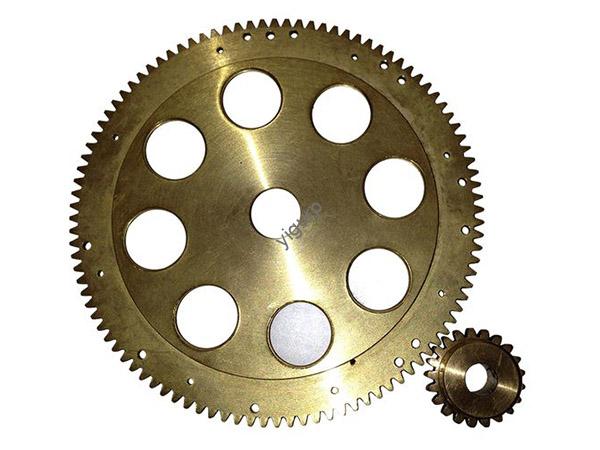
- Engrenagens: Heavy-duty gears for mining equipment or marine propulsion systems use T1—resistência ao desgaste reduces tooth wear by 60% contra. aço carbono, extending gear life to 5+ anos.
- Machine parts: High-temperature components (por exemplo, furnace conveyor rollers) use T1—estabilidade térmica retains strength at 500°C+, avoiding deformation in high-heat environments.
- Equipamento industrial: Cutting blades for metal shredders or recycling machinery use T1—resistência resists impact from metal scraps, and wear resistance extends blade life by 2.5x.
Indústria Automotiva
- Componentes do motor: High-temperature engine parts (por exemplo, valve seats or camshafts) use T1—estabilidade térmica withstands 550°C+ engine heat, and wear resistance reduces component degradation.
- Peças de transmissão: Transmission gears for heavy-duty trucks use T1—resistência à tracção handles torque loads up to 1500 N·m, and fatigue resistance ensures 300,000+ km of use.
- Axles: Heavy-duty trailer axles use T1—yield strength (2000-2200 MPa) resists bending under 30+ ton loads, reducing maintenance downtime by 40%.
- Suspension components: High-stress suspension brackets for off-road vehicles use T1—resistência resists impact from rough terrain, and wear resistance prevents corrosion-related failure.
Other Applications
- Moldes: Hot-forming molds for aluminum or brass use T1—estabilidade térmica retains shape at 450°C+, and wear resistance handles 10,000+ forming cycles.
- Morre: Cold-heading dies for fastener manufacturing use T1—dureza (65-66 CDH) creates precise fastener heads, and wear resistance extends die life by 3x vs. D2 tool steel.
- Punches: High-speed punches for stamping thick steel sheets (por exemplo, 10 milímetros de aço inoxidável) use T1—impact toughness resists chipping, and wear resistance handles 200,000+ stampings.
- Woodworking tools: Industrial woodworking blades for cutting hardwoods (por exemplo, oak or maple) use T1—sharpness retention reduces blade sharpening frequency by 70%, improving production efficiency.
3. Manufacturing Techniques for T1 Tool Steel
Producing T1 requires specialized processes to control its alloy composition (especially tungsten and vanadium) and optimize its heat treatment for red hardness and wear resistance. Here’s the detailed process:
1. Siderurgia
- Forno Elétrico a Arco (EAF): Primary method—scrap steel, tungstênio, cromo, vanádio, and other alloys are melted at 1650-1750°C. Real-time sensors monitor composição química to keep tungsten (17.50-19.00%) e vanádio (1.00-1.50%) within strict ranges—critical for red hardness and wear resistance.
- Vacuum Arc Remelting (VAR): Opcional, for high-purity T1—molten steel is remelted in a vacuum to remove impurities (por exemplo, oxigênio, azoto), improving toughness and reducing tool failure risk.
- Continuous casting: Molten steel is cast into slabs or billets (100-300 mm de espessura) via a continuous caster—fast and consistent, ensuring uniform alloy distribution and minimal internal defects.
2. Hot Working
- Hot rolling: Slabs/billets are heated to 1100-1150°C and rolled into bars, pratos, or tool blanks (por exemplo, 50×50 mm bars for milling cutters). Hot rolling refines grain structure and shapes T1 into standard tool forms, while avoiding tungsten carbide segregation.
- Hot forging: Heated steel (1050-1100°C) is pressed into complex tool shapes (por exemplo, lathe tool blanks or punch heads) using hydraulic presses—improves material density and aligns grain structure, enhancing toughness.
- Extrusão: Heated steel is pushed through a die to create long, uniform shapes (por exemplo, reamer blanks or broach bars)—ideal for high-volume tool production.
- Recozimento: After hot working, steel is heated to 850-900°C for 4-6 horas, slow-cooled to 600°C. Reduces hardness to HB 240-280, making it machinable and relieving internal stress from rolling/forging.
3. Cold Working (Limitado, for Precision)
- Cold drawing: For small-diameter tools (por exemplo, drill bits or small reamers), cold drawing pulls annealed steel through a die at room temperature to reduce diameter and improve dimensional accuracy—enhances surface finish (Rá 0.8 μm) but requires post-drawing annealing to retain machinability.
- Usinagem de precisão: CNC mills or grinders shape annealed T1 into tool blanks (por exemplo, milling cutter bodies or lathe tool holders)—carbide tools are mandatory due to T1’s moderate hardness in annealed state; machining is limited to pre-hardening steps (post-hardening grinding is needed for final precision).
4. Tratamento térmico (Key to T1’s Performance)
- Têmpera: Heated to 1260-1300°C (austenitizing) para 30-60 minutos (longer than low-alloy steels to dissolve tungsten carbides), quenched in oil or air. Hardens T1 to 65-68 HRC—air quenching reduces distortion but lowers hardness slightly (63-65 CDH) for large tools.
- Temperamento: Reheated to 540-580°C for 1-2 horas, air-cooled (repeated 2-3 times). Balances dureza vermelha and toughness—critical for high-speed cutting; avoids over-tempering, which would reduce wear resistance.
- Endurecimento superficial: Opcional, for extreme wear applications—low-temperature nitriding (500-550°C) forms a 5-10 μm nitride layer, boosting wear resistance by 30% (ideal for cutting tools or dies).
- Stress relief annealing: Applied after machining—heated to 600-650°C for 1 hora, slow-cooled. Reduces residual stress from cutting, preventing tool warping during quenching.
5. Tratamento de superfície & Acabamento
- Moagem: Post-heat-treatment grinding with diamond wheels refines tool edges to ±0.001 mm tolerances—ensures sharp, consistent cutting surfaces for precision tools like reamers or broaches.
- Revestimento: Deposição Física de Vapor (PVD) revestimentos (por exemplo, titanium aluminum nitride, TiAlN) are applied to cutting tools—reduces friction, extends tool life by 2.5x, and improves heat dissipation during high-speed cutting.
- Polimento: Precision polishing creates a smooth surface (Rá 0.1 μm) for tools like reamers or dies—reduces material adhesion during cutting/forming, improving part quality.
4. Estudo de caso: T1 Tool Steel in Heavy-Duty Gear Milling
A gear manufacturer used D2 tool steel for milling large industrial gears (4140 liga de aço, 500 mm de diâmetro) but faced two issues: tool wear after 150 gears and high regrinding costs. Switching to T1 delivered transformative results:
- Tool Life Extension: T1’s resistência ao desgaste e dureza vermelha extended tool life to 400 engrenagens (167% longer)—cutting regrinding frequency by 60% and saving $30,000 annually in regrinding costs.
- Production Efficiency: T1’s ability to handle higher cutting speeds (350 m/min vs. 200 m/min for D2) reduced milling time per gear by 43%, increasing production capacity by 75 gears per month.
- Economia de custos: Despite T1’s 40% higher material cost, the manufacturer saved $96,000 annually via longer tool life and faster production—achieving ROI in 3 meses.