
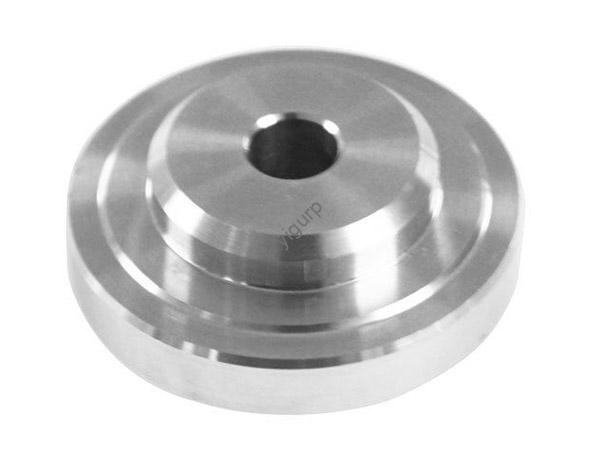
Se você trabalha na fabricação, aeroespacial, ou indústrias automotivas, você precisa de aço para ferramentas que possa lidar com arestas vivas, alto desgaste, e até calor moderado.Aço ferramenta T1 se destaca por sua excepcional resistência ao desgaste e resistência - mas como ele funciona no uso no mundo real? Este guia detalha suas principais propriedades, aplicações comuns, processos de fabricação, e como ele se compara a outros materiais, com estudos de caso práticos para ajudá-lo a decidir se é adequado para suas ferramentas.
1. Propriedades do material central do aço ferramenta T1
A atuação do T1 começa pela sua composição cuidadosamente equilibrada e características únicas. Vamos explorar o que o torna ideal para ferramentas de corte e conformação.
Composição Química
Cada elemento no T1 desempenha um papel na sua resistência e resistência ao desgaste. Aqui estão os componentes críticos e suas faixas padrão da indústria:
- Conteúdo de carbono (0.80 – 0.90%): Cria carbonetos duros (partículas minúsculas) que aumentam a resistência ao desgaste – fundamental para ferramentas de corte.
- Conteúdo de cromo (3.25 – 4.25%): Melhora dureza e ajuda a reter a resistência em temperaturas moderadas.
- Conteúdo de tungstênio (1.50 – 2.00%): Forma carbonetos resistentes que resistem à abrasão (chave para ferramentas que cortam metal).
- Conteúdo de manganês (0.15 – 0.35%): Melhora a temperabilidade sem adicionar fragilidade.
- Conteúdo de silício (0.15 – 0.35%): Aumenta a força e a resistência ao calor.
- Conteúdo de fósforo (≤0,03%) e Conteúdo de enxofre (≤0,03%): Mantido baixo para evitar pontos fracos, especialmente em ferramentas de alto estresse.
Físico & Propriedades Mecânicas
Para facilitar a avaliação, aqui está uma tabela das principais características físicas e mecânicas do T1:
| Tipo de propriedade | Propriedade Específica | Valor típico |
|---|---|---|
| Propriedades Físicas | Densidade | ~7,85g/cm³ |
| Condutividade térmica | ~35 C/(m·K) | |
| Capacidade térmica específica | ~0,48kJ/(kg·K) | |
| Coeficiente de expansão térmica | ~11 x 10⁻⁶/°C | |
| Propriedades magnéticas | Ferromagnético | |
| Propriedades Mecânicas | Resistência à tracção | ~1800 – 2200 MPa |
| Força de rendimento | ~1500 – 1800 MPa | |
| Alongamento | ~10 – 15% | |
| Dureza Rockwell (após tratamento térmico) | 62 – 66 CDH | |
| Força de fadiga | ~700 – 800 MPa | |
| Resistência ao impacto | Moderado a alto |
Outras características principais
Além dos números, T1 oferece benefícios práticos para fabricantes de ferramentas:
- Excelente resistência ao desgaste: Carbonetos em sua estrutura resistem à abrasão, então as ferramentas duram mais (por exemplo, fresas que permanecem afiadas para mais peças).
- Alta dureza a quente: Mantém sua dureza em temperaturas de até 500°C – perfeito para ferramentas de corte que geram calor de fricção.
- Boa resistência: Não lasca facilmente sob pressão repentina (crítico para punções ou ferramentas de estampagem).
- Usinabilidade (bom antes do tratamento térmico): Fácil de moldar em designs de ferramentas personalizados (por exemplo, alargadores especializados) antes de endurecer.
- Soldabilidade (com cautela): Pode ser soldado, mas pré-aquecimento (a 300–400°C) e pós-aquecimento são necessários para evitar rachaduras (devido ao alto teor de carbono).
2. Aplicações no mundo real do aço ferramenta T1
A combinação de resistência ao desgaste e resistência do T1 o torna essencial para ferramentas que moldam ou cortam materiais. Aqui estão seus usos mais comuns, com exemplos de casos.
Ferramentas de corte
Este é o uso principal do T1: ferramentas que cortam metal, madeira, ou plástico:
- Fresas: Usado para esculpir formas em peças de metal (por exemplo, blocos de motor para carros).
- Ferramentas de torneamento: Moldar metal em tornos (por exemplo, fabricação de eixos cilíndricos para motores).
- Broches: Faça furos ou ranhuras precisas (por exemplo, dentes de engrenagem em componentes mecânicos).
- Alargadores: Suavizar e ampliar furos pré-perfurados (por exemplo, furos para parafusos em peças aeroespaciais).
Exemplo de caso: Um EUA. fabricante de ferramentas usou T1 para fabricar fresas para peças automotivas de alumínio. Os cortadores duraram 40% mais longos do que aqueles feitos de aço ferramenta A2, reduzindo os custos de substituição de ferramentas $25,000 por ano para seus clientes.
Ferramentas de formação
T1 também se destaca em ferramentas que moldam materiais sem cortar:
- Socos: Faça furos em chapas de metal (por exemplo, fazendo furos em suportes de aço para móveis).
- Morre: Molde o metal em formas (por exemplo, dobrando aço em canais U para construção).
- Ferramentas de estampagem: Pressione designs em metal (por exemplo, logotipos em painéis de carroceria automotiva).
Indústria aeroespacial
Peças aeroespaciais precisam de ferramentas ultraprecisas. T1 é usado para:
- Componentes de alta resistência: Ferramentas para usinar peças de titânio ou liga de níquel (por exemplo, lâminas de turbina).
- Peças resistentes ao desgaste: Matrizes para formar finas, chapas de aço de alta resistência (por exemplo, componentes da fuselagem de aeronaves).
Indústria Automotiva
Os carros exigem produção em massa, peças consistentes – as ferramentas T1 oferecem:
- Componentes de alta resistência: Ferramentas de corte para peças de motor (por exemplo, cabeças de cilindro) que precisam de tolerâncias rígidas.
- Peças resistentes ao desgaste: Ferramentas de estampagem para fazer dobradiças de portas ou componentes de freio (que precisam durar milhares de peças).
Engenharia Mecânica
Em máquinas em geral, T1 é usado para:
- Engrenagens: Engrenagens de alto desgaste em caixas de engrenagens industriais (por exemplo, sistemas de transporte).
- Eixos: Eixos resistentes ao desgaste para bombas ou motores (por exemplo, bombas de água em fábricas).
- Rolamentos: Componentes que lidam com o atrito (por exemplo, rolamentos em motores elétricos).
3. Técnicas de fabricação para aço ferramenta T1
Transformar T1 bruto em ferramentas utilizáveis requer etapas precisas. Aqui está uma análise dos principais processos.
1. Processos Metalúrgicos (Fusão & Refino)
- Forno Elétrico a Arco (EAF): O método mais comum. A sucata de aço é derretida a 1.600–1.800°C, e ligas (cromo, tungstênio) são adicionados para atingir alvos químicos.
- Forno de oxigênio básico (BOF): Usado para produção em larga escala (100+ lotes de toneladas) para reduzir impurezas como fósforo.
2. Processos Rolantes
Laminação de perfis T1 em formatos padrão para fabricação de ferramentas:
- Laminação a quente: O aço é aquecido a 900–1.100°C e prensado em barras, pratos, ou varas (rápido, econômico para ferramentas grandes, como broches).
- Laminação a frio: Usado para pequenos, peças precisas (por exemplo, lâminas de ferramentas de torneamento finas). O aço é laminado à temperatura ambiente para obter superfícies mais lisas.
3. Tratamento térmico
O tratamento térmico é fundamental para desbloquear a dureza total do T1:
- Recozimento: Aquecido a 800–850°C, mantido por 2–3 horas, então esfriou lentamente. Isso suaviza o aço para usinagem (A dureza Brinell cai para ~200 HB).
- Têmpera: Aquecido a 850–900°C, então rapidamente resfriado em óleo. Isso endurece o aço a 64–66 HRC.
- Temperamento: Aquecido a 150–200°C (baixa temperatura para reter a dureza), então esfriou. Isso reduz a fragilidade enquanto mantém alta dureza (dureza final: 62–66 HRC).
- Recozimento de alívio de tensão: Aquecido a 500–550°C após a usinagem para remover tensões internas (evita empenamento em ferramentas pequenas como alargadores).
4. Tratamento de superfície
Para aumentar o desempenho, As ferramentas T1 geralmente recebem tratamentos de superfície:
- Endurecimento: Tratamento térmico adicional (por exemplo, endurecimento por chama) para bordas de ferramentas para torná-las ainda mais resistentes ao desgaste.
- Nitretação: Um processo químico que adiciona nitrogênio à superfície, criando uma camada superdura (ideal para punções ou ferramentas de estampagem).
- Revestimento (por exemplo, PVD, DCV): A deposição física ou química de vapor adiciona uma camada fina (por exemplo, nitreto de titânio) que reduz o atrito - fazendo com que as ferramentas de corte permaneçam afiadas por mais tempo.
5. Controle de qualidade
Nenhuma ferramenta T1 sai da fábrica sem testes rigorosos:
- Teste de dureza: Testes Rockwell C para confirmar 62–66 HRC (crítico para ferramentas de corte).
- Análise microestrutural: Verifica a distribuição uniforme de metal duro (evita pontos fracos que causam lascas).
- Inspeção dimensional: Usa scanners a laser ou máquinas de medição por coordenadas (CMM) para garantir que as ferramentas correspondam às especificações do projeto (por exemplo, diâmetro do cortador ou formato do punção).
4. Aço ferramenta T1 vs.. Outros materiais: Uma análise comparativa
Como o T1 se compara a outros aços para ferramentas, aços inoxidáveis, ou compostos? Aqui está uma comparação lado a lado.
| Material | Custo (contra. T1) | Dureza Rockwell | Resistência ao desgaste | Dureza Quente (a 500°C) | Melhor para |
|---|---|---|---|---|---|
| Aço ferramenta T1 | Base (100%) | 62–66 HRC | Excelente | Alto (retém 58+ CDH) | Fresas, socos |
| Aço ferramenta A2 | 80% | 58–62 HRC | Bom | Moderado (retém 50 CDH) | Ferramentas de estampagem a frio |
| Aço ferramenta D2 | 90% | 59–63 HRC | Excelente | Moderado (retém 52 CDH) | Ferramentas de corte a frio |
| Aço ferramenta M2 | 150% | 63–65 HRC | Excelente | Muito alto (retém 60 CDH) | Ferramentas de corte de alta velocidade |
| 440Aço inoxidável C | 85% | 58–60 HRC | Bom | Baixo (retém 45 CDH) | Ferramentas resistentes à corrosão |
| Liga de titânio (Ti-6Al-4V) | 600% | 30–35 HRC | Moderado | Baixo (retém 25 CDH) | Peças leves (não ferramentas) |
Principais conclusões:
- contra. A2/D2: T1 é mais difícil (62–66 HRC contra. 58–63 HRC) e tem melhor dureza a quente - ideal para ferramentas que geram calor.
- contra. M2: T1 é mais barato (por 33%) e quase tão difícil, mas M2 tem melhor dureza a quente (para corte em alta velocidade).
- contra. 440C/Titânio: T1 é muito mais duro e resistente ao desgaste – esses materiais são melhores para peças leves ou propensas à corrosão, não ferramentas.
5. Visão de especialista: Tecnologia Yigu em aço ferramenta T1
NoTecnologia Yigu, fornecemos aço ferramenta T1 para 300+ clientes na fabricação automotiva e aeroespacial. O que torna o T1 uma escolha preferida? Seu equilíbrio imbatível entre resistência ao desgaste e custo. Para clientes que fabricam ferramentas de corte de velocidade média (por exemplo, ferramentas de torneamento para peças de aço), O T1 supera os aços mais baratos como o A2 e custa menos que o M2 de alta qualidade. Freqüentemente adicionamos revestimentos PVD às ferramentas T1 para prolongar ainda mais sua vida útil – nossas fresas revestidas T1 duram até 50% mais longo. Para a maioria das ferramentas de corte e conformação de uso geral, T1 continua sendo nosso material mais recomendado.
Perguntas frequentes sobre aço ferramenta T1
- O aço ferramenta T1 pode ser usado para cortar madeira ou plástico?
Sim, mas é um exagero. T1 foi projetado para materiais duros como metal – ferramentas de corte de madeira/plástico podem usar aços mais baratos (por exemplo, aço rápido) sem perder desempenho. - Qual é a temperatura máxima que T1 pode suportar antes de perder dureza?
T1 mantém toda a sua dureza (62+ CDH) até ~500°C. Acima disso, a dureza cai lentamente – por isso não é ideal para ferramentas que atingem 600°C+ (por exemplo, matrizes de forjamento a quente). - O aço ferramenta T1 é reciclável?
Sim! Como a maioria dos aços para ferramentas, T1 pode ser derretido e reutilizado em novas ferramentas. Isso reduz o desperdício e os custos – a Yigu Technology oferece até um programa de reciclagem para ferramentas T1 antigas para ajudar os clientes a reduzir despesas.