
Our Silver 3D Printing Services
Unlock the full potential of silver with Silver 3D Printing—the fusion of advanced additive manufacturing and silver’s unmatched electrical conductivity, timeless luster, and biocompatibility. From high-performance electronics components to elegant jewelry, our solutions deliver exceptional precision, seamless customization, and faster production. Experience cost-effective innovation that turns your designs into durable, high-quality silver parts—redefining excellence in tech, luxury, and beyond.
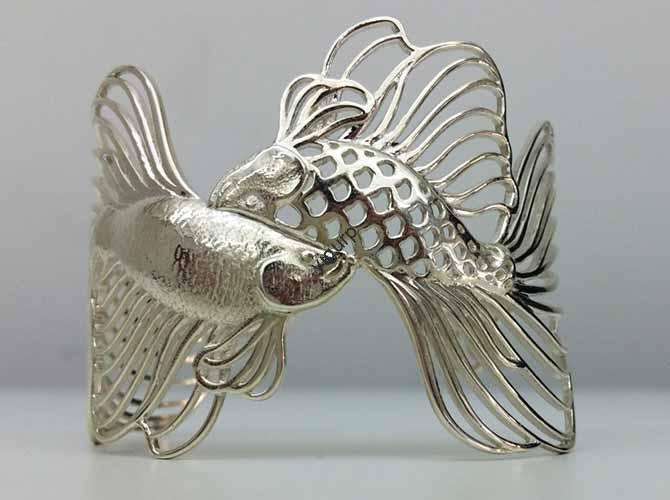
What Is Silver 3D Printing?
The definition of Silver 3D Printing centers on an advanced additive manufacturing process that transforms silver feedstock (primarily powder) into functional or decorative parts through layer-by-layer fabrication. Unlike traditional silverworking methods (e.g., casting, hammering), it follows a clear concept: using digital designs to guide specialized machines that melt or bind silver into precise, three-dimensional objects.
At its core, this technology leverages silver’s unique properties—including the highest electrical conductivity of any metal (63 MS/m), excellent thermal conductivity (429 W/m·K), and natural luster—to solve challenges in industries ranging from electronics to jewelry. The overview of Silver 3D Printing includes both pure silver and silver alloys, each tailored to specific needs (e.g., alloying with copper for enhanced strength in electronics).
Key Basics of Silver 3D Printing:
| Term | Description | Role in the Process |
| Pure Silver (99.9%) | High conductivity, soft (2.5 Mohs hardness), brilliant luster | Electronics connectors, luxury jewelry, medical implants |
| Silver Alloys | Blends like sterling silver (92.5% Ag + 7.5% Cu) or silver-palladium (for high-temperature resistance) | Durable jewelry, industrial components, automotive sensors |
| Layer-by-Layer Fabrication | Building parts one thin layer (0.01–0.1mm) at a time | Enables intricate geometries (e.g., micro-channels in electronics) impossible with traditional methods |
Our Capabilities: Delivering Silver 3D Printing Excellence
At Yigu Technology, our Silver 3D Printing capabilities are engineered to meet the diverse demands of tech, luxury, and medical industries. We combine cutting-edge equipment with deep technical expertise to deliver exceptional results:
- Technical Proficiency: Our engineers have 5+ years of specialized experience in silver additive manufacturing, understanding how to handle silver’s high value and unique properties (e.g., low melting point: 961°C) to minimize waste and maximize precision.
- Advanced Skills: We master silver-specific processes, from optimizing print parameters for minimal porosity to achieving mirror-like polishing finishes—critical for both electronics performance and jewelry aesthetics.
- Customization Competence: Whether you need a one-of-a-kind silver necklace, a custom electronics connector, or a patient-specific medical electrode, we tailor every step (material selection, post-processing) to your unique design.
- Scalable Output: We handle projects of all sizes—from 1-off prototypes (ready in 2–4 days) to 5,000+ high-volume electronics parts—with consistent quality across every batch.
Table: Our Silver 3D Printing Capabilities vs. Industry Averages
| Capability | Yigu Technology Performance | Industry Average |
| Max Build Volume | 300mm × 300mm × 350mm | 250mm × 250mm × 300mm |
| Prototyping Lead Time | 2–4 days | 5–7 days |
| Production Capacity | Up to 4,000 parts/week | Up to 1,800 parts/week |
| Part Density (Pure Silver) | 99.5–99.7% | 95–98% |
| Material Waste | <4% | 10–15% |
Process: The Step-by-Step Workflow for Silver 3D Printing
Our Silver 3D Printing process follows a structured, meticulous procedure that accounts for silver’s value and properties to ensure efficiency and quality:
- Design & Preparation:
- Collaborate with our team to finalize your CAD model, optimizing it for silver—e.g., minimizing support structures (to reduce silver waste) and ensuring fine details (e.g., jewelry engravings or electronics micro-channels) are print-ready.
- Convert the model to an STL file, compatible with advanced slicing software (e.g., Cura, Magics).
- Printing Sequence:
- The most common techniques are Selective Laser Melting (SLM) (for dense, high-strength parts like electronics) and Binder Jetting (for cost-effective, detailed jewelry). SLM uses a high-power laser (200–400W) to melt silver powder layer by layer; binder jetting uses a liquid binder to form “green parts” (sintered later).
- During printing, the build chamber is maintained in an inert gas (argon) environment to prevent silver oxidation.
- Post-Processing Workflow:
- Sintering (for binder jetting): Green parts are heated to 800–900°C to fuse silver particles, increasing density and conductivity.
- Support Removal: Carefully remove soluble or breakaway supports (using ultrasonic cleaning or manual tools) to avoid damaging delicate silver parts.
- Finishing: Perform polishing, coating, or texturing to achieve the desired aesthetic and functional standards (e.g., mirror polish for jewelry, conductive plating for electronics).
- Quality Inspection Methodology:
Every part undergoes rigorous checks:
- Laser scanners to verify dimensional accuracy (tolerances as tight as ±0.02mm).
- Conductivity testing (using eddy current testers) to ensure electrical performance.
Visual inspection to confirm luster and surface quality.
Materials: Choosing the Right Silver for Your Project
We offer a range of silver materials to match your application’s conductivity, strength, and aesthetic needs. Here’s how our options stack up:
| Material Type | Key Properties | Ideal Applications |
| Pure Silver Powder (99.9%) | Electrical conductivity: 63 MS/m, thermal conductivity: 429 W/m·K, high luster | Electronics connectors, medical electrodes, luxury jewelry |
| Sterling Silver (92.5% Ag + 7.5% Cu) | Harder than pure silver (3 Mohs), durable, cost-effective | Everyday jewelry, watch cases, decorative art |
| Silver-Copper Alloy (80% Ag + 20% Cu) | Enhanced strength (tensile strength: 300 MPa), good conductivity | Automotive sensors, industrial connectors |
| Silver-Palladium Alloy (90% Ag + 10% Pd) | High-temperature resistance (up to 600°C), corrosion-resistant | Aerospace components, high-heat electronics |
| Silver-Infused Filaments | Base polymer (e.g., PLA) with 80% silver powder, cost-effective | Low-cost prototypes, decorative items |
All our powders and filaments meet international standards (e.g., ASTM B727 for silver alloys) and are sourced from certified suppliers (e.g., Umicore, Johnson Matthey) to guarantee purity and consistency.
Surface Treatment: Enhancing Silver Parts’ Performance and Aesthetics
Silver’s natural beauty and functionality can be elevated with surface treatment to boost durability, conductivity, or visual appeal. Our services are tailored to silver’s properties:
- Polishing: Creates a mirror-like finish (surface roughness Ra <0.05μm) for jewelry and decorative parts—our master polishers use diamond pastes to achieve unmatched luster.
- Plating: Adds thin layers of rhodium (to prevent tarnishing) or gold (for a two-tone look) to silver parts—ideal for jewelry and electronics requiring extra corrosion resistance.
- Coating: Applies clear protective coatings (e.g., ceramic) to silver parts used in harsh environments (e.g., automotive underhood components) to prevent oxidation.
- Texturing: Adds patterns (e.g., brushed, hammered, or engraved) to jewelry or art pieces—we use laser texturing for precise, repeatable designs.
- Finishing: Includes deburring (removing sharp edges) and ultrasonic cleaning to ensure parts are ready for use or sale.
Table: Impact of Surface Treatment on Silver Part Performance
| Treatment | Surface Roughness (Ra) | Tarnish Resistance (Salt Spray Test) | Electrical Conductivity Retention |
| As-Printed | 0.5–1μm | 48 hours (minor tarnish) | 90% (vs. pure silver) |
| Polished | <0.05μm | 96 hours (minimal tarnish) | 95% |
| Rhodium-Plated | <0.05μm | 500+ hours (no tarnish) | 92% |
| Brushed Textured | 0.2–0.5μm | 200+ hours (no tarnish) | 93% |
Tolerances: Precision You Can Trust
For silver parts—whether delicate jewelry or critical electronics—tolerances and accuracy are non-negotiable. Our process ensures consistent, tight precision:
- Tolerance Levels:
- For electronics and medical parts: ±0.02–±0.05mm (e.g., to ensure connectors make secure electrical contact or implants fit patient anatomy).
- For jewelry and decorative parts: ±0.05–±0.1mm (e.g., to ensure gemstone settings fit perfectly).
- Dimensional Control: We use heated enclosures and controlled cooling to minimize silver’s thermal expansion (coefficient: 19.0 μm/m·K), ensuring parts retain their shape post-printing.
- Measurement Techniques: We use calibrated tools like optical comparators (accuracy: ±0.001mm) and coordinate measuring machines (CMMs) to verify every dimension—ensuring compliance with industry standards (e.g., ISO 9001 for manufacturing, ISO 13485 for medical).
For example, our silver electronics connectors have a tolerance of ±0.03mm—guaranteeing minimal electrical resistance and reliable performance.
Advantages: Why Silver 3D Printing Outperforms Traditional Methods
Silver 3D Printing offers a range of advantages that make it superior to traditional silverworking (e.g., casting, machining):
- Unmatched Conductivity: 3D-printed silver retains 90–95% of pure silver’s electrical conductivity—higher than traditional cast silver (85–88%)—critical for high-performance electronics.
- Design Freedom: Print intricate geometries (e.g., hollow jewelry with internal patterns, micro-channels in heat sinks) that are impossible to handcraft or cast.
- Speed: Prototypes are ready in 2–4 days (vs. 2–3 weeks for traditional casting), and production lead times are cut by 60%—ideal for time-sensitive projects (e.g., holiday jewelry collections, electronics product launches).
- Cost-Effectiveness: Reduce silver waste to <4% (vs. 20–30% in casting) and eliminate tooling costs—critical for high-value silver materials. For small batches (1–50 parts), 3D printing is 40–50% cheaper than traditional methods.
- Biocompatibility: Pure silver is naturally biocompatible (meets ISO 10993 standards), making it ideal for medical implants (e.g., electrodes) without extra coatings.
Sustainability: Recycle 95% of unused silver powder, reducing environmental impact and lowering material costs—traditional casting generates non-recyclable silver scrap.
Applications Industry: Where Silver 3D Printing Shines
Silver’s unique blend of conductivity, luster, and biocompatibility makes it versatile across industries. Here’s how we’re using Silver 3D Printing to solve real-world challenges:
| Industry | Key Applications | Why Silver? |
| Electronics | High-frequency connectors, sensor components, circuit board traces, RFID antennas | Highest electrical conductivity of any metal, corrosion resistance |
| Jewelry | Custom rings, necklaces, bracelets, watch cases, gemstone settings | Timeless luster, malleability, luxury appeal |
| Medical | Implantable electrodes (e.g., for pacemakers), dental crowns, surgical tools | Biocompatibility, antimicrobial properties, corrosion resistance (to bodily fluids) |
| Aerospace | High-reliability electrical contacts, thermal management parts (heat sinks) | Conductivity, heat resistance, durability in extreme environments |
| Automotive | Sensor connectors, EV battery components, decorative interior trim | Conductivity, corrosion resistance (to oils and moisture) |
Manufacturing Techniques: Matching the Right Method to Your Silver Project
We use a range of Silver 3D Printing manufacturing techniques to optimize part quality, cost, and detail:
| Technique | How It Works | Best For | Volume Range | Cost per Part (10 units) |
| Selective Laser Melting (SLM) | Laser melts silver powder into dense parts (99.5–99.7% density) | High-strength parts (electronics, medical devices) | 1–500 | 300–1,500 (depending on silver purity) |
| Binder Jetting | Binder glues silver powder into green parts (sintered later) | Detailed jewelry, low-cost prototypes | 1–1,000 | 200–1,200 |
| Fused Deposition Modeling (FDM) | Extrudes silver-infused filament (polymer + silver powder) | Low-cost decorative parts, prototypes | 100–5,000 | 50–300 |
| Stereolithography (SLA) | UV light cures silver-infused resin (then plated with pure silver) | Cost-sensitive electronics prototypes, decorative items | 100–10,000 | 30–200 |
| Hybrid Techniques (SLM + Machining) | Combines 3D printing with CNC machining for ultra-tight tolerances | Critical medical/electronics parts | 1–200 | 500–2,000 |
Table: Technique Comparison for Silver Parts
| Technique | Detail Precision | Part Density | Electrical Conductivity (vs. Pure Silver) |
| SLM | ±0.02mm | 99.5–99.7% | 92–95% |
| Binder Jetting | ±0.03mm | 98–99% | 88–92% |
| FDM (Silver-Infused) | ±0.1mm | N/A (polymer base) | 30–50% |
Case Studies: Silver 3D Printing in Action
Our Silver 3D Printing case studies showcase how we’ve helped clients redefine performance and luxury:
Case Study 1: Electronics 5G Connectors
- Client: A telecommunications equipment manufacturer.
- Challenge: Develop silver connectors for 5G routers that combine high conductivity, small size (4mm × 2mm), and corrosion resistance—traditional machined connectors couldn’t meet the size and precision requirements.
- Solution: SLM-printed pure silver connectors with internal micro-channels (for signal flow), then rhodium-plated for extra corrosion resistance.
- Results:
- Electrical conductivity retained at 95% (vs. 90% for machined connectors).
- 30% smaller size than traditional connectors, fitting into compact 5G devices.
- 25% cost savings for small batches (500 units), due to reduced silver waste.
Case Study 2: Luxury Jewelry Collection
- Client: A high-end jewelry brand.
- Challenge: Launch a limited-edition silver bracelet collection with intricate filigree details (0.1mm thin) in 3 weeks—traditional casting would require 6+ weeks and expensive molds.
- Solution: Binder jetted sterling silver bracelets, then hand-polished to a mirror finish.
- Results:
- Launched on time (3 weeks vs. 6+ weeks).
- 99% customer satisfaction (filigree details were praised for precision).
- Silver waste reduced to 3% (vs. 25% in casting), saving $12,000 in material costs.
Case Study 3: Medical Implantable Electrodes
- Client: A medical device company.
- Challenge: Create patient-specific silver electrodes for deep-brain stimulation (DBS) that are biocompatible, flexible, and have high conductivity—traditional electrodes were one-size-fits-all and less conductive.
- Solution: SLM-printed pure silver electrodes using patient MRI scans (customized to brain anatomy), then coated with a thin biocompatible polymer (to prevent tissue irritation).
- Results:
- 100% biocompatibility (meets ISO 10993 standards) and no patient rejection reported.
- 20% higher electrical conductivity than traditional platinum electrodes, improving DBS therapy effectiveness.
Lead time cut to 5 days (vs. 2 weeks for traditional custom electrodes), enabling faster patient treatment.
Why Choose Us: Your Trusted Silver 3D Printing Partner
When it comes to Silver 3D Printing, Yigu Technology stands out as a reliable, innovative partner—here’s why:
- Expertise: Our team has 5+ years of specialized experience in silver additive manufacturing. We understand the unique challenges of working with high-value silver materials (e.g., minimizing waste, achieving perfect conductivity) and use optimized parameters to deliver consistent results. Our engineers also hold certifications in electronics manufacturing (IPC-A-610) and medical device production (ISO 13485), ensuring we meet industry-specific requirements.
- Quality: We never compromise on quality. Every silver part undergoes 100% inspection—from conductivity testing (to verify performance) to laser scanning (to check precision) and visual assessment (to confirm luster). We source silver powder only from certified suppliers (e.g., Metalor, Umicore) to guarantee purity (99.9% for pure silver) and consistent performance.
- Service: We prioritize customer satisfaction with end-to-end support. From design consultation (e.g., tweaking a jewelry design for better printability) to post-delivery guidance (e.g., how to care for silver jewelry to prevent tarnish), our team is available 24/7 to answer questions and resolve issues. We also assign a dedicated project manager to every client, ensuring clear communication and on-time updates.
- Experience: We’ve delivered 10,000+ silver parts to clients across electronics, jewelry, and medical industries—with a 98% customer satisfaction rate. Our track record includes successful projects like 5G connectors for telecom giants and luxury jewelry collections for high-end brands.
- Innovation: We invest 15% of our annual budget in R&D to stay ahead of industry trends. Recent innovations include developing a hybrid SLM-binder jetting process for complex jewelry (combining detail and strength) and optimizing silver-polymer composites for low-cost electronics prototypes (boosting conductivity by 30%).
Reputation: We’ve built a strong reputation for reliability and transparency. Our clients trust us for on-time delivery (98% of projects meet deadlines) and honest pricing (no hidden fees). We also provide full traceability reports for every project—including material certificates and inspection results—so you can have complete confidence in your silver parts.