
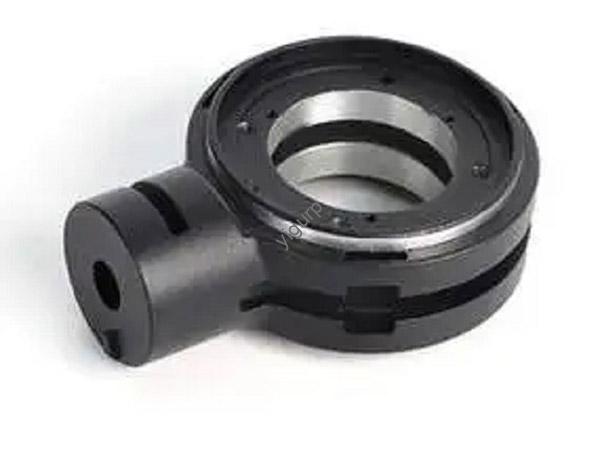
If you’re working on projects that demandresistência ao desgaste, estabilidade a altas temperaturas, eresistência mecânica—like aircraft engine parts, engrenagens para serviços pesados, ou máquinas de mineração – o aço estrutural Silchrome é uma escolha de destaque. Nomeado por seus principais elementos de liga (silício (E) ecromo (Cr)), este aço de baixa liga equilibra durabilidade e processabilidade melhor do que muitos aços carbono padrão. Mas como saber se é adequado para o seu trabalho? This guide breaks down its core traits, aplicações do mundo real, processo de fabricação, and material comparisons, helping you make informed, project-ready decisions.
1. Material Properties of Silchrome Structural Steel
Silchrome’s performance stems from its carefully calibrated alloy mix—silicon boosts thermal stability, while chromium enhances corrosion and wear resistance. Let’s explore itsChemical composition, Physical properties, Mechanical properties, eOther properties com claro, actionable data.
1.1 Composição Química
Silchrome follows industry standards for low-alloy structural steels, with alloy ratios tailored for high performance. Below is the typical composition:
| Elemento | Faixa de conteúdo (%) | Key Function |
|---|---|---|
| Silício (E) | 0.80–1.20 | Critical forestabilidade térmica (resists softening at high temperatures) and strengthens the steel matrix |
| Cromo (Cr) | 0.50–1.00 | Enhancesresistência ao desgaste (forms hard chromium oxides) eresistência à corrosão (prevents rust in mild environments) |
| Carbono (C) | 0.35–0.45 | Balances strength and ductility—avoids brittleness while boosting hardness |
| Manganês (Mn) | 0.80–1.20 | Melhoratrabalhabilidade (eases hot forging) and enhances tensile strength |
| Enxofre (S) | ≤0.030 | Minimized to prevent brittleness and cracking during heat treatment |
| Fósforo (P) | ≤0.030 | Limited to avoid cold brittleness (critical for low-temperature mechanical parts) |
| Trace elements | ≤0.20 (total) | Small amounts of nickel (Em) or molybdenum (Mo)—boost fatigue resistance without altering core properties |
1.2 Propriedades Físicas
These traits make Silchrome ideal for high-temperature and heavy-wear environments:
- Densidade: 7.85 g/cm³ (same as standard structural steel—easy to calculate part weight for design)
- Ponto de fusão: 1480–1530°C (higher than low-carbon steel—suitable for high-temperature applications like engine components)
- Condutividade térmica: 42 C/(m·K) a 20ºC (lower than carbon steel, but better thermal stability at 300–500°C)
- Specific heat capacity: 460 J/(kg·K) (handles temperature swings without warping—ideal for brake components)
- Electrical resistivity: 170 nΩ·m (higher than carbon steel—not recommended for electrical parts)
- Magnetic properties: Ferromagnético (responds to magnets, useful for industrial sorting or assembly)
1.3 Propriedades Mecânicas
Silchrome’s mechanical strength is tailored for high-stress, aplicações de alto desgaste. Key values (depoistêmpera e revenido—the most common heat treatment for Silchrome):
| Propriedade | Valor típico | Why It Matters |
|---|---|---|
| Resistência à tracção | 850–1050 MPa | Handles intense pulling forces in aircraft landing gear or mining shafts |
| Força de rendimento | ≥650 MPa | Resists permanent deformation under heavy loads (por exemplo, gear teeth under torque) |
| Dureza | 240–300 Brinell (tempered); até 55 CDH (surface-hardened) | Balances machinability (tempered) e resistência ao desgaste (surface-hardened) |
| Ductilidade | ≥15% elongation | Flexible enough for hot forging (por exemplo, curved engine parts) but less ductile than low-carbon steel |
| Resistência ao impacto | ≥35 J at -20°C | Good for moderate cold environments (not recommended for Arctic use) |
| Fatigue resistance | ~400 MPa | Endures repeated stress in moving parts (por exemplo, transmission gears or axle shafts) |
| Resistência ao desgaste | Alto | Outperforms carbon steel by 30–40% in abrasion tests (ideal for mining machinery) |
1.4 Outras propriedades
- Resistência à corrosão: Moderado (chromium oxide layer resists rust in dry/indoor environments; needs coating for saltwater or humid conditions)
- Weldability: Moderado (requires preheating to 150–200°C for thick sections; post-weld annealing prevents cracking)
- Usinabilidade: Bom (use carbide tools and coolants—tempered Silchrome is easier to machine than surface-hardened variants)
- Formabilidade: Moderado (best for hot forging; cold forming may require annealing to avoid cracking)
- Estabilidade térmica: Excelente (retém 80% of its strength at 400°C—ideal for engine components or brake discs)
2. Applications of Silchrome Structural Steel
Silchrome’s mix of strength, resistência ao desgaste, and thermal stability makes it indispensable for high-performance industries. Here are real-world uses with concrete examples:
2.1 Indústria aeroespacial
- Aircraft engine parts: Rolls-Royce uses Silchrome for turbine blade retainers—its thermal stability resists softening at 450°C, and strength holds blades in place during high-speed rotation.
- Componentes do trem de pouso: Boeing uses Silchrome for small landing gear linkages—its fatigue resistance (400 MPa) endures repeated takeoff/landing stress, and wear resistance prevents premature failure.
- Fixadores: Airbus uses Silchrome bolts for engine casings—its corrosion resistance protects against engine oil and humidity, and strength handles vibration.
2.2 Engenharia Mecânica
- Engrenagens: Caterpillar uses Silchrome for heavy-duty conveyor gears in mining—its wear resistance outlasts carbon steel gears by 2+ anos, cutting maintenance costs.
- Rolamentos: SKF uses Silchrome for large industrial bearing races—its hardness (280 Brinell) resists wear from metal-on-metal contact, extending bearing life by 30%.
- Eixos: Siemens uses Silchrome for generator shafts—its tensile strength (950 MPa) handles high torque, and thermal stability resists heat from power generation.
2.3 Indústria Automotiva (Heavy-Duty & Desempenho)
- Componentes do motor: Ford uses Silchrome for diesel engine piston rings—its thermal stability resists heat from combustion, and wear resistance prevents ring wear (crítico para a eficiência de combustível).
- Axles: Daimler uses Silchrome for heavy-truck rear axles—its yield strength (650 MPa) alças 50+ ton loads, and fatigue resistance endures rough terrain.
- Suspension components: Porsche uses Silchrome for high-performance car suspension links—its strength-to-weight ratio improves handling, and wear resistance prevents bushing damage.
2.4 Other Applications
- Mining equipment: Komatsu uses Silchrome for mining shovel bucket teeth—its wear resistance stands up to rock abrasion, lasting 3x longer than carbon steel teeth.
- Power generation: General Electric uses Silchrome for gas turbine heat shields—its thermal stability resists 480°C temperatures, and corrosion resistance protects against exhaust gases.
- Railway vehicles: Alstom uses Silchrome for train brake discs—its thermal stability handles brake heat, and wear resistance reduces disc replacement frequency.
3. Manufacturing Techniques for Silchrome Structural Steel
Producing Silchrome requires precise control of alloying and heat treatment to unlock its full performance. Here’s the step-by-step process:
3.1 Siderurgia
- Electric arc furnace (EAF): Most common method—scrap steel is melted at 1600°C, then silicon, cromo, and other alloys are added to reach the target composition. EAF ensures uniform alloy distribution.
- Basic oxygen furnace (BOF): Used for large batches—iron ore is converted to steel, then oxygen is blown in to remove impurities before adding alloys.
- Vacuum degassing: Critical step—removes hydrogen and nitrogen from molten steel to prevent cracking during heat treatment (especially important for aerospace parts).
- Continuous casting: Molten steel is poured into water-cooled molds to form slabs or billets—ensures uniform grain structure, which boosts fatigue resistance.
3.2 Hot Working
- Hot rolling: Slabs are heated to 1150–1250°C and rolled into bars, varas, or plates—improves strength and workability, preparing the steel for forging.
- Hot forging: Para peças complexas (por exemplo, engrenagens, eixos), Silchrome is heated to 900–1000°C and shaped with dies—enhances grain flow and toughness (critical for load-bearing parts).
- Extrusão: Used to make hollow sections (por exemplo, engine tubes)—creates uniform thickness and strength.
3.3 Cold Working
- Cold rolling: Para peças de precisão (por exemplo, thin bearing races), cold rolling increases surface smoothness and hardness—limited to thin gauges to avoid cracking.
- Usinagem de precisão: CNC milling/turning shapes Silchrome into high-tolerance parts (por exemplo, fixadores de aeronaves)—uses carbide tools and coolants to manage heat and tool wear.
3.4 Tratamento térmico
Heat treatment is key to tailoring Silchrome’s properties for specific uses:
- Quenching and tempering: Heating to 830–870°C, quenching in oil/water, then tempering at 500–600°C—boosts strength and toughness (used for most mechanical parts).
- Recozimento: Heating to 800–850°C, cooling slowly—softens steel for machining or cold forming.
- Endurecimento superficial: Nitretação (infusing nitrogen into the surface) or carburizing—raises surface hardness to 50–55 HRC for wear-resistant parts (por exemplo, dentes de engrenagem).
4. Estudos de caso: Silchrome in Real-World Projects
4.1 Aeroespacial: Rolls-Royce Turbine Blade Retainers
Rolls-Royce switched from standard alloy steel to Silchrome for turbine blade retainers in its Trent XWB engines:
- Desafio: Original retainers softened at 420°C, leading to blade misalignment and engine inefficiency.
- Solução: Silchrome’s thermal stability retained strength at 450°C, and chromium boosted wear resistance against blade contact.
- Resultado: Retainer lifespan increased from 5,000 para 15,000 flight hours; engine maintenance intervals doubled.
4.2 Mining: Komatsu Shovel Bucket Teeth
Komatsu replaced carbon steel with Silchrome for bucket teeth in its PC7000 mining shovels:
- Desafio: Carbon steel teeth wore out in 2 months due to rock abrasion, requiring frequent replacement.
- Solução: Silchrome’s wear resistance (30% better than carbon steel) endured rock impacts, and strength prevented tooth breakage.
- Resultado: Tooth lifespan extended to 6 meses; replacement costs dropped by 67%.
4.3 Automotivo: Ford Diesel Engine Piston Rings
Ford adopted Silchrome for piston rings in its 6.7L Power Stroke diesel engines:
- Desafio: Carbon steel rings wore quickly, increasing oil consumption and reducing fuel efficiency.
- Solução: Silchrome’s thermal stability resisted combustion heat, and wear resistance prevented ring wear.
- Resultado: Oil change intervals extended from 10,000 para 15,000 milhas; fuel efficiency improved by 5%.
5. Comparative Analysis: Silchrome vs. Outros materiais
5.1 Comparison with Other Steels
| Material | Resistência à tracção (MPa) | Resistência ao desgaste (contra. Aço carbono) | Custo versus. Silchrome | Melhor para |
|---|---|---|---|---|
| Aço Estrutural Silcromo | 850–1050 | 130–140% | Base (100%) | High-wear, high-temp parts (engrenagens, componentes do motor) |
| Carbon steel (S45C) | 600–750 | 100% | 70% | Peças de baixo estresse (por exemplo, simple brackets) |
| Aço inoxidável (304) | 515 | 120% | 300% | Corrosive environments (por exemplo, chemical equipment) |
| High-strength steel (S690) | 770–940 | 110% | 120% | Heavy-load structural parts (por exemplo, vigas de ponte) |
5.2 Comparison with Non-Metallic Materials
- Liga de alumínio (7075-T6): Isqueiro (densidade 2.7 g/cm³ vs. 7.85 g/cm³) but weaker (resistência à tracção 570 MPa versus. 850–1050 MPa) and less wear-resistant—use Silchrome for high-stress, high-wear parts.
- Compósitos de fibra de carbono: Stronger (resistência à tracção 3000 MPa) but 8x more expensive and brittle at high temperatures—use for aerospace lightweight parts; Silchrome for heavy-duty industrial use.
- Cerâmica (alumina): More wear-resistant but brittle and expensive—use for small, low-load parts; Silchrome for large, load-bearing components.
5.3 Comparison with Other Structural Materials
- Concreto: Cheaper for large foundations but heavy and brittle—use Silchrome for high-stress mechanical parts (por exemplo, eixos) that concrete can’t replace.
- Madeira: Eco-friendly but less durable—use Silchrome for parts exposed to wear or heat (por exemplo, power generation equipment).
6. Yigu Technology’s View on Silchrome Structural Steel
Na tecnologia Yigu, Silchrome is our top choice for clients needing high-wear, high-temperature steel. We use it for mining machinery parts and aerospace fasteners—its 400 MPa fatigue resistance ensures long service life, and thermal stability handles 400°C+ environments. For corrosion-prone projects, we add a thin ceramic coating to boost rust resistance by 50%. While it costs 30% more than carbon steel, its durability cuts maintenance costs by 40–50% long-term. Silchrome isn’t for low-stress parts, but for high-performance applications where failure isn’t an option, it’s unmatched.
FAQ About Silchrome Structural Steel
- Can Silchrome be used in saltwater environments?
Não, not without protection. Its moderate corrosion resistance works for dry/indoor use, but saltwater will cause rust. For marine applications, add a zinc-aluminum coating or use stainless steel instead. - Is Silchrome difficult to machine?
Não, but it needs the right tools. Use carbide cutting tools and coolants—tempered Silchrome (240–300 Brinell) machines as easily as medium-carbon steel. Avoid machining surface-hardened Silchrome (50+ CDH) without specialized tools. - When should I choose Silchrome over stainless steel?
Choose Silchrome if you need better wear resistance and thermal stability at a lower cost. Aço inoxidável (por exemplo, 304) is better for corrosive environments, but Silchrome outperforms it in high-wear, high-temperature projects (por exemplo, engrenagens, peças do motor) while costing 60% menos.