
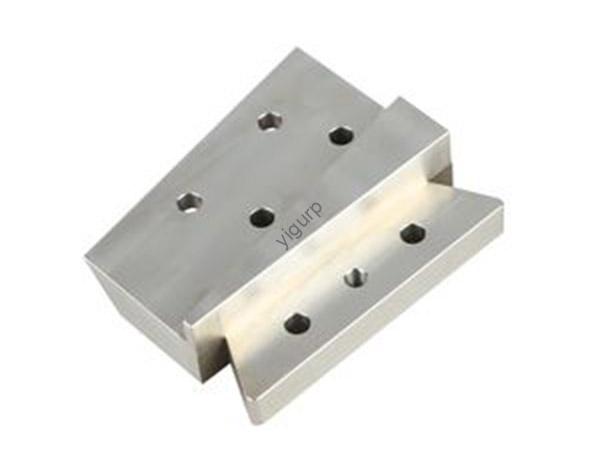
Se você está em engenharia mecânica, automotivo, ou fabricação, O aço estrutural S45C é um material básico. Como um aço de médio carbono, equilibra a força, usinabilidade, e acessibilidade - mas como isso funciona para o seu projeto? Este guia detalha suas principais características, aplicações do mundo real, etapas de fabricação, e como ele se compara a outros materiais, para que você possa tomar decisões inteligentes.
1. Material Properties of S45C Steel
S45C’s popularity comes from its well-rounded properties. Vamos explorar seucomposição química, propriedades físicas, propriedades mecânicas, e outras características críticas.
1.1 Composição Química
S45C is defined by its medium carbon content (per JIS G4051 standards). Below is the typical element range:
| Elemento | Símbolo | Conteúdo Máximo/Típico (%) | Função principal |
|---|---|---|---|
| Carbono (C) | C | 0.42–0.48 | Main driver of strength and hardness |
| Manganês (Mn) | Mn | 0.60–0,90 | Improves tensile strength and workability |
| Silício (E) | E | 0.15–0,35 | Melhora a resistência ao calor durante o processamento |
| Enxofre (S) | S | ≤0.030 | Minimizado para evitar fragilidade |
| Fósforo (P) | P | ≤0.030 | Limitado para evitar rachaduras a frio |
| Cromo (Cr) | Cr | ≤0.20 | Trace amount for minor corrosion resistance |
| Níquel (Em) | Em | ≤0.20 | Trace amount for slight toughness boost |
| Molibdênio (Mo) | Mo | ≤0.05 | Elemento traço, minimal impact on properties |
| Vanádio (V) | V | ≤0.05 | Elemento traço, no major performance effect |
1.2 Propriedades Físicas
These traits affect how S45C behaves in different environments:
- Densidade: 7.85 g/cm³ (padrão para aços carbono, easy to calculate part weight)
- Ponto de fusão: 1495–1530°C (compatible with common heat treatment processes)
- Condutividade térmica: 49 C/(m·K) a 20ºC (good for heat dissipation in machinery)
- Capacidade térmica específica: 470 J/(kg·K) (lida com mudanças de temperatura sem danos)
- Coeficiente de expansão térmica: 13.8 µm/(m·K) (baixa expansão, reduzindo empenamento em temperaturas extremas)
1.3 Propriedades Mecânicas
S45C’s mechanical strength makes it ideal for load-bearing and wear-resistant parts. Key values (annealed state unless noted):
- Resistência à tracção: 570–700 MPa (handles pulling forces in shafts or gears)
- Força de rendimento: ≥335 MPa (resists permanent deformation under pressure)
- Alongamento: ≥15% (flexible enough for shaping into simple components)
- Dureza: 160–200 Brinell (recozido); até 55 CDH (after quenching/tempering)
- Resistência ao impacto: ≥30 J at 20°C (moderate toughness—best for non-cold environments)
1.4 Outras propriedades
- Resistência à corrosão: Baixo (prone to rust; needs painting, galvanização, or oiling for protection)
- Soldabilidade: Moderado (requires preheating to 150–250°C to avoid cracking; post-weld annealing recommended)
- Usinabilidade: Bom (facilmente perfurado, virou, or milled with standard tools—best in annealed state)
- Propriedades magnéticas: Ferromagnético (responde a ímãs, útil para classificação industrial)
- Ductilidade: Moderado (can be bent or forged into shapes but less flexible than low-carbon steels)
2. Applications of S45C Structural Steel
S45C’s balance of strength and machinability makes it versatile across industries. Aqui estão exemplos do mundo real:
2.1 Engenharia Mecânica
- Eixos: Industrial motor shafts use S45C—its tensile strength (570–700 MPa) handles high-speed rotation, and post-heat treatment boosts wear resistance.
- Engrenagens: Small to medium-sized gears (por exemplo, em sistemas transportadores) use S45C—its hardness (after tempering) resiste ao desgaste dos dentes.
- Rolamentos: Bearing races for low-load machinery use S45C—its machinability ensures precise dimensions.
2.2 Automotivo
- Componentes de transmissão: Manual transmission gears in compact cars (por exemplo, Honda Civic) use S45C—its strength endures constant gear meshing.
- Peças do motor: Camshafts for small engines (por exemplo, cortadores de grama) use S45C—heat treatment improves surface hardness for wear resistance.
- Peças de suspensão: Shock absorber rods use S45C—its yield strength prevents bending under road impacts.
2.3 Outras aplicações
- Equipamento de mineração: Small drill bits for light mining use S45C—heat treatment boosts hardness for rock drilling.
- Maquinaria agrícola: Tractor axle pins use S45C—its strength handles heavy loads from plowing.
- Sistemas de tubulação: Low-pressure industrial pipes (por exemplo, for water transport) use S45C—its machinability allows easy threading.
2.4 Construção (Limited Use)
S45C is rarely used for large construction projects (due to low corrosion resistance), but it works for small components like:
- Handrail brackets in indoor industrial buildings
- Small support pins for conveyor systems in factories
3. Manufacturing Techniques for S45C Steel
Producing high-quality S45C requires careful control of carbon content and processing. Aqui está o processo passo a passo:
3.1 Produção Primária
- Forno elétrico a arco (EAF): Método mais comum – a sucata de aço é derretida a 1600°C, then carbon and manganese are added to reach the 0.42–0.48% C range.
- Forno de oxigênio básico (BOF): Usado para grandes lotes – o minério de ferro é convertido em aço, then carbon is adjusted to meet S45C standards.
- Fundição contínua: O aço fundido é derramado em moldes para formar placas, floresce, ou boletos (raw material for secondary processing).
3.2 Processamento Secundário
- Laminação a quente: Slabs are heated to 1100–1200°C and rolled into bars, varas, or plates—this improves strength and workability.
- Laminação a frio: Para peças de precisão (por exemplo, eixos finos), cold rolling increases surface smoothness and hardness.
- Tratamento térmico: Critical for S45C performance:
- Recozimento: Heating to 820–860°C, cooling slowly—softens steel for machinability.
- Quenching/tempering: Heating to 820–860°C, quenching in water/oil, then tempering at 500–600°C—boosts hardness and toughness.
- Tratamento de superfície: Galvanização (para peças externas), pintura (for indoor parts), or oiling (for moving parts like gears) para evitar ferrugem.
3.3 Controle de qualidade
To meet JIS G4051 standards, every batch of S45C is tested:
- Análise química: Spectrometers check carbon and alloy content to ensure compliance.
- Testes mecânicos: Testes de tração medem a resistência; hardness tests verify Brinell/HRC values.
- Testes não destrutivos (END): Testes ultrassônicos detectam rachaduras internas; magnetic particle testing checks surface flaws.
- Inspeção dimensional: Calipers and lasers ensure bars/plates match size specifications.
4. How S45C Compares to Other Materials
Choosing S45C depends on cost, força, e necessidades do projeto. Veja como isso se compara:
4.1 Comparação com outros aços
| Material | Conteúdo de carbono (%) | Resistência à tracção (MPa) | Resistência à corrosão | Custo versus. S45C | Melhor para |
|---|---|---|---|---|---|
| S45C Steel | 0.42–0.48 | 570–700 | Baixo | Base (100%) | Engrenagens, eixos, pequenas peças mecânicas |
| Aço de baixo carbono (S10C) | 0.08–0,12 | 320–450 | Baixo | 80% | Welded parts (por exemplo, colchetes) |
| Aço de alta resistência (S690QL) | 0.18 | 770–940 | Moderado | 220% | Estruturas de carga pesada (por exemplo, vigas de ponte) |
| Aço inoxidável (304) | 0.08 | 515 | Excelente | 350% | Ambientes corrosivos (por exemplo, chemical parts) |
4.2 Comparação com metais não ferrosos
- Alumínio (6061-T6): O alumínio é mais leve (densidade 2.7 g/cm³ versus. 7.85 g/cm³) mas mais fraco (resistência à tracção 310 MPa versus. 570–700 MPa)—use S45C for high-strength mechanical parts.
- Cobre: O cobre é mais condutor, mas mais macio (resistência à tracção 220 MPa) and pricier—S45C is better for load-bearing use, not electrical components.
4.3 Comparação com materiais compósitos
- Polímeros reforçados com fibra (PRFV): FRP é mais leve e resistente à corrosão, mas tem menor resistência à tração (300 MPa versus. 570–700 MPa)—S45C is more reliable for wear-resistant parts like gears.
- Compósitos de fibra de carbono: Carbon fiber is stronger (resistência à tracção 3000 MPa) but costs 8x more—use it for aerospace; S45C is the economical choice for industrial machinery.
5. Yigu Technology’s View on S45C Structural Steel
Na tecnologia Yigu, S45C is our go-to for medium-strength mechanical parts. Its balance of machinability, força, and cost makes it perfect for gears, eixos, e componentes automotivos. We recommend annealing it for easy processing and quenching/tempering for wear resistance. For corrosion protection, we pair it with our zinc-plating service, extending part life by 20–25%. While it’s not ideal for cold or corrosive environments, it’s unmatched for affordable, reliable industrial parts.
FAQ About S45C Structural Steel
- Can S45C be used in cold climates?
Não, not recommended. Its impact toughness drops in low temps (≥30 J at 20°C, lower at -10°C+), so it may crack under stress. Use cold-resistant steels like S355JR for cold environments. - Do I need to preheat S45C before welding?
Sim. Preheat to 150–250°C to prevent hydrogen cracking. Depois de soldar, anneal at 600–650°C to reduce internal stress—this ensures the weld joint stays strong. - How does S45C differ from S45C-Mn?
S45C-Mn has higher manganese (1.00–1.30% vs. 0.60–0.90% for S45C), boosting tensile strength (620–750 MPa vs. 570–700 MPa). Use S45C-Mn for parts needing extra strength; S45C for standard applications.