
A criação de protótipos de robôs é mais do que apenas transformar um design em um objeto físico – é uma ponte crítica entre ideias criativas e desempenho no mundo real. Esteja você construindo um pequeno robô educacional ou um braço automatizado de nível industrial, following a structured robot prototype making process ensures you catch flaws early, reduzir custos, and create a model that truly reflects your final product. Neste guia, we’ll break down every step with real-world examples, dados, and practical tips to help you succeed.
1. Projeto & Planejamento: Lay the Foundation for Your Prototype
Before picking up a tool, thorough design and planning set the stage for a smooth prototype process. This step answers: What will the robot do?How will it fit its use case?What resources do I need?
Key Actions in Design & Planejamento
- Create a detailed 3D model: Use software like SolidWorks or Fusion 360 to map every part—from the outer shell to internal gears and sensor placement. Por exemplo, a team building a delivery robot prototype would need to model the cargo compartment (to ensure it holds 5kg packages) and wheelbase (to fit through standard doorways, ~80cm wide).
- Define use-case requirements: List non-negotiable specs based on how the robot will be used. A manufacturing robot, por exemplo, needs a load capacity of 10–50kg e um range of motion of 180° for assembly tasks, while a medical robot might prioritize precision (±0,1 mm) over speed.
- Plan timeline & resources: Use a Gantt chart to outline milestones. A small consumer robot prototype (por exemplo, a pet-feeding robot) typically takes 4–6 weeks, while a complex industrial prototype may take 3–6 months.
Exemplo: Design Fail Avoidance
A startup once skipped 3D modeling for a warehouse robot and rushed to production. The prototype’s arm couldn’t reach high shelves—because they forgot to account for the robot’s 1.2m height in the design. Fixing this added 3 weeks to their timeline and $2,000 in rework. A 3D model would have caught this issue instantly.
2. Seleção de Materiais & Preparação: Choose What Works (Not Just What’s Cheap)
The right materials make or break your prototype’s performance. Your choice depends on strength, peso, custo, and how easy the material is to process.
Common Materials for Robot Prototypes (With Use Cases)
| Tipo de material | Exemplos | Propriedades principais | Melhor para | Faixa de custo (Por kg) |
| Plásticos | ABS, PLA | Leve (0.9–1.2 g/cm³), easy to 3D print | Consumer robots (por exemplo, toy robots), 外壳 (outer shells) | \(2–\)8 |
| Metais | Alumínio, Aço | Alta resistência, durável | Industrial robot arms, peças de suporte de carga | \(10–\)30 |
| Ligas | Liga de titânio | Leve + forte, resistente à corrosão | Medical robots, aerospace robots | \(50–\)150 |
Material Preparation Steps
- Corte: Use shears (for thin plastics) or a bandsaw (para metais) to trim materials to rough sizes. Por exemplo, a 3mm aluminum sheet for a robot’s base might be cut from a larger 1m x 2m sheet.
- Tratamento térmico: Strengthen metals like steel with annealing (heating to 800°C, então esfriando lentamente) to prevent bending under load. A robot arm made of untreated steel might warp when lifting 20kg—heat treatment fixes this.
- Cleaning: Wipe down plastics with isopropyl alcohol to remove dust (critical for 3D printing) and degrease metals with solvent to ensure paint adheres later.
3. Manufacturing Processes: Turn Designs Into Physical Parts
Advanced manufacturing techniques let you create precise, complex parts quickly. The best method depends on your material, complexidade da peça, e linha do tempo.
Principal 3 Manufacturing Methods for Robot Prototypes
| Method | Como funciona | Melhor para | Time Per Part | Precisão |
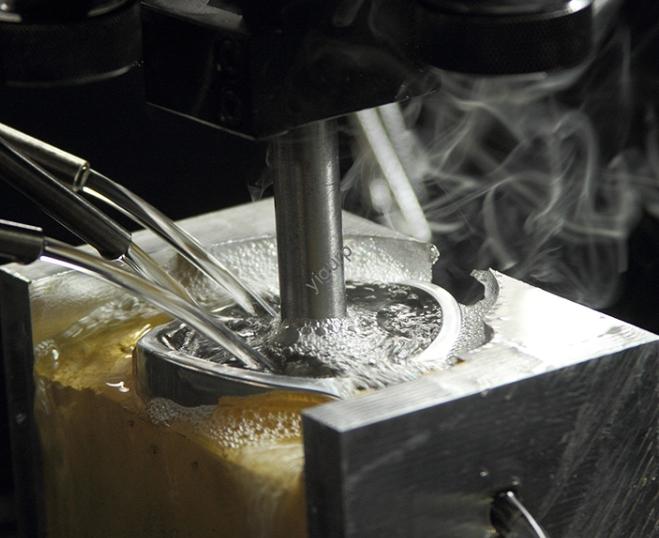
| Usinagem CNC | Computer-controlled tools carve parts from solid blocks | Metal parts (por exemplo, caixas de velocidades), componentes precisos | 1–4 horas | ±0,01 mm |
| 3Impressão D | Lays down layers of plastic/metal filament/resin | Formas complexas (por exemplo, robot joints), custom shells | 2–12 hours | ±0,1 mm |
| Corte a laser | Uses a high-powered laser to cut/etch sheet materials | Partes planas (por exemplo, robot frames, sensor mounts) | 5–30 minutes | ±0,05 mm |
Real-World Example
A robotics company building a agricultural robot used 3D printing for its curved crop-sensing housing (complex shape, volume baixo) and CNC machining for its metal wheel axles (needs strength for rough terrain). This mix cut production time by 25% compared to using just one method.
4. Conjunto & Teste: Ensure Your Prototype Works as Planned
Even the best parts fail if assembled poorly—this step is where you turn parts into a functional robot and catch performance issues.
Assembly Best Practices
- Use precision tools: A torque wrench ensures screws (por exemplo, M3 bolts) are tightened to 5 N·m—too loose, and parts rattle; muito apertado, and plastic parts crack.
- Follow a Bill of Materials (BOM): List every part (por exemplo, 4 x motors, 8 x gears, 1 x microcontroller) and assemble in order (por exemplo, attach motors to frame first, then connect gears).
- Check fitment: After assembling, move joints by hand to ensure smooth motion. A robot’s wrist joint, por exemplo, should rotate 360° without sticking.
Critical Tests for Robot Prototypes
- Motion Performance Test: Measure speed, range of motion, and accuracy. For a robotic arm, test how quickly it can move from Point A to Point B (alvo: <2 segundos) and if it hits the target within ±0.5mm.
- Electrical System Test: Check wiring for shorts and ensure components like sensors and motors work with the controller. A battery-powered robot should run for at least 4 horas (target runtime) without losing power.
- Load Test: Gradually add weight to test durability. A delivery robot prototype should carry 120% of its target load (por exemplo, 6kg if target is 5kg) without breaking.
Exemplo: Test Failure & Fix
A team’s cleaning robot failed its load test—it stopped moving when carrying a 3kg cleaning tank (target load: 2.5kg). They discovered the motor gears were too small, so they replaced them with larger, stronger gears. The revised prototype handled 4kg easily.
5. Tratamento de superfície & Otimização: Make It Durable & Ready for Iteration
Surface treatment improves appearance and lifespan, while optimization turns a “good” prototype into a “great” one.
Common Surface Treatments
- Pintura: Use spray paint (por exemplo, acrílico) for plastics to add color and protect against scratches. A consumer robot’s bright red shell might need 2 coats of primer + 2 coats of paint.
- Chapeamento: Add a thin layer of chrome or nickel to metals to prevent rust. Industrial robots used in wet environments (por exemplo, car washes) benefit from chrome plating.
- Anodização: Treat aluminum with an electric current to create a hard, colored layer. Medical robots often use anodized aluminum for its sleek, sterile finish.
Optimization Tips
- Redução de peso: Replace a solid metal part with a hollow 3D-printed one (por exemplo, a robot’s leg) to cut weight by 30% sem perder força.
- Cost saving: If a prototype uses expensive titanium, test a cheaper aluminum alloy for non-critical parts (por exemplo, the robot’s base vs. its precision gripper).
- Performance boost: Upgrade a slow motor to one with 20% more torque if the robot struggles with heavy loads.
Yigu Technology’s Perspective on Robot Prototype Making
Na tecnologia Yigu, we believe the robot prototype making process is the heart of innovation. Too many teams rush to mass production without validating prototypes—this leads to costly recalls. We recommend focusing on two things: 1) Use a mix of 3D printing and CNC machining to balance speed and strength, e 2) Test in real-world scenarios (por exemplo, a warehouse robot should be tested on concrete floors, not just lab tables). Our clients who follow this approach reduce prototype iterations by 40% and get products to market faster.
Perguntas frequentes
- How much does a robot prototype cost to make?
Costs vary by size and complexity: a small consumer robot (por exemplo, a toy) custos \(50–\)200, a medium industrial robot (por exemplo, a small arm) custos \(500–\)2,000, and a large, complex robot (por exemplo, a medical surgical robot) custos \(10,000–\)50,000.
- How long does the robot prototype making process take?
Para protótipos simples: 2–4 semanas (design → manufacturing → testing). For complex prototypes (por exemplo, industrial or medical robots): 2–6 meses, including multiple iterations.
- Can I make a robot prototype at home?
Sim! Para pequenos, simple robots (por exemplo, a line-following robot), you can use a consumer 3D printer (custo: \(200–\)500), Arduino microcontroller (\(20), and PLA plastic (\)20/kg). Follow online tutorials to design a basic 3D model and assemble parts.