
Our PPSF 3D Printing Services
Unlock the full potential of high-demand applications with PPSF 3D Printing—the synergy of robust PPSF (Polyphenylsulfone) and advanced 3D Printing Technology. Boasting exceptional high-temperature resistance, chemical resistance, and mechanical strength, our solutions deliver durable, precision parts for aerospace, medical, and automotive industries. From custom prototypes to high-volume production, we turn your most challenging designs into reliable, industry-ready reality.
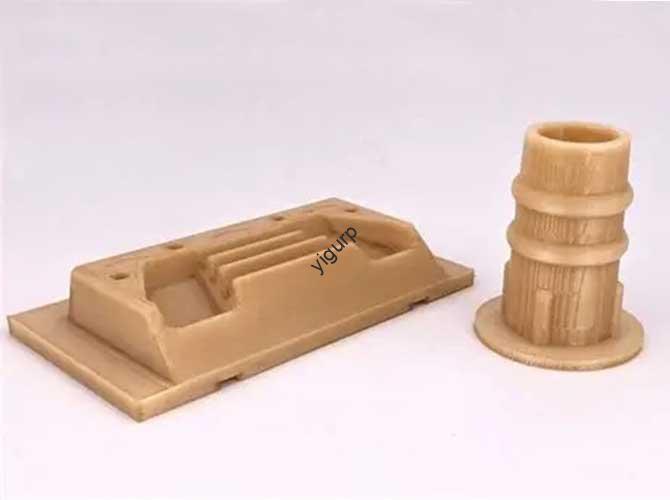
What Is PPSF 3D Printing?
PPSF 3D Printing is a cutting-edge additive manufacturing process that utilizes PPSF (Polyphenylsulfone)—a high-performance thermoplastic renowned for its extreme durability and resistance to harsh conditions. At its core, this technology follows the basic Printing Principle of layer-by-layer fabrication, but leverages PPSF’s unique Material Properties to create parts that outperform traditional polymers like ABS or PLA.
Key Material Properties of PPSF that make it ideal for demanding applications:
| Material Property | Description | Relevance to 3D Printing |
| High-Temperature Resistance | Withstands continuous use up to 200°C (392°F) and short bursts up to 260°C (500°F) | Perfect for aerospace engine components and automotive underhood parts |
| Chemical Resistance | Unaffected by strong acids, bases, and organic solvents (e.g., acetone, ethanol) | Ideal for medical devices (sterilized with harsh chemicals) and industrial equipment |
| Mechanical Strength | Tensile strength of 85 MPa, flexural modulus of 2.8 GPa | Suitable for load-bearing parts (e.g., medical implants, robotics frames) |
| Flame Retardancy | Meets UL94 V-0 standards (self-extinguishes within 10 seconds) | Critical for aerospace and electronics applications |
Unlike lower-performance polymers, PPSF’s ability to maintain integrity in extreme environments makes it a go-to choice for industries where failure is not an option.
Our Capabilities: Delivering PPSF Excellence
At Yigu Technology, our PPSF 3D Printing capabilities are designed to meet the most stringent industry requirements. We combine state-of-the-art equipment with deep technical knowledge to deliver consistent, high-quality results:
- Advanced Printing Equipment: We use industrial-grade FDM and SLS printers calibrated specifically for PPSF, ensuring optimal layer adhesion and part density.
- Technical Expertise: Our engineers have 5+ years of experience with PPSF, understanding its unique printing needs (e.g., high extrusion temperatures, controlled cooling) to avoid defects like warping.
- Scalable Production Capacity: We handle projects of all sizes—from 1-off prototypes to 10,000+ end-use parts monthly—with consistent quality across every batch.
- Customization Services: Whether you need complex geometries for medical devices or large-format aerospace components, we tailor our process to your exact specifications.
- Rigorous Quality Control: Every PPSF part undergoes 100% inspection, including dimensional checks and mechanical testing, to ensure it meets your standards.
Table: Our PPSF 3D Printing Capabilities vs. Industry Averages
| Capability | Yigu Technology Performance | Industry Average |
| Max Print Size (FDM) | 1000mm × 800mm × 600mm | 700mm × 700mm × 500mm |
| Prototyping Lead Time | 3–5 days | 7–10 days |
| Production Capacity | Up to 8,000 parts/week | Up to 3,000 parts/week |
| Material Waste | <3% | 10–15% |
Process: The Step-by-Step Workflow for PPSF 3D Printing
Our PPSF 3D Printing process is a structured, optimized workflow that accounts for PPSF’s unique properties to ensure reliability:
- Pre-processing:
- Model Design: Our team reviews your CAD model to optimize it for PPSF (e.g., adding minimal supports to reduce post-processing and material waste).
- Slicing: We use advanced slicing software (e.g., Simplify3D) to convert the model into layers (0.1–0.3mm) and set critical Printing Parameters (FDM: extrusion temp 370–400°C, bed temp 120–140°C; SLS: laser temp 380–410°C).
- Printing Phase:
- For FDM, the printer extrudes molten PPSF filament layer by layer, with a heated enclosure to prevent warping.
- For SLS, a laser sinters PPSF powder into dense, high-strength parts without the need for supports.
- Post-processing:
- Support Removal: For FDM parts, we carefully remove soluble or breakaway supports (PPSF-compatible materials) to avoid damaging the part.
- Finishing: We perform sanding, polishing, or coating to enhance surface quality and meet your aesthetic requirements.
- Quality Inspection: Every part is measured with coordinate measuring machines (CMMs) to verify dimensional accuracy and ensure compliance with your specs.
- Process Optimization:
We continuously monitor and adjust parameters (e.g., print speed, cooling rate) based on real-time data to improve efficiency and part quality.
Materials: Choosing the Right PPSF for Your Project
Not all PPSF materials are identical—we offer a range of PPSF Filament and PPSF Powder variants to match your application’s unique demands:
| Material Type | Key Properties | Ideal Applications |
| Standard PPSF Filament | High heat resistance, excellent chemical stability | Industrial equipment components, electronics enclosures |
| Carbon Fiber Reinforced PPSF | 40% higher tensile strength than standard PPSF, low weight | Aerospace brackets, robotics structural parts |
| Glass Fiber Reinforced PPSF | Improved stiffness, reduced thermal expansion | Automotive underhood parts, medical device frames |
| Medical-Grade PPSF Powder | Biocompatible (meets ISO 10993), sterilizable | Surgical instruments, implantable devices |
| Flame-Retardant PPSF | Enhanced UL94 V-0 flame rating | Aerospace cabin parts, electronics housings |
We also ensure Material Compatibility—our PPSF works seamlessly with all major 3D printing technologies (FDM, SLS) and post-processing techniques (coating, sterilization).
Surface Treatment: Enhancing PPSF Parts’ Performance and Aesthetics
While PPSF parts have a naturally robust surface, Surface Treatment can further improve their functionality and appearance. Our services are tailored to PPSF’s properties:
- Sanding: Smooths layer lines (reduces surface roughness from 4–6μm to 1–2μm) for better paint adhesion or a more polished look—ideal for consumer-facing parts.
- Painting: Applies high-temperature-resistant paints to match brand colors or add protective finishes (PPSF’s surface ensures strong paint bonding without primer).
- Coating: Adds epoxy or PTFE coatings to boost chemical resistance (e.g., for parts exposed to harsh solvents) or reduce friction (e.g., industrial gears).
- Polishing: Creates a high-gloss finish (surface roughness <0.5μm) for premium applications (e.g., medical devices, aerospace interior components).
Table: Impact of Surface Treatment on PPSF Part Performance
| Surface Treatment | Surface Roughness (Ra) | Chemical Resistance | Heat Resistance Retention |
| As-Printed | 4–6μm | High (resists acids/bases) | 100% (200°C continuous use) |
| Sanded + Painted | 1–2μm | Very High (with chemical-resistant paint) | 98% (paint withstands 180°C) |
| Polished + Coated | <0.5μm | Extreme (resists harsh solvents) | 99% (coating withstands 190°C) |
Tolerances: Precision You Can Trust
For PPSF parts used in critical applications (e.g., aerospace, medical), Tolerances and Precision Control are non-negotiable. Our process ensures consistent, tight tolerances:
- Tolerance Range: For FDM-printed PPSF parts, we achieve ±0.1mm for parts up to 100mm (±0.2mm for larger parts up to 500mm). For SLS parts, tolerances are even tighter (±0.05mm for small parts).
- Measurement Methods: We use calibrated tools like laser scanners and CMMs to verify every part’s dimensions, ensuring compliance with Tolerance Standards (e.g., ISO 8062 for plastic parts).
- Precision Control: Our printers are calibrated weekly for temperature stability and extrusion accuracy, and we use heated enclosures to minimize thermal expansion— a common cause of tolerance issues in high-temperature polymers.
For example, our PPSF aerospace components have a tolerance of ±0.08mm, meeting the strict requirements of AS9100 (aerospace quality management).
Advantages: Why PPSF 3D Printing Outperforms Other Technologies
PPSF 3D Printing offers a range of benefits that make it a superior choice for demanding industries:
- Unmatched High-Temperature Resistance: Unlike ABS (which deforms at 90°C) or PLA (which melts at 60°C), PPSF retains strength at 200°C—critical for underhood automotive and aerospace parts.
- Superior Chemical Resistance: PPSF resists harsh chemicals like sulfuric acid and hydraulic fluids, making it ideal for industrial and medical applications (e.g., sterilizable surgical tools).
- Exceptional Mechanical Strength: PPSF’s tensile strength and impact resistance outperform most polymers, reducing the need for frequent part replacement.
- Design Freedom: 3D printing allows for complex geometries (e.g., internal channels, lightweight lattices) that are impossible with traditional machining—saving weight and improving performance.
Cost-effectiveness: For small-to-medium batches (10–1,000 parts), PPSF 3D Printing eliminates the need for expensive molds (saving 30–50% vs. injection molding) and reduces material waste.
Applications Industry: Where PPSF 3D Printing Shines
PPSF’s unique properties make it a versatile material across industries. Here’s how we’re using it to solve real-world challenges:
| Industry | Key Applications | Why PPSF? |
| Aerospace | Engine components, cabin brackets, sensor housings | High-temperature resistance, flame retardancy, lightweight |
| Automotive | Underhood parts (e.g., valve covers), EV battery enclosures | Heat resistance, chemical resistance to oils |
| Medical | Surgical instruments, implantable devices, diagnostic equipment | Biocompatibility, sterilizability, strength |
| Electronics | Circuit board supports, high-temperature connectors | Heat resistance, electrical insulation |
| Consumer Goods | High-performance kitchen tools, outdoor gear | Durability, chemical resistance to cleaning agents |
Manufacturing Techniques: Matching the Right Method to Your PPSF Project
We use a range of Manufacturing Techniques to optimize PPSF part production, depending on your needs:
- Fused Deposition Modeling (FDM): Ideal for PPSF Filament—cost-effective for prototypes and low-to-medium volume production (e.g., industrial enclosures). Print speed: 20–50mm/s.
- Selective Laser Sintering (SLS): Best for PPSF Powder—produces dense, high-strength parts without supports (e.g., medical implants, aerospace components). Layer thickness: 0.1–0.2mm.
- Multi-Jet Fusion: For high-volume PPSF production (10,000+ parts)—offers fast turnaround and consistent part quality (e.g., automotive sensor housings).
- Hybrid Manufacturing: Combines 3D printing with machining to achieve ultra-tight tolerances (±0.05mm) for critical parts (e.g., aerospace engine components).
Table: PPSF Manufacturing Techniques Comparison
| Technique | Material Type | Best For | Volume Range | Cost per Part (100 units) |
| FDM | PPSF Filament | Prototypes, large parts | 1–500 | 40–80 |
| SLS | PPSF Powder | High-strength end-use parts | 50–1,000 | 60–120 |
| Multi-Jet Fusion | PPSF Powder | High-volume production | 1,000+ | 25–50 |
Case Studies: PPSF 3D Printing in Action
Our PPSF 3D Printing projects have helped clients overcome tough challenges and achieve better results than traditional methods:
Case Study 1: Aerospace Engine Bracket
- Client: A leading aerospace manufacturer.
- Challenge: Need a lightweight, heat-resistant bracket for engine bays (traditional aluminum parts were too heavy and corroded).
- Solution: SLS-printed carbon fiber reinforced PPSF bracket.
- Results: 35% weight reduction, 20% cost savings vs. aluminum, and compliance with AS9100. The bracket has been in service for 3+ years with zero failures.
Case Study 2: Medical Surgical Instrument
- Client: A global medical device company.
- Challenge: Develop a sterilizable surgical forceps that withstands repeated autoclaving (134°C, 2 bar pressure) without deforming.
- Solution: FDM-printed medical-grade PPSF forceps with a polished surface.
- Results: Withstands 1,000+ autoclave cycles, meets ISO 10993 biocompatibility standards, and 40% faster production than machining.
Case Study 3: Automotive EV Battery Enclosure
- Client: An electric vehicle manufacturer.
- Challenge: Create a heat-resistant enclosure for EV batteries that resists thermal runaway and chemical leaks.
- Solution: Multi-Jet Fusion-printed flame-retardant PPSF enclosure.
Results: Meets UL94 V-0 flame rating, withstands 200°C for 1 hour, and 25% lighter than steel enclosures.
Why Choose Us: Your Trusted PPSF 3D Printing Partner
With so many 3D printing providers, here’s why Yigu Technology is the right choice for your PPSF projects:
- Professional Team: Our engineers have specialized expertise in PPSF—we know how to optimize printing parameters, avoid defects, and ensure parts meet industry standards.
- Advanced Technology: We use the latest FDM and SLS printers (e.g., Stratasys Fortus 900, EOS P 500) calibrated specifically for PPSF, ensuring consistent quality.
- Reliable Service: We guarantee on-time delivery (98% of projects meet deadlines) and offer 24/7 support for urgent requests.
- Competitive Price: We optimize material use (waste <3%) and offer volume discounts (up to 35% off for 1,000+ parts) to help you save.
Customer-oriented Approach: We work closely with you from design to delivery, providing regular updates and material samples for testing before full production.