
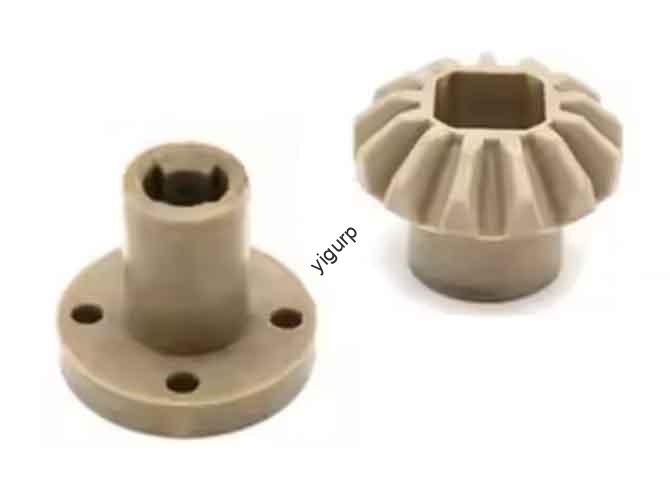
In the rapidly evolving landscape of fabricação aditiva, Impressão 3D em pó stands out as a transformative technology, permitindo a criação de complexos, peças de alto desempenho em todos os setores. Ao contrário dos métodos subtrativos tradicionais que desperdiçam material e lutam com designs complexos, esta tecnologia constrói objetos camada por camada usando materiais em pó – abrindo novas possibilidades de inovação. Este guia explora seus princípios básicos, principais vantagens, seleção de materiais, aplicações, and why it’s becoming a cornerstone of modern manufacturing.
1. Core Principle & Working Process of Powder 3D Printing
To fully grasp the value of Impressão 3D em pó, it’s essential to understand its fundamental principle and step-by-step workflow—two elements that distinguish it from other 3D printing technologies.
1.1 Basic Principle
Impressão 3D em pó operates on a “layer-by-layer sintering/binding” principle: It uses powdered materials (por exemplo, metais, cerâmica, polímeros) and selectively fuses or binds them to form thin layers. Over time, these layers stack to create the final 3D object. The key lies in precise material deposition and curing—either via heat, luz, or chemical binders—to ensure structural integrity and detail accuracy.
1.2 Step-by-Step Working Process
The technology follows a seamless, repeatable cycle to turn digital designs into physical parts:
- Digital Model Preparation: Use CAD software (por exemplo, SolidWorks, Fusion 360) to create a detailed 3D model of the part. Slice the model into thin layers (typically 0.02–0.1 mm) using specialized software to generate toolpaths for the printer.
- Printer Setup: Load the chosen powder material into the printer’s hopper and calibrate the build platform to ensure level alignment. Select the appropriate binding/sintering method (por exemplo, laser sintering for metals, binder jetting for ceramics).
- Layer Deposition: A recoater blade spreads a uniform layer of powder onto the build platform—thickness matching the sliced layer size.
- Selective Binding/Sintering:
- Sinterização: A laser or electron beam selectively melts and fuses the powder in areas matching the layer’s cross-section (por exemplo, SLS for polymers, SLM for metals).
- Binding: A printhead deposits a liquid binder onto the powder to bond particles together (por exemplo, binder jetting for sand or ceramic powders).
- Layer Stacking: The build platform lowers by one layer thickness, and the process repeats (deposition → binding/sintering) until the entire part is formed.
- Pós-processamento: Remove the part from the powder bed, clean excess powder (recyclable for future use), and cure/sinter further if needed (por exemplo, heating metal parts to enhance strength).
2. Unmatched Advantages of Powder 3D Printing
Compared to traditional manufacturing (por exemplo, casting, forjamento) and other 3D printing technologies (por exemplo, FDM, resina), Impressão 3D em pó offers four key benefits that solve critical industry pain points.
2.1 Advantage Breakdown (with Data & Impact)
| Advantage | Key Details & Industrial Impact |
| Exceptional Design Freedom | Creates parts with complex geometries that are impossible or costly with traditional methods—e.g., internal lattices, hollow structures, and organic shapes. Por exemplo, aerospace engine components with internal cooling channels (reducing weight by 30–50%) can only be produced via powder 3D printing. |
| High Material Utilization | Minimizes waste by using only the required powder for the part—unprinted powder is recycled (até 95% reuse rate). Traditional casting/forging wastes 50–70% of raw material; powder 3D printing cuts this to <10%. For expensive metals like titanium, this saves $1,000+ per part. |
| Short Production Cycles | Reduces lead times by 50–80% compared to traditional processes. A small-batch metal part (10–50 unidades) that takes 4–6 weeks to produce via casting can be made in 3–7 days with powder 3D printing. This accelerates prototyping and time-to-market for new products. |
| Flexible Personalization | Enables on-demand customization without retooling. Update the digital model to adjust part size, forma, or features—no need for new molds (which cost \(5,000–\)50,000 for traditional methods). Ideal for personalized medical implants (por exemplo, custom hip replacements) and limited-edition industrial parts. |
3. Material Selection for Powder 3D Printing
The performance of Impressão 3D em pó depends heavily on material choice—each powder type has unique properties suited to specific applications. Below is a breakdown of the most common materials, their characteristics, e usos ideais.
3.1 Material Comparison Chart
| Material Category | Specific Materials | Propriedades principais | Ideal Applications | Printing Notes |
| Metallic Powders | Titanium Alloys (Ti-6Al-4V) | – High strength-to-weight ratio (força: 860 MPa; densidade: 4.5 g/cm³). – Corrosion-resistant and biocompatible. | Aerospace components (engine brackets, turbine blades), implantes médicos (hip joints, dental crowns). | Use SLM (Fusão seletiva a laser) for full density (99.9%); post-heat treat to reduce residual stress. |
| Aço inoxidável (316L, 304) | – Good corrosion resistance and mechanical strength (316L: 550 MPa tensile strength). – Cost-effective vs. titanium. | Industrial parts (válvulas, pumps), bens de consumo (jewelry, watch cases), componentes automotivos (sensor housings). | SLS (Sinterização Seletiva a Laser) is ideal; post-polish for a smooth surface (Rá < 0.8 μm). | |
| Aluminum Alloys (AlSi10Mg) | – Lightweight (densidade: 2.7 g/cm³) and high thermal conductivity. – Good machinability post-printing. | Aerospace structural parts (fuselage components), automotive lightweight parts (wheel rims), electronics enclosures. | Use SLM; avoid high-temperature applications (melts at 580°C). | |
| Ceramic Powders | Alumina (Al₂O₃), Zirconia (ZrO₂) | – Ultra-high hardness (Alumina: HV 1,500; Zirconia: HV 1,200). – Heat-resistant (up to 1,600°C) and chemical-resistant. | Industrial wear parts (rolamentos, nozzles), dispositivos médicos (dental crowns, orthopedic spacers), high-temperature components (furnace liners). | Use binder jetting + sintering; ensure powder particle size (20–50 μm) for uniform binding. |
| Polymer Powders | Nylon (PA12, PA11) | – High impact strength (PA12: 5 kJ/m²) e flexibilidade. – Water-resistant and durable. | Consumer goods (toys, phone cases), protótipos industriais, automotive interior parts (grips, brackets). | SLS is standard; post-process with vapor smoothing for a glossy finish. |
4. Real-World Applications of Powder 3D Printing
Impressão 3D em pó is transforming three key industries by enabling innovation, eficiência, e personalização. Below are its most impactful use cases with case studies.
4.1 Industry-Specific Applications
| Industry | Application Examples & Case Studies |
| Aeroespacial | – Engine Components: Powder 3D printed titanium alloy turbine blades with internal cooling channels—reduce engine weight by 40% and improve fuel efficiency by 15%. – Thermal Protection Systems: Ceramic powder parts for spacecraft that withstand temperatures up to 1,500°C (critical for re-entry into the atmosphere). Case: Boeing used powder 3D printing to produce 300+ aluminum alloy fuselage components—cutting production time by 60% and material waste by 75%. |
| Médico | – Biomedical Implants: Custom titanium alloy hip replacements (matching patient bone structure) with porous surfaces—promote bone integration (success rate >95%). – Dental Parts: Zirconia ceramic crowns and bridges (printed via binder jetting) that match natural tooth color and strength. Case: A medical device firm produced 500 personalized knee implants using powder 3D printing—patient recovery time decreased by 25% contra. standard implants. |
| Industrial Manufacturing | – Moldes & Ferramentas: Metal powder 3D printed injection molds with conformal cooling channels—reduce mold cooling time by 50% and improve part quality. – Wear Parts: Ceramic powder nozzles for industrial printers (resist abrasion, lasting 3x longer than plastic nozzles). Case: A plastic injection molding company used powder 3D printed molds to produce 10,000+ toy parts—cutting mold lead time from 8 weeks to 10 days. |
Yigu Technology’s Perspective on Powder 3D Printing
Na tecnologia Yigu, we see Impressão 3D em pó as a catalyst for industrial transformation. Our solutions integrate high-precision SLM/SLS printers (optimized for titanium, aço inoxidável, and ceramic powders) with AI-driven powder recycling systems—reducing material waste by 45% and cutting production costs by 30%. We’ve supported aerospace clients in creating lightweight engine parts and medical firms in producing custom implants. As materials advance (por exemplo, high-temperature superalloys), we’re developing smarter process monitoring tools to ensure consistent part quality, making powder 3D printing more accessible for SMEs.
Perguntas frequentes: Common Questions About Powder 3D Printing
- P: Is Powder 3D Printing suitable for large-scale production (1,000+ units)?
UM: Yes—with industrial-grade printers. While small desktop powder printers are ideal for prototyping, large-format systems (por exemplo, multi-laser SLM machines) can produce 1,000+ units efficiently. Por exemplo, automotive suppliers use powder 3D printing to mass-produce lightweight sensor housings—costs are competitive with casting for high-volume runs.
- P: What’s the minimum part size that can be produced with Powder 3D Printing?
UM: It depends on the material and printer, but most systems can produce parts as small as 0.5–1 mm (por exemplo, tiny medical sensors, micro-electronics components). High-precision SLM printers achieve feature sizes down to 0.1 mm—suitable for intricate jewelry or dental parts.
- P: How does Powder 3D Printing compare to resin 3D printing in terms of strength?
UM: Powder 3D printed parts (especially metals/ceramics) are significantly stronger. Por exemplo, a powder-printed titanium part has a tensile strength of 860 MPa, while a resin part has ~50–100 MPa. Resin is better for high-detail, non-load-bearing parts (por exemplo, estatuetas), while powder is ideal for functional, load-bearing components (por exemplo, peças aeroespaciais, implantes).