
Our Plastic 3D Printing Services
Unlock limitless possibilities with Yigu Technology’s Plastic 3D Printing solutions. From rapid prototyping to industrial-grade end-use parts, we leverage advanced techniques like FDM, SLA, and SLS to deliver high-quality, custom prints with tight tolerances. Our expertise in material selection, surface treatment, and iterative design ensures cost-effective, fast-turnaround projects tailored to your industry—whether aerospace, medical, or consumer products. Choose innovation; choose Yigu Technology.
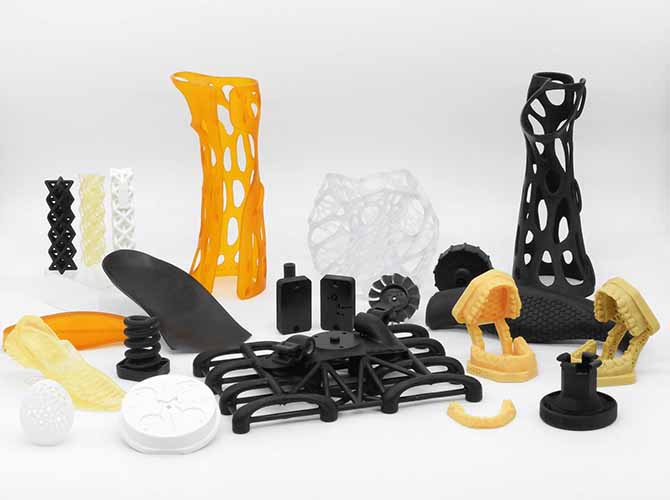
What Is Plastic 3D Printing?
Plastic 3D Printing—also known as Polymer Printing—is a subset of Additive Manufacturing (AM), a process that builds objects through Layer-by-Layer Fabrication rather than subtracting material (e.g., cutting or drilling). Unlike traditional manufacturing, it transforms digital designs into physical parts directly, eliminating the need for expensive molds.
The most common Plastic 3D Printing Process variants include:
| Technology | Key Advantage | Ideal Use Case |
| Fused Deposition Modeling (FDM) | Low cost, wide material range (e.g., PLA, ABS) | Prototyping, consumer products |
| Stereolithography (SLA) | High surface detail, smooth finishes | Jewelry, medical models |
| Selective Laser Sintering (SLS) | Strong, durable parts (e.g., nylon) | Industrial components, functional parts |
| Digital Light Processing (DLP) | Fast printing speed, high resolution | Dental aligners, small intricate parts |
Yigu Technology’s Plastic 3D Printing Capabilities
At Yigu Technology, we combine cutting-edge equipment with technical expertise to meet diverse client needs. Our core capabilities include:
- In-House 3D Printing: Full control over production, ensuring quality and speed.
- Custom 3D Printing Solutions: Tailored designs for unique industry challenges (e.g., aerospace components, medical devices).
- Rapid Prototyping: Turn CAD models into physical prototypes in days, not weeks—accelerating your product development cycle.
- High-Quality Prints: Consistent results with Industrial 3D Printing standards, backed by rigorous quality checks.
- Precision Printing: Achieve tight tolerances for parts requiring dimensional accuracy (e.g., electronics, robotics).
- Large-Format Printing: Create oversized parts (up to 1.2m x 0.6m x 0.6m) for architecture, automotive, and industrial equipment.
- Multi-Material Printing: Combine flexible (e.g., TPU) and rigid (e.g., polycarbonate) plastics in a single part for enhanced functionality.
- On-Demand Manufacturing: Produce small batches or single parts without minimum order quantities, reducing inventory costs.
Our Technical Expertise spans material science, design optimization, and post-processing—ensuring every project meets your specifications.
The Plastic 3D Printing Workflow (Process)
A successful 3D print relies on a structured 3D Printing Workflow. At Yigu Technology, we follow these key steps to deliver reliable results:
- Design for Additive Manufacturing (DfAM): Optimize designs for 3D printing (e.g., reducing overhangs, adding support structures) to avoid defects and improve part strength.
- CAD Modeling: Create a 3D digital model using software like SolidWorks or Fusion 360—this is the blueprint for your part.
- STL File Preparation: Convert the CAD model to an STL file (a standard format for 3D printing) and repair any mesh errors (e.g., missing faces).
- Slicing Software: Use tools like Cura or PrusaSlicer to split the STL file into thin layers (0.1–0.3mm) and set print parameters (e.g., speed, temperature).
- Print Orientation: Choose the best orientation for the part to balance strength, surface quality, and support material usage.
- Support Structures: Add temporary supports for overhangs (45°+ angles) to prevent warping during printing—these are removed post-processing.
- Printing: The 3D printer builds the part layer by layer using the selected plastic material (e.g., PLA, nylon).
- Post-Processing: Clean the part (remove supports, sand rough edges) and apply surface treatments (e.g., painting, vapor smoothing) if needed.
- Quality Control: Inspect the part for dimensional accuracy (using calipers or 3D scanners) and functional performance (e.g., stress testing).
Iterative Design Process: Refine the design based on test results—critical for prototyping and ensuring the final part meets your needs.
Materials for Plastic 3D Printing
Choosing the right material is critical for 3D print success. Yigu Technology offers a wide range of Thermoplastics and specialty polymers, each with unique properties:
| Material | Key Properties | Industry Applications |
| PLA | Biodegradable, low cost, easy to print | Prototyping, consumer goods, education |
| ABS | Impact-resistant, heat-resistant (up to 90°C) | Automotive parts, electronics enclosures |
| PETG | Strong, chemical-resistant, food-safe | Water bottles, medical devices |
| Nylon | High strength, flexible, durable | Industrial components, gears |
| Polycarbonate (PC) | Heat-resistant (up to 135°C), shatterproof | Aerospace parts, safety equipment |
| TPU | Flexible (rubber-like), abrasion-resistant | Phone cases, gaskets, sports gear |
| Engineering Plastics | High performance (e.g., heat, chemical resistance) | Oil & gas, electronics |
| High-Performance Polymers (e.g., PEEK) | Extreme heat resistance (up to 343°C), biocompatible | Medical implants, aerospace |
| Composites (e.g., carbon fiber-reinforced PLA) | Lightweight, high strength | Automotive, robotics |
| Biodegradable Materials (e.g., PLA, PHA) | Eco-friendly, breaks down in soil | Disposable products, packaging |
Our team provides Material Selection guidance to match your project’s needs—whether you prioritize cost, strength, flexibility, or sustainability.
Surface Treatment for Plastic 3D Prints
Post-processing and Surface Treatment enhance the aesthetic and functional performance of 3D prints. Yigu Technology offers the following techniques:
- Sanding: Use sandpaper (80–400 grit) to smooth layer lines and rough edges—ideal for preparing parts for painting.
- Painting: Apply acrylic or spray paint to match brand colors or improve UV resistance—common for consumer products and art.
- Coating: Add protective coatings (e.g., clear varnish, epoxy) to increase durability and chemical resistance.
- Plating: Deposit metal layers (e.g., chrome, nickel) onto plastic parts for a metallic finish—used in automotive and consumer electronics.
- Polishing: Use compounds or buffing wheels to create a glossy surface—popular for jewelry and decorative parts.
- Texturing: Add patterns (e.g., matte, grippy) to improve grip or hide layer lines—useful for handles or medical devices.
- Vapor Smoothing: Expose parts to solvent vapor (e.g., acetone for ABS) to melt surface layers, creating a smooth finish.
- Chemical Etching: Use mild chemicals to remove surface imperfections without damaging the part’s structure.
- Primer Application: Apply a primer before painting to improve paint adhesion and cover layer lines.
- Surface Hardening: Treat parts with heat or chemicals to increase scratch resistance—critical for high-wear components.
These treatments not only boost Aesthetic Enhancement but also add Functional Coatings that extend part lifespan.
Tolerances and Precision in Plastic 3D Printing
Tolerances (the allowable deviation from a part’s intended dimensions) are vital for parts that need to fit or function with other components. Yigu Technology ensures Dimensional Accuracy through:
| Factor | Our Standard | Industry Benchmark |
| Tolerance Levels | ±0.1mm for small parts (<100mm); ±0.1% for large parts | ±0.2mm / ±0.2% |
| Layer Thickness | 0.1–0.3mm (adjustable for speed/quality) | 0.2–0.4mm |
| Print Resolution | Up to 50μm (for SLA/DLP) | 100–200μm |
| Material Shrinkage | Minimized (e.g., 1–2% for PLA; 3–5% for ABS) | 2–6% (untreated) |
| Thermal Expansion | Controlled via heated enclosures (for ABS/PC) | Uncontrolled (leads to warping) |
We use advanced Measurement Techniques (e.g., coordinate measuring machines, 3D scanners) and Quality Assurance protocols to verify tolerances—ensuring parts meet your exact specifications.
Advantages of Plastic 3D Printing
Plastic 3D printing offers transformative benefits over traditional manufacturing:
- Rapid Prototyping: Test designs in days, cutting product development time by 50–70% compared to mold-based methods.
- Cost-Effective Production: No upfront mold costs—ideal for small batches (1–100 parts) or custom designs.
- Customization: Easily modify designs for individual needs (e.g., personalized medical devices, custom consumer products).
- Complexity: Print intricate geometries (e.g., lattice structures, internal channels) that are impossible with machining or injection molding.
- Reduced Waste: Only uses the material needed for the part—cutting waste by 70–90% compared to subtractive manufacturing.
- Faster Time-to-Market: Accelerate from design to production, helping you launch products ahead of competitors.
- Enhanced Creativity: Frees designers from traditional manufacturing constraints, enabling innovative, lightweight structures.
- Lightweight Structures: Use lattice or hollow designs to reduce part weight (by 30–50%) without sacrificing strength—critical for aerospace and automotive.
- Functional Testing: Produce testable prototypes to validate performance before full-scale production, reducing risk.
Sustainable Manufacturing: Use biodegradable materials (e.g., PLA) and on-demand production to minimize environmental impact.
Industry Applications of Plastic 3D Printing
Plastic 3D printing is revolutionizing industries worldwide. Yigu Technology serves the following sectors:
| Industry | Key Applications | Our Solutions |
| Aerospace | Lightweight components, engine parts, prototypes | High-performance polymers (e.g., PEEK), tight tolerances |
| Automotive | Custom interior parts, tooling, spare parts | ABS, nylon prints with vapor smoothing |
| Medical | Surgical guides, patient-specific implants, dental aligners | Biocompatible materials (e.g., PETG, PEEK) |
| Consumer Products | Custom toys, phone cases, home goods | PLA, TPU prints with painting/coating |
| Electronics | Enclosures, connectors, prototypes | Heat-resistant plastics (e.g., PC) |
| Architecture | Scale models, decorative elements | Large-format PLA prints |
| Education | Teaching models (e.g., anatomy, engineering) | Low-cost PLA prints |
| Art & Design | Sculptures, jewelry, decorative pieces | High-detail SLA prints with plating |
| Industrial Equipment | Gears, gaskets, replacement parts | Durable nylon, TPU prints |
| Robotics | Lightweight frames, grippers | Composite materials (carbon fiber-reinforced PLA) |
| Sports & Leisure | Custom helmets, shoe insoles, equipment parts | Flexible TPU, impact-resistant ABS |
Manufacturing Techniques: Additive vs. Subtractive
Understanding the difference between Additive vs. Subtractive Manufacturing helps you choose the right method for your project:
| Aspect | Additive Manufacturing (Plastic 3D Printing) | Subtractive Manufacturing (e.g., CNC Machining) |
| Material Usage | Minimal waste (only uses needed material) | High waste (cuts material from a solid block) |
| Complexity | Handles intricate designs (lattices, channels) | Limited by tool access (hard to make internal features) |
| Lead Time | Fast (prototypes in days) | Slow (requires tool setup, machining time) |
| Cost (Small Batches) | Low (no mold costs) | High (tooling + material waste) |
| Cost (Large Batches) | High (per-part cost stays the same) | Low (per-part cost decreases with volume) |
| Tolerances | Good (±0.1mm) | Excellent (±0.01mm) |
Yigu Technology also offers Hybrid Manufacturing (combining 3D printing with machining) for parts that need high precision. Other techniques we use include Binder Jetting (for metal-plastic composites) and Material Jetting (for multi-color prints).
Case Studies: Yigu Technology’s Success Stories
Our Case Studies demonstrate how we solve real-world challenges with plastic 3D printing:
Case Study 1: Medical Device Prototyping
- Client: A leading medical equipment manufacturer.
- Challenge: Need to prototype a custom surgical guide in 1 week (traditional methods took 4 weeks).
- Solution: Used SLA with biocompatible PETG to print the guide. Applied vapor smoothing for a sterile surface.
- Results: Delivered the prototype in 5 days. Client tested and approved the design, reducing time-to-market by 75%.
Case Study 2: Automotive Spare Parts
- Client: A regional automotive repair shop.
- Challenge: Needed a rare ABS gear for an older vehicle (no OEM parts available).
- Solution: Scanned the old gear, created a CAD model, and printed a replacement using FDM with high-impact ABS.
- Results: Part cost 60% less than a custom-machined alternative. Performed flawlessly in testing.
Case Study 3: Consumer Electronics Enclosure
- Client: A startup developing a smart thermostat.
- Challenge: Needed 50 custom enclosures for beta testing (injection molding would cost $10k for molds).
- Solution: Used SLS with nylon to print the enclosures. Applied painting and coating for a premium finish.
- Results: Delivered 50 enclosures in 10 days for $2k. Client received positive beta feedback and ordered full production.
These projects highlight our ability to deliver Cost Savings, Time Reduction, and Improved Functionality—backed by Customer Testimonials.
Why Choose Yigu Technology for Plastic 3D Printing?
When you partner with us, you get more than just 3D prints—you get a trusted technical partner. Here’s why clients choose us:
- Expertise in 3D Printing: Our team has 10+ years of experience in polymer 3D printing and material science.
- Reliable Services: 98% on-time delivery rate and 95% client satisfaction score.
- High-Quality Materials: We use only certified plastics (e.g., FDA-approved for medical parts) from top suppliers.
- Custom Solutions: No “one-size-fits-all” approach—we tailor every project to your goals.
- Fast Turnaround Time: Prototypes in 3–7 days; production parts in 1–2 weeks.
- Competitive Pricing: Transparent quotes with no hidden fees—save up to 40% vs. competitors.
- Technical Support: Dedicated engineers available to help with design, material selection, and troubleshooting.
- Industry Experience: We serve 12+ industries, so we understand your unique challenges.
- Client Satisfaction: We don’t stop until you’re happy—we offer free revisions for prototypes.
Unique Capabilities: Multi-material printing, large-format prints, and hybrid manufacturing under one roof.