
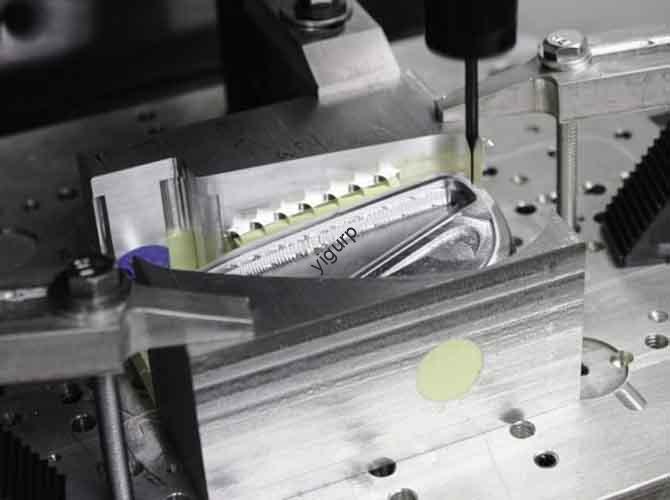
Se você já se perguntou como as peças de precisão para carros, dispositivos médicos, ou equipamentos aeroespaciais ganham vida, the answer lies in amachining shop. Mas nem todas as lojas são iguais – algumas são especializadas em protótipos únicos, enquanto outros produzem milhares de peças idênticas diariamente. Neste guia, detalharemos tudo o que você precisa saber: from choosing the right shop type to mastering workflows and materials. Vamos mergulhar.
1. Machining Shop Types & Business Models: O que atende às suas necessidades?
First things first: figuring out what kind ofmachining shop aligns with your project. The industry has distinct models, cada um com pontos fortes únicos. Let’s compare them:
| Shop Type | Key Focus | Ideal For | Business Model Example |
|---|---|---|---|
| Job Shop | Personalizado, small-batch parts | Protótipos, specialized components | High-Mix Low-Volume (HMLV) |
| Production Shop | Large-volume, standardized parts | Componentes automotivos, bens de consumo | Mass production |
| CNC Machine Shop | Precision work with computer control | Complex parts for aerospace/medical | Tech-driven manufacturing |
| Tool and Die Shop | Moldes, morre, and tooling creation | Plastic injection molds, stamping dies | Custom tooling production |
| Prototype Shop | Rapid iteration of new part designs | Product development phases | Make-to-Order (MTO) |
Real-World Example: A startup developing a new medical device needed 50 peças de protótipo. UMJob Shop specializing inHigh-Mix Low-Volume (HMLV) work was perfect—they handled the custom design without requiring large orders. Later, when scaling to 10,000 unidades, they switched to aProduction Shop for cost efficiency.
Many shops also operate asContract Manufacturers, handling end-to-end production from design to delivery. Some even useVertical Integration, owning everything from material sourcing to assembly, which cuts lead times by 20–30% .
2. Core Equipment & Tecnologia: The Tools That Make Precision Possible
You can’t run amachining shop without the right gear. Here’s a breakdown of essential equipment and how they work together:
Must-Have Machines
- CNC Machining Centers: The workhorses—they mill, furar, and shape parts with computer precision. Modern 5-axis models can handle complex angles in one setup.
- CNC Lathes: For turning parts (like bolts or shafts) by spinning material against a cutting tool.
- Multi-Axis Machines: Critical for aerospace parts—they move in 4+ axes to create intricate shapes without repositioning.
- EDM Machines: Use electrical sparks to cut hard materials (like titanium) that traditional tools can’t handle.
- Grinders: For finishing parts to ultra-smooth surfaces (down to 0.1-micron accuracy).
Qualidade & Efficiency Tools
- CMM (Máquina de medição por coordenadas): Verifies part dimensions by comparing them to 3D models—essential for Controle de qualidade (QC).
- CAD/CAM Software: Bridges design and production—engineers draw parts in CAD, and CAM converts it to machine code.
- Tool Presetters: Calibrate cutting tools before use, reducing setup time by 40% .
Tech Trend: AI is transforming equipment—systems like “Huazhong Type 9” use AI for thermal error compensation, boosting precision from 8 microns to 5 mícrons . This is a game-changer forUsinagem de Precisão in medical and aerospace.
3. Key Operations & Fluxo de trabalho: From Quote to Delivery
A smooth workflow is what separates reliable shops from chaotic ones. Here’s the step-by-step process mostmachining shops follow, with pro tips:
- Quoting and Estimating: The first touchpoint. Shops calculate costs based on material, machine time, e trabalho. Pro tip: Ask for a detailed quote—cheap estimates often skip Controle de qualidade (QC) passos.
- Job Planning: Engineers map out the process: which machines to use, tooling needs, and timeline.
- Material Procurement: Sourcing the right material (mais sobre isso mais tarde) is critical. Delays here push back the entire project.
- Programação CNC: Converting CAD designs into machine code. Experienced programmers can cut cycle times by 15% with optimized code.
- Configurar: Preparing machines and tools. A good setup reduces errors—shops with strict setup checklists have 30% fewer reworks .
- First Article Inspection (FAI): Testing the first part to ensure it meets specs. Skipping FAI risks costly batch errors.
- Production Run: The actual manufacturing. Shops use Scheduling software to avoid machine downtime.
- Controle de qualidade (QC): Checking parts with CMM or other tools. ISO 9001-certified shops have 99.5%+ pass rates .
- Rebarbação: Removing sharp edges—small but vital for safety and functionality.
- Entrega: Packaging and shipping. On-time delivery rates above 95% are a sign of a well-managed shop .
Estudo de caso: A German auto parts shop optimized its workflow by adding digital twin technology to simulate production . This cut setup time by 25% and reduced scrap from 5% para 1.2%.
4. Shop Management & Capabilities: What Makes a Shop Reliable?
Even with great equipment, poor management sinks amachining shop. Here are the key capabilities to look for:
Critical Management Practices
- Capacity Planning: Ensuring the shop has enough machine time and staff for your project. Overbooked shops miss deadlines.
- Scheduling: Using software to prioritize jobs. The best shops adjust schedules for urgent orders without delaying others.
- Quality Assurance System (ISO 9001): This certification means the shop follows strict quality protocols. 80% of top shops have ISO 9001 .
- Maquinistas qualificados: Experienced staff can troubleshoot issues (like tool wear) that AI might miss. Shops with 5+ year veterans have 40% fewer errors .
- Process Documentation: Clear records of every step—critical for repeat orders or regulatory compliance (por exemplo, medical parts).
Key Performance Metrics (KPIs)
- Lead Time: Time from order to delivery. For precision parts, 2–4 weeks is standard; prototypes can take 3–5 days.
- Entrega no prazo: Aim for 95%+—lower rates mean poor planning.
- Shop Rate: Hourly cost to use machines. Rates range from $60–$150/hour depending on equipment and location .
- Continuous Improvement: Shops that update processes (por exemplo, adopting green tech) stay competitive.
5. Materiais & Specializations: Choosing the Right Fit
The material makes or breaks a part. Here’s how to pick wisely, plus common specializations:
Popular Materials & Their Uses
| Material | Propriedades principais | Ideal Applications | Machining Difficulty |
|---|---|---|---|
| Alumínio | Leve, acessível, fácil de usinar | Peças aeroespaciais, dissipadores de calor | Baixo |
| Aço | Forte, durável | Structural components, ferramentas | Médio |
| Aço inoxidável | Resistente à corrosão | Dispositivos médicos, food equipment | Medium-High |
| Titânio | High strength-to-weight, biocompatível | Implantes, peças aeroespaciais | Alto |
| Plásticos | Baixo custo, resistente a produtos químicos | Bens de consumo, electrical parts | Low-Medium |
| Exotic Alloys | Heat/chemical resistant | Jet engines, oil rig parts | Very High |
Pro Tip: If cost is a concern, replace titanium with aluminum alloy for non-critical parts—it cuts material costs by 70% . For medical parts, 316L stainless steel is a must for biocompatibility .
Common Specializations
- Usinagem de Precisão: Tolerances as tight as 0.0001 inches—used for sensors or aerospace parts.
- Large-Part Machining: Handling parts over 10 pés (por exemplo, wind turbine components) with large CNC routers.
- Micro-Machining: Creating tiny parts (por exemplo, watch gears) with tools as small as 0.005 polegadas.
- Assembly Services: Some shops assemble parts into finished products, saving you time.
Yigu Technology’s Perspective
Omachining shop industry is evolving fast—intelligence and sustainability are now non-negotiable. Na tecnologia Yigu, we see three key trends: Primeiro, AI and 5-axis machines are democratizing precision, letting small shops compete with giants. Segundo, sustainable practices (like using ceramic tools or recycling metal scrap) cut costs and meet green regulations . Third, vertical integration is becoming key—shops that handle design, usinagem, and assembly win more long-term contracts. We advise clients to partner with shops that blend tech (por exemplo, CAD/CAM, CMM) with skilled staff—this balance ensures quality and flexibility.
Perguntas frequentes
Q1: How do I choose between a Job Shop and a Production Shop?
UM: Pick aJob Shop for custom, small-batch parts (1–100 units) or prototypes. Choose aProduction Shop for large volumes (1,000+ unidades) where standardization cuts costs.
Q2: What’s the difference between CNC Machining and traditional machining?
UM: CNC uses computer code for precision and consistency—error rates are under 0.1%. Traditional machining relies on manual operation, which is slower and less accurate for complex parts.
Q3: How can I reduce lead time for my machining order?
UM: Provide complete CAD files upfront, choose common materials (por exemplo, 6061 alumínio), and work with a shop that offersVertical Integration (they handle sourcing and assembly in-house).
Q4: Is ISO 9001 certification necessary?
UM: It’s critical for regulated industries (médico, aeroespacial) and a good sign of quality for others. ISO 9001 shops have 3x fewer defects .
Q5: What’s the most expensive part of machining?
UM: For complex parts, it’s oftenProgramação CNC and setup (40% of costs). For large volumes, material costs dominate (até 60% ).