
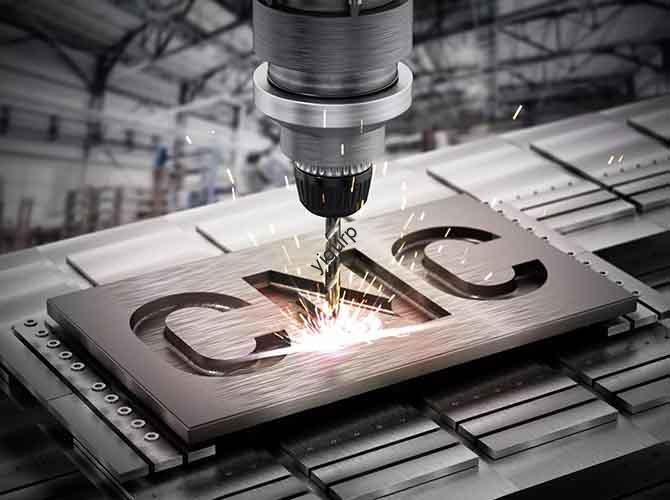
Se você já se perguntou como os produtos do dia a dia – desde o smartphone no bolso até as peças do motor de um carro – são moldados com tanta precisão, você provavelmente está pensando em usinagem na manufatura. Se você é proprietário de uma pequena empresa e deseja começar a prototipar, um gerente de produção com o objetivo de otimizar sua linha, or just curious about the process behind metal and plastic parts, this guide will walk you through everything you need to know. We’ll start with the basics of what machining is, move to the key processes and methods, and dive into how it fits into modern manufacturing systems—plus, we’ll share real-world examples and practical tips to help you apply this knowledge.
What Is Machining in Manufacturing, e por que isso importa?
Em sua essência, machining in manufacturing is a group of processes that shape raw materials (como metal, plástico, ou madeira) by removing unwanted material—this is why it’s often called fabricação subtrativa. Ao contrário da impressão 3D (fabricação aditiva), que constrói peças camada por camada, machining starts with a solid block (called a “blank”) and carves it into the desired shape.
Why is this important? Because machining is one of the most reliable ways to create parts with tight tolerances (think fractions of a millimeter) and smooth surfaces—something critical for products that need to fit or function perfectly, like medical devices or aerospace components. Por exemplo, a hip implant’s surface must be so smooth that it doesn’t irritate surrounding tissue—machining makes that possible.
A Quick Real-World Example
Last year, a small automotive parts shop I worked with needed to produce 50 custom brackets for a vintage car restoration project. They started with aluminum blanks and used a combination of perfuração (to make holes for bolts) e fresagem (to shape the bracket’s edges). Without machining, they would have had to order expensive custom-cast parts, which would have doubled their costs and delayed the project by 6 weeks. Machining let them create the parts in-house in just 3 days—saving time and money.
Primary Machining Processes: Which One Should You Use?
The first step in using machining effectively is understanding the main processes available. Each is designed for specific tasks, and choosing the right one can make or break your project’s efficiency and quality. Let’s break down the most common processes, their uses, and when to pick them.
| Processo | What It Does | Best For | Example Use Case |
| Fresagem | Uses a rotating cutting tool to remove material from the blank’s surface. | Shaping flat or curved surfaces, slots, or pockets. | Creating the base of a computer case. |
| Virando | Spins the blank while a cutting tool trims material from the outside. | Cylindrical parts (por exemplo, eixos, bolts). | Making a metal rod for a bicycle pedal. |
| Drilling | Uses a rotating drill bit to create holes in the blank. | Adding holes for fasteners (bolts, screws). | Drilling holes in a wooden shelf bracket. |
| Moagem | Uses an abrasive wheel to smooth surfaces or refine shapes. | Achieving ultra-smooth finishes or tight tolerances. | Polishing the surface of a stainless steel sink. |
| Música eletrônica (Electrical Discharge Machining) | Uses electrical sparks to melt and remove material (no physical cutting tool). | Hard materials (por exemplo, titanium, carbide) or complex shapes. | Creating a mold for plastic toy parts. |
| Usinagem CNC | Computer-controlled version of any of the above processes (most common today). | High precision, repetibilidade, or large production runs. | Mass-producing smartphone charging port components. |
| Conventional Machining | Manual operation (no computer control) by a skilled machinist. | Small batches, custom one-off parts, ou prototipagem. | Making a single replacement gear for an old machine. |
Key Insight: CNC vs. Conventional Machining
One question I get asked often is: “Should I invest in CNC or stick with conventional machining?” The answer depends on your needs. If you’re making 10 identical parts, conventional machining might be cheaper (no need for programming). But if you need 1000 identical parts—or parts with super tight tolerances—Usinagem CNC is better. Por exemplo, a medical device company I consulted with switched from conventional to CNC for producing surgical scissors. The CNC machines reduced errors from 5% to less than 0.1% and cut production time by 40%—critical for meeting FDA quality standards.
Manufacturing Methodologies: Matching Machining to Your Production Needs
Once you know which machining process to use, the next step is choosing the right production methodology. This is all about how many parts you need to make, how often you need them, and how customized they are. Let’s look at the most common methodologies and how machining fits into each.
1. High-Volume/Mass Production
What it is: Making thousands (or millions) of identical parts.
Machining fit: Usinagem CNC is ideal here because it’s fast and consistent. Por exemplo, a company that makes soda can tabs uses CNC punching machines to produce 1 million tabs per day—each one identical.
Key fact: According to the Manufacturing Technology Insights report, high-volume production with CNC can reduce per-unit costs by up to 30% compared to manual machining, thanks to faster cycle times and fewer errors.
2. Low-Volume High-Mix Production
What it is: Making small batches (10–100 parts) of many different designs.
Machining fit: Conventional machining or flexible CNC setups work best here. A job shop I know specializes in this—they recently made 20 custom brackets for a robotics startup, 50 gear shafts for a farm equipment repair shop, e 15 handles for a furniture maker—all in one week.
Pro tip: Usar cellular manufacturing (grouping machines by process) to switch between jobs quickly. This shop cut setup time between jobs from 2 hours to 30 minutes by arranging their mills and lathes in cells.
3. Prototyping
What it is: Making a small number of parts (1–5) to test a design before full production.
Machining fit: Usinagem CNC ou conventional machining (for simple designs) works here. A startup I helped used CNC to make 3 prototypes of a new water bottle cap. They tested the caps for leaks, adjusted the design, and made 2 more prototypes—all in 5 days. Without machining, they would have had to wait 2 weeks for 3D printed prototypes that weren’t as strong as the final plastic parts.
Key benefit: Prototipagem rápida with machining lets you test real-world performance (por exemplo, força, ajustar) early, which reduces the risk of costly design changes later.
4. Job Shop Production
What it is: Making one-off or custom parts for specific customer needs.
Machining fit: Conventional machining is often preferred here, as it lets machinists adjust the process on the fly. Por exemplo, a job shop recently made a single replacement valve for a 50-year-old industrial pump. The machinist used a lathe to shape the valve, tested it in the pump, and made small adjustments until it worked perfectly—something hard to do with CNC (which requires programming every change).
Integrating Machining with Modern Manufacturing Systems
Machining doesn’t exist in a vacuum—it works best when connected to other manufacturing tools and systems. This integration helps reduce errors, acelerar a produção, and keep track of parts from design to delivery. Let’s look at the key tools and systems you need to know.
1. CAD/CAM Integration
What it is: CAD (Design Assistido por Computador) software lets you create 3D models of parts. CAM (Computer-Aided Manufacturing) software takes that 3D model and turns it into instructions (G-code) for CNC machines.
Why it matters: Without CAD/CAM, a machinist would have to draw a part by hand and program the CNC machine manually—something that could take 8 hours for a complex part. With CAD/CAM, that same part can be designed and programmed in 2 horas.
Real example: A aerospace parts manufacturer I worked with switched to CAD/CAM integration and reduced programming time by 75%. They also reduced errors because the 3D model lets engineers check for fit issues before machining even starts.
2. The Digital Thread
What it is: A connected system that tracks every step of a part’s journey—from design (CAD) to machining (CAM/CNC) to inspection (metrology tools). It lets everyone on the team (designers, maquinistas, controle de qualidade) access the same data.
Why it matters: If a part fails inspection, the digital thread lets you trace back to the problem. Por exemplo, a car parts supplier found that a batch of faulty bolts had been machined with the wrong cutting tool. Using the digital thread, they quickly identified which other batches used that tool and fixed the issue before any bad parts reached customers.
Key stat: The National Institute of Standards and Technology (NIST) reports that companies using a digital thread reduce rework costs by an average of 22%.
3. Flexible Manufacturing Systems (FMS)
What it is: A group of CNC machines connected by a computer system that can switch between different parts automatically. It’s like a “smart factory” for machining.
Best for: Low-volume high-mix production or companies that need to quickly adapt to new orders. Por exemplo, a electronics manufacturer uses an FMS to make phone chargers, laptop ports, and smartwatch components—all on the same line. The system switches between parts in 10 minutos, compared to 2 hours for a traditional setup.
Qualidade & Metrology: Ensuring Your Machined Parts Meet Standards
Even the best machining process won’t matter if your parts don’t meet quality standards. That’s where metrology (the science of measurement) entra. It’s how you check that parts are the right size, forma, and finish—and it’s critical for industries like medical, aeroespacial, e automotivo.
Key Quality Processes & Ferramentas
Let’s break down the most important quality steps and the tools used to execute them:
| Process/Tool | What It Does | When to Use It |
| Statistical Process Control (CEP) | Uses data to monitor machining processes and catch variations before they cause defects. | High-volume production (por exemplo, fazendo 10,000 bolts). |
| First Article Inspection (FAI) | Checks the first part made in a production run to ensure it meets design specs. | Every new production run or after a machine change. |
| In-Process Inspection | Checks parts during machining (not just at the end) to fix issues early. | Complex parts (por exemplo, componentes aeroespaciais) where mistakes are costly. |
| CMM (Coordinate Measuring Machine) | Uses a probe to measure a part’s dimensions with extreme precision (down to 0.001mm). | Parts with tight tolerances (por exemplo, dispositivos médicos). |
| GD&T (Geometric Dimensioning and Tolerancing) | A standardized language for defining part shapes and tolerances (por exemplo, “this hole must be 5mm ± 0.1mm”). | All parts—ensures everyone (designers, maquinistas, inspectors) understands specs. |
| ISO 9001 | A global quality management standard that outlines best practices for consistency. | Any company that wants to sell to international customers (por exemplo, exporting parts to Europe). |
Real-World Quality Win
A medical device company I worked with was struggling with inconsistent surgical tool sizes. They implemented CEP—tracking the diameter of each tool as it was machined—and found that the cutting tool was wearing down after 100 parts. By replacing the tool every 90 parts and doing in-process inspection every 10 parts, they reduced defects from 8% para 0.5%. This not only saved them $50,000 in rework but also helped them maintain their FDA certification.
The Role of Machining in Product Development & the Supply Chain
Machining isn’t just about making parts—it’s a critical link in how products are developed and how supply chains work. Understanding this role can help you make better decisions about when to machine in-house, when to outsource, and how to speed up product launches.
1. Product Development Stages
Machining plays a role in almost every stage of product development:
- Idea Testing: Usar prototipagem rápida to make a few parts and test your design (por exemplo, a new handle for a tool).
- Tool and Die Making: Machining creates the molds and tools needed for mass production (por exemplo, a mold for plastic water bottles).
- Final Part Production: Once the design is finalized, machining makes the actual products (por exemplo, the metal parts in a blender).
- Spare Part Manufacturing: Machining produces replacement parts for older products (por exemplo, a gear for a 10-year-old washing machine).
Pro tip: Usar Design for Manufacturability (DFM)—designing parts with machining in mind. Por exemplo, a startup wanted to make a custom laptop stand with a complex curved edge. By simplifying the curve to a shape that could be made with a standard mill, they cut machining costs by 30%.
2. Supply Chain Decisions: Make vs. Buy
One of the biggest decisions companies face is whether to machine parts in-house (“make”) or outsource to a supplier (“buy”). Here’s how to decide:
| “Make” (In-House Machining) | “Buy” (Outsource to a Supplier) |
| Best for: High-volume parts, parts with sensitive designs, or companies with the budget for machines. | Best for: Low-volume parts, complex parts (por exemplo, Música eletrônica), or small companies without machines. |
| Prós: Faster lead times, more control over quality, lower per-unit costs for large runs. | Prós: No upfront machine costs, access to specialized equipment (por exemplo, CMM), less need for skilled staff. |
| Cons: High upfront costs (machines, staff), maintenance needs. | Cons: Longer lead times, less control over production, higher per-unit costs for large runs. |
Example: A small furniture company I advised wanted to make custom table legs. They considered buying a CNC mill (custo: \(50,000) but realized they only needed 200 legs per year. Instead, they outsourced to a local job shop—saving \)45,000 and getting the legs in 2 weeks. If they’d needed 2,000 legs per year, buying the mill would have made sense.
3. Lead Time Management
Lead time (the time from ordering a part to receiving it) is critical in supply chains. Machining can help reduce lead times by:
- Using Usinagem CNC for faster production.
- Keeping common parts (por exemplo, bolts, washers) in stock (machined in-house).
- Partnering with local suppliers to avoid shipping delays.
Key fact: According to the Institute for Supply Management (ISM), companies that use in-house machining for critical parts reduce lead times by an average of 18% compared to those that outsource.
Yigu Technology’s Perspective on Machining in Manufacturing
Na tecnologia Yigu, we believe machining in manufacturing is the backbone of innovation—especially as industries like automotive, médico, and aerospace push for smaller, more precise parts. We’ve seen firsthand how integrating CAD/CAM e Usinagem CNC helps our clients cut production time while improving quality. Por exemplo, a client in the electric vehicle (EV) industry used our flexible machining solutions to reduce the lead time for battery components by 25%—a game-changer in the fast-paced EV market. We also emphasize DFM because designing parts for machining early avoids costly rework later. As technology evolves, we’re excited to see how AI-powered CNC systems will further enhance precision and efficiency, making machining even more accessible to small and medium-sized businesses.
Perguntas frequentes: Common Questions About Machining in Manufacturing
1. What’s the difference between subtractive manufacturing (usinagem) e fabricação aditiva (3Impressão D)?
Subtractive manufacturing (usinagem) removes material from a solid blank to create parts, making it ideal for high precision and strong materials (por exemplo, metal). Fabricação aditiva (3Impressão D) builds parts layer by layer from plastic or metal powder, which is better for complex shapes or one-off prototypes. Por exemplo, you’d use machining to make a metal gear (needs strength and precision) and 3D printing to test a plastic gear design.
2. How much does a CNC machine cost?
CNC machines range in price: entry-level benchtop CNC mills cost \(5,000–\)20,000 (good for small businesses or prototyping), mid-range CNC lathes cost \(20,000–\)100,000 (for low-volume production), and high-end CNC machining centers (used for aerospace parts) custo \(100,000–\)500,000+.
3. What materials can be machined?
Almost any solid material can be machined, incluindo:
- Metais: Alumínio, aço, titanium, latão, cobre.
- Plásticos: Acrílico, nylon, polyethylene.
- Woods: Oak, maple, plywood.
- Composites: Carbon fiber, fiberglass (requires specialized tools).