
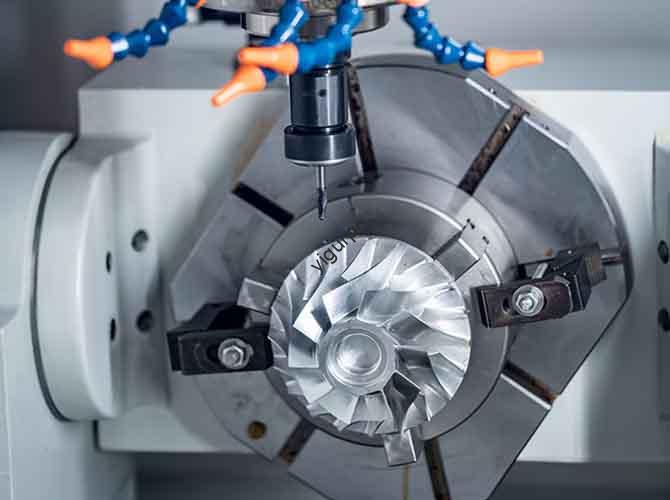
Se você já se perguntou como são feitas peças aeroespaciais complexas ou componentes médicos precisos, the answer often lies in amachining center. Estas máquinas versáteis são a espinha dorsal da fabricação moderna, mas com tantos tipos e especificações, é fácil se sentir sobrecarregado. Vamos detalhar isso passo a passo - quer você esteja comprando um, treinando sua equipe, or just curious, this guide has you covered.
1. Types of Machining Centers: Which Fits Your Work?
Not all machining centers are the same. The right choice depends on your parts, materiais, e volume de produção. Here’s a breakdown of the most common types with real-world context:
Vertical vs. Horizontal Machining Centers (VMC vs. HMC)
These two are the most widely used, but their strengths differ dramatically. Let’s compare them:
| Feature | Vertical Machining Center (VMC) | Horizontal Machining Center (HMC) |
|---|---|---|
| Spindle Orientation | Vertical (perpendicular to the ground) | Horizontal (parallel to the ground) |
| Best For | Top-surface work (plates, small casings) | Multi-sided parts (engine blocks, gearboxes) |
| Chip Removal | Needs frequent cleaning (chips pile on the table) | Gravity-aided (chips fall naturally) |
| Custo & Footprint | Compact, budget-friendly (small workshops) | Larger, pricier (high-volume production) |
Real Case Example: A medical device maker uses a VMC to machine small titanium casings (30mm x 20mm). The accessible table makes loading/unloading easy, and the coolant system directly targets the cutting area—critical for precision. Meanwhile, an automotive plant relies on HMCs for engine blocks, corte 4 sides in one setup and slashing production time by 35% .
5-Axis Machining Center: Complex Geometry Made Easy
Unlike 3-axis models, 5-Axis Machining Centers move along X, S, Z axes plus two rotary axes (A/B/C), letting you machine from almost any angle in one setup. This eliminates repositioning errors and speeds up work.
Estudo de caso: An aerospace supplier needed aluminum housings (180mm x 120mm x 60mm) with ±0.008mm tolerance for avionics. Using a 5-axis machine, they cut setup from 4 operations to 1, achieved defect-free parts, and hit their 8,000 units/year target . Another example: A tool maker used a 5-axis center for U-drill bodies (Φ40mm x 278mm), boosting 良率 from 90-95% para 98% by avoiding tool interference .
Other Common Types
- 3-Axis Mill: Basic, affordable—great for simple 2.5D work like drilling and face milling.
- Turn-Mill Center: Combines milling and turning in one machine (ideal for parts needing both, like shafts).
- Gantry Machining Center: Large, heavy-duty—handles 巨型 parts (por exemplo, 5m+ mold plates) with high stability.
2. Key Components: What Makes a Machining Center Work?
Every part of a machining center plays a role in precision and speed. Let’s break down the critical components:
Essencial “Brains & Muscles”
- CNC Control System: O “brain” (por exemplo, Fanuc, Siemens). It runs programs and controls all movements. A good system has vibration suppression and speed optimization—key for smooth cuts .
- Spindle: O “cutting heart”. Spindle Speed (RPM) e Power matter: High speeds (12,000+ RPM) work for aluminum; high torque (300+ N·m) is for steel .
- Tool Magazine & ATC: O Tool Magazine stores tools (capacity ranges from 10-100+), e o ATC (Automatic Tool Changer) swaps them fast. For complex parts, um 20+ tool magazine cuts downtime by 40% .
Structural Backbone
- Machine Bed & Column: Made of rigid cast iron to reduce vibration. A stable bed ensures long-term precision.
- Ball Screw & Linear Guideways: These drive axis movement. Pre-stretched ball screws eliminate backlash, while linear guideways boost Rapid Traverse Rate (up to 60m/min with linear motors) .
Support Systems
- Chip Conveyor: Removes chips to keep the workspace clean (critical for HMCs with high chip volume).
- Coolant System: Prevents overheating. HMCs need more robust systems to flush chips from internal cavities .
3. Critical Technical Specs: How to Compare Machines
When shopping for a machining center, specs aren’t just numbers—they determine if the machine can do your job. Here’s what to focus on:
Precision Metrics
- Positioning Accuracy: How close the spindle gets to the target (aim for ±0.005mm or better for precision work).
- Repeatability: How consistently it hits the same target (±0.003mm or less is ideal for batch production) .
Performance Specs
| Spec | What It Means For You |
|---|---|
| Spindle Speed (RPM) | 12,000+ RPM = Fast aluminum milling; 6,000 RPM = Steel cutting |
| Feed Rate | Higher rates (20-50mm/min) = Faster material removal |
| Table Load Capacity | Must match your heaviest part (por exemplo, 5 tons for large molds) |
| Pallet Changer | Automated (swaps workpieces in seconds) = Less downtime |
Pro Tip: Don’t chase “big numbers”. A machine with 24,000 RPM is overkill if you only cut steel. Balance specs with your needs .
4. Common Machining Operations: What Can You Do?
Machining centers handle a range of tasks—here are the most frequent, with when to use them:
- Fresagem: Shapes material with rotating cutters (used for flat surfaces or slots).
- Drilling: Creates holes (pair with tapping for threaded holes).
- Contouring & 3D Profiling: Makes curved surfaces (critical for molds or aerospace parts).
- Pocketing: Cuts hollow areas (por exemplo, cavities in engine parts).
Exemplo de caso: A toy maker used3D Profiling on a VMC to machine S136H mold parts for a popular action figure. The machine ran a 0.15mm small cutter for 10.5 hours straight, hitting ±10μm accuracy—no post-machining polishing needed .
Yigu Technology’s Perspective
Machining centers are evolving from “ferramentas” para “smart production hubs”. We see three key trends: 5-axis machines are becoming standard for mid-sized shops (thanks to falling costs), CNC Control Systems are integrating AI for predictive maintenance (reducing downtime by 25%), and sustainability features (energy-efficient spindles, coolant recycling) are no longer optional. For businesses, the goal isn’t just buying a machine—it’s choosing one that scales with your needs, whether that’s prototyping or high-volume production. Prioritize rigidity, user-friendly controls, and reliable support over flashy specs.
Perguntas frequentes: Your Top Machining Center Questions Answered
Q1: VMC or HMC—Which Should I Buy for Small-Batch Production?
UM: Go with a VMC. It’s cheaper, easier to maintain, and fits in small spaces. HMCs only make sense if you need multi-sided machining for 500+ parts/month.
Q2: How Important Is Spindle Power for My Work?
UM: Very—if you cut hard materials (aço, titanium), aim for 15+ kW. For aluminum or plastics, 5-10 kW is enough. Low power leads to slow cuts and tool wear.
Q3: Can a 5-Axis Machine Replace My 3-Axis Mill?
UM: It depends. If you only do simple work (perfuração, face milling), a 3-axis is more cost-effective. But if you’re moving to complex parts (por exemplo, implantes médicos), 5-axis saves time and improves accuracy.
Q4: What’s the Minimum Maintenance Needed?
UM: Daily: Clean chips and check coolant level. Weekly: Lubricate ball screws and linear guideways. Monthly: Inspect spindle vibration. Neglecting maintenance cuts machine life by 30% .