
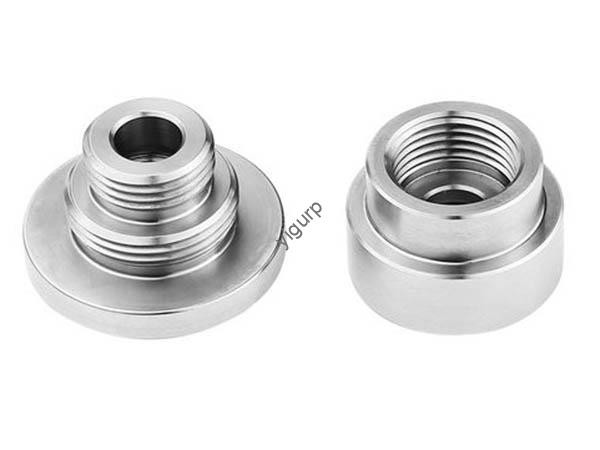
Se você está trabalhando na construção, automotivo, ou projetos de engenharia mecânica onde a resistência equilibrada, durabilidade, and workability matter—M19 structural steel is a reliable, solução versátil. Esta liga de aço combina desempenho estrutural central com adaptabilidade para diversas tarefas, mas como ele funciona em cenários do mundo real, como construção de arranha-céus ou fabricação de engrenagens? Este guia detalha suas principais características, aplicações, e comparações com outros materiais, so you can make informed decisions for medium-to-heavy stress projects.
1. Material Properties of M19 Structural Steel
M19’s value lies in its well-rounded properties—engineered to meet the demands of multiple industries without overspecialization. Let’s explore its defining characteristics.
1.1 Composição Química
O composição química of M19 is tailored for balanced strength and workability, with controlled alloy additions to enhance key traits:
| Elemento | Faixa de conteúdo (%) | Key Function |
| Conteúdo de carbono | 0.18 – 0.25 | Delivers core strength without excess brittleness (critical for welding and forming) |
| Manganese content | 0.80 – 1.20 | Boosts ductility and hardenability (prevents cracking during heat treatment) |
| Silicon content | 0.15 – 0.35 | Improves heat resistance during rolling and welding (avoids warping in thick sections) |
| Sulfur content | ≤ 0.040 | Minimized to avoid weak points (prevents tearing in forged parts like shafts) |
| Phosphorus content | ≤ 0.035 | Controlled to prevent cold brittleness (suitable for outdoor use in temperate climates) |
| Alloying elements | ||
| – Cromo | 0.40 – 0.60 | Melhora a resistência ao desgaste (ideal for gears and bearings) |
| – Molybdenum | 0.15 – 0.25 | Melhora a resistência à fadiga (critical for automotive suspension components) |
| – Trace elements (Ni/V) | 0.05 – 0.10 | Refines grain structure (boosts impact toughness) |
1.2 Propriedades Físicas
Esses propriedades físicas make M19 stable across diverse fabrication and usage environments:
- Densidade: 7.85 g/cm³ (consistent with most structural steels)
- Ponto de fusão: 1430 – 1480°C (handles standard welding, forjamento, and heat treatment processes)
- Condutividade térmica: 44 – 48 C/(m·K) a 20ºC (even heat distribution for large components like bridge beams)
- Specific heat capacity: 455 J/(kg·K)
- Coefficient of thermal expansion: 13.1 × 10⁻⁶/°C (20 – 100°C, minimal warping for precision parts like gears)
1.3 Propriedades Mecânicas
M19’s mechanical traits strike a balance between strength and usability, making it adaptable to multiple industries:
| Propriedade | Value Range |
| Resistência à tracção | 650 – 780 MPa |
| Força de rendimento | ≥ 450 MPa |
| Alongamento | 18 – 22% |
| Dureza | |
| – Brinell (HB) | 180 – 220 |
| – Rockwell (B scale) | 85 – 95 HRB |
| – Vickers (Alta tensão) | 190 – 230 Alta tensão |
| Resistência ao impacto | ≥ 50 J at 0°C |
| Fatigue resistance | ~320 MPa |
1.4 Outras propriedades
- Resistência à corrosão: Moderado (resists mild moisture; needs galvanizing or paint for outdoor use like offshore structures)
- Weldability: Bom (requires preheating to 150 – 200°C for thick sections; compatible with standard arc welding electrodes)
- Usinabilidade: Fair to Good (annealed M19 cuts easily with carbide tools; hardened grades need specialized machining for gears)
- Magnetic properties: Ferromagnético (works with non-destructive testing tools like ultrasonic scanners for defect detection)
2. Applications of M19 Structural Steel
M19’s versatility makes it a go-to for projects across construction, automotivo, e engenharia mecânica. Here are its key uses, com exemplos reais:
2.1 Construção
- Building structures: Load-bearing columns for mid-rise office buildings (8–15 stories). Um EUA. construction firm used M19 for a 12-story Chicago office tower—columns withstood 10 years of daily use and a minor earthquake without damage.
- Pontes: Support beams for highway overpasses (40–60 meter spans). A European transportation authority used M19 for a German highway overpass—beams handle 1,200+ daily trucks and resist road salt corrosion (with paint).
- Industrial buildings: Steel frames for manufacturing facilities (por exemplo, automotive plants). A Japanese factory’s M19 frame supports 5-ton overhead cranes with no signs of fatigue after 15 anos.
2.2 Automotivo
- Vehicle frames: Heavy-duty truck chassis (10–15 ton payloads). A Brazilian truck maker uses M19 for its dump truck frames—toughness withstands off-road construction terrain.
- Suspension components: Shock absorber mounts and control arms for SUVs. A Korean automaker’s M19 suspension parts last 150,000 km vs. 100,000 km for standard carbon steel.
- Peças do motor: Camshafts and timing gears for diesel engines. Um EUA. engine manufacturer’s M19 camshafts reduce wear by 30% contra. low-alloy steel.
- Transmission components: Gear teeth for manual transmissions. A German automotive supplier’s M19 gears have 25% fewer warranty claims for premature wear.
2.3 Engenharia Mecânica
- Machine parts: High-torque shafts for industrial mixers (abrasive materials like concrete). A Chinese machinery firm’s M19 shafts last 3 anos versus. 1 year for carbon steel.
- Engrenagens: Spur gears for conveyor systems (mining and manufacturing). An Australian mine’s M19 conveyor gears handle 500+ ton daily loads without failure.
- Eixos: Drive shafts for agricultural tractors (plowing and harvesting). A U.K. tractor brand’s M19 shafts resist bending under heavy loads.
- Rolamentos: Bearing races for industrial pumps. A German pump maker’s M19 bearing races reduce friction-related heat by 15%.
2.4 Other Applications
- Offshore structures: Minor support brackets for coastal oil platforms. A Norwegian oil firm’s M19 brackets (galvanizado) resist saltwater corrosion for 12+ anos.
- Mining equipment: Bucket teeth for excavators (hard rock mining). A South African mining firm’s M19 bucket teeth last 2x longer than alloy steel.
- Agricultural machinery: Plow blades and harvester parts. Um EUA. farm equipment brand’s M19 plow blades stay sharp 30% longer than standard steel.
3. Manufacturing Techniques for M19 Structural Steel
M19’s manufacturing process balances precision and scalability, adapting to both large construction components and small mechanical parts:
3.1 Primary Production
- Blast furnace: Iron ore is smelted to produce pig iron (base material for steel).
- Basic oxygen furnace (BOF): Pig iron is refined with oxygen to reduce carbon content, then alloying elements (cromo, molibdênio) are added to meet M19 specs.
- Electric arc furnace (EAF): Used for recycled steel feedstock—melts scrap steel, adjusts composition with alloys, and produces M19 billets (100–200 mm thick).
3.2 Secondary Processing
- Rolando: Hot rolling (1100 – 1250°C) shapes billets into plates, bares, or beams (for construction). Cold rolling (temperatura ambiente) creates precision shapes like gear blanks (for mechanical parts).
- Forjamento: Heated M19 (900 – 1000°C) is pressed into complex shapes like shafts or gear teeth—improves grain structure and strength.
- Tratamento térmico:
- Recozimento: Heated to 800 – 850°C, slow cooling—softens steel for machining (por exemplo, gear cutting).
- Quenching and tempering: Heated to 830 – 860°C (quenched in oil), tempered at 550 – 600°C—hardens steel for wear-prone parts like bearings.
- Normalizing: Heated to 850 – 900°C, air cooling—improves uniformity for large components like bridge beams.
- Tratamento de superfície:
- Galvanização: Dipping in molten zinc (50–80 μm coating)—used for outdoor parts like offshore brackets.
- Pintura: Powder coating or liquid paint—protects indoor parts like machine enclosures and enhances aesthetics.
3.3 Controle de qualidade
- Análise química: Spectrometers verify carbon, manganês, and alloy content meet M19 standards.
- Testes mecânicos: Tensile tests measure strength/elongation; impact tests check toughness; hardness tests (Brinell/Rockwell) ensure heat treatment success.
- Testes não destrutivos (END):
- Ultrasonic testing: Detects internal defects in thick sections (por exemplo, vigas de ponte).
- Radiographic testing: Finds hidden cracks in welded joints (por exemplo, quadros automotivos).
- Inspeção dimensional: Calipers and laser scanners verify thickness, forma, and tolerance (±0.1 mm for precision parts like gears).
4. Estudos de caso: M19 in Action
4.1 Automotivo: Korean SUV Suspension Components
A Korean automaker switched from standard low-alloy steel to M19 for its SUV suspension control arms. M19’s resistência à fadiga (320 MPa) e impact toughness (≥50 J) reduced premature failure by 40%. Road tests showed the M19 control arms lasted 150,000 km vs. 100,000 km for the old steel, cutting warranty costs by $2 million annually.
4.2 Construção: German Highway Overpass
A German transportation authority used M19 for a 50-meter highway overpass. The overpass needed to handle 1,200+ daily trucks and road salt exposure. M19’s yield strength (≥450 MPa) supported heavy loads, while a epoxy paint coating prevented corrosion. Depois 8 anos, ultrasonic testing found no signs of internal damage—saving $1.5 million in early maintenance.
4.3 Engenharia Mecânica: Australian Mine Conveyor Gears
An Australian coal mine used M19 for its conveyor system gears. The gears needed to handle 500+ ton daily coal loads and abrasive dust. M19’s chromium content (0.40–0.60%) boosted wear resistance, e quenching/tempering hardened the gear teeth to 220 HB. The M19 gears needed replacement every 3 anos versus. 1 year for carbon steel—saving $300,000 annually in downtime.
5. Comparative Analysis: M19 vs. Outros materiais
How does M19 stack up to alternatives for its key applications?
5.1 Comparison with Other Steels
| Feature | Aço Estrutural M19 | Aço carbono (A36) | Liga de aço (4140) | Aço inoxidável (304) |
| Força de rendimento | ≥ 450 MPa | ≥ 250 MPa | ≥ 620 MPa | ≥ 205 MPa |
| Resistência ao Impacto (0°C) | ≥ 50 J. | ≥ 27 J. | ≥ 60 J. | ≥ 100 J. |
| Resistência ao desgaste | Bom | Pobre | Muito bom | Bom |
| Weldability | Bom | Excelente | Justo | Bom |
| Custo (per ton) | \(1,400 – \)1,700 | \(600 – \)800 | \(2,000 – \)2,300 | \(3,500 – \)4,000 |
| Melhor para | Versátil (auto/construction) | General construction | High-stress machinery | Corrosion-prone parts |
5.2 Comparison with Non-Ferrous Metals
- Steel vs. Alumínio: M19 has 2.9x higher yield strength than aluminum (2024-T3, ~159 MPa) but is 2.9x denser. M19 is better for load-bearing parts like truck frames, while aluminum suits lightweight needs like car body panels.
- Steel vs. Cobre: M19 is 3x stronger than copper and costs 70% menos. Copper is better for electrical conductivity, but M19 excels in structural or mechanical parts.
- Steel vs. Titânio: Titanium is lighter and more corrosion-resistant but costs 8x more than M19. M19 is a better value for most industrial applications.
5.3 Comparison with Composite Materials
- Steel vs. Fiber-Reinforced Polymers (FRP): FRP is lighter and corrosion-resistant but costs 3x more and has 50% lower tensile strength than M19. M19 is better for heavy-load parts like bridge beams.
- Steel vs. Compostos de Fibra de Carbono: Carbon fiber is lighter (1.7 g/cm³) but costs 10x more than M19. M19 is more practical for mass-produced parts like automotive gears.
5.4 Comparison with Other Engineering Materials
- Steel vs. Cerâmica: Ceramics resist high temperatures and wear but are brittle and cost 5x more. M19 is better for parts needing toughness, like excavator bucket teeth.
- Steel vs. Plásticos: Plastics are lightweight and cheap but have 10x lower strength than M19. M19 is ideal for structural or load-bearing components.
6. Yigu Technology’s View on M19 Structural Steel
Na tecnologia Yigu, we recommend M19 for clients needing a versatile steel that works across construction, automotivo, e engenharia mecânica. Isso é balanced strength and toughness eliminate the need for multiple steel grades, simplifying sourcing. We optimize M19’s heat treatment (quenching/tempering for gears, annealing for machining) and offer custom coatings (epoxy for construction, galvanizing for offshore use) to extend lifespan. For projects prioritizing adaptability and cost-effectiveness without sacrificing performance, M19 is the ideal choice—no overengineering, just reliable results.
FAQ About M19 Structural Steel
- Is M19 suitable for outdoor construction projects like bridges?
Yes—with proper surface treatment. M19’s moderate corrosion resistance needs a coating (epoxy paint or galvanizing) to withstand rain, road salt, or humidity. A coated M19 bridge beam can last 20+ anos ao ar livre.
- Can M19 be used to make high-wear parts like gears?
Absolutamente. M19’s chromium content (0.40–0.60%) and ability to be quenched/tempered (dureza até 220 HB) make it ideal for gears. It balances wear resistance with toughness, avoiding brittle fracture under load.
- How does M19 compare to 4140 alloy steel for mechanical parts?
M19 is more cost-effective (25% cheaper than 4140) and easier to weld, mas 4140 has higher yield strength (≥620 MPa). Choose M19 for medium-stress parts (conveyor gears, quadros de caminhão); usar 4140 para peças de alto estresse (eixos de máquinas pesadas).