
Our Low Pressure Die Casting (LPDC) Serviços
Elevate your manufacturing with Low Pressure Die Casting (LPDC) — the go-to casting technology for high-precision, cost-efficient parts. Esteja você no setor automotivo, aeroespacial, ou eletrônicos, our LPDC solutions deliver superior strength, reduced porosity, and tight tolerance levels, backed by decades of technical expertise and top-tier equipment. Transform your projects with reliable, high-quality castings tailored to your industry needs.
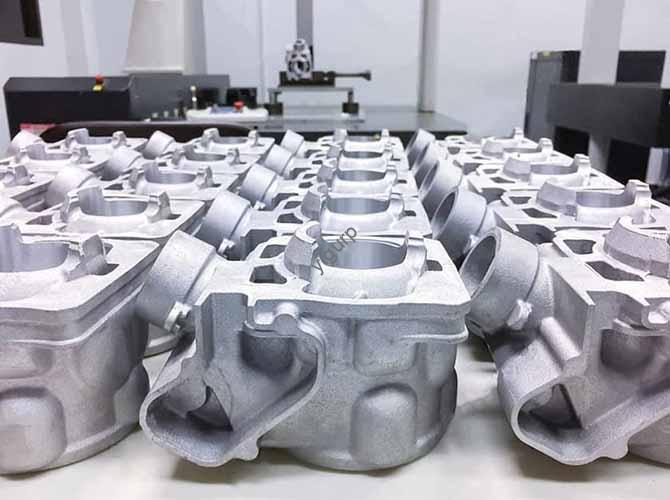
Definição: Understanding LPDC Basics
Em sua essência, Low Pressure Die Casting (LPDC) is a specialized casting technology designed to produce high-quality metal parts with minimal defects. Unlike high-pressure methods, LPDC uses low air or gas pressure (typically 0.5–5 bar) to push molten metal into a reusable die, ensuring even filling and solidification.
Esse process overview highlights why LPDC stands out: it eliminates turbulence, reducing porosity and improving structural integrity. For those new to the term, LPDC meaning boils down to a controlled, efficient way to create complex parts that meet strict industry standards. Whether you’re manufacturing small electronic components or large automotive parts, LPDC’s focus on precision makes it a versatile choice.
Our Capabilities: Delivering Excellence in LPDC
Na tecnologia Yigu, our capabilities in LPDC are built on three pillars: technical expertise, avançado equipamento, and proven experience. We don’t just offer casting services — we provide end-to-end solutions that align with your production goals.
| Capability Area | Details |
| Technical Expertise | Team of 20+ engineers with 10+ years in LPDC; certified in alloy science and die design. |
| Equipamento | 15 state-of-the-art LPDC machines (5–500 ton clamping force); automated quality inspection tools. |
| Capacity | Monthly production of 50,000+ parts; ability to scale for high-volume orders (até 200,000 units/month). |
| Controle de qualidade | 6-step inspection process (from material testing to final dimensional checks); 99.8% defect-free rate. |
Our experience spans 15+ industries, from automotive to medical devices, and our controle de qualidade protocols ensure every part meets or exceeds your specifications. Whether you need a prototype or mass-produced components, we have the tools and knowledge to deliver.
Processo: Step-by-Step Breakdown of LPDC
O casting process for LPDC is straightforward yet highly controlled, ensuring consistency and precision at every stage. Abaixo está um detalhado procedure of the key steps, along with typical cycle time for common part sizes:
- Die Preparation: The reusable die is preheated to 200–400°C and coated with a release agent to prevent metal sticking.
- Molten Metal Preparation: Materials used (por exemplo, aluminum alloys) are melted in a furnace at 650–750°C and tested for purity.
- Pressure Application: Low pressure (0.5–5 bar) is applied to push molten metal from the holding furnace into the die cavity.
- Solidification: The metal cools and solidifies in the die (1–15 minutes, depending on part size).
- Die Opening & Part Removal: The die opens, and the finished part is removed using automated tools.
- Secondary Operations: Trimming, deburring, or surface treatment is performed to meet final specs.
| Part Size | Typical Cycle Time |
| Small (≤100g) | 1–3 minutes |
| Medium (100g–1kg) | 3–8 minutes |
| Large (>1kg) | 8–15 minutes |
Esse low pressure technique ensures minimal waste and consistent part quality, making it ideal for high-production runs.
Materiais: Choosing the Right Alloys for LPDC
The success of an LPDC project depends heavily on seleção de materiais — the right alloy can enhance strength, reduzir peso, and improve corrosion resistance. Na tecnologia Yigu, we work with three primary materials used in LPDC, each with unique alloy properties:
| Alloy Type | Common Grades | Key Properties | Ideal Applications |
| Aluminum Alloys | A356, A380, 6061 | Lightweight (2.7 g/cm³), alta resistência, good corrosion resistance. | Automotive parts (wheels, engine components), aerospace components. |
| Magnesium Alloys | AZ91D, AM60B | Ultra-lightweight (1.8 g/cm³), high stiffness, good machinability. | Electronics (laptop casings), medical devices. |
| Copper Alloys | C36000, C17200 | Excellent conductivity (electrical/thermal), high ductility. | Electrical connectors, heat sinks. |
Our team helps you select the best alloy based on your project’s needs — whether you prioritize weight reduction (ligas de magnésio) or strength (aluminum alloys).
Tratamento de superfície: Enhancing Aesthetics and Durability
After casting, tratamento de superfície is critical to improving a part’s appearance, resistência à corrosão, e funcionalidade. We offer a range of surface finishing options to meet your specific requirements:
| Treatment Type | Process Description | Benefits | Industry Use Cases |
| Coatings | Application of polymer or ceramic layers via spraying or dipping. | Enhances corrosion resistance; adds color. | Automotive exterior parts, consumer goods. |
| Painting | Powder coating or liquid painting for a smooth, uniform finish. | Improves aesthetics; protects against scratches. | Furniture components, outdoor equipment. |
| Plating | Electrochemical deposition of metals (por exemplo, chrome, níquel). | Increases hardness; improves conductivity. | Electrical parts, decorative components. |
| Polimento | Mechanical buffing to create a glossy, mirror-like surface. | Enhances aesthetics; removes surface imperfections. | Aerospace components, high-end consumer goods. |
| Anodizing | Electrochemical process to create an oxide layer on aluminum/magnesium. | Improves corrosion resistance; allows dyeing. | Automotive parts, electronics casings. |
Each tratamento de superfície is tailored to your part’s material and end use, ensuring long-lasting performance and visual appeal.
Tolerâncias: Achieving Precision in Every Part
Tolerâncias are non-negotiable in manufacturing — tight tolerance levels ensure parts fit seamlessly into larger assemblies. Our LPDC process delivers exceptional precisão e precisão, meeting even the most stringent industry standards.
| Part Feature | Typical Tolerance Range | Measurement Method |
| Dimensional Accuracy | ±0.1 mm (for parts ≤100mm); ±0.2 mm (for parts >100milímetros) | Coordinate Measuring Machine (CMM), laser scanning. |
| Flatness | 0.05 mm/m | Surface plate with dial indicator. |
| Roundness | 0.02 mm | Roundness tester. |
We adhere to global quality standards (por exemplo, ISO 9001, IATF 16949 for automotive) to ensure estabilidade dimensional — even over high-production runs. Our measurement tools are calibrated regularly to maintain accuracy.
Vantagens: Why LPDC Outperforms Other Casting Methods
LPDC offers a range of vantagens that make it a top choice for manufacturers across industries. Below is a comparison of LPDC with other common casting methods, highlighting its key benefícios:
| Advantage | LPDC Performance | High-Pressure Die Casting (HPDC) | Sand Casting |
| Reduced Porosity | <1% porosidade (ideal for leak-tight parts) | 2–5% porosity | 5–10% porosity |
| Força | 10–15% higher tensile strength than HPDC | Good strength but lower than LPDC | Lower strength |
| Weight Reduction | Enables thin-walled parts (1–3mm) | Limited to 2–5mm walls | Thick walls (5+milímetros) |
| Cost Efficiency | 15–20% lower material waste than HPDC | Higher waste (5–10%) | High waste (15–20%) |
| High Production Rate | Up to 60 parts/hour (medium-sized parts) | Up to 120 parts/hour | 10–20 parts/hour |
Additional benefícios of LPDC include better material flow (reducing defects) and compatibility with a wide range of alloys — making it a versatile, solução econômica.
Applications Industry: Where LPDC Shines
LPDC’s versatility makes it suitable for a diverse set of industries served, from automotive to medical devices. Below are key sectors where our LPDC parts make a difference:
| Industry | Common LPDC Applications | Key Requirements Met |
| Automotivo | Wheels, engine blocks, transmission housings, suspension components. | High strength, tolerâncias apertadas, weight reduction. |
| Aeroespacial | Structural components, fuel system parts, landing gear components. | High strength-to-weight ratio, corrosion resistance. |
| Electronics | Heat sinks, connector housings, laptop casings. | Lightweight, good thermal conductivity, precision. |
| Telecomunicações | Antenna parts, router housings. | Dimensional stability, durability. |
| Medical Devices | Instrumentos cirúrgicos, implant components (ligas de magnésio). | Biocompatibility, precisão, corrosion resistance. |
| Consumer Goods | Furniture hardware, kitchen appliances, tool casings. | Aesthetics, durabilidade, cost efficiency. |
Our team has deep experience in each industry, ensuring your parts meet sector-specific standards (por exemplo, FDA for medical devices, AS9100 for aerospace).
Manufacturing Techniques: Innovations in LPDC
Na tecnologia Yigu, we combine traditional LPDC with advanced técnicas de fabricação to optimize efficiency and quality. Our key innovations include:
- Tooling: Custom die designs using 3D modeling (CAD) and high-wear-resistant materials (H13 steel), extending die life to 100,000+ cycles.
- Automation: Robotic arms for die preparation, part removal, and inspection — reducing labor costs by 30% and improving consistency.
- Solidification Control: Computer-controlled cooling systems to adjust solidification rates, minimizing internal stresses and defects.
- Secondary Operations: In-house machining (fresagem, perfuração) and assembly services to deliver ready-to-use parts, cutting lead times by 20%.
Esses techniques ensure our LPDC process is not just efficient, but also adaptable to your unique project needs — whether you require complex geometries or rapid prototyping.
Case Studies: Real-World Success with LPDC
Our case studies demonstrate how LPDC solves real manufacturing challenges. Below are two examples of successful projects:
Estudo de caso 1: Automotive Wheel Production for a Global OEM
- Client: Leading automotive manufacturer.
- Challenge: Need for lightweight, high-strength wheels with <1% porosidade (to prevent leaks).
- Solution: Used aluminum alloy A356 in LPDC; implemented automated solidification control and anodizing for corrosion resistance.
- Results: 15% weight reduction vs. previous HPDC wheels; 99.9% defect-free rate; monthly production of 10,000 units.
Estudo de caso 2: Medical Device Housing for a Healthcare Company
- Client: Medical equipment manufacturer.
- Challenge: Require biocompatible, ultra-lightweight housings for portable diagnostic tools.
- Solution: Selected magnesium alloy AZ91D; applied powder coating for durability; maintained ±0.05mm tolerance levels.
Results: 30% weight reduction vs. plastic housings; meets FDA biocompatibility standards; 6-week production lead time.
Why Choose Us: Your Trusted LPDC Partner
When it comes to Low Pressure Die Casting, Yigu Technology stands out for our unique combination of expertise, innovation, and customer focus. Here’s why you should choose us:
- Unique Selling Points (USPs): We offer end-to-end solutions — from seleção de materiais and die design to tratamento de superfície and assembly — eliminating the need for multiple vendors.
- Customer Service: Dedicated account managers available 24/7 to address questions; regular production updates to keep you informed.
- Custom Solutions: Our engineering team designs LPDC processes tailored to your part’s geometry, material, and performance requirements.
- Inovação: We invest 10% of annual revenue in R&D to adopt new technologies (por exemplo, AI-powered quality inspection) and improve efficiency.
- Confiabilidade: 98% on-time delivery rate; 5-year warranty on die tools; ISO 9001 and IATF 16949 certifications.
Whether you’re a small business or a large enterprise, we have the capabilities to bring your LPDC projects to life.