
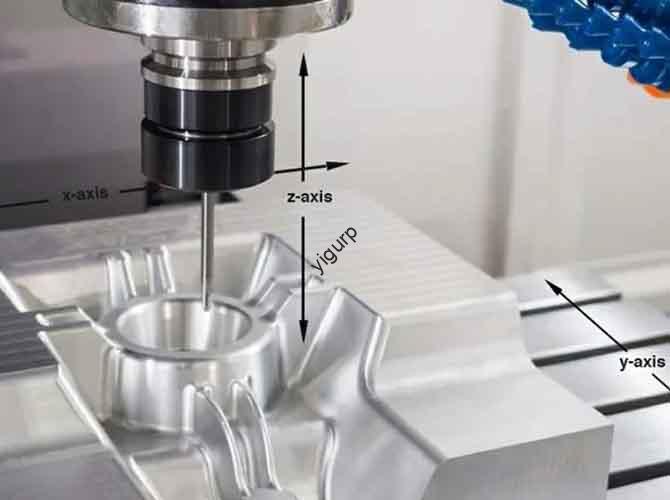
Lâmpadas inteligentes, integrando funções como controle WiFi e escurecimento, tornaram-se um produto básico em casas inteligentes. A qualidade de seus protótipos, shaped largely by Usinagem CNC, impacta diretamente o sucesso da produção em massa. Este artigo detalha o processo completo de usinagem CNC para protótipos de lâmpadas inteligentes, addressing key challenges engineers and manufacturers face—from design to assembly.
1. Pre-Machining: Projeto & Seleção de Materiais
A solid design and suitable materials lay the groundwork for a functional prototype. This stage balances aesthetics, funcionalidade, and machining feasibility to avoid rework later.
1.1 3Modelagem D & Structural Breakdown
The intelligent light bulb is split into core components, each with precise design requirements. Abaixo está uma análise detalhada:
| Component | Design Requirements | Key CNC Machining Considerations |
| Lampshade | Translucent, smooth inner wall (for uniform light); modern/minimalist shape | Needs mirror polishing after machining; avoids complex undercuts |
| Heat Dissipation Aluminum Shell | Integrated heat dissipation fins (espaçamento: 1.5-2milímetros); fits circuit board | Fins require precise milling to prevent deformation; compatible with clamping |
| Lamp Holder | Standard threaded interface (por exemplo, E27, pitch 2.8mm); reserved wire holes | Thread accuracy ±0.05mm to match commercial sockets; hole positioning must align with circuit |
| Circuit Board Bracket | Snap-fit structure; resistente ao calor (to withstand LED heat) | Snaps need precise dimensioning for tight assembly; no sharp edges |
1.2 Material Comparison for Core Components
Choosing the right material affects performance, custo, and machining efficiency. Here’s a side-by-side analysis:
| Component | Optional Materials | Vantagens | Disadvantages |
| Lampshade | Acrílico | High light transmittance (≥90%), fácil de usinar | Low impact resistance; prone to scratching |
| PC Plastic | Resistente ao calor (até 120ºC), durável | Custo mais alto; requires slower feed speed | |
| Heat Dissipation Shell | Liga de alumínio (6061) | Excelente condutividade térmica, leve | Needs coolant during machining; anodization required post-processing |
| Cobre | Better heat dissipation than aluminum | Pesado; high machining cost | |
| Insulating Parts | Nylon | Good insulation, resistente ao desgaste | Low rigidity; may deform under high temperature |
2. CNC Machining Preparation: Ferramentas, Parameters & Fixtures
Proper preparation prevents machining errors and ensures consistency. This stage focuses on tool selection, parameter setting, and secure clamping.
2.1 Tool Selection for Key Processes
Different machining steps demand specific tools to balance efficiency and precision:
| Machining Stage | Tool Type | Size (milímetros) | Propósito |
| Roughing | Flat Bottom Cutter | Φ8-10 | Quickly remove excess material; retain 0.5-1mm allowance |
| Acabamento (Lampshade) | Ball Head Cutter | Φ3-5 | Smooth curved surfaces; achieve mirror-like inner wall |
| Perfuração (Wire Holes) | Twist Drill | Φ2-3 | Create precise holes for wire routing |
| Tocando (Threaded Interface) | Tap (E27) | Standard pitch | Machine compatible threads for lamp sockets |
2.2 Critical Machining Parameters by Material
Material properties dictate parameters—incorrect settings cause melting (plásticos) or tool wear (metais):
| Material | Rotational Speed (RPM) | Feed Speed (mm/min) | Special Requirements |
| Acrílico | 15,000 – 20,000 | 200 – 300 | Layered cutting (each layer 0.3mm) para evitar derreter |
| PC Plastic | 12,000 – 18,000 | 150 – 250 | Use compressed air to blow away chips; prevent clogging |
| Liga de alumínio (6061) | 8,000 – 12,000 | 100 – 200 | Coolant must be used; avoid high speed to prevent burrs |
2.3 Projeto de luminária & Clamping Tips
Secure clamping prevents vibration, which ruins precision. Key practices:
- Lampshade: Use vacuum suction cups (para superfícies planas) to avoid pressure marks; no over-clamping (risk of deformation).
- Aluminum Shell: Vises with soft jaws (rubber-lined) to protect the surface; align fins with machining direction.
- Peças Pequenas (Colchetes): Custom fixtures with locating pins to ensure consistent positioning across prototypes.
3. Processo de usinagem CNC: Roughing, Acabamento & Special Treatments
This stage transforms raw materials into components. It follows a linear sequence: roughing → finishing → special processes.
3.1 Step-by-Step Machining Workflow
- Roughing: Use a flat bottom cutter to shape the component’s basic form. Por exemplo, mill the aluminum shell’s outer contour and fin grooves—remove 80% of excess material in 1-2 passes.
- Acabamento: For the lampshade, use a ball head cutter to refine the inner wall (surface roughness Ra ≤ 0.8μm) for uniform light. For the threaded interface, tap with an E27 tool to ensure socket compatibility.
- Special Processes:
- Metal parts: Anodize the aluminum shell (black/silver) for corrosion resistance and aesthetics.
- Plastic parts: Laser engrave WiFi icons or brand logos on the lampshade (translucent patterns for style).
3.2 Problemas comuns & Soluções
Even with preparation, problems arise. Here’s how to troubleshoot:
| Issue | Cause | Solução |
| Lampshade Scratches | Tool dullness; high feed speed | Replace with new ball head cutter; reduce feed speed by 20% |
| Thread Misalignment | Fixture shift; incorrect tap alignment | Re-calibrate fixture; use a center drill to guide tapping |
| Aluminum Shell Burrs | Low coolant flow; high rotational speed | Increase coolant supply; reduce RPM by 1,000 |
4. Pós-processamento & Conjunto: Ensure Functionality & Safety
Post-processing improves durability and appearance, while assembly verifies that all parts work together.
4.1 Etapas de pós-processamento
| Component | Processo | Propósito |
| Lampshade | Lixar (400-1000 mesh) + Polimento | Remove knife marks; enhance light transmittance |
| Aluminum Shell | Ultrasonic Cleaning + Anodization | Remove oil/chips; prevent rust |
| Insulating Brackets | Rebarbação (file or sandpaper) | Eliminate sharp edges; avoid wire damage |
4.2 Conjunto & Teste Funcional
Assembly follows a logical order to avoid rework, and testing ensures the prototype meets smart home requirements:
Assembly Steps (Linear Narrative):
- Attach the circuit board to the bracket using snaps (ensure no wire pinching).
- Secure the aluminum heat dissipation shell to the bracket with screws (torque: 0.5 N·m).
- Install the lampshade (snap-fit or glue) – check for gaps (≤0.1mm) to prevent light leakage.
- Connect the lamp holder to the circuit board (solder wires; insulate with heat-shrink tubing).
Functional Testing Checklist:
- Electrical Safety: Test insulation (no leakage when 220V power is applied).
- Smart Functions: Verify WiFi connection (connect to app within 10 segundos); test dimming (10%-100% brightness adjustment).
- Durabilidade: Simulate 1,000 on/off cycles; check for loose parts or overheating.
5. Precautions: Precisão, Safety & Cost Control
This section addresses long-term success—avoiding costly mistakes and ensuring user safety.
5.1 Precision Control Standards
- Tolerância Dimensional: Plastic parts ±0.1mm (por exemplo, lampshade diameter); metal parts ±0.05mm (por exemplo, threaded interface).
- Rugosidade Superficial: Lampshade inner wall Ra ≤ 0.8μm (for uniform light); aluminum shell Ra ≤ 1.6μm (for anodization adhesion).
5.2 Safety & Cost Optimization Tips
- Safety:
- Wear safety goggles during machining (prevent chip splashing).
- Use low-voltage (12V) power for initial circuit testing (avoid electric shock).
- Cost Control:
- Reuse fixtures for multiple prototypes (reduce custom tooling costs).
- Prioritize flat geometries (avoid complex curves that increase machining time).
Yigu Technology’s Viewpoint
For CNC machining of intelligent light bulb prototypes, balancing precisão e funcionalidade is key. Yigu Technology emphasizes that the design stage must prioritize CNC compatibility—for example, avoiding undercuts in the lampshade that complicate machining. Material selection also matters: liga de alumínio 6061 strikes the best balance between heat dissipation and cost for the shell. Pós-processamento, like anodization, isn’t just cosmetic; it protects the metal from corrosion in humid home environments. Looking ahead, as smart bulbs add features (por exemplo, motion sensors), CNC machining will need to handle smaller, more intricate parts—demanding tighter tolerances and advanced tooling.
Perguntas frequentes
- What is the most suitable CNC machine for intelligent light bulb prototypes?
Desktop CNC machining centers (por exemplo, Haas TM-1) or small engraving machines (3018 Pro) are ideal. They handle small components (lampshades, conchas) with precision and are cost-effective for prototype batches.
- Why is the aluminum shell anodized post-machining?
Anodization creates a dense oxide layer (5-10μm) on the aluminum surface. This prevents rust (critical for humid bathrooms/kitchens) and improves aesthetics—black or silver finishes match modern home decor.
- How to ensure the lampshade’s light transmittance meets requirements?
Use acrylic (≥90% transmittance) and finish with a ball head cutter (Ra ≤ 0.8μm). Post-processing with 1000-mesh sandpaper and polishing compound removes scratches, ensuring uniform light distribution.