
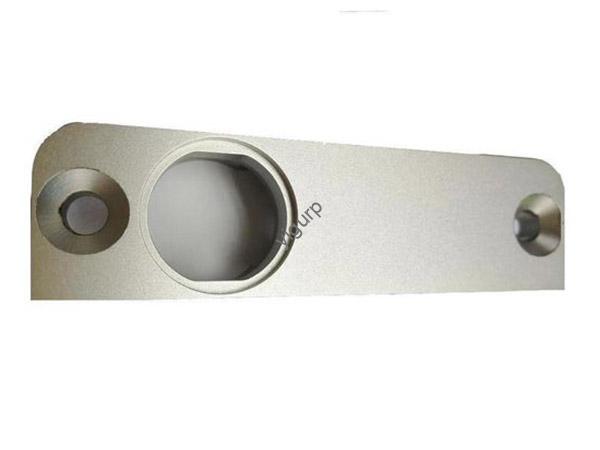
O aço para ferramentas H11 é um aço para ferramentas premium para trabalho a quente, celebrado por seu excepcional dureza quente e mistura equilibrada de força, resistência, e resistência ao desgaste. Ao contrário dos aços para ferramentas para trabalho a frio (por exemplo, D2), é feito sob medida composição química—com cromo direcionado, molibdênio, e adições de vanádio - permite reter a dureza em temperaturas elevadas (até 600ºC), tornando-o a melhor escolha para matrizes de forjamento a quente, ferramentas de extrusão, e componentes automotivos/aeroespaciais de alta temperatura. Neste guia, vamos detalhar suas principais características, usos no mundo real, processos de fabricação, e como ele se compara a outros materiais, ajudando você a selecioná-lo para projetos que exigem confiabilidade em ambientes de alta temperatura.
1. Principais propriedades do material do aço ferramenta H11
O desempenho do aço ferramenta H11 é definido por sua calibração precisa composição química, que molda sua robustez propriedades mecânicas, consistente propriedades físicas, e características destacadas de alta temperatura.
Composição Química
A fórmula do H11 é otimizada para aplicações de trabalho a quente, com intervalos fixos para elementos-chave:
- Conteúdo de carbono: 0.35-0.45% (equilibra resistência e tenacidade – alta o suficiente para resistência ao desgaste, baixo o suficiente para evitar fragilidade em altas temperaturas)
- Conteúdo de cromo: 4.75-5.50% (forma carbonetos resistentes ao calor para excelente resistência ao desgaste e aumenta a temperabilidade)
- Conteúdo de manganês: 0.20-0.60% (aumenta a temperabilidade sem criar carbonetos grossos que enfraquecem o aço)
- Conteúdo de silício: 0.15-0.35% (auxilia na desoxidação durante a fabricação e melhora a estabilidade em altas temperaturas)
- Conteúdo de molibdênio: 1.10-1.75% (o elemento estrela para um desempenho excelente - melhora dureza quente e resiste à fadiga térmica, crítico para ciclos repetidos de aquecimento/resfriamento)
- Conteúdo de vanádio: 0.80-1.10% (refina o tamanho do grão, melhora a resistência, e forma carbonetos de vanádio duros para maior resistência ao desgaste)
- Conteúdo de fósforo: ≤0,03% (estritamente controlado para evitar fragilidade pelo frio, especialmente no uso pós-tratamento térmico)
- Conteúdo de enxofre: ≤0,03% (ultra-baixo para manter a tenacidade e evitar rachaduras durante a conformação a quente)
Propriedades Físicas
O aço para ferramentas H11 possui características físicas consistentes que simplificam o projeto para aplicações de alta temperatura:
| Propriedade | Valor Típico Fixo |
| Densidade | ~7,85g/cm³ |
| Condutividade térmica | ~35 C/(m·K) (a 20 °C - mais alta do que aços para ferramentas para trabalho a frio, permitindo uma dissipação de calor eficiente durante o trabalho a quente) |
| Capacidade térmica específica | ~0,48kJ/(kg·K) (a 20ºC) |
| Coeficiente de expansão térmica | ~11 x 10⁻⁶/°C (20-500°C – inferior aos aços inoxidáveis austeníticos, minimizando a distorção térmica) |
| Propriedades magnéticas | Ferromagnético (retém o magnetismo em todos os estados tratados termicamente, consistente com aços para ferramentas para trabalho a quente) |
Propriedades Mecânicas
Após tratamento térmico padrão (recozimento + têmpera + têmpera), H11 oferece desempenho confiável para aplicações quentes e frias:
- Resistência à tracção: ~1800-2000 MPa (maior que o aço ferramenta A2, adequado para matrizes de forjamento a quente de alta carga)
- Força de rendimento: ~1400-1600 MPa (garante que as ferramentas resistam à deformação permanente sob cargas pesadas de trabalho a quente)
- Alongamento: ~10-15% (em 50 mm – alta ductilidade para um aço para trabalho a quente, permitindo pequenas remodelações sem rachaduras)
- Dureza (Escala Rockwell C): 58-62 CDH (após tratamento térmico - ajustável para 52-56 HRC para máxima tenacidade em ferramentas quentes de alto impacto)
- Força de fadiga: ~700-800MPa (a 10⁷ ciclos - superior aos aços para trabalho a frio como D2, ideal para ferramentas sob aquecimento/resfriamento repetidos)
- Resistência ao impacto: Moderado a alto (~40-50 J/cm² em temperatura ambiente)—maior do que a maioria dos aços para trabalho a quente, reduzindo o risco de rachaduras por fadiga térmica
Outras propriedades críticas
- Excelente resistência ao desgaste: Carbonetos de cromo e vanádio resistem à abrasão, mesmo em altas temperaturas – ideal para forjamento a quente de aço ou alumínio.
- Boa resistência: Equilibrado com força, tornando-o adequado para aplicações quentes de alto impacto (por exemplo, matrizes de forjamento de martelo) onde os aços frágeis quebrariam.
- Alta dureza a quente: Retém ~50 HRC a 600°C (muito superior aos aços para trabalho a frio)—crítico para manter a forma e a resistência ao desgaste durante o trabalho a quente.
- Usinabilidade: Bom (antes do tratamento térmico)—recozido H11 (dureza ~220-250 Brinell) é fácil de usinar com ferramentas de metal duro; evite usinar após o endurecimento (58-62 CDH).
- Soldabilidade: Justo – alto teor de carbono e liga aumenta o risco de rachaduras; pré-aquecimento (300-400°C) e revenimento pós-soldagem são necessários para restaurar a tenacidade e evitar fragilidade.
2. Aplicações no mundo real do aço para ferramentas H11
A mistura de H11 de alta dureza a quente, excelente resistência ao desgaste, e tenacidade o torna ideal para trabalhos a quente e aplicações de alta temperatura. Aqui estão seus usos mais comuns:
Ferramentas de trabalho a quente
- Matrizes de forjamento a quente: Matrizes para forjamento de peças de aço ou alumínio (por exemplo, virabrequins automotivos) use H11—dureza quente mantém a forma durante o forjamento a 500-600°C, e a tenacidade resiste ao impacto de martelos de forjamento.
- Matrizes de extrusão a quente: Matrizes para extrusão de perfis de alumínio ou cobre (por exemplo, caixilhos de janelas) use H11 – a resistência ao desgaste lida com o atrito do metal fundido, e a resistência à fadiga térmica prolonga a vida útil da matriz.
- Ferramentas de estampagem a quente: Ferramentas para estampagem a quente de aço de alta resistência (por exemplo, painéis de carroceria automotiva) use H11 – mantém a dureza a 500°C, garantindo um formato consistente do painel 100,000+ estampados.
Exemplo de caso: Uma forja automotiva usou aço ferramenta H13 (um aço comum para trabalho a quente) para matrizes de forjamento de virabrequim. As mortes do H13 duraram 8,000 ciclos de forjamento antes de mostrar desgaste. Eles mudaram para H11, e as mortes duraram 12,000 ciclos - vida útil 50% maior - reduzindo os custos de substituição da matriz $30,000 anualmente.
Ferramentas de corte
- Fresas: Fresas para usinagem de ligas de alta temperatura (por exemplo, Inconel) use H11—dureza quente mantém a nitidez em temperaturas de corte de 400-500°C, superando os cortadores HSS padrão.
- Ferramentas de torneamento: Ferramentas de torno para torneamento de metais resistentes ao calor usam H11 – a resistência ao desgaste reduz as trocas de ferramentas, melhorando a eficiência da produção.
- Broches: Broches de liga de alta temperatura (por exemplo, para componentes aeroespaciais) use H11 - a resistência resiste ao lascamento, e a dureza quente mantém a precisão.
Ferramentas de formação & Moldagem de plástico
- Soca e morre: Os punções de conformação a quente para chapas de metal espessas usam H11 – a resistência suporta cargas elevadas, e a resistência à fadiga térmica evita rachaduras.
- Ferramentas de moldagem por injeção: Moldes para plásticos de alta temperatura (por exemplo, náilon ou PEEK) use H11 – resiste ao desgaste causado pelo fluxo de plástico e mantém a forma em temperaturas de moldagem de 300°C.
- Ferramentas de moldagem por sopro: Ferramentas para moldagem por sopro de grandes peças plásticas (por exemplo, tanques de combustível) use H11 – a resistência resiste à pressão, e a resistência ao desgaste mantém a precisão do molde.
Aeroespacial & Indústrias Automotivas
- Indústria aeroespacial: Componentes de alta temperatura (por exemplo, matrizes de forjamento da lâmina da turbina ou escudos térmicos do motor) use H11—dureza quente suporta temperaturas do motor de 600°C, e a resistência suporta cargas estruturais.
- Indústria automotiva: Componentes de alto desempenho (por exemplo, válvulas de motor de corrida ou coletores de escapamento) use H11 – a resistência ao calor suporta temperaturas de exaustão de 500°C+, e a resistência ao desgaste reduz a degradação dos componentes.
3. Técnicas de fabricação para aço ferramenta H11
A produção de aço para ferramentas H11 requer precisão para manter seu equilíbrio químico e otimizar o desempenho em altas temperaturas. Aqui está o processo detalhado:
1. Processos Metalúrgicos (Controle de composição)
- Forno Elétrico a Arco (EAF): O método principal – sucata de aço, cromo, molibdênio, vanádio, e outras ligas são fundidas a 1.650-1.750°C. Monitoramento de sensores composição química para manter os elementos dentro dos intervalos fixos do H11 (por exemplo, 4.75-5.50% cromo e 1.10-1.75% molibdênio), crítico para dureza a quente.
- Forno de oxigênio básico (BOF): Para produção em larga escala – o ferro fundido de um alto-forno é misturado com sucata de aço, então o oxigênio é soprado para ajustar o conteúdo de carbono. Ligas (molibdênio, vanádio) são adicionados pós-sopro para evitar oxidação.
2. Processos Rolantes
- Laminação a quente: A liga fundida é fundida em lingotes, aquecido a 1.100-1.200°C, e enrolado em barras, pratos, ou folhas. A laminação a quente quebra carbonetos grandes e molda o material em peças brutas de ferramentas (por exemplo, forjando blocos de matrizes).
- Laminação a frio: Raramente usado – H11 é principalmente para ferramentas de trabalho a quente, que requerem seções grossas; a laminação a frio é usada apenas para chapas finas (por exemplo, pequenas ferramentas de corte) para melhorar o acabamento superficial.
3. Tratamento térmico (Crítico para um excelente desempenho)
O tratamento térmico do H11 é adaptado para maximizar a dureza e a tenacidade a quente:
- Recozimento: Aquecido a 850-900°C e mantido durante 2-4 horas, então esfriou lentamente (50°C/hora) a ~600°C. Reduz a dureza para 220-250 Brinell, tornando-o usinável e aliviando o estresse interno.
- Têmpera: Aquecido a 1.000-1.050°C (austenitização) e mantido por 30-60 minutos (dependendo da espessura da peça), então temperado em óleo ou ar. A têmpera em óleo endurece o aço para 62-64 CDH; têmpera a ar (Mais devagar) reduz a distorção, mas reduz a dureza para 58-60 CDH.
- Temperamento: Reaquecido a 500-600°C (para ferramentas para trabalho a quente) ou 300-400°C (para uso em trabalho a frio) e mantido por 1-2 horas, então resfriado a ar. Têmpera em balanças de 500-600°C dureza quente e resistência – fundamental para matrizes de forjamento; temperaturas de revenimento mais baixas priorizam a resistência das ferramentas de corte.
- Recozimento de alívio de tensão: Opcional – aquecido a 600-650°C para 1 hora após usinagem (antes do tratamento térmico final) para reduzir o estresse de corte, o que pode causar rachaduras durante a têmpera.
4. Conformação e Tratamento de Superfície
- Métodos de formação:
- Moldagem por prensa: Usa prensas hidráulicas (5,000-10,000 toneladas) para moldar placas H11 em grandes blocos de matrizes de forjamento - feito antes do tratamento térmico, quando o aço é macio.
- Dobrando: Raramente usado - H11 é para espessura, ferramentas pesadas; a maior parte da modelagem é feita por meio de usinagem ou prensagem.
- Usinagem: Fresas CNC com ferramentas de metal duro moldam H11 em cavidades de matrizes ou geometrias de ferramentas de corte (por exemplo, dentes de moinho) quando recozido. A refrigeração é necessária para evitar superaquecimento – as velocidades de usinagem são 10-15% mais lento que os aços de baixa liga.
- Moagem: Após tratamento térmico, moagem de precisão (com rodas diamantadas) refina cavidades de matrizes ou bordas de ferramentas para tolerâncias restritas (por exemplo, ±0,001 mm para matrizes de extrusão).
- Tratamento de superfície:
- Endurecimento: Tratamento térmico final (têmpera + têmpera) é suficiente para a maioria das aplicações – não é necessário endurecimento superficial adicional.
- Nitretação: Para ferramentas quentes de alto desgaste (por exemplo, matrizes de extrusão)—aquecido a 500-550°C em atmosfera de nitrogênio para formar uma camada dura de nitreto (5-10 μm), aumentando a resistência ao desgaste por 30% sem reduzir a tenacidade do núcleo.
- Revestimento (PVD/CVD): Revestimentos finos como nitreto de alumínio e titânio (PVD) são aplicados em ferramentas de corte – reduz o atrito e prolonga a vida útil da ferramenta em 2x, especialmente para usinagem de ligas de alta temperatura.
5. Controle de qualidade (Garantia de desempenho quente)
- Teste de dureza: Usa testadores Rockwell C para verificar a dureza pós-têmpera (58-62 CDH) e dureza quente (≥50 HRC a 600°C)—crítico para desempenho em trabalho a quente.
- Análise microestrutural: Examina a liga sob um microscópio para confirmar a distribuição uniforme do carboneto (sem carbonetos grandes que causam rachaduras térmicas) e temperagem adequada (sem martensita frágil).
- Inspeção dimensional: Usa máquinas de medição por coordenadas (CMM) para verificar cavidades de matrizes ou dimensões de ferramentas – garante precisão para forjamento a quente ou extrusão.
- Teste de fadiga térmica: Simula ciclos repetidos de aquecimento/resfriamento (500-600°C à temperatura ambiente) para verificar a resistência à fissuração – essencial para ferramentas de trabalho a quente.
- Teste de tração: Verifica a resistência à tração (1800-2000 MPa) e força de rendimento (1400-1600 MPa) para atender às especificações H11.
4. Estudo de caso: Aço ferramenta H11 em matrizes de extrusão a quente
Uma empresa de extrusão de alumínio usou aço ferramenta H13 para matrizes de extrusão que produzem perfis de esquadrias de janelas. As matrizes H13 apresentaram desgaste após 5,000 ciclos de extrusão, exigindo reafiação a cada 1,000 ciclos e substituição após 5,000 ciclos - custos $15,000 mensalmente em manutenção. Eles mudaram para o aço ferramenta H11, com os seguintes resultados:
- Vestir & Resistência à fadiga térmica: As mortes do H11 duraram 8,000 ciclos de extrusão (60% mais longo que H13) e exigia reafiação apenas a cada 2,000 ciclos - reduzindo custos de manutenção em 50%.
- Qualidade do perfil: As matrizes H11 mantiveram dimensões de perfil consistentes (±0,02mm) ao longo de sua vida, enquanto as matrizes H13 mostraram desvio dimensional após 3,000 ciclos - reduzindo perfis defeituosos por 80%.
- Economia de custos: Enquanto o H11 morre custa 25% mais adiantado, a vida útil mais longa e a menor manutenção salvaram a empresa $90,000 anualmente.
5. Aço ferramenta H11 vs.. Outros materiais
Como o H11 se compara a outros aços para ferramentas para trabalho a quente e materiais de alto desempenho? Vamos decompô-lo com uma tabela detalhada:
| Material | Custo (contra. H11) | Dureza (CDH) | Dureza Quente (HRC a 600°C) | Resistência ao Impacto | Resistência ao desgaste | Usinabilidade |
| Aço ferramenta H11 | Base (100%) | 58-62 | ~50 | Moderado-Alto | Excelente | Bom |
| Aço ferramenta H13 | 90% | 56-60 | ~48 | Alto | Muito bom | Bom |
| Aço ferramenta A2 | 75% | 52-60 | ~35 | Alto | Muito bom | Bom |
| Aço ferramenta D2 | 85% | 60-62 | ~30 | Baixo | Excelente | Difícil |
| Liga de titânio (Ti-6Al-4V) | 400% | 30-35 | ~25 | Alto | Bom | Pobre |
Adequação da aplicação
- Matrizes de forjamento a quente: H11 é melhor que H13 (maior dureza a quente, vida mais longa) e muito mais barato que o titânio - ideal para forjamento de aço/alumínio.
- Matrizes de extrusão a quente: H11 supera H13 (melhor resistência ao desgaste) e D2 (sem dureza quente)—adequado para extrusão de alumínio/cobre.
- Ferramentas de corte de alta temperatura: H11 é superior a A2/D2 (melhor dureza a quente) para usinagem de ligas de alta temperatura — reduz as trocas de ferramentas.
- Componentes automotivos/aeroespaciais: H11 equilibra força e resistência ao calor melhor que H13 – econômico para válvulas de motor ou peças de escapamento.
Visão da Yigu Technology sobre aço ferramenta H11
Na tecnologia Yigu, vemos o H11 como uma solução de primeira linha para aplicações de trabalho a quente e de alta temperatura. Isso é alta dureza a quente, resistência equilibrada, e excelente resistência ao desgaste torná-lo ideal para nossos clientes em forjamento automotivo, extrusão de alumínio, e fabricação de componentes aeroespaciais. Freqüentemente recomendamos H11 para matrizes de forjamento a quente, ferramentas de extrusão, e ferramentas de corte de alta temperatura - onde supera o H13 (vida mais longa) e D2 (melhor desempenho a quente). Embora custe mais do que H13, sua manutenção reduzida e vida útil mais longa proporcionam melhor valor, alinhando-nos com nosso objetivo de sustentabilidade, soluções de alto desempenho.