
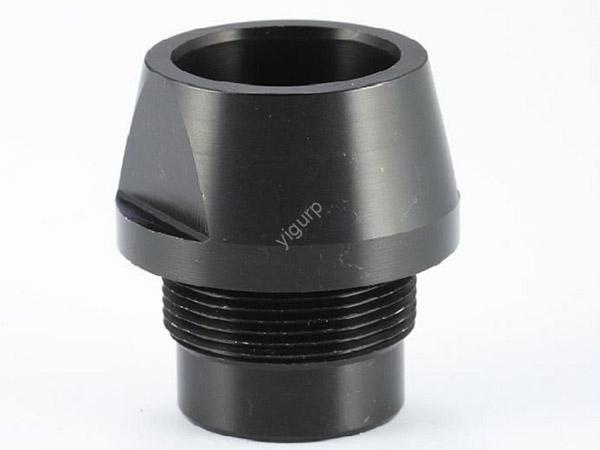
Se você está procurando uma liga de níquel que se destaque em resistência à oxidação em altas temperaturas e funcione de maneira confiável em indústrias agressivas, como aeroespacial ou processamento químico, GH3030 nickel alloy is a top solution. Esta liga equilibra durabilidade, resistência ao calor, e proteção contra corrosão, tornando-o um produto básico para tarefas exigentes. Este guia detalha suas principais propriedades, usos no mundo real, métodos de fabricação, and how it compares to other materials—so you can make informed decisions for your project.
1. Material Properties of GH3030 Nickel Alloy
GH3030’s performance comes from its carefully balanced composition and robust characteristics. Let’s explore each property clearly.
1.1 Composição Química
Every element in GH3030 plays a role in enhancing its heat resistance and durability. Below is its typical composition (by weight):
| Elemento | Faixa de conteúdo (%) | Key Role |
|---|---|---|
| Níquel (Em) | ≥70 | Base metal—provides high-temperature stability and ductility |
| Cromo (Cr) | 19–22 | Enhances oxidation resistance (critical for furnace and engine parts) |
| Ferro (Fé) | ≤1.5 | Adds minor structural strength without reducing heat resistance |
| Cobalt (Co) | ≤1.0 | Improves high-temperature creep resistance (prevents deformation) |
| Molybdenum (Mo) | ≤0.5 | Boosts corrosion resistance in mild acidic environments |
| Tungsten (C) | ≤0.5 | Enhances high-temperature hardness and wear resistance |
| Carbono (C) | ≤0.12 | Strengthens the alloy while maintaining workability |
| Manganês (Mn) | ≤0.7 | Aids in manufacturing (por exemplo, welding and casting) |
| Silício (E) | ≤0.8 | Reduces oxidation at extreme temperatures |
| Enxofre (S) | ≤0.03 | Kept low to prevent brittleness in high-heat conditions |
| Alumínio (Al) | ≤0.15 | Enhances oxidation resistance (works with chromium) |
| Titânio (De) | ≤0.15 | Stabilizes the alloy and prevents intergranular corrosion |
1.2 Propriedades Físicas
These traits make GH3030 ideal for high-temperature design and industrial use:
- Densidade: 8.4 g/cm³ (heavier than aluminum, lighter than some superalloys like Hastelloy X)
- Ponto de fusão: 1370–1420°C (2500–2590°F) – handles extreme heat in furnaces and aerospace parts
- Condutividade Térmica: 14.0 C/(m·K) a 20ºC (68°F); 22.5 C/(m·K) at 800°C – efficient heat transfer
- Thermal Expansion Coefficient: 13.8 μm/(m·K) (20–100ºC); 17.5 μm/(m·K) (20–800ºC) – minimal warping in heat cycles
- Electrical Resistivity: 118 Ω·mm²/m at 20°C – suitable for electrical components in high-heat areas
- Propriedades Magnéticas: Non-magnetic – great for aerospace and electronic equipment where magnetism is a problem
1.3 Propriedades Mecânicas
GH3030 maintains strength and flexibility even at high temperatures. All values below are for the annealed (tratado termicamente) version:
| Propriedade | Valor (Room Temperature) | Value at 800°C |
|---|---|---|
| Resistência à tracção | Min 650 MPa (94 ksi) | 380 MPa (55 ksi) |
| Força de rendimento | Min 270 MPa (39 ksi) | 240 MPa (35 ksi) |
| Alongamento | Min 35% (em 50 milímetros) | 40% (em 50 milímetros) |
| Dureza | Max 200 HB (Brinell) | N / D |
| Resistência à fadiga | 250 MPa (10⁷ cycles) | 190 MPa (10⁷ cycles) |
| Resistência à fluência | Maintains strength up to 1000°C (1830°F) – no deformation under long-term heat | – |
1.4 Outras propriedades
- Resistência à corrosão: Excellent in oxidizing environments (por exemplo, ar, vapor) and mild acids – outperforms stainless steel at high temps.
- Oxidation Resistance: Resists scaling in air up to 1000°C (1830°F) for long periods – ideal for furnace liners and aerospace exhaust parts.
- Stress Corrosion Cracking (SCC) Resistance: Resists SCC in chloride-rich solutions (a common issue for 316 aço inoxidável).
- Pitting Resistance: Good resistance to pitting in salty or acidic brines (suitable for marine and chemical applications).
- Hot/Cold Working Properties: Easy to hot forge (at 1150–1200°C) – cold working is possible but may require annealing to restore ductility.
2. Applications of GH3030 Nickel Alloy
GH3030’s high-temperature resistance and corrosion protection make it perfect for demanding industries. Aqui estão seus usos mais comuns, com exemplos do mundo real:
2.1 Componentes Aeroespaciais
- Use Case: A Chinese aerospace manufacturer uses GH3030 for jet engine exhaust casings. The casings handle 950°C temperatures—they’ve lasted 7 anos, comparado com 4 years for stainless steel casings.
- Other Uses: Combustion chamber liners, aircraft turbine parts, and high-temperature fasteners.
2.2 Heat Treatment Equipment
- Use Case: A metal processing plant in Japan uses GH3030 for furnace heating elements. The elements operate at 900°C daily—they’ve run for 5 anos, contra. 2 years for stainless steel elements.
- Other Uses: Furnace baskets, annealing trays, and heat exchanger tubes.
2.3 Chemical Processing Equipment
- Use Case: A chemical plant in Germany uses GH3030 for high-temperature acid storage tanks. The tanks handle 200°C sulfuric acid—they’ve lasted 6 anos, comparado com 3 years for carbon steel tanks.
- Other Uses: Acid mixing vessels, pipework for high-heat chemicals.
2.4 Nuclear Industry
- Use Case: A nuclear power plant in France uses GH3030 for coolant system components. The alloy resists corrosion from radioactive coolants and maintains strength at 600°C, ensuring safety.
2.5 Marine Applications
- Use Case: An offshore oil rig in the North Sea uses GH3030 for seawater heat exchangers. The alloy resists saltwater corrosion— the heat exchangers have run for 8 anos, contra. 5 years for Monel 400 ones.
3. Manufacturing Techniques for GH3030 Nickel Alloy
To maximize GH3030’s performance, manufacturers use specialized methods tailored to its properties:
- Fundição: Investment casting (using a wax mold) is ideal for complex shapes like aerospace engine parts. The low sulfur content prevents defects during casting.
- Forjamento: Hot forging (at 1150–1200°C) shapes the alloy into strong parts like furnace baskets. Forging improves grain structure, boosting high-temperature strength.
- Soldagem: Gas Tungsten Arc Welding (GTAW) is recommended. Use matching filler metals (por exemplo, ERNiCr-3) to maintain corrosion resistance. Pre-weld cleaning (to remove oils) is critical for strong welds.
- Usinagem: Use ferramentas de metal duro (they stay sharp longer). Add coolant (por exemplo, mineral oil) to prevent overheating—GH3030 can work-harden if cut too quickly.
- Tratamento térmico:
- Recozimento: Heat to 980–1050°C, cool rapidly (air or water) – softens the alloy for forming and restores ductility.
- Stress Relieving: Heat to 700–800°C, cool slowly – reduces internal stresses after welding or cold working.
- Tratamento de superfície: Passivação (using nitric acid) enhances pitting resistance. No painting is needed— the alloy’s natural surface resists rust in most environments.
4. Estudo de caso: GH3030 in an Aerospace Combustion Liner
An aerospace company needed to upgrade combustion liners for a military jet engine. The old liners (made of Inconel 600) failed after 3000 flight hours due to oxidation at 980°C.
They switched to GH3030 liners. Here’s the result:
- Lifespan: The liners have lasted 6000 flight hours with no oxidation or cracking.
- Economia de custos: Replacement costs dropped by 45% (fewer frequent liner changes).
- Desempenho: The alloy’s heat resistance allowed the engine to run at 50°C hotter, improving thrust by 7% and fuel efficiency by 4%.
This case proves why GH3030 is the top choice for high-temperature aerospace components.
5. Comparative with Other Materials
How does GH3030 nickel alloy stack up against other common high-temperature materials? The table below compares key properties:
| Material | Max Service Temp (°C) | Resistência à tracção (MPa, RT) | Resistência à corrosão (Oxidizing Env.) | Custo (Relative) |
|---|---|---|---|---|
| GH3030 | 1000 | 650 | Excelente | Médio-alto |
| Aço inoxidável 316 | 870 | 515 | Bom | Baixo |
| Titanium Alloy Ti-6Al-4V | 400 | 860 | Muito bom | Muito alto |
| Inconel 625 | 980 | 930 | Excelente | Alto |
| Hastelloy X | 1090 | 700 | Excelente | Alto |
| Monel 400 | 480 | 550 | Bom (seawater) | Médio |
| Aço carbono | 425 | 400 | Pobre | Muito baixo |
Key Takeaways:
- GH3030 outperforms stainless steel and Monel 400 in high-temperature oxidation resistance.
- It’s more affordable than titanium alloys and offers better heat resistance than Inconel 625 (up to 1000°C vs. 980°C).
- Hastelloy X works at higher temps but is more expensive—GH3030 offers better value for most high-heat industrial needs.
Yigu Technology’s Perspective
Na tecnologia Yigu, we recommend GH3030 nickel alloy for clients in aerospace, tratamento térmico, and chemical industries. Its exceptional high-temperature oxidation resistance and corrosion protection make it a reliable, long-lasting solution. Our team provides custom machining and heat treatment for GH3030 components, ensuring they meet strict industry standards. For projects needing durability in extreme heat, GH3030 delivers unmatched value and performance.
Perguntas frequentes
1. Can GH3030 nickel alloy handle temperatures above 1000°C?
It can handle short bursts of higher temperatures (up to 1050°C) but is designed for long-term use at 1000°C. Beyond that, oxidation may occur—for temps above 1050°C, Hastelloy X is a better choice.
2. Is GH3030 suitable for marine heat exchangers?
Sim! Its goodpitting resistance and saltwater corrosion protection make it ideal for marine heat exchangers—outperforming stainless steel and even Monel 400 in long-term coastal use.
3. What’s the typical lifespan of GH3030 parts in heat treatment furnaces?
In furnace components (por exemplo, heating elements, baskets), GH3030 parts last 5–8 years—2–3 times longer than stainless steel parts. Proper maintenance (like regular annealing) can extend this lifespan even further.