
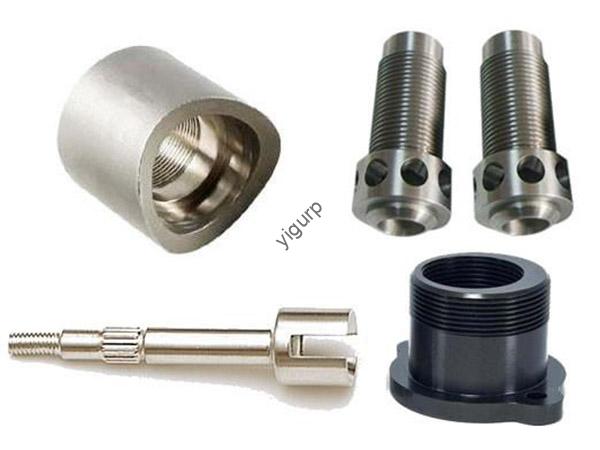
Se você precisar de uma liga de aço que resista a altas tensões, resiste ao desgaste, and performs well in tough environments—like heavy machinery or automotive parts—GB 20CrNiMo alloy steel is an excellent choice. Como aço de baixa liga padrão chinês, combina a força do cromo, a dureza do níquel, e a resistência ao calor do molibdênio. Este guia detalha tudo que você precisa saber para usá-lo de forma eficaz, desde sua composição química até histórias de sucesso do mundo real.
1. Material Properties of GB 20CrNiMo Alloy Steel
GB 20CrNiMo’s performance is rooted in its well-balanced properties, all compliant with China’sGB/T 3077 padrão. Let’s explore each key aspect clearly.
1.1 Composição Química
The elements in GB 20CrNiMo work together to boost strength, resistência, e durabilidade. Below is the standard composition range:
| Element | Symbol | Composition Range (%) | Key Role in the Alloy |
|---|---|---|---|
| Carbon (C) | C | 0.17 – 0.23 | Provides a foundation for strength; balances hardness and ductility |
| Chromium (Cr) | Cr | 0.80 – 1.10 | Enhancestemperabilidade eresistência à corrosão; improves wear resistance |
| Níquel (Em) | Em | 0.40 – 0.70 | Boostsimpact toughness (even at low temperatures) and ductility |
| Molybdenum (Mo) | Mo | 0.15 – 0.25 | Increasesresistência à fadiga and high-temperature stability; reduces brittleness |
| Manganese (Mn) | Mn | 0.60 – 0.90 | Improvesusinabilidade and grain refinement; strengthens the alloy |
| Silicon (E) | E | 0.17 – 0.37 | Acts as a deoxidizer during steelmaking; enhances overall strength |
| Sulfur (S) | S | ≤ 0.035 | Kept low to avoid cracking and brittleness in high-stress parts |
| Phosphorus (P) | P | ≤ 0.035 | Limited to prevent cold brittleness (fracture in low-temperature environments) |
1.2 Propriedades Físicas
These traits determine how GB 20CrNiMo behaves in different working conditions—like temperature changes or magnetic fields:
- Densidade: 7.85 g/cm³ (consistent with most ferrous alloys, easy to integrate into existing designs)
- Melting point: 1420 – 1450°C (high enough for high-temperature applications like industrial rollers or engine parts)
- Thermal conductivity: 43 C/(m·K) a 20ºC (retains heat well, suitable for parts that operate continuously)
- Specific heat capacity: 465 J/(kg·K) a 20ºC (absorbs heat steadily, avoiding warping from sudden temperature swings)
- Thermal expansion coefficient: 12.3 μm/(m·K) (low expansion, critical for precision parts like gears or shafts)
- Magnetic properties: Ferromagnetic (attracts magnets, useful for tools like magnetic clamps or sensors)
1.3 Propriedades Mecânicas
GB 20CrNiMo’s full mechanical strength is unlocked afterquenching + tempering (its standard heat treatment). Below are typical values tested to Chinese standards:
| Propriedade | Valor típico | Test Standard (GB) |
|---|---|---|
| Resistência à tracção | ≥ 980 MPa | GB/T 228.1 |
| Força de rendimento | ≥ 785 MPa | GB/T 228.1 |
| Alongamento | ≥ 12% | GB/T 228.1 |
| Reduction of area | ≥ 45% | GB/T 228.1 |
| Dureza (Brinell) | 241 – 286 HB | GB/T 231.1 |
| Dureza (Rockwell C.) | 24 – 30 CDH | GB/T 230.1 |
| Dureza (Vickers) | 245 – 290 HV | GB/T 4340.1 |
| Resistência ao impacto | ≥ 70 J. | GB/T 229 |
| Força de fadiga | ~530 MPa | GB/T 3075 |
1.4 Other Properties
- Resistência à corrosão: Moderado (resists mild moisture, oils, and industrial chemicals; use zinc plating or paint for outdoor/humid environments)
- Resistência ao desgaste: Bom (thanks to cromo (Cr) and heat treatment; suitable for moving parts like bearings or rollers)
- Usinabilidade: Fair (softer in annealed state; use high-speed steel (HSS) or carbide tools with cutting fluid to reduce tool wear)
- Weldability: Acceptable (preheat to 250 – 300°C and post-weld heat treat to avoid cracking; use low-hydrogen electrodes)
- Hardenability: Excelente (heat treatment penetrates deeply, ensuring uniform strength in thick parts like heavy machinery shafts)
2. Applications of GB 20CrNiMo Alloy Steel
GB 20CrNiMo’s mix of strength, resistência, and heat resistance makes it ideal foraplicações de alto estresse across industries. Here are its most common uses, com exemplos do mundo real:
2.1 Automotive Industry
Cars, trucks, and commercial vehicles rely on its durability for critical parts:
- Shafts: A Chinese heavy-duty truck manufacturer uses it for drive shafts—its yield strength (≥785 MPa) handles 25-ton loads without bending.
- Gears: A domestic automaker uses it for transmission gears; o resistência à fadiga (~530 MPa) extends gear life by 35% contra. carbon steel.
- Axles: Compact SUVs use GB 20CrNiMo axles—its impact toughness (≥70 J) prevents fracture during off-road driving.
2.2 Mechanical & Heavy Machinery
Industrial machines need parts that last through continuous use:
- Bearings: A manufacturing plant uses it for conveyor belt bearings—its resistência ao desgaste cuts maintenance downtime by 25%.
- Springs: A construction equipment maker uses it for excavator bucket springs; its elasticity (from tempering) withstands 9,000+ compression cycles.
- Rollers: Steel mills use it for rolling mill rollers; isso é dureza (241–286 HB) resists deformation from hot metal sheets.
2.3 Structural Components
For infrastructure and heavy-duty structures, it provides reliable strength:
- Crane shafts: Port cranes use it for hoist shafts—its resistência à tracção (≥980 MPa) handles 40-ton containers without breaking.
- Bridge fasteners: Large-span highways use GB 20CrNiMo bolts; with anti-rust coating, they stay stable outdoors for 10+ years.
3. Manufacturing Techniques for GB 20CrNiMo Alloy Steel
To maximize GB 20CrNiMo’s performance, follow these industry-proven manufacturing steps:
3.1 Steelmaking Processes
It’s typically produced using two methods:
- Electric Arc Furnace (EAF): Most common for medium batches. Scrap steel is melted with electrodes, then cromo (Cr), níquel (Em), e molibdênio (Mo) are added to reach the target composition. EAF is flexible and reduces waste, ideal for custom parts like large shafts.
- Basic Oxygen Furnace (BOF): Used for mass production. Molten iron is mixed with oxygen to remove impurities, then alloy elements are added. BOF is faster and cost-effective for standard parts like bolts.
3.2 Tratamento térmico
Heat treatment is critical to unlock GB 20CrNiMo’s full potential. The standard process for high-stress parts is:
- Annealing: Heat to 820 – 850°C, cool slowly. Softens the alloy for easier machining (cuts tool wear by 30%).
- Têmpera: Heat to 830 – 860°C, cool rapidly in oil. Hardens the steel to reach resistência à tracção ≥980 MPa.
- Temperamento: Heat to 500 – 550°C, cool in air. Reduces brittleness while retaining strength—critical for parts like gears or shafts.
- Carburizing (optional): Heat to 900 – 950°C in a carbon-rich atmosphere. Adds a hard outer layer (0.8–1.0 mm thick) to boost resistência ao desgaste (ideal for bearings).
3.3 Forming Processes
GB 20CrNiMo is shaped into parts using:
- Forging: Hammered or pressed at 1100 – 1200°C. Aligns the metal’s grain structure, increasing resistência à tracção by 12% contra. cast parts. Used for gears, eixos, and crane components.
- Rolling: Passed through rollers to make bars, sheets, or rods. Used for basic shapes like bolt blanks or spring stock.
- Extrusion: Pushed through a die to make complex shapes (por exemplo, hollow shafts). Ideal for precision parts like automotive transmission components.
3.4 Machining Processes
After forming, parts are finished with precision machining:
- Virando: Uses a lathe to make cylindrical parts (por exemplo, eixos). Use cutting fluid (por exemplo, mineral oil) to prevent overheating and tool wear.
- Fresagem: Uses a rotating cutter to shape gear teeth or bearing races. Carbide tools work best for high precision (por exemplo, gear tooth tolerance ±0.02 mm).
- Drilling: Creates holes for bolts or fasteners. High-speed drills (900–1400 RPM) avoid cracking.
- Moagem: Smooths surfaces to tight tolerances (por exemplo, ±0.01 mm for bearing inner rings). Improves resistência ao desgaste by reducing surface friction.
4. Estudo de caso: GB 20CrNiMo in Heavy-Duty Truck Axles
A Chinese truck manufacturer faced a problem: their carbon steel axles kept failing in cold northern regions, leading to costly roadside repairs. They switched to GB 20CrNiMo—and solved the issue.
4.1 Challenge
The manufacturer’s 25-ton trucks operated in temperatures as low as -25°C. Carbon steel axles had lowimpact toughness (35 J.), causing them to crack under heavy loads. The failure rate was 7% per year, hurting customer trust.
4.2 Solution
They switched to GB 20CrNiMo axles, using:
- Forging (1150°C) to align grain structure and boost strength.
- Têmpera (840°C) + tempering (520°C) to reach 800 MPa yield strength e 75 J. impact toughness.
- Zinc-nickel plating to improve corrosion resistance in snowy, salty conditions.
4.3 Results
- Service life: Axles now last 300,000 km—double the previous lifespan.
- Cost savings: Reduced maintenance costs by ¥220,000 per year (per factory).
- Confiabilidade: Failure rate dropped from 7% para 1%, restoring customer confidence.
5. Comparative Analysis: GB 20CrNiMo vs. Outros materiais
How does GB 20CrNiMo stack up against common alternatives? Below is a side-by-side comparison of key traits:
| Material | Tensile Strength | Impact Toughness | Resistência à corrosão | Custo (contra. GB 20CrNiMo) | Best For |
|---|---|---|---|---|---|
| GB 20CrNiMo | ≥980 MPa | ≥70 J | Moderado | 100% (base) | High-stress, cold-environment parts |
| Aço inoxidável (304) | 515 MPa | 60 J. | Excelente | 170% | Food/chemical equipment |
| Carbon Steel (45#) | 600 MPa | 35 J. | Low | 50% | Low-stress parts (brackets) |
| Liga de aço (40Cr) | 980 MPa | 47 J. | Moderado | 80% | General machinery parts |
| Alumínio (6061) | 310 MPa | 110 J. | Bom | 120% | Lightweight parts (car frames) |
Key takeaway: GB 20CrNiMo has far betterimpact toughness than 40Cr or carbon steel, making it ideal for cold climates. It’s cheaper than stainless steel and aluminum, making it the best value forhigh-stress, low-temperature applications.
Yigu Technology’s Perspective on GB 20CrNiMo Alloy Steel
Na tecnologia Yigu, GB 20CrNiMo is a go-to for clients needing tough, reliable parts—especially in cold or heavy-duty environments. We’ve supplied it for truck axles and machinery shafts for 13+ years, and itsnickel-enhanced toughness emolybdenum heat resistance never disappoint. We often recommend tempering at 520–550°C for optimal strength and anti-rust coatings for outdoor use, helping clients cut maintenance costs by 30%. For Chinese manufacturers prioritizing durability in harsh conditions, GB 20CrNiMo is unmatched.
FAQ About GB 20CrNiMo Alloy Steel
1. Can GB 20CrNiMo be used in extremely cold temperatures?
Yes—itsimpact toughness (≥70 J) lets it perform reliably at temperatures as low as -30°C. For colder climates (-35°C or below), we recommend adjusting the tempering process (lower to 480–500°C) to boost toughness further.
2. What’s the difference between GB 20CrNiMo and GB 40Cr?
GB 20CrNiMo containsníquel (Em) emolibdênio (Mo), giving it 50% higherimpact toughness and better high-temperature stability than GB 40Cr. Choose GB 20CrNiMo for cold environments or high-stress parts (por exemplo, truck axles), and GB 40Cr for less demanding uses (por exemplo, general machinery gears).
3. How to improve GB 20CrNiMo’s corrosion resistance?
Add a protective coating: zinc-nickel plating (for cold, salty regions like northern China), powder coating (for structural components), or chrome plating (for moving parts like bearings). These treatments can extend service life in harsh environments by 8–12 years.