
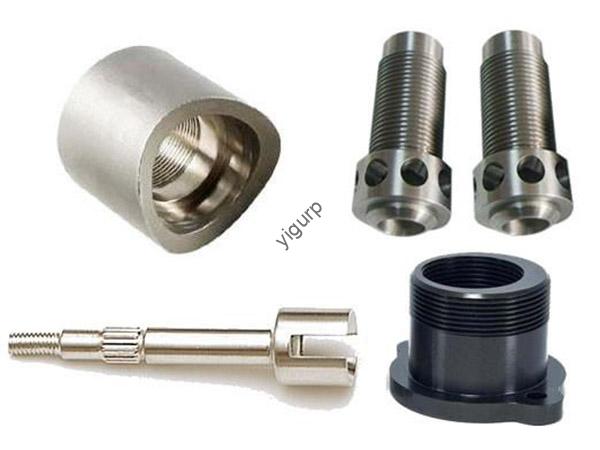
Se você está procurando um versátil, aço inoxidável econômico para processamento de alimentos, construção, ou eletrodomésticos, GB 0Cr18Ni9 de aço inoxidável is likely on your list. Mas o que faz com que se destaque? É a escolha certa para o seu projeto? Este guia detalha suas principais propriedades, aplicações do mundo real, etapas de fabricação, e como ele se compara a outros metais. No final, you’ll have clear answers to help you make informed decisions.
1. Material Properties of GB 0Cr18Ni9
O desempenho deGB 0Cr18Ni9 starts with its structure and composition. It’s anaustenitic stainless steel—a type known for ductility and corrosion resistance—with a carefully balancedcomposição da liga that delivers reliability.
Core Alloy Elements
- Alto teor de cromo (17.0-19.0%): Forms a protective oxide layer to fight rust.
- High nickel content (8.0-11.0%): Stabilizes the austenitic structure, boosting toughness and resistance to low temperatures.
- Outros elementos: Carbono (máx. 0.07%), manganês (máx. 2.0%), and silicon (máx. 1.0%) for added strength.
Key Mechanical Strength Data
| Propriedade | Valor típico | Padrão de teste |
|---|---|---|
| Força de rendimento | ≥205 MPa | GB/T 228.1 |
| Resistência à tracção | ≥520 MPa | GB/T 228.1 |
| Alongamento | ≥40% | GB/T 228.1 |
| Dureza (Brinell) | ≤187 HB | GB/T 231.1 |
| Densidade | 7.93 g/cm³ | GB/T 20878 |
Por exemplo, a Chinese kitchenware manufacturer choseGB 0Cr18Ni9 for stainless steel pots. Its high elongation (≥40%) let the metal be pressed into thin, smooth shapes without cracking, while its low hardness made it easy to polish to a shiny finish.
2. Applications of GB 0Cr18Ni9
GB 0Cr18Ni9 is one of the most widely used stainless steels because it works in so many environments. Aqui estão seus principais usos, with real 案例:
- Equipamento de processamento de alimentos: Used for mixing tanks, correias transportadoras, e ferramentas de corte. A Shanghai dairy plant uses GB 0Cr18Ni9 tanks to store milk—its non-toxic, easy-to-clean surface prevents bacterial growth, meeting food safety standards.
- Eletrodomésticos: Found in refrigerator doors, tambores de máquina de lavar, and oven interiors. A Guangdong appliance brand reports that GB 0Cr18Ni9 parts resist rust from water and cleaning sprays, duradouro 10+ anos.
- Sanitary Fittings: Used for faucets, pias, and showerheads. A Beijing hotel replaced old brass fittings with GB 0Cr18Ni9—the new parts stay shiny and rust-free, even in humid bathrooms.
- Materiais de Construção: Ideal for handrails, curtain walls, and decorative panels. The exterior of a Shenzhen shopping mall uses GB 0Cr18Ni9 panels—they’ve withstood rain and pollution for 8 years with no visible corrosion.
- Dispositivos Médicos: Used for surgical tools and hospital bed frames. A Wuhan hospital chose GB 0Cr18Ni9 for scalpels because it’s easy to sterilize and doesn’t react with bodily fluids.
- Other uses: Peças automotivas (trim and exhaust components), Chemical Processing Plants (non-corrosive pipes for mild chemicals), e Componentes Aeroespaciais (internal structural parts).
3. Manufacturing Processes for GB 0Cr18Ni9
ProduzindoGB 0Cr18Ni9 requires standard but precise steps to maintain its properties. Veja como é feito:
- Laminação a Quente: Heat the alloy to 1100-1200°C and roll it into thick plates or coils. This step shapes the material and softens it for further processing. A Hebei steel mill uses hot rolling to make 10mm-thick GB 0Cr18Ni9 plates for construction.
- Laminação a Frio: Use room-temperature pressure to reduce thickness (por exemplo, to 0.5mm for appliance panels). Cold rolling makes the surface smoother but hardens the metal—so annealing is needed next.
- Recozimento: Heat to 1010-1150°C, hold for 30 minutos, then cool rapidly. This restores ductility and removes internal stress. A Jiangsu factory anneals GB 0Cr18Ni9 sheets before making kitchenware to prevent cracking during pressing.
- Decapagem: Dip in nitric acid to remove oxide scales from rolling. Pickling brightens the surface and improves resistência à corrosão—critical for food-contact parts.
- Drawing/Extrusion: Pull the alloy through dies to make wires or tubes. Drawn GB 0Cr18Ni9 wires are used for kitchen sieves, while extruded tubes work in water supply systems.
- Usinagem: Cut the material into final parts (por exemplo, faucet handles). Use high-speed steel tools—GB 0Cr18Ni9’s ductility means it can be drilled or turned easily without chipping.
- Forjamento: Hammer the alloy into complex shapes (por exemplo, corpos de válvula). Forging at 900-1000°C ensures the parts keep their strength.
4. Corrosion Resistance of GB 0Cr18Ni9
GB 0Cr18Ni9 resists most everyday corrosion, but it has limits. Here’s how it performs against common threats:
- General Corrosion: Excellent resistance to water, ar, e produtos químicos suaves (por exemplo, vinegar). It won’t rust in home kitchens or office buildings.
- Resistência à corrosão: Moderate—can develop small holes (pitting) in salty or acidic environments (por exemplo, seawater or industrial cleaners). It has a Pitting Resistance Equivalent (PRE) de 18, lower than SUS316 (PRE 25).
- Intergranular Corrosion: Risky if heated to 450-850°C (por exemplo, during welding). This temperature range can cause chromium carbides to form at grain boundaries, weakening the material. Annealing after welding fixes this.
- Stress Corrosion Cracking (CCS): Can crack under tension in chloride-rich environments (por exemplo, saltwater pools). A coastal hotel once had GB 0Cr18Ni9 handrails crack—switching to a more corrosion-resistant alloy (like SUS316) solved the issue.
To boost protection:
- Usar passivação (citric acid treatment) to strengthen the oxide layer.
- Avoid using it in highly acidic or salty environments without testing.
- Verificar corrosion resistance charts (por exemplo, from GB/T 10125) to confirm suitability for your application.
5. Welding GB 0Cr18Ni9
GB 0Cr18Ni9 is easy to weld—one reason it’s so popular. Here’s how to do it right:
- Soldabilidade: Excellent for most processes—its austenitic structure prevents brittleness in welds.
- Recommended Welding Processes:
- Gas Tungsten Arc Welding (GTAW/TIG): Best for thin sheets (por exemplo, peças de eletrodomésticos) because it creates clean, precise welds.
- Metal Inert Gas Welding (MEU): Fast for thick plates (por exemplo, vigas de construção).
- Welding Rods: Use matching rods like ER308L (for GTAW) or E308L-16 (for SMAW). These rods have low carbon content to reduce intergranular corrosion risk.
- Welding Gases: Use pure argon (99.99%) for TIG welding—this prevents oxidation. For MIG, use argon with 2-5% carbon dioxide.
- Post-Weld Heat Treatment: Anneal at 1050°C if the weld will be in corrosive environments. This removes carbide formation and restores corrosion resistance.
- Welding Inspection: Use visual inspection (for surface defects) or X-ray testing (for internal flaws). Follow padrões de soldagem like GB/T 985.1.
- Welding Safety: Wear a welding helmet and gloves—GB 0Cr18Ni9 produces bright sparks during welding, which can cause burns.
6. Standards and Specifications for GB 0Cr18Ni9
To ensure you’re getting genuine, de alta qualidadeGB 0Cr18Ni9, always check compliance with these standards:
- GB/T 20878: The core Chinese standard for stainless steels—it defines GB 0Cr18Ni9’s composition, propriedades mecânicas, and testing methods.
- ASTM A240: NÓS. standard—GB 0Cr18Ni9 is equivalent to ASTM 304, so it meets this standard’s requirements for flat products (pratos, folhas).
- EM 10088: European standard—equivalent grade is X5CrNi18-10, então GB 0Cr18Ni9 works for EU-based projects.
- ISO Standards: ISO 15510 alinha-se com GB 0Cr18Ni9 for pressure equipment.
Always ask suppliers for:
- Certificação de Materiais (por exemplo, Mill Test Report) to verify composition and strength.
- Conformance Testing resultados (por exemplo, GB/T 10125 para resistência à corrosão).
- Technical Data Sheets (TDS) with detailed specs like heat treatment requirements.
Controle de qualidade is key: A Zhejiang manufacturer once recalled faultyGB 0Cr18Ni9 sheets that failed tensile strength tests—always confirm compliance before buying.
7. Comparação: GB 0Cr18Ni9 vs. Outros materiais
Como é queGB 0Cr18Ni9 stack up against common stainless steels and alloys? Vamos comparar:
| Material | Resistência à corrosão (PRE) | Força de rendimento | Custo (contra. GB 0Cr18Ni9) | Melhor para |
|---|---|---|---|---|
| GB 0Cr18Ni9 | 18 | 205 MPa | 100% | Everyday uses (kitchens, eletrodomésticos) |
| SUS304 | 18 | 205 MPa | 105% | Same as GB 0Cr18Ni9 (global equivalent) |
| SUS316 | 25 | 205 MPa | 150% | Salty/acidic environments (zonas costeiras) |
| SUS430 (Ferrítico) | 16 | 240 MPa | 80% | Baixo custo, non-corrosive parts (oven liners) |
| Aço Inoxidável Duplex | 35 | 450 MPa | 200% | Alta resistência, ambientes corrosivos (oil pipes) |
| Ligas de titânio | 50 | 860 MPa | 500% | Dispositivos médicos, aeroespacial |
| Ligas de alumínio | 10 | 110 MPa | 50% | Peças leves (quadros de bicicleta) |
Por exemplo, if you’re making home kitchenware, GB 0Cr18Ni9 is perfect—it’s affordable and resists food acids. If you’re building a coastal hotel’s handrails, SUS316 is better (more corrosion resistance), but it costs 50% mais.
Perspectiva da Tecnologia Yigu
Na tecnologia Yigu, we’ve suppliedGB 0Cr18Ni9 to food, appliance, and construction clients for 15 anos. Its biggest strength is versatility— it works for everything from kitchen pots to building facades, at a price that fits most budgets. We often recommend it for clients new to stainless steel, as it’s easy to manufacture and weld. Our data showsGB 0Cr18Ni9 reduces material costs by 30% contra. SUS316 for non-salty applications. We also provide pre-weld guidance to help clients avoid intergranular corrosion issues.
Perguntas frequentes
- Can GB 0Cr18Ni9 be used in seawater?
No—its low PRE (18) means it will develop pitting in seawater. For marine applications, use SUS316 or duplex stainless steel instead. - Is GB 0Cr18Ni9 safe for food contact?
Yes—it meets global food safety standards (por exemplo, GB da China 4806.9). Its non-toxic composition and easy-to-clean surface make it ideal for food processing equipment. - Do I need to paint or coat GB 0Cr18Ni9?
No—its natural oxide layer provides enough rust resistance for most environments. Painting can trap moisture and cause crevice corrosion, so it’s not recommended.