
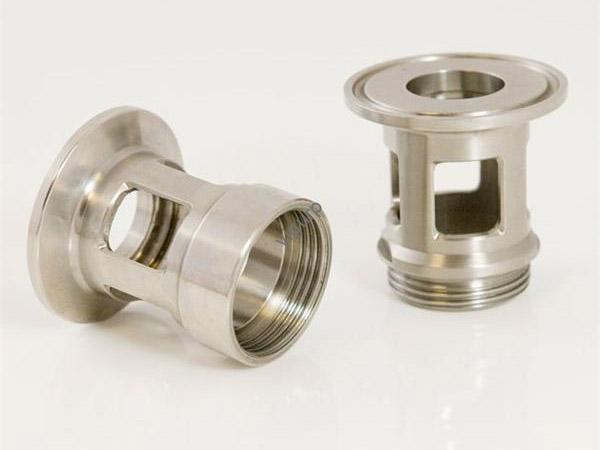
O aço inoxidável ferrítico é um material amplamente utilizado, conhecido por sua excelente resistência à corrosão e economia.. É uma escolha obrigatória em muitos setores, do automotivo à construção. Neste guia, vamos detalhar suas principais propriedades, aplicações do mundo real, como é feito, and how it compares to other materials—so you can decide if it’s right for your project.
1. Key Material Properties of Ferritic Stainless Steel
Understanding the properties of ferritic stainless steel is key to using it effectively. These properties come from its unique composição química, which then shapes its propriedades físicas, propriedades mecânicas, e outras características críticas.
Composição Química
The main element in ferritic stainless steel is cromo—usually between 10.5% e 30%. This high chromium content is what gives it strong corrosion resistance. Unlike austenitic stainless steel, it has very low carbon content (less than 0.2%), which reduces the risk of intergranular corrosion. Other elements include small amounts of manganês, silício, fósforo, e enxofre (to improve processing), plus molibdênio (for better pitting resistance) ou titanium/niobium (to stabilize carbon and prevent carbide precipitation).
Propriedades Físicas
| Propriedade | Valor típico |
| Densidade | 7.7 g/cm³ |
| Condutividade Térmica | 25-30 C/(m·K) (a 20ºC) |
| Capacidade Específica de Calor | 0.46 J/(g·K) (a 20ºC) |
| Coeficiente de Expansão Térmica | 11-13 × 10⁻⁶/°C (20-100°C) |
| Propriedades Magnéticas | Fortemente magnético (unlike austenitic stainless steel) |
Propriedades Mecânicas
Ferritic stainless steel balances strength and ductility. Common values for popular grades (como 430) include:
- Resistência à tracção: 450-600 MPa
- Força de rendimento: 270-400 MPa
- Alongamento: 20-30% (em 50 milímetros)
- Dureza: 150-180 Brinell, 60-70 Rockwell B, ou 160-190 Vickers
- Força de fadiga: ~200 MPa (em 10⁷ ciclos)
- Resistência ao impacto: 20-40 J. (à temperatura ambiente)
Outras propriedades críticas
- Resistência à corrosão: Excellent in mild environments (por exemplo, air, água) thanks to chromium.
- Pitting resistance: Improved with molybdenum (por exemplo, nota 434).
- Stress corrosion cracking resistance: Better than austenitic stainless steel in chloride environments.
- Weldability: Moderate—requires preheating to avoid brittleness.
- Usinabilidade: Good with proper tools (slower speeds than carbon steel).
2. Real-World Applications of Ferritic Stainless Steel
Ferritic stainless steel is used across industries because it’s affordable and durable. Here are the most common uses:
Automotive Industry
- Exhaust systems: Handles high temperatures (up to 800°C) and resists exhaust gas corrosion (por exemplo, nota 409).
- Catalytic converters: The heat-resistant surface protects internal components.
- Fuel lines: Resists fuel additives and prevents rust.
Exemplo de caso: A major car manufacturer switched to ferritic stainless steel for exhaust systems in 2022. This cut costs by 15% and improved durability—warranties for exhausts increased from 5 para 7 years.
Construction Industry
- Architectural cladding: Used for building exteriors (por exemplo, shopping malls) because it’s low-maintenance and has a sleek finish (nota 430).
- Roofing materials: Resists rain, snow, and UV damage.
- Fasteners: Replaces galvanized steel in coastal areas (better saltwater corrosion resistance).
Domestic Appliances
- Washing machines: Inner drums use grade 430—resists detergent and water damage.
- Dishwashers: Door liners and spray arms handle hot, soapy water.
- Refrigerators: Door panels and shelves (easy to clean and rust-proof).
Chemical Processing & Food Industries
- Storage tanks: Holds mild chemicals (por exemplo, acids, alkalis) without leaking (nota 444).
- Piping systems: Transports liquids safely in processing plants.
- Food processing equipment: Meets hygiene standards (non-toxic and easy to sanitize).
3. Manufacturing Techniques for Ferritic Stainless Steel
Making ferritic stainless steel requires precise steps to ensure quality. Here’s the process:
1. Metallurgical Processes
- Electric Arc Furnace (EAF): The most common method. Scrap steel and chromium are melted at 1,600°C.
- Basic Oxygen Furnace (BOF): Used for large-scale production—blows oxygen to remove impurities.
2. Rolling Processes
- Hot rolling: Heats the steel to 1,100-1,200°C and rolls it into thick plates or coils.
- Cold rolling: Cools the steel and rolls it again to make thin sheets (por exemplo, for appliance parts).
3. Tratamento térmico
- Annealing: Heats the steel to 700-900°C and cools slowly. This softens the material and improves ductility.
- Stress relief annealing: Reduces stress after welding (heated to 600-700°C) to prevent cracking.
4. Forming Methods
- Press forming: Uses presses to shape parts (por exemplo, exhaust components).
- Bending: Creates angles for cladding or piping.
- Deep drawing: Makes hollow parts (por exemplo, washing machine drums).
5. Tratamento de superfície & Controle de qualidade
- Pickling: Dips the steel in acid to remove rust or scale.
- Passivation: Applies a chromium oxide layer to boost corrosion resistance.
- Electropolishing: Gives a smooth, shiny finish (for appliances or architecture).
Quality control steps include:
- Ultrasonic testing: Checks for internal defects.
- Radiographic testing: Detects welding flaws.
- Tensile testing: Verifies strength.
- Análise microestrutural: Ensures the correct ferritic grain structure.
4. Estudo de caso: Ferritic Stainless Steel in a Coastal Construction Project
A construction company built a 10-story office building in Miami (a coastal city with high salt air). They chose ferritic stainless steel (nota 430) para:
- Architectural cladding: Covered 80% of the building’s exterior.
- Roofing materials: Used 2mm thick sheets.
- Fasteners: 316 ferritic stainless steel bolts.
Results: After 3 years, there was no rust or corrosion. Maintenance costs were 50% lower than if they used aluminum. The building also met local environmental standards because ferritic stainless steel is 100% recyclable.
5. Ferritic Stainless Steel vs. Outros materiais
How does ferritic stainless steel stack up against other options? Let’s compare:
| Material | Custo (contra. Ferritic) | Resistência à corrosão | Força | Weight | Weldability |
| Aço Inoxidável Ferrítico | Base (100%) | Bom (excellent with Mo) | Moderado | 7.7 g/cm³ | Moderado |
| Austenitic Stainless Steel (304) | 150% | Better | Higher | 7.9 g/cm³ | Excelente |
| Aço Inoxidável Martensítico (410) | 90% | Lower | Higher (harder) | 7.8 g/cm³ | Bom |
| Aço Inoxidável Duplex (2205) | 200% | Best | Highest | 7.8 g/cm³ | Bom |
| Aluminum Alloy (6061) | 120% | Bom (but prone to pitting) | Lower | 2.7 g/cm³ | Bom |
| Composto de fibra de carbono | 500% | Excelente | Highest | 1.8 g/cm³ | Pobre (needs bonding) |
Adequação da aplicação
- Automotivo: Ferritic is better than austenitic (lower cost, lighter than martensitic).
- Construction: Better than aluminum (lower maintenance in coastal areas).
- Appliances: More cost-effective than austenitic (no need for high strength).
- Chemical Processing: Duplex is better (higher corrosion resistance), but ferritic is cheaper for mild chemicals.
Yigu Technology’s View on Ferritic Stainless Steel
Na tecnologia Yigu, we see ferritic stainless steel as a versatile, sustainable material for modern manufacturing. Its low cost and strong corrosion resistance make it ideal for automotive and appliance clients looking to balance performance and budget. We also recommend it for coastal construction projects—its recyclability aligns with our commitment to eco-friendly solutions. For clients needing higher strength, we often blend ferritic with small amounts of molybdenum to boost pitting resistance without raising costs too much.
Perguntas frequentes
1. Is ferritic stainless steel magnetic?
Sim, ferritic stainless steel is strongly magnetic. This is a key difference from austenitic stainless steel (which is non-magnetic), making it easy to identify in the field.
2. Can ferritic stainless steel be welded?
Sim, but it requires preheating (to 150-200°C) and post-weld annealing to avoid brittleness. Using low-carbon grades (por exemplo, 430Ti) also helps improve weld quality.
3. How long does ferritic stainless steel last?
In mild environments (por exemplo, indoor appliances), it can last 20+ years. In harsh environments (por exemplo, coastal areas), it can last 10-15 years with proper maintenance (por exemplo, passivation). With molybdenum (nota 444), it can last even longer.