
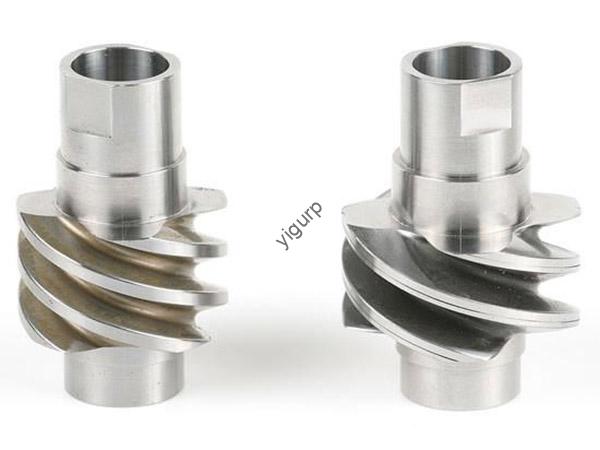
Se você estiver trabalhando em projetos de alto estresse, como máquinas pesadas ou transmissões automotivas,Aço estrutural EN24 é um nome que você precisa saber. Este aço-liga se destaca por sua excepcional resistência e tenacidade, mas como ele funciona em cenários do mundo real? Este guia detalha tudo, desde a composição química até o custo, para que você possa decidir se é adequado para seu próximo projeto.
1. Propriedades materiais do aço estrutural EN24
O desempenho da EN24 começa com as suas propriedades cuidadosamente equilibradas. Vamos mergulhar nos detalhes que o tornam a melhor escolha para aplicações de alta demanda.
1.1 Composição Química
O composição química da EN24 é o que lhe dá força. Abaixo está uma faixa padrão (para EN 10083-3):
| Elemento | Faixa de conteúdo (%) | Função principal |
| Carbono (C) | 0.36 – 0.44 | Aumenta a dureza e a resistência à tração |
| Manganês (Mn) | 0.60 – 0.90 | Melhora a ductilidade e soldabilidade |
| Silício (E) | 0.10 – 0.40 | Melhora a resistência ao calor durante a fabricação |
| Enxofre (S) | ≤ 0.050 | Minimizado para evitar fragilidade |
| Fósforo (P) | ≤ 0.050 | Controlado para evitar rachaduras |
| Cromo (Cr) | 0.90 – 1.20 | Aumenta a resistência ao desgaste e a tenacidade |
| Níquel (Em) | 1.30 – 1.70 | Aumenta a resistência ao impacto, especialmente em baixas temperaturas |
| Molibdênio (Mo) | 0.15 – 0.25 | Melhora a temperabilidade e a resistência à fadiga |
| Outros elementos de liga | Quantidades de rastreamento (por exemplo, cobre) | Nenhum grande impacto nas propriedades principais |
1.2 Propriedades Físicas
EN24 propriedades físicas torná-lo adequado para condições extremas:
- Densidade: 7.85 g/cm³ (igual à maioria dos aços estruturais)
- Ponto de fusão: 1420 – 1460ºC
- Condutividade térmica: 44 C/(m·K) a 20ºC (inferior ao aço carbono, então aquece lentamente)
- Capacidade térmica específica: 465 J/(kg·K)
- Coeficiente de expansão térmica: 13.0 × 10⁻⁶/°C (20 – 100ºC, estável para peças de precisão)
1.3 Propriedades Mecânicas
Estas são as características mais importantes para aplicações de alto estresse:
- Resistência à tracção: 800 – 1000 MPa (depois de têmpera e revenido)
- Força de rendimento: ≥ 600 MPa
- Alongamento: ≥ 12% (flexibilidade suficiente para formar sem quebrar)
- Dureza: 240 – 300 HB (Escala Brinell, pode ser aumentado com tratamento térmico)
- Resistência ao impacto: ≥ 50 J a -40°C (excelente para ambientes frios)
- Resistência à fadiga: ~400MPa (lida com cargas repetidas, como eixos de motor)
- Efeitos de endurecimento e revenimento: Têmpera (resfriamento rápido) seguido de têmpera (aquecimento para 500 – 600ºC) aumenta a resistência enquanto mantém a tenacidade – fundamental para engrenagens e eixos.
1.4 Outras propriedades
- Resistência à corrosão: Moderado (precisa de revestimentos como cromagem ou lubrificação para uso externo)
- Soldabilidade: Justo (requer pré-aquecimento para 200 – 300°C para evitar rachaduras; tratamento térmico pós-soldagem é recomendado)
- Usinabilidade: Bom (melhor quando recozido para reduzir a dureza)
- Propriedades magnéticas: Ferromagnético (funciona com ferramentas de inspeção magnética)
- Ductilidade: Moderado (pode ser dobrado, mas não tão facilmente quanto o aço de baixo carbono)
- Resistência: Alto (resiste à quebra sob impactos repentinos, como um carro batendo em um buraco)
2. Aplicações do Aço Estrutural EN24
A resistência e tenacidade da EN24 a tornam ideal para peças que enfrentam cargas pesadas ou choques. Aqui estão seus usos mais comuns:
- Engenharia Mecânica:
- Engrenagens: Usado em caixas de engrenagens industriais (por exemplo, para sistemas transportadores) devido à sua resistência ao desgaste. Um fabricante alemão usa EN24 para suas caixas de câmbio de 10 toneladas, qual último 50% mais longos do que aqueles feitos com aço carbono.
- Eixos: Alimenta bombas e turbinas – a resistência à fadiga do EN24 evita rachaduras devido à rotação constante.
- Eixos: Suporta máquinas pesadas (por exemplo, empilhadeiras) graças à sua alta resistência ao escoamento.
- Indústria automotiva:
- Componentes de transmissão: Conjuntos de engrenagens e eixos de transmissão em caminhões e SUVs. Um EUA. marca de caminhões usa EN24 em seus eixos de transmissão, qual alça 300+ potência sem falhar.
- Peças de suspensão: Suportes de amortecedores – a resistência ao impacto do EN24 resiste a estradas irregulares.
- Máquinas industriais:
- Rolamentos: Usado em grandes motores elétricos (por exemplo, para fábricas) por causa de sua dureza.
- Rolos: Para siderúrgicas – EN24 resiste ao desgaste causado por chapas metálicas quentes.
- Construção:
- Componentes estruturais: Vigas resistentes em edifícios industriais (por exemplo, armazéns com pontes rolantes).
- Vigas e colunas: Em pontes que transportam caminhões pesados – a resistência à tração da EN24 suporta 10+ toneladas de cargas.
- Construção naval:
- Componentes do casco: Para pequenos navios de carga – a robustez da EN24 resiste a ondas e colisões.
- Indústria ferroviária:
- Rodas: Para trens de carga – a resistência ao desgaste da EN24 reduz os custos de manutenção.
- Eixos: Suporta vagões de trem (por exemplo, transportadores de carvão) graças à sua alta resistência.
3. Técnicas de Fabricação de Aço Estrutural EN24
Transformar a EN24 em peças utilizáveis requer processos precisos. Veja como é feito:
3.1 Processos Rolantes
- Laminação a quente: O método principal. O aço é aquecido a 1150 – 1250°C e prensado em formas (bares, pratos, forjados). EN24 laminado a quente tem uma superfície áspera, mas de alta resistência.
- Laminação a frio: Raramente usado para EN24 (já que muitas vezes é tratado termicamente mais tarde), mas feito para folhas finas que precisam de um acabamento liso.
3.2 Tratamento térmico
O tratamento térmico é fundamental para o desempenho da EN24:
- Recozimento: Aquecido até 820 – 850ºC, mantido, então esfriou lentamente. Reduz a dureza para facilitar a usinagem.
- Normalizando: Aquecido até 850 – 900ºC, resfriado ao ar. Melhora a uniformidade em peças grandes.
- Têmpera e revenimento: O passo mais importante. O aço é aquecido a 830 – 860ºC (temperado em óleo), então temperado em 500 – 600ºC. Isso cria um equilíbrio entre força e resistência.
3.3 Métodos de Fabricação
- Corte: Usos corte a plasma (para chapas grossas) ou corte oxi-combustível (para bares). O alto teor de carbono da EN24 significa corte mais lento do que o aço de baixo carbono.
- Técnicas de soldagem: Soldagem a arco (mais comum) e soldagem a laser (para peças de precisão). O pré-aquecimento é obrigatório – ignore, e você terá rachaduras.
- Dobrando e formando: Feito quando o aço é recozido (suavizado). EN24 pode ser dobrado em formas simples (por exemplo, colchetes) mas não curvas complexas.
3.4 Controle de qualidade
- Métodos de inspeção:
- Teste ultrassônico: Verifica se há defeitos internos (por exemplo, buracos) em forjamentos.
- Inspeção de partículas magnéticas: Encontra rachaduras superficiais (por exemplo, em engrenagens).
- Padrões de certificação: Deve conhecer ISO 683-3 (aços-liga para têmpera e revenido) e EN 10204 (certificação de materiais) para garantir qualidade.
4. Estudos de caso: EN24 em Ação
4.1 Engenharia Mecânica: Um eixo de turbina eólica
Uma empresa dinamarquesa de energia eólica utilizou a EN24 para a sua 2.5 Eixos de turbina MW. Os eixos enfrentam rotação constante (1500 RPM) e cargas de vento. Depois 5 anos, os testes não mostraram sinais de fadiga – a resistência à fadiga da EN24 manteve os eixos funcionando. Sem EN24, a empresa teria que substituir os eixos a cada 2 anos.
4.2 Automotivo: Uma transmissão de caminhão
Um fabricante japonês de caminhões mudou para EN24 em seus conjuntos de engrenagens de transmissão. Anteriormente, eles usaram aço carbono, que falhou depois 100,000 milhas. As marchas EN24 agora duram 200,000+ milhas, reduzindo custos de manutenção por 40%. A chave? Resistência ao desgaste e tenacidade da EN24.
5. Análise Comparativa: EN24 versus. Outros materiais
Como a EN24 se compara a outras opções? Vamos comparar:
5.1 contra. Outros tipos de aço
| Recurso | Aço EN24 Estrutural | Aço carbono (A36) | Liga de aço (EN19) |
| Resistência à tracção | 800 – 1000 MPa | 400 – 550 MPa | 620 – 780 MPa |
| Resistência ao Impacto (a -40ºC) | ≥ 50 J. | ≤ 20 J. | ≥ 40 J. |
| Custo (por tonelada) | \(1,200 – \)1,500 | \(600 – \)800 | \(800 – \)1,000 |
5.2 contra. Materiais Não Metálicos
- Concreto: EN24 é 10x mais forte em tensão e 3x mais leve. Mas o concreto é mais barato para fundações. Por exemplo, uma ponte utiliza betão na sua base e EN24 nas suas vigas de suporte.
- Materiais compósitos (por exemplo, fibra de carbono): Os compósitos são mais leves, mas 2x mais caros. EN24 é melhor para peças que necessitam de alta resistência a um custo menor (por exemplo, caixas de velocidades).
5.3 contra. Outros materiais metálicos
- Ligas de alumínio: O alumínio é mais leve, mas tem menor resistência à tração (200 – 300 MPa). EN24 é melhor para cargas pesadas (por exemplo, eixos de caminhão).
- Aço inoxidável: O aço inoxidável resiste à corrosão, mas custa 3x mais. EN24 é a melhor escolha para peças internas (por exemplo, caixas de velocidades) ou peças que podem ser revestidas.
5.4 Custo & Impacto Ambiental
- Análise de custos: O custo do material da EN24 é superior ao do aço carbono, mas sua vida útil é mais longa (50%+ em muitos casos) torna mais barato com o tempo. Custo de fabricação também é maior (devido ao pré-aquecimento para soldagem), mas isso é compensado por menos substituições.
- Impacto ambiental: EN24 é 100% reciclável (salva 75% energia versus. fazendo novo aço). Sua produção utiliza mais energia que o aço carbono, mas menos que o aço inoxidável.
6. Visão da Yigu Technology sobre o aço estrutural EN24
Na tecnologia Yigu, recomendamos EN24 para aplicações de alto estresse onde a durabilidade é fundamental. Isso é excelente resistência à tração e resistência à fadiga torná-lo perfeito para peças mecânicas como engrenagens e eixos. Freqüentemente combinamos EN24 com nossos revestimentos antidesgaste para prolongar sua vida útil, 30%+. Embora o custo de fabricação da EN24 seja mais elevado, sua confiabilidade a longo prazo economiza dinheiro aos clientes. Para projetos que não podem permitir falhas – como caixas de engrenagens industriais ou transmissões de caminhões – a EN24 é a escolha inteligente.
Perguntas frequentes sobre o aço estrutural EN24
- EN24 pode ser soldado sem pré-aquecimento?
Não - pré-aquecimento para 200 – 300°C é necessário. O alto teor de carbono e liga da EN24 torna-a propensa a rachar se for soldada a frio. Tratamento térmico pós-soldagem (por exemplo, recozimento) também é recomendado para reduzir o estresse.
- EN24 é adequado para uso externo??
Depende. EN24 resistência à corrosão é moderado - não revestido, enferrujará em ambientes úmidos ou salgados. Para uso externo, adicione um revestimento (por exemplo, cromagem ou pintura epóxi) para protegê-lo.
- Como a EN24 se compara à EN19?
EN24 é mais forte (resistência à tracção: 800 – 1000 MPa versus. EN19 620 – 780 MPa) e tem melhor resistência ao impacto. Mas a EN19 é mais barata e mais fácil de soldar. Escolha EN24 para peças de alto estresse (por exemplo, eixos de turbina) e EN19 para cargas mais leves (por exemplo, pequenas vigas).