
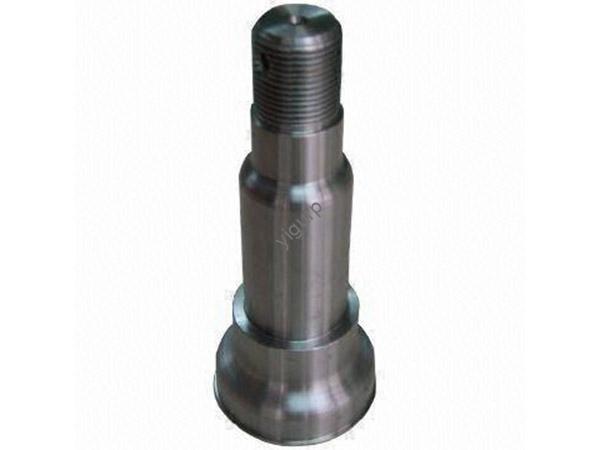
If you work withcold working tools—like stamping dies or extrusion tools—you need a steel that can handle pressure, resistir ao desgaste, e continue firme. That’s whereEM 1.2344 aço para ferramentas brilha. Esta liga foi construída para tarefas de fabricação a frio, mas o que o torna melhor do que outras opções? Neste guia, vamos detalhar suas propriedades, usos no mundo real, como é feito, and how it compares to alternatives. No final, you’ll know if it’s the right fit for your cold working projects.
1. Material Properties of EN 1.2344 Aço ferramenta
EN 1.2344’s performance starts with its carefully balanced makeup and key properties. Let’s break this into four parts:
1.1 Composição Química
The elements in EN 1.2344 work together to boost its strength and cold working capabilities. Below is its typical composition (per EN standards):
| Elemento | Faixa de conteúdo (%) | Key Role |
|---|---|---|
| Carbono (C) | 0.38 – 0.45 | Adds hardness and helps form wear-resistant carbides. |
| Manganês (Mn) | 0.20 – 0.40 | Improves hardenability and reduces brittleness during heat treatment. |
| Silício (E) | 0.80 – 1.20 | Enhances strength and resistance to oxidation. |
| Cromo (Cr) | 4.80 – 5.50 | Boosts corrosion resistance and hardenability; supports carbide formation. |
| Molybdenum (Mo) | 1.20 – 1.60 | Increases toughness and high-temperature stability (even for cold tools). |
| Vanadium (V) | 0.80 – 1.20 | Forms hard vanadium carbides, improving wear resistance and edge retention. |
| Enxofre (S) | ≤ 0.030 | Minimized to avoid weakening the steel and reducing toughness. |
| Fósforo (P) | ≤ 0.030 | Kept low to prevent brittleness, especially in cold conditions. |
1.2 Propriedades Físicas
These properties affect how EN 1.2344 behaves in cold working environments—like when shaping metal at room temperature. All values are measured at room temperature unless stated:
- Densidade: 7.85 g/cm³ (same as most steels, making it easy to calculate part weights).
- Ponto de fusão: 1450 – 1510 °C (high enough to withstand manufacturing steps like forging).
- Condutividade Térmica: 30 C/(m·K) (good heat transfer, so it cools evenly during heat treatment).
- Coeficiente de Expansão Térmica: 11.8 × 10⁻⁶/°C (de 20 para 600 °C; low expansion means less warping when heated/cooled).
- Capacidade Específica de Calor: 465 J/(kg·K) (efficient at absorbing heat, useful for controlled heat treatment).
1.3 Propriedades Mecânicas
Mechanical properties determine how EN 1.2344 holds up under cold working stress—like stamping or extrusion. These values are typical after standard heat treatment (têmpera + tempering at 250 °C):
| Propriedade | Valor típico | Test Standard | Why It Matters |
|---|---|---|---|
| Dureza (CDH) | 52 – 56 | EN ISO 6508 | Balanced hardness—tough enough to avoid cracking, yet hard enough to resist wear. |
| Resistência à tracção | ≥ 1800 MPa | EN ISO 6892 | Handles high pulling forces (critical for cold extrusion tools). |
| Força de rendimento | ≥ 1600 MPa | EN ISO 6892 | Resists permanent deformation, so tools keep their shape during stamping. |
| Alongamento | ≤ 8% | EN ISO 6892 | Better ductility than harder tool steels, reducing the risk of cracking. |
| Resistência ao Impacto (Entalhe em V Charpy) | ≥ 35 J. (no 20 °C) | EN ISO 148-1 | High toughness—ideal for cold shearing tools that face sudden impacts. |
| Fatigue Strength | ~700 MPa (10⁷ cycles) | EN ISO 13003 | Resists failure from repeated stress (key for high-cycle cold stamping dies). |
1.4 Outras propriedades
- Resistência à corrosão: Bom. Chromium content helps it resist rust in workshop environments, but avoid long exposure to chemicals.
- Resistência ao desgaste: Excelente. Vanadium and carbon form hard carbides that protect against abrasive wear (perfeito para cold forming tools).
- Usinabilidade: Justo. It’s harder to machine than low-carbon steel, mas recozimento (heating to 820–860 °C and cooling slowly) softens it to HRC 22–26, making machining easier.
- Temperabilidade: Very good. It hardens evenly across thick sections (até 60 milímetros), so large cold working tools have consistent performance.
- Red Hardness: Moderado. It retains hardness at temperatures up to 400 °C—useful for cold tools that generate heat from friction.
2. Applications of EN 1.2344 Aço ferramenta
EN 1.2344’s mix of toughness, resistência ao desgaste, and hardenability makes it perfect for cold working tasks. Aqui estão seus usos mais comuns, com exemplos reais:
2.1 Stamping Dies
- Exemplos: Dies for stamping metal parts like automotive brackets, washer, or electrical contacts.
- Why it works: High toughness prevents cracking during stamping, while wear resistance keeps the die’s shape. A German automotive supplier used EN 1.2344 stamping dies and saw die life increase from 80,000 para 200,000 peças.
2.2 Cold Extrusion Tools
- Exemplos: Tools for extruding metal into shapes like bolts, nozes, or tubes (done at room temperature).
- Why it works: High tensile strength handles the pressure of extrusion, and wear resistance prevents tool damage. A Korean manufacturer used EN 1.2344 extrusion tools for aluminum bolts—tool life doubled compared to alloy steel.
2.3 Cold Shearing Tools
- Exemplos: Shear blades for cutting metal sheets or bars.
- Why it works: Impact toughness resists chipping when cutting hard metals, and hardness keeps blades sharp. Um EUA. metal shop reported that EN 1.2344 shear blades lasted 3x longer than carbon steel blades.
2.4 Other Cold Working Tools
- Exemplos: Cold forming tools (for bending metal), punch tools (for making holes), and drawing dies (for pulling metal into wires).
- Why it works: Its balanced properties handle the unique stresses of each cold working task. A Chinese factory used EN 1.2344 drawing dies for steel wires—wire quality improved (fewer surface defects) and die maintenance dropped by 40%.
2.5 Componentes Automotivos
- Exemplos: Tooling for making automotive parts like gears, eixos, or body panels.
- Why it works: It meets the strict durability requirements of the automotive industry. A Japanese auto parts maker used EN 1.2344 for gear-stamping dies—downtime from die changes fell by 50%.
3. Manufacturing Techniques for EN 1.2344 Aço ferramenta
Turning EN 1.2344 into usable tools requires careful steps. Aqui está uma análise passo a passo:
- Fusão: Matérias-primas (iron, carbono, cromo, etc.) are melted in an electric arc furnace (EAF) at 1500–1600 °C. This ensures even mixing of elements.
- Fundição: Molten steel is poured into molds to make ingots (large blocks) or near-net-shape parts. Slow cooling prevents internal cracks.
- Forjamento: Ingots are heated to 1050–1150 °C and pressed/hammered into tool shapes (por exemplo, die blanks). Forging improves grain structure, making the steel stronger.
- Tratamento térmico: The most critical step—standard cycle for cold working tools:
- Recozimento: Heat to 820–860 °C, hold 2–4 hours, cool slowly. Softens steel for machining.
- Têmpera: Heat to 1020–1060 °C, hold 1–2 hours, tempere em óleo. Hardens steel to HRC 58–60.
- Temperamento: Reheat to 200–300 °C, hold 1–3 hours, cool. Reduces brittleness and sets final hardness (HRC 52–56).
- Moagem: Após tratamento térmico, tools are ground to precise dimensions (por exemplo, 0.001 mm tolerance for stamping dies). This removes surface flaws and improves finish.
- Usinagem: Perfuração, fresagem, or turning—done before quenching (when steel is soft). Carbide tools are recommended for best results.
- Tratamento de superfície: Optional steps like nitriding (adds a hard surface layer) ou revestimento (por exemplo, TiCN) to boost wear resistance further.
4. Estudo de caso: EM 1.2344 in Cold Stamping Dies
A European manufacturer of electrical contacts faced a problem: their carbon steel stamping dies were cracking after 50,000 peças, leading to costly downtime. They switched to EN 1.2344, e aqui está o que aconteceu:
- Processo: The dies were forged, recozido (CDH 24), machined to shape, quenched (1040 °C), tempered (250 °C), and ground to tolerance.
- Resultados:
- Die life increased to 180,000 peças (260% melhoria).
- Cracking dropped to almost zero (thanks to EN 1.2344’s high toughness).
- Part quality improved: contacts had more consistent shapes (no die warping).
- Why it worked: The alloy’s toughness absorbed the impact of stamping, while its wear resistance prevented the die from wearing down—even when stamping hard copper.
5. EM 1.2344 contra. Outros materiais
How does EN 1.2344 stack up against common alternatives for cold working? Let’s compare key properties:
| Material | Dureza (CDH) | Toughness (J.) | Resistência ao desgaste | Custo (contra. EM 1.2344) | Melhor para |
|---|---|---|---|---|---|
| EM 1.2344 Aço ferramenta | 52 – 56 | 35+ | Excelente | 100% | Cold stamping/extrusion tools |
| Aço Rápido (HSS) | 60 – 65 | 15 – 20 | Muito bom | 80% | High-speed cutting (not cold work) |
| Aço inoxidável (304) | 20 – 25 | 100+ | Pobre | 120% | Corrosion-prone parts (not tools) |
| Aço carbono (1095) | 55 – 60 | 10 – 15 | Bom | 40% | Baixo custo, low-toughness tools |
| Liga de aço (4140) | 30 – 40 | 50+ | Justo | 60% | Partes estruturais (not cold tools) |
| Cold Work Tool Steel (EM 1.2080) | 58 – 62 | 18 – 25 | Muito bom | 90% | Cold tools needing higher hardness (less toughness) |
Key takeaway: EM 1.2344 offers the best balance of toughness and wear resistance for cold working. It’s more durable than carbon/alloy steel and tougher than othercold work tool steel grades like EN 1.2080.
Yigu Technology’s View on EN 1.2344 Aço ferramenta
Na tecnologia Yigu, EM 1.2344 is our top pick for clients needing reliable cold working tools. Its unique mix of toughness and wear resistance solves the common issues of cracking and rapid wear in cold stamping or extrusion. We often recommend it for automotive and industrial clients, as it cuts maintenance costs and boosts productivity. For tools needing extra precision, we pair it with our high-precision grinding services to ensure tight tolerances. EM 1.2344 isn’t just a steel—it’s a solution for consistent, long-lasting cold working performance.
FAQ About EN 1.2344 Aço ferramenta
1. Can EN 1.2344 be used for hot working tools (por exemplo, hot forging dies)?
Não, EM 1.2344 is designed for cold working. It lacks the high-temperature strength needed for hot tools (por exemplo, 600+ °C). For hot working, choose a dedicated hot work tool steel like EN 1.2343.
2. What’s the best tempering temperature for EN 1.2344 cold stamping dies?
For cold stamping dies, temper at 200–250 °C. This sets hardness to HRC 54–56, balancing toughness (to avoid cracking) e resistência ao desgaste (to extend die life). If you need more toughness (por exemplo, for thick metal stamping), temper at 300 °C (HRC 52–54).
3. Is EN 1.2344 more expensive than EN 1.2080?
Sim, EM 1.2344 is about 10% more expensive than EN 1.2080. But it’s worth the cost for cold tools that need high toughness (por exemplo, matrizes de estampagem). EM 1.2080 is harder but less tough—better for tools with low impact (por exemplo, small cutting tools).