
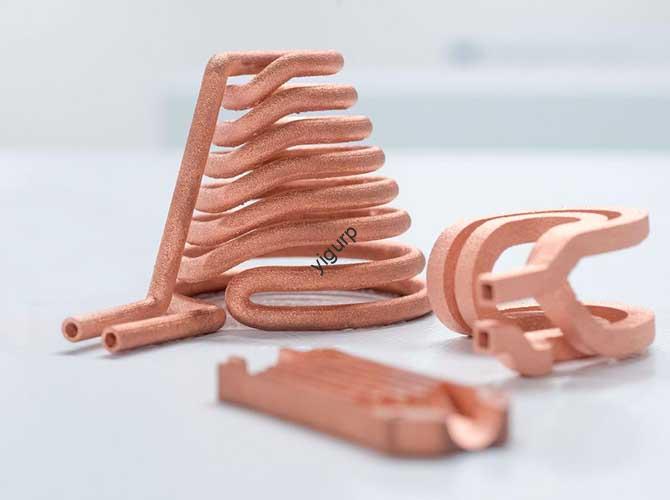
3Impressão D, ou fabricação aditiva, não é apenas uma nova maneira de fazer as coisas – é uma mudança de paradigma na forma como pensamos sobre a produção. Ao contrário da fabricação tradicional (que corta, exercícios, ou molda materiais em forma), 3Impressão D builds objects layer by layer from digital files. O que torna esta tecnologia tão transformadora? Três características definidoras: it creates complex items without raising costs, enables product diversification at no extra expense, and eliminates the need for assembly. These traits don’t just simplify production—they break the rules of traditional manufacturing, opening doors for innovation across industries. Abaixo, we break down each characteristic, why it matters, and how it solves real-world challenges.
1. Complexity Doesn’t Drive Up Costs
The biggest pain point in traditional manufacturing? The more complex a part, the higher the cost. Carving intricate shapes, adding detailed features, or making custom designs requires extra tools, trabalho, and time—all of which hike up expenses. 3D printing flips this logic: complexity has no impact on cost. Whether you’re printing a simple cube or a part with tiny internal channels, superfícies curvas, or interlocking components, the time, materiais, and effort stay roughly the same.
Traditional Manufacturing vs. 3Impressão D: Custo versus. Complexidade
| Fator | Fabricação Tradicional | 3Impressão D |
| Cost Driver | Complexidade (more tools, trabalho, and setup needed) | Volume and material use (complexity doesn’t add cost) |
| Exemplo: Engine Part | A part with 5 internal channels costs 3x more than a simple block | The same 5-channel part costs the same as a simple block |
| Tempo de configuração | 1–2 weeks for custom tooling (por exemplo, moldes, exercícios) | 1–2 hours to upload a digital file |
Take an aerospace engineer designing a fuel injector with 20 tiny nozzles (each 0.5mm wide). With traditional CNC machining, this would require 5 different tools, 40 hours of labor, e custo \(5,000. Using 3D printing, the same part is printed in 8 hours with one machine, costing just \)800. Why? 3D printing builds layer by layer—intricate details are just part of the digital blueprint, not extra work. This characteristic is a game-changer for industries like medical device manufacturing, where parts (por exemplo, custom knee implants) need to be complex to fit the human body.
2. Product Diversification Comes at No Extra Cost
Na fabricação tradicional, making different products means retooling machines, training workers, or even buying new equipment—all of which add time and money. A factory that makes plastic cups can’t switch to making plastic toys without spending weeks adjusting molds and teaching staff. 3D printing solves this with cost-free diversification: one machine can print dozens of different products in a single day, with no extra setup or training.
How 3D Printing Enables Low-Cost Diversification
- No retooling needed: Swap designs by uploading a new CAD file—no need to change molds, exercícios, or tools.
- Minimal labor training: Operators only need to learn basic 3D printing skills; switching between products doesn’t require new expertise.
- Shared materials: Many 3D printers use the same base materials (por exemplo, PLA, resina) for different products—no need to stockpile specialized supplies.
Consider a small toy company that wants to offer 10 different animal figurines (cats, dogs, bears, etc.). With traditional injection molding, each figurine needs a custom mold (\(1,000–\)3,000 per mold), totaling \(10,000–\)30,000 in upfront costs. Com impressão 3D, the company uses one printer and uploads 10 different digital files—no molds needed. They can even add new figurines (por exemplo, um coelho) later by simply uploading a new file, with zero extra cost. This makes 3D printing ideal for small businesses, startups, or anyone needing to test multiple product ideas without breaking the bank.
3. No Assembly Required—Integrated Molding Saves Time
Traditional manufacturing often involves making parts separately, then assembling them (por exemplo, attaching a phone’s screen to its body, or bolting a car’s engine to its frame). Assembly adds steps, trabalho, and risk: parts can be misaligned, bolts can loosen, or workers can make mistakes. 3D printing eliminates this with integrated molding—it prints entire objects as a single piece, no assembly needed.
The Benefits of No-Assembly 3D Printing
| Beneficiar | Example Scenario | Impact on Production |
| Produção mais rápida | A 3D-printed chair (seat + legs + backrest) is done in 12 horas | Traditional chair assembly takes 3 horas (after making parts), mais 2 days to make parts—total 2.5 dias |
| Fewer Errors | A 3D-printed robot arm (no bolts or joints) has no loose parts | A traditionally assembled robot arm has 5 articulações, each with a 2% risk of failure—10% total failure risk |
| Isqueiro, Stronger Parts | A 3D-printed bike frame (one piece) has no weak welds | A welded bike frame has 3 welds, quais são 30% weaker than the frame itself |
A great example is a medical device company making a handheld blood glucose monitor. Traditionally, the monitor would have 15 separate parts (case, screen, battery holder, botões) that need assembly—taking 2 hours per device and risking misalignment (which could break the screen). Com impressão 3D, the company prints the entire case (with built-in battery holder and button slots) as one piece. They just insert the screen and electronics (the only non-3D-printed parts) and are done in 30 minutes per device. This cuts production time by 75% and reduces defect rates from 5% para 0.5%. For industries where precision and reliability matter (like healthcare or aerospace), integrated molding is a lifesaver.
Yigu Technology’s Perspective
Na tecnologia Yigu, we’ve seen 3D printing’s three core characteristics transform clients’ workflows. For industrial designers, “complexity without cost” lets them create innovative parts (por exemplo, lightweight automotive brackets) they once thought impossible. For small businesses, “cost-free diversification” turns 10 product ideas into reality for the price of one. And “no assembly” cuts our clients’ production time by 40–60%, boosting efficiency. These traits aren’t just features—they’re tools to solve problems. As 3D printing evolves, we’ll keep leveraging these characteristics to help clients stay ahead in manufacturing.
Perguntas frequentes
- Does 3D printing’s “no assembly” feature work for all products?
It works best for medium-sized, partes complexas (por exemplo, small appliances, ferramentas médicas). Very large products (por exemplo, cars, houses) may still need partial assembly, but 3D printing can reduce the number of parts by 50–80%.
- If 3D printing doesn’t charge more for complexity, why is some 3D-printed stuff expensive?
Cost comes from material type (por exemplo, metal resin is pricier than PLA) and print time (large parts take longer). Complexity itself doesn’t add cost—but using high-end materials or printing big parts does.
- Can traditional manufacturing ever match 3D printing’s “diversification without cost”?
Unlikely. Traditional manufacturing relies on tooling (moldes, exercícios) that’s designed for one product. 3D printing uses digital files, which are easy to swap—no tooling limits. For low-volume, diverse production, 3D printing is unbeatable.