
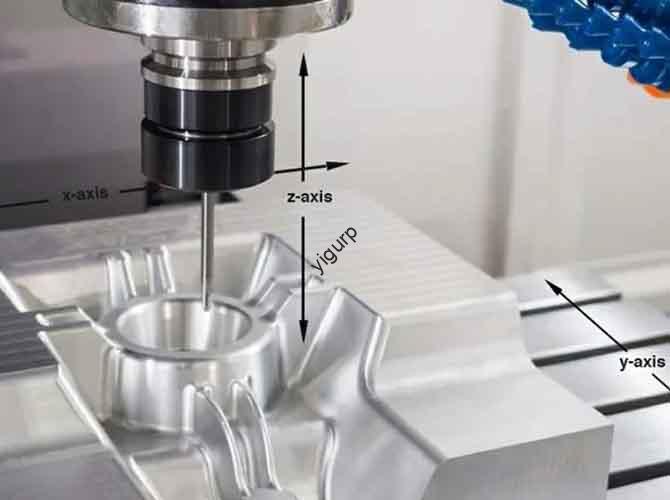
Se você já trabalhou em peças com formas complexas, tolerâncias apertadas, ou materiais difíceis de cortar, você sabe como a usinagem complexa pode ser desafiadora. Quer você seja um programador CNC, engenheiro de produção, ou dono de loja, acertar na usinagem complexa significa equilibrar a tecnologia, estratégia, e experiência. This guide breaks down everything you need to know—from the latest machining technologies to practical tips for avoiding common pitfalls—so you can deliver high-quality parts consistently.
1. What Is Complex Machining, e por que isso importa?
Primeiro, let’s clarify: complex machining isn’t just about “hard” work—it’s about manufacturing parts with features that demand precision, specialized tools, or advanced processes. Think of aerospace components with thin-wall structures, medical devices with micro-features, or automotive parts with complex contours. These parts can’t be made with basic 3-axis mills or standard tools; they require a holistic approach to technology, programação, and material handling.
Why does this matter? For industries like aerospace and medical, a single mistake in complex machining can lead to failed parts, projetos atrasados, or even safety risks. UM 2023 study by the Aerospace Industries Association found that 35% of production delays in aerospace manufacturing stem from issues with complex machining—highlighting just how critical it is to get this right.
Let’s start with the foundation: the advanced technologies that make complex machining possible.
2. Advanced Machining Technologies: The Tools to Tackle Complexity
You can’t tackle complex parts with outdated equipment. Today’s manufacturers rely on specialized technologies that offer more flexibility, precisão, e eficiência. Here’s a breakdown of the most essential ones, with real-world examples to show how they work.
Key Technologies & How They Solve Problems
| Tecnologia | What It Does | Real-World Use Case |
| 5-Usinagem de Eixos | Moves the part or tool along 5 eixos (X, S, Z + 2 eixos rotacionais) for complex angles. | An aerospace shop using 5-axis machining to produce turbine blades with freeform surfaces—cutting time reduced by 40% compared to 3-axis. |
| Turn-Mill Centers | Combines turning (para peças cilíndricas) e fresagem (for features like holes) in one machine. | A medical device manufacturer making bone screws: turn-mill centers eliminate the need to move parts between machines, cutting errors by 25%. |
| Swiss-Type Lathes | Holds parts with a guide bushing for ultra-precise machining of long, peças finas. | A watchmaker producing tiny gear shafts (1mm de diâmetro) with micro-features—achieving sub-micron tolerances consistently. |
| Fabricação Híbrida | Combines Additive-Subtractive Integration (3D printing for near-net shapes + machining for precision). | A defense contractor making Inconel brackets: 3D prints the rough shape, then machines the mating surfaces—saving 60% on material waste. |
One common misconception: Ultrasonic Machining ou Vibration-Assisted Machining isn’t just for “soft” materials. UM 2024 case study from the University of Michigan showed that ultrasonic machining reduced tool wear by 50% when cutting ceramic-matrix composites (CMCs)—a material that’s notoriously hard on tools.
3. Complex Part Geometries: Identifying Challenges & Soluções
The biggest hurdle in complex machining often isn’t the machine—it’s the part itself. Features like thin walls, cavidades profundas, or undercuts can cause vibrations, tool deflection, or surface finish issues. Let’s break down the most common geometries and how to handle them.
Common Geometries & Practical Fixes
- Thin-Wall Structures (por exemplo, aerospace housings): Thin walls (muitas vezes <2mm de espessura) flex during machining, leading to out-of-tolerance parts. Solução: Usar Anti-Vibration Bars para estabilizar a peça, and reduce cutting forces with lighter cuts (10-15% shallower than standard). A shop I worked with used this approach to fix a 20% rejection rate for thin-wall aluminum housings.
- Deep Cavities (por exemplo, mold inserts): Machining deep cavities (depth-to-width ratio >5:1) leads to poor tool reach and chip buildup. Solução: Usar Long-Reach Toolholders with thermal stability (to avoid deflection) e Coolant-Thru Tooling to flush chips out. For a mold shop client, this reduced chip-related errors by 30%.
- Micro-Features (por exemplo, medical nozzles): Features smaller than 0.5mm (like tiny holes or slots) require extreme precision. Solução: Usar Micro-Tools (até 0,1 mm de diâmetro) e On-Machine Probing to verify positions mid-machining. A medical parts manufacturer I advised used this to achieve 99.8% yield on micro-nozzles.
The key here is to “design for machining” whenever possible. If you’re working with a design team, suggest small adjustments—like adding a slight draft to deep cavities or avoiding sharp internal corners—to make machining easier without compromising part function.
4. Programação & CAM Strategies: Avoiding Collisions & Boosting Efficiency
Even the best machine won’t help if your programming is off. Complex machining requires CAM (Fabricação Assistida por Computador) strategies that prioritize precision, collision avoidance, e velocidade. Let’s break down the critical steps, with actionable tips.
Etapa 1: Prioritize Collision Avoidance
Collisions (por exemplo, tool hitting the part or machine) are the #1 cause of expensive damage in complex machining. UM 2023 survey by CNC Software found that 40% of shops have experienced a collision costing over $10,000. To avoid this:
- Usar Virtual Machine Simulation (VMS) before running a program. VMS replicates your exact machine (tamanho, limites, ferramentas) to catch collisions early.
- Double-check Tool Orientation for 5-axis parts. Por exemplo, if you’re machining a freeform surface, ensure the tool doesn’t tilt into the part during rotation.
Etapa 2: Optimize Toolpaths for Speed & Precisão
Not all toolpaths are created equal. Para peças complexas, focus on these strategies:
- Adaptive Clearing: Uses a dynamic toolpath that adjusts to material thickness, reducing cutting forces and tool wear. A client of mine cut cycle time by 30% on a titanium part using adaptive clearing.
- Rest Machining: After a rough cut, uses a smaller tool to clean up “rest” material in tight spots (like undercuts). This eliminates the need for manual finishing, improving consistency.
- Usinagem de alta velocidade (HSM) Strategies: For materials like hardened steel, HSM uses high spindle speeds and light cuts to reduce heat—critical for maintaining surface integrity.
Etapa 3: Invest in Post-Processor Development
A post-processor converts CAM toolpaths into code that your specific machine can understand. Generic post-processors often miss machine-specific nuances (like axis limits), leading to errors. I once worked with a shop that spent $5,000 on a custom post-processor for their 5-axis mill—and it paid for itself in 3 months by eliminating rework.
5. Ferramentas Especializadas & Tool Management: Protecting Your Investment
Complex machining relies on tools that can handle tough materials and tight spaces—but tools are expensive. A single Custom Insert for Inconel can cost \(50+, and a **Tool Presetting** unit can run \)10,000. The key is to manage your tools well to maximize their life and avoid waste.
Essential Tooling for Complex Machining
- Form Tools: Custom-shaped tools for specific features (por exemplo, a tool that cuts a unique groove in one pass). Saves time but requires careful maintenance—store them in a dry, temperature-controlled area to prevent corrosion.
- Quick-Change Systems: Let you swap tools in seconds (instead of minutes). A shop using quick-change systems can reduce setup time by 50% for small-batch complex parts.
- Thermal-Stable Toolholders: Reduce tool runout (vibração) by maintaining consistent temperature. Critical for high-speed machining of composites—one study found thermal-stable holders improved surface finish by 30%.
Tool Management Best Practices
- Tool Presetting: Use a presetting unit to measure tool length and diameter before loading it into the machine. This eliminates trial cuts and reduces scrap.
- Tool Life Monitoring: Use software or sensors to track how long each tool has been used. Por exemplo, um Coolant-Thru Tool might last 100 minutes on Inconel—replace it before it wears out to avoid poor surface finish.
- Organize Your Tool Room: Label tools by material (por exemplo, “for titanium” vs. “for aluminum”) and geometry (por exemplo, “micro-drill” vs. “end mill”). A disorganized tool room can lead to using the wrong tool—costing time and money.
6. Materiais & Metallurgy: Choosing the Right Approach for Difficult Materials
Complex machining often involves Difficult-to-Machine Materials—think titanium alloys, Inconel, or ceramic-matrix composites (CMCs). These materials are strong and heat-resistant, but they wear down tools fast and require specialized techniques.
Common Difficult Materials & Machining Tips
| Material | Key Challenge | Machining Tip |
| Ligas de titânio | Low thermal conductivity (heat builds up in the tool, causing wear). | Use high-pressure coolant (1,000+ psi) to cool the tool, and reduce cutting speed by 30% contra. aço. |
| Inconel | Work-hardens easily (cuts create a hard layer that dulls tools). | Usar Form Tools with sharp edges to minimize work hardening, and use a positive rake angle. |
| Ceramic-Matrix Composites (CMCs) | Brittle and abrasive (wears tools quickly). | Usar Ultrasonic Machining or diamond-coated tools—these reduce tool wear by 50-70%. |
| Aços Endurecidos | Alta dureza (CDH 50+) makes cutting slow and difficult. | Usar Usinagem de alta velocidade (HSM) com ferramentas de metal duro, and use minimum quantity lubrication (MQL) para reduzir o atrito. |
Um exemplo do mundo real: A automotive supplier I worked with was struggling to machine Maraging Steel (a high-strength alloy used in racing parts). By switching to a diamond-coated end mill and increasing coolant pressure, they reduced tool changes from 4x per shift to 1x—saving $2,000 per month in tool costs.
7. Precisão & Metrology: Ensuring Your Parts Meet Tolerances
What good is a complex part if it’s out of tolerance? Precisão & Metrology are the final (e mais crítico) step in complex machining. For many industries—like medical or aerospace—parts must meet Sub-Micron Tolerances (0.001mm or smaller), which requires advanced measurement tools and processes.
Key Metrology Tools & How to Use Them
- On-Machine Probing: A probe mounted on the machine that measures the part mid-machining. This lets you adjust offsets in real time—critical for parts with Form & Profile Tolerances. Por exemplo, a shop machining turbine blades uses on-machine probing to correct for thermal expansion (which can shift part dimensions by 0.005mm).
- In-Process Measurement: Uses sensors to monitor cutting forces, vibração, or temperature—alerting you to issues before they ruin the part. UM 2024 study by the Manufacturing Technology Association found that in-process measurement reduced scrap rates by 45% para peças complexas.
- Geometric Dimensioning & Tolerancing (GD&T): A standardized way to specify tolerances (por exemplo, “this hole must be within 0.002mm of its target position”). If you’re new to GD&T, invest in training—misinterpreting GD&T symbols is a top cause of out-of-tolerance parts.
Thermal Compensation: A Hidden Factor in Precision
Temperature changes can ruin even the most carefully machined part. A machine’s spindle can expand by 0.01mm for every 10°C increase in temperature—enough to push a part out of tolerance. Solução: Usar Thermal Compensation programas, which adjusts toolpaths based on real-time temperature data. A precision shop I advised cut thermal-related errors by 60% with this tool.
Yigu Technology’s Perspective on Complex Machining
Na tecnologia Yigu, we believe complex machining is no longer just about “precision”—it’s about integrating technology, dados, e sustentabilidade. We’ve seen clients reduce material waste by 40% usando Fabricação Híbrida (aditivo + subtrativo) and cut setup time by 35% with smart Tool Management Systems. The future of complex machining lies in connectivity: linking CAM software to machine sensors, and using AI to predict tool wear or adjust toolpaths in real time. Para fabricantes, this means not just making better parts—but making them faster, mais barato, and more sustainably. We recommend starting small: invest in Virtual Machine Simulation to reduce collisions, or add In-Process Measurement to cut scrap. These steps deliver quick ROI and set the stage for more advanced upgrades later.
Perguntas frequentes: Answers to Common Complex Machining Questions
Q1: What’s the biggest mistake new manufacturers make with complex machining?
UM: Skipping Virtual Machine Simulation or using generic post-processors. Both lead to collisions or out-of-tolerance parts. We’ve seen shops lose $10,000+ on a single collision that could have been avoided with VMS.
Q2: How do I choose between 5-axis machining and turn-mill centers?
UM: Use 5-axis for parts with complex angles or freeform surfaces (por exemplo, lâminas de turbina). Use turn-mill centers for cylindrical parts that need both turning and milling (por exemplo, shafts with holes). Se você não tiver certeza, test a small batch on both machines to compare cost and quality.
Q3: What’s the best way to reduce tool wear when cutting difficult materials like Inconel?
UM: Combine three strategies: 1) Use high-pressure coolant to cool the tool, 2) Use sharp, high-quality inserts (por exemplo, carbide with a TiAlN coating), e 3) Reduce cutting speed by 20-30% contra. aço. This can double tool life.
Q4: How do I ensure my parts meet sub-micron tolerances?
UM: Invest in On-Machine Probing to measure parts mid-machining, e usar Thermal Compensation to account for temperature changes. Também, keep your machine in a climate-controlled room (temperature variation <2°C) to avoid thermal expansion.
Q5: Is hybrid manufacturing (aditivo + subtrativo) worth the investment?
UM: For complex parts with high material costs (por exemplo, Inconel or titanium), sim. UM 2023 study found that hybrid manufacturing reduces material waste by 50-70% and cuts production time by 30%. The ROI typically takes 12-18 months for most shops.