
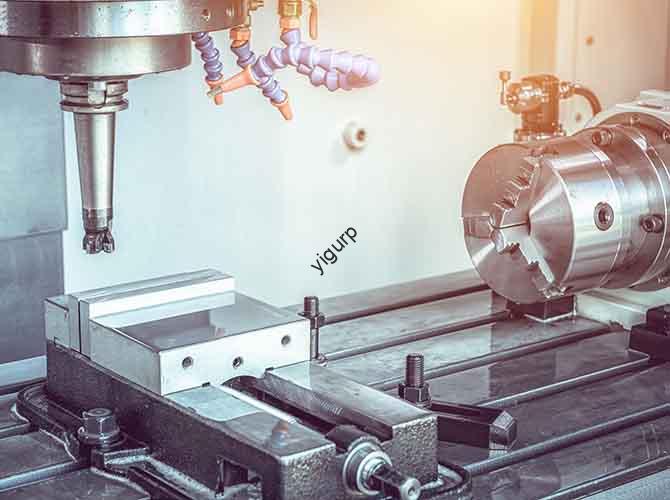
Na fabricação moderna, CNC machining efficiency directly impacts a business’s bottom line. Produção lenta, tempo de inatividade frequente, e resultados inconsistentes podem levar a prazos perdidos, custos mais elevados, e clientes perdidos. Mas melhorar a eficiência não significa trabalhar mais rápido – trata-se de trabalhar de maneira mais inteligente. Da otimização da programação ao gerenciamento de ferramentas e processos, cada passo desempenha um papel. This article breaks down the critical factors that shape CNC machining efficiency and provides actionable solutions to solve common productivity pain points.
1. Programming Skills: The Foundation of Efficient CNC Machining
Programming is the “brain” of CNC machining. A well-written program reduces errors, shortens cycle times, and ensures consistent results. Poor programming, por contraste, leads to wasted time, material scrap, and rework.
Key Programming Strategies for Higher Efficiency
| Estratégia | How It Boosts Efficiency | Exemplo do mundo real |
| Use Main Programs + Sub-Programs | For parts with repeated shapes (por exemplo, cavidades de molde), call sub-programs from the main program instead of rewriting code. This cuts programming time and reduces errors. | A mold maker machining a mold with 8 identical holes: Using a sub-program for the hole-drilling step reduced programming time by 60% (de 2 horas para 48 minutos). |
| Adopt Absolute Programming | Program each segment based on the workpiece’s origin (not the previous cut). This eliminates cumulative errors that force rework. | An automotive parts manufacturer switched from incremental to absolute programming—scrap rate dropped from 8% para 2% (saving $5,000/month in material costs). |
| Optimize Tool Paths | Minimize unnecessary tool movements (por exemplo, avoid rapid moves over unprocessed areas). Use CAM software to generate the shortest, most efficient paths. | A aerospace component shop used CAM software to reorder tool paths—cycle time per part decreased by 15% (de 20 minutos para 17 minutos). |
P&UM: Solving Common Programming Efficiency Issues
P: My programs take too long to write—how can I speed this up?
UM: Reuse existing code! Create a library of sub-programs for common tasks (por exemplo, perfuração, chamfering). Por exemplo, a sub-program for M8 hole drilling can be adjusted in 5 minutes instead of writing new code from scratch. Most CAM software also has “template” features to auto-generate basic program structures.
2. Gerenciamento de ferramentas: Reduce Downtime and Cut Costs
Tools are the “hands” of CNC machining. Poor tool management—dull tools, incorrect tool selection, or unplanned tool changes—causes 30% of CNC downtime. Proactive tool management keeps machines running and parts moving.
Melhores práticas de gerenciamento de ferramentas
| Practice | How It Improves Efficiency | Data-Driven Impact |
| Track Tool Life | Use CNC systems to monitor tool usage (by cycles or time). Replace tools before they wear out (por exemplo, depois 500 cuts for carbide tools). | A machinery shop implemented tool life tracking—spindle downtime from tool failures dropped by 40% (de 2 hours/day to 1.2 hours/day). |
| Choose the Right Tool | Match tool type/spec to material and process (por exemplo, use high-speed steel for aluminum, carbide for steel). Avoid “one-tool-fits-all” mistakes. | A metal fabricator switched to carbide tools for steel parts—cutting speed increased by 30% (de 1000 RPM to 1300 RPM), reduzindo o tempo de ciclo em 25%. |
| Organize Tool Storage | Use a tool cabinet with labeled slots. Keep frequently used tools near the machine to cut tool change time. | A job shop organized tools by material (alumínio, aço, latão)—tool change time per part decreased from 2 minutos para 45 segundos (salvando 1.25 hours/day for 50 peças). |
Tool Life Extension Tips
- Usar refrigerante: Proper coolant flow (5–10 L/min) reduces tool heat—extending life by 20%.
- Ajustar os parâmetros de corte: Lower feed rate by 10% for hard materials (por exemplo, aço inoxidável) to reduce tool stress.
- Sharpen Tools: Resharpen carbide tools 2–3 times before replacing (salva 50% on tool costs).
3. Otimização de Processos: Streamline Every Step
Even the best programs and tools can’t fix inefficient processes. Optimizing machining routes, cutting parameters, and part handling eliminates bottlenecks and speeds up production.
Process Optimization Strategies
| Estratégia | Step-by-Step Implementation | Efficiency Gain |
| Separate Roughing + Acabamento | For parts prone to deformation (por exemplo, thin-walled aluminum), rough cut first (remover 90% de materiais), then finish cut (refine shape). This avoids rework from post-roughing deformation. | A consumer electronics maker separated roughing/finishing for phone casings—rework rate dropped from 12% para 3%, salvando 8 hours/week in reprocessing. |
| Otimize os parâmetros de corte | Adjust speed, taxa de alimentação, and depth of cut based on machine/material (por exemplo, 1500 RPM, 500 mm/min, 2mm depth for aluminum). Use manufacturer guidelines as a starting point. | A furniture parts manufacturer optimized parameters—material removal rate increased by 20% (de 10 cm³/min to 12 cm³/min), cutting production time for 100 parts from 5 horas para 4.2 horas. |
| Minimize Part Handling | Use fixtures to hold parts securely during multi-operation machining (por exemplo, furar, moinho, tap in one setup). Avoid removing/reclamping parts (causes alignment errors). | A automotive supplier used a custom fixture for gear parts—setup time per batch decreased from 1 hora para 20 minutos (salvando 40 minutes/batch for 10 batches/week). |
Exemplo: Process Optimization for a Mold Cavity
A mold shop was machining a 100mm × 80mm cavity with these issues:
- Long cycle time (30 minutes/part).
- High scrap rate (10%) from deformation.
Solução:
- Separated roughing (20 minutos, 2mm profundidade) e acabamento (5 minutos, 0.5mm profundidade).
- Increased coolant flow to 8 L/min (reduced tool wear).
- Used a vacuum fixture to hold the part (no clamping marks).
Resultado:
- Tempo de ciclo: 25 minutes/part (17% mais rápido).
- Taxa de sucata: 2% (80% redução).
4. Production Management: Standardize and Maintain
Efficient CNC machining needs consistent workflows and well-maintained equipment. Poor production management—lack of SOPs, ignored maintenance—undermines all other efficiency efforts.
Production Management Best Practices
| Practice | How It Drives Efficiency | Real-World Outcome |
| Implement Production SOPs | Create step-by-step guides for setup, programação, e verificações de qualidade. Train employees to follow SOPs to reduce errors and wasted time. | A contract manufacturer implemented SOPs—employee onboarding time dropped from 4 semanas para 2 semanas, and process consistency improved by 35%. |
| Regular Equipment Maintenance | Check machines weekly: Tighten loose bolts, clean filters, test electrical parts (cilindros, solenoids). Fix small issues before they become big problems. | A heavy machinery shop scheduled weekly maintenance—unplanned downtime dropped by 50% (de 3 hours/week to 1.5 hours/week). |
| Batch Similar Parts | Group parts with the same material or process (por exemplo, all aluminum parts first, then steel parts). This reduces tool changes and setup time. | A job shop batched parts by material—setup time per day decreased from 3 horas para 1.5 horas (salvando 7.5 hours/week). |
Perspectiva da Tecnologia Yigu
Na tecnologia Yigu, we believe CNC machining efficiency is a holistic effort—programming, ferramentas, processos, and management must work together. Nós ajudamos 120+ clients boost efficiency by 25–40%: For a automotive parts maker, we optimized tool paths and implemented SOPs, reduzindo o tempo do ciclo em 30%. For a mold shop, we added tool life tracking, reduzindo o tempo de inatividade em 45%. We’re now integrating AI to predict tool wear and auto-adjust parameters—making efficiency gains even easier. Para fabricantes, the key isn’t just working harder—it’s optimizing every small step to build big productivity wins.
Perguntas frequentes
- P: How much can I realistically improve CNC machining efficiency?
UM: Most shops see 20–40% gains with basic optimizations (tool tracking, SOPs). Advanced steps (AI parameter adjustment) can push gains to 50%+. A small shop we worked with went from 50 parts/day to 70 partes/dia (40% gain) em 1 mês.
- P: Is process optimization worth the time for small batches (10–20 parts)?
UM: Sim! Even for small batches, separating roughing/finishing or optimizing tool paths saves 10–15% of time. Por exemplo, 20 parts with 20-minute cycle time become 17-minute cycle time—saving 1 hour total.
- P: What’s the biggest mistake that hurts CNC machining efficiency?
UM: Ignoring preventive maintenance. UM \(5 filter replacement can avoid a \)500 spindle repair and 8 hours of downtime. Vimos lojas perderem $10,000+ in a week due to unplanned machine failures from skipped maintenance.