
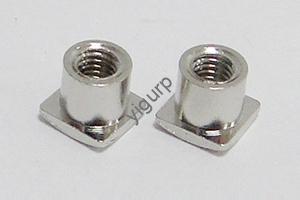
Se você estiver envolvido na fabricação de peças, seja para o setor aeroespacial, dispositivos médicos, or cars—Usinagem CNC is the backbone of precise, produção consistente. Mas com tantos tipos de máquinas, ferramentas, e materiais para escolher, é fácil se sentir sobrecarregado. Este guia detalha tudo o que você precisa saber sobre usinagem CNC: como funciona, as máquinas que você usará, common pitfalls to avoid, and real-world examples to make decisions easier.
1. O que é usinagem CNC, Exactly?
Vamos começar com o básico: CNC stands for “Computer Numerical Control.” Unlike manual machines (where a worker guides tools by hand), CNC machines follow pre-programmed commands calledCódigo G—a list of coordinates that tells the machine how to move.
Key facts to know:
- Movement axes: Most CNC machines use 3 core axes (X = left-right, Y = forward-backward, Z = up-down). Advanced models add rotational axes (UM, B, C) para formas complexas.
- Machine types: Any tool controlled by G-code counts as a CNC machine—from mills and lathes to plasma cutters. We’ll focus on the most common ones: fresagem, girando, perfuração, e moagem.
- Manufacturing method: CNC uses fabricação subtrativa—it cuts away material from a solid blank (like an aluminum block) to make your part. This is the opposite of 3D printing (fabricação aditiva), where material is built up layer by layer.
2. The Most Common CNC Machine Types (With Use Cases)
Not all CNC machines are the same—each is designed for specific tasks. Below’s a breakdown of the machines you’ll encounter most, plus when to use them.
2.1 CNC Milling Machines: For Flat or Complex Shapes
CNC mills are workhorses for parts with flat surfaces, buracos, or intricate cuts. The material stays still, and a rotating tool moves along the X/Y/Z axes to carve the shape.
There are two main types of milling centers:
| Feature | Vertical Machining Center (VMC) | Horizontal Machining Center (HMC) |
|---|---|---|
| Spindle orientation | Vertical (points straight down) | Horizontal (points sideways) |
| Working range | Smaller (best for parts under 1m in size) | Larger (ideal for high-volume, peças longas) |
| Velocidade & eficiência | Good for low-to-medium production runs | 3x more parts per shift than VMCs (continuous production) |
| Custo | More affordable (starting at ~$20,000) | More expensive (starting at ~$100,000) |
| Melhor para | Protótipos, colchetes pequenos, or parts with simple cuts | Blocos de motor, large aerospace components, or mass-produced parts |
Real Example: A startup making drone frames used a VMC to prototype aluminum parts. Once demand grew, they switched to an HMC—cutting production time from 2 hours per frame to 40 minutos.
2.2 CNC Lathes: For Cylindrical Parts
CNC lathes are for round parts (like rods, tubos, or bolts). The machine spins the material (held in achuck), and a stationary tool cuts away excess material to shape it.
Common lathe types:
- Regular lathes: Basic, versatile models for simple cylindrical parts (por exemplo, a steel rod with a smooth finish).
- Turret lathes: Speed up production by preloading all needed tools on a rotating turret. No more stopping to switch tools—great for mass-produced parts like bolts.
- Tool Room lathes: High-precision machines for low-volume, detailed work (por exemplo, making custom molds or tooling).
- High-speed lathes: Simples, fast machines for light work (por exemplo, aluminum pins for electronics).
- CNC Turning Centers: Advanced models with extra features—like a second spindle or milling tools. Some are vertical (easier to automate, chips fall by gravity) or horizontal (chips go to a conveyor).
Real Example: A medical device company used a CNC turning center to make stainless steel syringe barrels. The second spindle let the machine cut both ends of the barrel in one run—reducing errors and doubling output.
2.3 Other Essential CNC Machines
- CNC Drilling Machines: Specialized for drilling holes—they only move along the Z-axis (no X/Y cuts). Faster and more precise than manual drilling for repeatable holes (por exemplo, 100 identical holes in a metal plate).
- CNC Grinding Machines: Uses a rotating grinding wheel to smooth hard materials (like steel) and create ultra-finished surfaces. Often used as a final step (por exemplo, polishing a turbine blade to reduce friction).
3. CNC Tooling: The Tools That Make the Cut
Even the best CNC machine is useless without the right tool. Below are the most common tools for milling and turning, plus what they do.
3.1 Ferramentas de fresagem
| Tool Type | Propósito | Example Use Case |
|---|---|---|
| End Mill | Cuts in 3 directions (X/Y/Z)—the most versatile milling tool. Comes in flat-head (for straight cuts), ball-nose (for curved surfaces), or taper-shank (para furos profundos). | Carving a slot in a plastic part or shaping a curved edge on aluminum. |
| Face Mill | Cuts large flat surfaces (por exemplo, the top of a metal block). Uses carbide inserts for durability. | Smoothing the surface of a steel engine bracket. |
| Thread Mill | Creates internal or external threads (like the threads on a bolt). Rotates around the part to cut the thread shape. | Making threaded holes in a aluminum housing for electronics. |
| Cut-out Milling Cutter | Makes T-grooves (slots with a wider bottom). Must enter from the edge of the material. | Adding a T-groove to a workbench for clamps. |
3.2 Lathe Tools
| Tool Type | Propósito | Example Use Case |
|---|---|---|
| Outside Turning Tool | Cuts the outer diameter of a cylindrical part (por exemplo, narrowing a steel rod). | Shaping the outside of a bolt. |
| Internal Grooving/Threading Tool | Thin tools that reach inside parts to cut grooves or threads (por exemplo, inside a pipe). | Adding threads to the inside of a nut. |
| Cut-off Tool | Cuts the finished part away from the blank (etapa final). | Separating a finished bolt from the rest of the steel rod. |
| Drilling Tool | Drills holes along the length of a cylindrical part. | Drilling a hole through the center of a metal pin. |
3.3 Materiais para ferramentas: Which to Choose?
Tool material affects how fast you can cut, how long the tool lasts, and what materials it can handle.
| Material | Max Temperature Resistance | Melhor para | Custo & Durabilidade |
|---|---|---|---|
| Aço de alto carbono | ~200°C | Materiais macios (madeira, plástico) | Cheap, but wears fast (needs frequent replacement). |
| Aço Rápido (HSS) | ~600°C | Alumínio, aço macio | More durable than carbon steel; affordable for most tasks. |
| Carboneto | ~900°C | Hard steel, aço inoxidável | Harder than HSS, but brittle (breaks if dropped). More expensive. |
| Cerâmica | ~1,200°C | Superhard materials (titânio) | Extremely hard, but only for high-temperature cutting. |
| Cubic Boron Nitride (CBN) | ~1,300°C | Aço endurecido, superalloys | Best for tough jobs; expensive but long-lasting. |
Pro Tip: For aluminum, use HSS or carbide tools—they resist “sticking” (aluminum’s softness can gum up tools). For titanium, go with ceramic or CBN to handle high heat.
4. Materiais de usinagem CNC: What Works (and What Doesn’t)
CNC machines can cut almost any material, but each has challenges. Below’s how to pick the right one for your part.
| Material | Key Challenges | Best Tools & Settings | Example Use Case |
|---|---|---|---|
| Alumínio | Macio, sticks to tools; baixo ponto de fusão. | HSS/carbide tools; altas velocidades de corte. | Drone frames, capas para smartphones. |
| Aço carbono | Machinability varies by grade (lead/tin adds lubrication). | HSS for mild steel; carbide for hard steel. | Car parts (pistões), parafusos. |
| Titânio | Generates heat; work-hardens quickly. | Ceramic/CBN tools; low speeds, high chip loads. | Implantes médicos (joelhos), peças aeroespaciais. |
| Superalloys (por exemplo, Inconel) | High strength at high temps; hardens fast. | CBN tools; powerful machines, low speeds. | Jet engine turbine blades. |
| Cobre | Maleável (rolls around tools instead of cutting). | Ferramentas de metal duro; high feed rates. | Conectores elétricos, trocadores de calor. |
| Plásticos (rígido) | Melts if overheated (insulator, traps heat). | HSS tools; low speeds, sharp edges. | 3D printer nozzles, plastic gears. |
Real Example: A company making copper electrical connectors switched from HSS to carbide tools. The carbide tools cut faster without “gumming up,” reducing production time by 30%.
5. Prós & Cons of CNC Machining (Honest Breakdown)
CNC machining is popular for a reason—but it’s not perfect. Here’s what to weigh:
| Prós | Contras |
|---|---|
| Faster than manual machines: A CNC lathe can make 10x more bolts per hour than a manual lathe. | Expensive upfront: A basic CNC mill costs $20k–$50k; advanced models top $500k. |
| Custos de produção mais baixos: One operator can run 3–4 CNC machines (contra. 1 manual machine), cutting labor costs. | Needs skilled operators: Programming G-code and troubleshooting requires training (salaries start at $60k/year). |
| Higher precision: CNC machines hit tolerances as tight as ±0.001mm—critical for medical or aerospace parts. | High maintenance costs: Complex parts mean more frequent repairs (annual maintenance can cost $5k–$15k). |
| Flexível: Switch between parts in seconds (just upload new G-code)—great for prototypes and small runs. | Waste material: Subtractive manufacturing creates scrap (por exemplo, cutting a 1kg aluminum block to make a 0.5kg part). |
6. Common CNC Machining Mistakes (and How to Avoid Them)
Even experienced teams make errors—here are the biggest ones to watch for, plus fixes:
6.1 CNC System Crashes
A crash happens when the tool hits the machine or blank (por exemplo, if G-code has a wrong coordinate). It can break tools or damage the machine.
Fix:
- Simulate the tool path first: Use software (like Fusion 360 or Mastercam) to test G-code before uploading. For 5-axis machines, use specialized simulation tools—CAM software alone often misses complex movements.
6.2 Wrong Speed & Feed Settings
“Speed” is how fast the tool spins; “feed” is how fast it moves through the material. Wrong settings wear tools fast or leave rough surfaces.
Fix:
- Start with material-specific guides: Por exemplo, aluminum uses a speed of 1,000–3,000 RPM; titanium uses 100–500 RPM. Test on a scrap piece first—adjust until you get a smooth finish.
6.3 Lack of Maintenance
Dust, chips, and worn parts cause machines to break down. A neglected CNC mill might need a $10k repair instead of a $500 serviço.
Fix:
- Follow the OEM schedule: Clean chips daily, lubricate axes weekly, and replace filters monthly. Keep a log to track maintenance—this extends machine life by 2–3 years.
7. Which Industries Rely on CNC Machining?
CNC machining is everywhere—here are the sectors that depend on it most:
- Aeroespacial: Makes turbine blades (needs ±0.005mm tolerance) and rocket combustion chambers (formas complexas).
- Automotivo: Produces engine pistons and molds for car parts (alto volume, preciso).
- Médico: Creates custom implants (por exemplo, titanium hip replacements) that fit individual patients.
- Military: Builds missile components and gun barrels (tight tolerances for safety).
- Energia: Makes turbine blades for windmills and plasma suppression cavities for nuclear fusion (large, hard materials).
8. Yigu Technology’s Take on CNC Machining
Na tecnologia Yigu, we’ve helped hundreds of clients navigate CNC machining—from startups to aerospace firms. The biggest mistake we see? Choosing the wrong machine or tool for the job (por exemplo, using a VMC for high-volume cylindrical parts). Our advice: Start with your part’s needs—size, material, and production volume—then pick the machine. Por exemplo, use a turret lathe for mass-produced bolts, or an HMC for large aerospace parts. By aligning tools and machines with your goals, you’ll get precise parts at a lower cost.
9. Perguntas frequentes: Common CNC Machining Questions
Q1: Can CNC machines make any shape?
Almost—but they have limits. Por exemplo, a 3-axis mill can’t cut undercuts (a shape that “hides” behind another surface). You’d need a 5-axis machine for that. Always check if your design fits the machine’s axis capabilities.
Q2: How long does it take to program a CNC machine?
It depends on complexity: A simple part (like a hole in a block) takes 30 minutes to program. A complex part (like a turbine blade) can take 8–10 hours. Using pre-made G-code templates or CAM software speeds this up.
Q3: Is CNC machining better than 3D printing?
It depends on your needs. CNC is better for high-precision, peças duráveis (por exemplo, suportes metálicos) or large production runs. 3D printing is better for complex shapes (por exemplo, a lattice structure) or small prototypes. Para muitos projetos, you’ll use both—3D print a prototype, then CNC machine the final metal parts.