
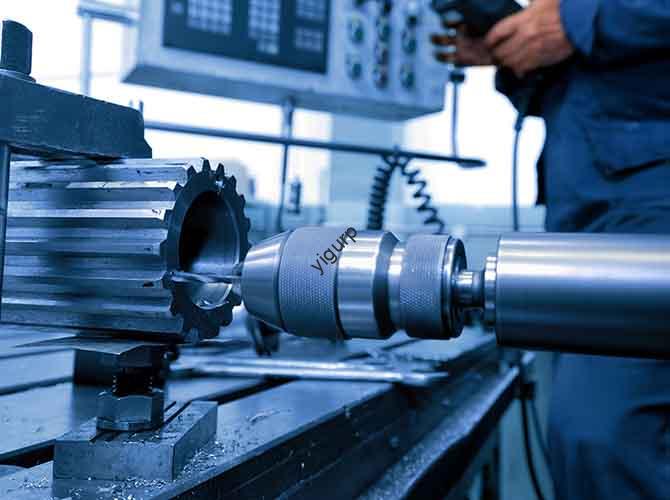
Se você está procurando por confiável CNC machining services in Canada or wondering how to navigate the country’s manufacturing landscape for precision parts, você veio ao lugar certo. A indústria de usinagem CNC do Canadá se destaca por seus rígidos padrões de qualidade, adoção de tecnologia avançada, e acesso a mão de obra qualificada – tornando-a a melhor escolha para indústrias como a aeroespacial, automotivo, e dispositivos médicos. Whether you’re a local startup or an international company looking to outsource, this guide breaks down everything you need to know: from key industry players and regional hotspots to cost factors, quality certifications, and how to choose the right CNC partner.
Key Advantages of Choosing CNC Machining in Canada
Canada’s CNC machining sector isn’t just about producing parts—it’s about delivering consistent, high-quality results that meet global standards. Here are the core benefits that set it apart:
Primeiro, stringent quality certifications não são negociáveis. Most Canadian CNC shops hold certifications like ISO 9001 (gestão de qualidade) e AS9100 (específico aeroespacial), ensuring parts meet strict industry requirements. Por exemplo, a Toronto-based shop we worked with recently supplied precision components to a major aerospace firm; their AS9100 certification was critical to winning the contract, as it guaranteed compliance with aviation safety standards.
Segundo, access to advanced technology is widespread. Canadian manufacturers invest heavily in state-of-the-art equipment, including 5-axis CNC mills, multi-tasking lathes, and automated inspection systems. UM 2024 report from the Canadian Manufacturers & Exporters (CME) descobri que 78% of CNC shops in Canada have upgraded their machinery in the past three years—well above the global average of 65%. This means faster turnaround times and more complex part production.
Terceiro, skilled labor and engineering expertise are readily available. Canada’s education system, including programs at colleges like British Columbia Institute of Technology (BCIT) and Conestoga College, trains workers specifically in CNC operation and manufacturing engineering. Unlike some countries where skill gaps are common, Canadian shops typically have teams with 5+ years of hands-on experience, reducing errors and ensuring consistency.
Top Regional Hotspots for CNC Machining in Canada
CNC machining in Canada isn’t evenly distributed—certain regions have emerged as hubs due to proximity to industries, supply chains, and talent. Understanding these hotspots can help you find the right partner faster:
Ontario: The Manufacturing Heartland
Ontario is home to over 40% of Canada’s CNC machining shops, with major clusters in Toronto, Windsor, e Kitchener-Waterloo. Toronto’s strength lies in aerospace and medical machining; por exemplo, a shop in Mississauga specializes in titanium parts for knee replacements, using 5-axis CNC machines to achieve tolerances of ±0.0005 inches. Windsor, meanwhile, is tied to the automotive industry—many shops here supply parts to Ford, GM, and their suppliers, with a focus on high-volume production.
British Columbia: Precision for Aerospace and Mining
BC’s CNC sector, centered in Vancouver e Kelowna, excels in high-precision work for aerospace and mining. Vancouver-based shops often work with companies like Boeing and Bombardier, producing complex components like engine brackets. Kelowna, por outro lado, serves the mining industry, creating durable parts for heavy machinery that can withstand harsh conditions. A key advantage here is access to local raw materials—BC’s aluminum and steel suppliers reduce lead times for shops.
Quebec: Automotive and Defense Expertise
Quebec’s CNC hubs, incluindo Montreal e Quebec City, are leaders in automotive and defense machining. Montreal has a large network of shops that specialize in custom CNC milling for electric vehicle (VE) peças, as the province pushes to become a leader in EV manufacturing. Quebec City, with its proximity to defense contractors, focuses on precision parts for military equipment—many shops here hold ITAR (Regulamentos sobre Tráfico Internacional de Armas) certificações, allowing them to work on sensitive projects.
Cost Factors to Consider for CNC Machining in Canada
While Canadian CNC machining offers high quality, it’s important to understand the cost drivers to budget effectively. Here’s a breakdown of key factors, along with data to help you plan:
| Cost Factor | Explanation | Average Impact on Project Cost |
| Tipo de material | High-grade materials (por exemplo, titânio, Inconel) cost more than aluminum or steel. | 30-60% of total cost |
| Part Complexity | 5-axis machining or tight tolerances (±0.0001 inches) require more time and expertise. | 20-40% of total cost |
| Volume de produção | Baixo volume (1-100 peças) has higher per-unit costs; alto volume (10,000+) benefits from economies of scale. | 15-35% of total cost |
| Tempo de espera | Pedidos urgentes (1-2 semanas) often add a 25-50% premium compared to standard lead times (3-4 semanas). | 25-50% premium on total cost |
Por exemplo, a small batch (50 peças) of aluminum brackets with standard tolerances might cost \(15-\)20 por unidade, while the same number of titanium brackets with tight tolerances could cost \(80-\)100 por unidade. It’s also worth noting that Canadian shops often include value-added services like design assistance or post-processing (por exemplo, anodização) in their quotes—these can save you time but may add 10-15% to the total cost.
How to Choose the Right CNC Machining Partner in Canada
Selecting a CNC shop that aligns with your needs is critical to project success. Follow these practical steps to make an informed decision:
- Verify Certifications First: Start by checking if the shop holds the certifications relevant to your industry. Para peças médicas, look for ISO 13485; para o setor aeroespacial, AS9100 is a must. Ask for a copy of their certification—reputable shops will provide this without hesitation.
- Review Their Portfolio and Case Studies: Look for examples of work similar to your project. A shop that’s successfully produced automotive parts may not be the best fit for delicate medical components. Por exemplo, if you need micro-machining for electronics, ask if they’ve worked on parts with features under 0.5mm—this will show their capability.
- Assess Technology and Equipment: Ask about the machines they use. Do they have 5-axis mills for complex parts? Do they use automated inspection tools like CMMs (Máquinas de medição por coordenadas) para garantir precisão? A shop with outdated equipment may struggle to meet your tolerances or lead times.
- Check References and Reviews: Reach out to past clients to ask about their experience. Did the shop meet deadlines? Were the parts consistent? You can also check platforms like Google Reviews or industry forums—look for shops with a 4.5+ star rating and positive feedback about communication.
- Evaluate Communication and Support: A good CNC partner will keep you updated throughout the process. Ask how often they’ll share progress reports, and who your main contact will be. Por exemplo, one Ontario-based shop we recommend assigns a project manager to each client, ensuring you have a single point of contact for questions or changes.
Trends Shaping the Future of CNC Machining in Canada
The Canadian CNC industry is evolving rapidly, driven by technology and global demand. Here are the key trends to watch in 2024 e além:
1. Automation and Industry 4.0
More shops are adopting automation—like robotic loaders for CNC machines—to increase efficiency. The CME reports that automated CNC lines can reduce labor costs by 30-40% and improve output by 25%. Por exemplo, a Winnipeg shop recently installed an automated cell with three CNC lathes; it now operates 24/7 com mínima intervenção humana, cutting lead times for automotive parts from 4 semanas para 2 semanas.
2. Focus on Sustainable Manufacturing
Canadian CNC shops are prioritizing sustainability, from using eco-friendly coolants to recycling metal scraps. Many are also investing in energy-efficient machines—new CNC mills use up to 20% less energy than older models. A Vancouver shop, por exemplo, has reduced its carbon footprint by 35% in two years by switching to biodegradable coolants and recycling 90% of its aluminum waste.
3. Growth in Electric Vehicle (VE) Peças
With Canada’s push to expand EV manufacturing (the federal government aims for 50% of new car sales to be EVs by 2030), CNC shops are shifting to produce EV-specific parts like battery housings and motor components. These parts require tight tolerances and lightweight materials, so shops are investing in specialized machines—like high-speed aluminum mills—to meet demand.
Yigu Technology’s Perspective on CNC Machining in Canada
Como fornecedor global de soluções de fabricação, Yigu Technology recognizes Canada’s CNC machining sector as a reliable and innovative partner for businesses worldwide. The country’s commitment to quality—backed by strict certifications—and investment in advanced technology make it a standout choice for precision parts. What truly sets Canada apart, though, is its focus on collaboration: Canadian CNC shops often work closely with clients to optimize designs, reduzir custos, e cumprir prazos apertados. For businesses looking to balance quality and efficiency, Canada’s CNC industry offers a unique combination of expertise and flexibility. We recommend that companies prioritize shops with industry-specific certifications and a track record of adapting to trends like automation and EV manufacturing—this ensures long-term success and alignment with global standards.
FAQ About CNC Machining in Canada
1. How long does a typical CNC machining project take in Canada?
Standard lead times range from 3-4 weeks for most projects. No entanto, this can vary: peças simples (por exemplo, suportes de alumínio) may take 1-2 semanas, while complex, peças de alta precisão (por exemplo, componentes aeroespaciais) could take 6-8 semanas. Rush orders are possible but often add a 25-50% prêmio.
2. Are Canadian CNC shops able to handle large-volume production?
Sim. Many Canadian shops have the capacity for high-volume production, especially in automotive hubs like Windsor and Montreal. Por exemplo, some shops can produce 10,000+ parts per month using automated lines, with consistent quality and competitive pricing.
3. Do Canadian CNC shops offer design assistance?
Most reputable shops provide design for manufacturability (DFM) assistance. This helps clients optimize their part designs to reduce costs, improve durability, and ensure compatibility with CNC processes. Por exemplo, a shop may suggest adjusting a part’s geometry to avoid complex setups, reduzindo o tempo de produção em 20%.
4. What materials do Canadian CNC shops commonly work with?
The most common materials are aluminum (6061, 7075), aço (304 inoxidável, 4140), e titânio. Shops also handle specialty materials like Inconel (for high-temperature applications) e plásticos (por exemplo, ABS, ESPIAR) for industries like medical and electronics.
5. How do Canadian CNC machining costs compare to other countries?
Canadian costs are generally higher than countries like China or Mexico (por 20-30%), mas isso é compensado por prazos de entrega mais rápidos, melhor controle de qualidade, and lower shipping costs for North American clients. For projects where quality and reliability are critical (por exemplo, médico, aeroespacial), the premium is often worth it.