
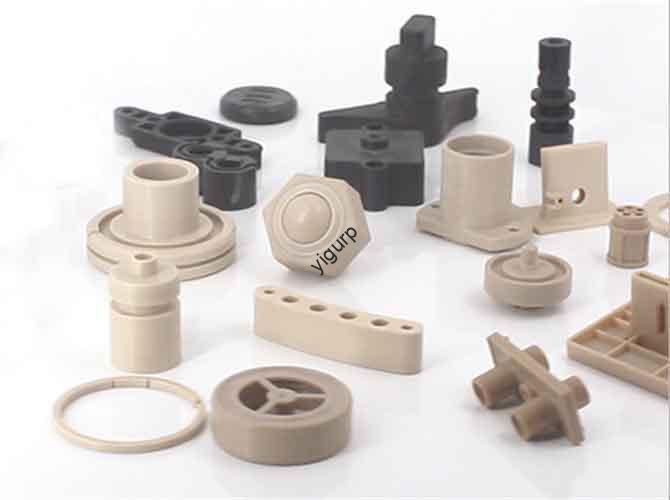
Nylon (Poliamida, PA)-valorizado por sua alta resistência, resistência ao desgaste, e flexibilidade - há muito tempo é um elemento básico em plásticos de engenharia. Mas quando se trata de FDM (Moldagem por Deposição Fundida) 3Impressão D, muitos usuários se perguntam: “Can nylon be FDM printed?” A resposta é sim, mas é necessário enfrentar desafios únicos, como a absorção de umidade, altos pontos de fusão, e problemas de cristalização. This article breaks down nylon’s suitability for FDM printing, key challenges, proven solutions, aplicações do mundo real, and practical tips to ensure successful prints.
1. Why Nylon Is Worth FDM Printing: Core Advantages
Nylon’s inherent properties make it a valuable material for FDM-printed parts, especially in functional and industrial applications. Below are its four most critical benefits for FDM printing:
1.1 Resistência Mecânica Excepcional & Toughness
Nylon (por exemplo, PA6, PA66) delivers tensile strength of 45–80 MPa and excellent impact resistance—far superior to mainstream materials like PLA (30–60 MPa) ou ABS (30–50 MPa). This makes FDM-printed nylon parts ideal for load-bearing roles, such as mechanical gears, dobradiças, or tool handles, that would crack or deform with weaker plastics.
1.2 Strong Wear & Resistência Química
Nylon has low friction and high abrasion resistance, making it suitable for parts that experience repeated movement (por exemplo, sliding bearings, componentes do transportador). It also resists oils, graxas, e a maioria dos solventes (por exemplo, mineral spirits, álcoois)—a key advantage for automotive or industrial fluid system parts.
1.3 Flexibilidade & Resistência à fadiga
Unlike rigid materials like PLA, nylon retains flexibility even after repeated bending or stress. Por exemplo, FDM-printed nylon springs can withstand thousands of compression cycles without permanent deformation—perfect for applications like shock absorbers or clip fasteners.
1.4 Leve vs.. Metal Alternatives
With a density of 1.13–1.15 g/cm³, nylon is 60% mais leve que o alumínio (2.7 g/cm³) e 85% lighter than stainless steel (7.9 g/cm³). FDM-printed nylon parts reduce weight in applications like aerospace interior components or consumer electronics, sem sacrificar a força.
2. Key Challenges of FDM Printing Nylon
Despite its advantages, nylon poses four major hurdles for FDM printing—most related to its material properties. Understanding these challenges is critical to avoiding failed prints (por exemplo, deformação, delamination, clogged nozzles).
| Desafio | Impact on FDM Printing | Root Cause |
| High Moisture Absorption | Moisture in nylon filament vaporizes during printing, causando bolhas, popping sounds, or uneven extrusion. This ruins part surface quality and weakens layer bonding. | Nylon is hygroscopic—it absorbs up to 3–4% of its weight in water from the air, even at moderate humidity (50–60% RH). |
| High Melting Point & Crystallization | Ordinary FDM printers (max nozzle temp: 240–250ºC) can’t fully melt nylon (ponto de fusão: 220–260°C for PA6/PA66). Fast crystallization when cooling leads to deformação (edges lifting) ou delamination (layers separating). | Nylon’s high melting point requires precise temperature control; its rapid crystal formation creates internal stress between layers. |
| Poor Melt Fluidity | Nylon melt has high viscosity, levando a amarrando (thin plastic strands between layers), incomplete fills, or clogged nozzles—especially with narrow 0.4 mm nozzles. | Nylon’s molecular structure resists flow at typical FDM temperatures, even when fully melted. |
| Limited Adhesion to Build Plates | Nylon has low surface energy, making it hard to stick to standard build plates (por exemplo, vidro, alumínio). Parts often lift during printing, ruining dimensional accuracy. | Nylon’s non-stick surface prevents strong bonding with common adhesives (por exemplo, hairspray) used for PLA/ABS. |
3. Proven Solutions to FDM Print Nylon Successfully
Each challenge of FDM printing nylon has a practical fix—from equipment upgrades to material preparation. Below is a step-by-step guide to resolving issues and achieving high-quality prints.
3.1 Prep Nylon Filament: Dry First, Store Properly
Moisture is nylon’s biggest enemy—always dry filament before printing:
- Pre-drying method: Use a dedicated filament dryer (por exemplo, Eibos Dry Box) or oven set to 80–90ºC para 4–8 horas (PA6 needs 4 horas; PA66 needs 6–8 hours).
- Armazenar: Keep dried filament in an airtight container with desiccants (silica gel packets) to prevent reabsorption. For long-term storage, use a vacuum-sealed bag.
3.2 Upgrade Equipment for High-Temperature Printing
Nylon requires specialized FDM hardware to handle its melting point and reduce warping:
- High-Temperature Nozzles: Usar hardened steel (max temp: 300°C) ou brass nozzles with PTFE liners (max temp: 280°C) to avoid clogging. Standard brass nozzles work but wear faster with reinforced nylon (por exemplo, carbon fiber-filled PA).
- Heated Build Chamber: A closed chamber maintained at 50–70°C slows cooling, reducing crystallization stress and warping by 70–80%. If you don’t have a chamber, enclose the printer with foam boards to trap heat.
- Specialized Build Plates: Use um PEI (Polieterimida) folha ou Kapton tape—these materials form a strong bond with nylon. For extra adhesion, apply a thin layer of PVA (polyvinyl alcohol) glue to the plate.
3.3 Optimize FDM Printing Parameters
The table below lists optimal settings for FDM printing common nylon grades (PA6, PA66) with a heated chamber and hardened steel nozzle:
| Parâmetro | PA6 Recommended Value | PA66 Recommended Value | Reasoning |
| Nozzle Temperature | 250–270ºC | 260–280ºC | Ensures full melting without thermal degradation. |
| Build Plate Temperature | 80–100ºC | 90–110ºC | Promotes first-layer adhesion and reduces warping. |
| Chamber Temperature | 50–70°C | 60–80ºC | Slows cooling to improve layer bonding. |
| Print Speed | 30–50mm/s | 25–40 mm/s | Slower speed gives nylon time to flow evenly (avoids stringing). |
| Altura da camada | 0.2–0,3mm | 0.2–0.25 mm | Thicker layers reduce nozzle wear and improve flow. |
| Cooling Fan Speed | 0–20% | 0–10% | Minimal fan use prevents rapid crystallization and delamination. |
| Retraction Distance | 2–4 mm | 3–5mm | Reduces stringing by pulling excess filament back into the nozzle. |
3.4 Choose Modified Nylon Filaments for Easier Printing
If pure nylon (PA6/PA66) is too challenging, opt for modified grades that improve printability:
- Nylon Alloys (por exemplo, PA6/PA12): Blends reduce melting point (210–230ºC) and improve flowability—works with mid-range FDM printers.
- Carbon Fiber-Reinforced Nylon: Adds strength (resistência à tracção: 80–120 MPa) but requires a hardened steel nozzle to avoid wear. Ideal for high-stress parts (por exemplo, quadros de drones).
- Glass Fiber-Filled Nylon: Reduces warping by 50% and boosts rigidity—suitable for structural components (por exemplo, suportes automotivos).
3.5 Post-Process to Enhance Performance
Post-processing improves nylon’s strength, estabilidade dimensional, e aparência:
- Recozimento: Heat printed parts to 140–160°C (below nylon’s melting point) para 1–2 horas, then cool slowly. This relieves internal stress, improves toughness by 30%, and reduces warping.
- Acabamento de Superfície: Sand parts with 400–1000 grit sandpaper to remove layer lines. For a smooth finish, apply a thin coat of epoxy resin or nylon-specific paint.
4. Real-World Applications of FDM-Printed Nylon
FDM-printed nylon excels in functional and industrial applications where performance justifies the extra effort. Below are three key use cases:
4.1 Ferramentas Industriais & Fixtures
Manufacturers like Boeing and Ford use FDM-printed nylon to make custom tools (por exemplo, chaves dinamométricas, assembly jigs). These tools are lightweight, durável, e 50% cheaper than metal alternatives. Por exemplo, Ford’s FDM-printed nylon battery hold-down brackets reduce production time from 2 semanas (metal) para 2 dias.
4.2 Componentes Automotivos
Nylon’s chemical resistance and heat tolerance make it ideal for under-hood parts (por exemplo, caixas de sensores, fluid line clips). FDM printing lets automakers produce small batches (100–500 peças) without expensive injection molds—cutting costs by 40%.
4.3 Consumer & Robotics Parts
Hobbyists and engineers use FDM-printed nylon for drone frames, robotic grippers, and 3D printer components (por exemplo, extruder gears). Nylon’s flexibility and wear resistance ensure these parts withstand repeated use—unlike brittle PLA.
5. Yigu Technology’s Perspective on FDM Printing Nylon
Na tecnologia Yigu, we see FDM-printed nylon as a “functional workhorse” but caution against overcomplicating it for beginners. Many clients try to print pure PA66 with consumer printers, leading to frustration—we recommend starting with nylon alloys (por exemplo, PA6/PA12) ou carbon fiber-reinforced nylon for easier results. Para clientes industriais, we pair high-temperature FDM printers (por exemplo, Stratasys Fortus) with pre-drying systems to ensure consistent quality—recently, this setup reduced a client’s nylon print failure rate from 50% para 5%. We also advise against using nylon for decorative parts (PLA is cheaper/faster) and reserve it for functional applications where its strength and durability are critical. Ultimately, FDM printing nylon works—but it needs preparation, the right equipment, and realistic expectations.
Perguntas frequentes: Common Questions About FDM Printing Nylon
- P: Can I FDM print nylon with a consumer-grade printer (por exemplo, Ender 3) without upgrades?
UM: It’s difficult. Most consumer printers lack heated chambers (causing warping) and max out at 240°C (too low for PA66). With upgrades (hardened nozzle, PEI plate, and DIY chamber), you can print PA6—but expect more trial and error than with PLA.
- P: How does FDM-printed nylon compare to injection-molded nylon in strength?
UM: FDM-printed nylon is 15–30% weaker (due to layer bonding gaps). No entanto, annealing closes this gap to 5–10% for non-critical parts. For high-stress applications (por exemplo, load-bearing brackets), injection molding is still better—but FDM is cheaper for small batches.
- P: Is carbon fiber-reinforced nylon harder to FDM print than pure nylon?
UM: It’s slightly harder due to nozzle wear—you need a hardened steel nozzle (brass nozzles wear out in 1–2 prints). No entanto, carbon fiber reduces warping by 50%, making layer adhesion easier. For beginners, start with 10–20% carbon fiber-filled nylon (less abrasive than 30% filled).