
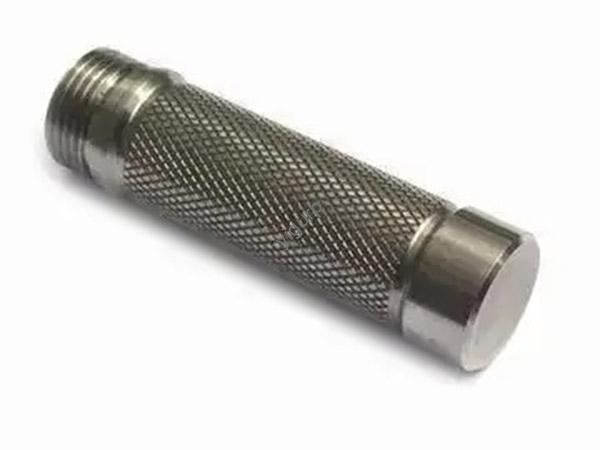
If you’re designing parts that need a tough coree a hard, superfície resistente ao desgaste – como engrenagens automotivas, eixos industriais, or aerospace fasteners—you need a material that balances ductility and surface strength.AISI 8620 liga de aço is the perfect solution: como um níquel-cromo-molibdênio de baixo carbono (Ni-Cr-Mo) liga, é ideal para cementação (um tratamento térmico que endurece apenas a superfície), delivering a hard outer layer (até 60 CDH) and a tough inner core. Este guia detalha suas propriedades, aplicações do mundo real, processo de fabricação, and material comparisons to help you solve “tough core + hard surface” design challenges.
1. Material Properties of AISI 8620 Liga de aço
AISI 8620’s performance comes from its low-carbon (0.18–0.23%) and Ni-Cr-Mo composition: low carbon keeps the core ductile, nickel boostsresistência, chromium enhances surface hardenability, and molybdenum improveslimite de fadiga. Let’s explore its key properties in detail.
1.1 Composição Química
AISI 8620 adheres to ASTM A29/A29M standards, with elements optimized for carburizing. Below is its typical composition:
| Element | Symbol | Content Range (%) | Key Role |
|---|---|---|---|
| Carbon (C) | C | 0.18 – 0.23 | Low enough to keep the core ductile; reacts with carbon during carburizing to harden the surface |
| Níquel (Em) | Em | 0.40 – 0.70 | Core toughness booster; maintainsimpact toughness at low temperatures (-30 °C) |
| Chromium (Cr) | Cr | 0.40 – 0.60 | Enhances surface hardenability; improvesresistência à corrosão of the carburized layer |
| Molybdenum (Mo) | Mo | 0.15 – 0.25 | Raiseslimite de fadiga; prevents brittleness in the carburized surface |
| Manganese (Mn) | Mn | 0.70 – 0.90 | Refines grain structure; aumentaresistência à tracção without reducing ductility |
| Silicon (E) | E | 0.15 – 0.35 | Aids deoxidation; supports stability during carburizing |
| Phosphorus (P) | P | ≤ 0.035 | Minimized to avoid brittle fracture in the carburized layer |
| Sulfur (S) | S | ≤ 0.040 | Controlled to balanceusinabilidade e qualidade da superfície (lower S = smoother carburized surfaces) |
| Vanadium (V) | V | ≤ 0.03 | Trace element; refines grains for uniform surface hardening |
| Cobre (Cu) | Cu | ≤ 0.30 | Trace element; adds mild atmospheric corrosion resistance for outdoor parts |
1.2 Propriedades Físicas
These traits make AISI 8620 ideal for carburized parts across industries:
- Densidade: 7.85 g/cm³ (same as standard steels)—simplifies weight calculations for gears, eixos, or fasteners
- Melting Point: 1,420 – 1,450 °C (2,588 – 2,642 °F)—compatible with carburizing and forging processes
- Condutividade Térmica: 42.0 C/(m·K) at 20 °C; 38.0 C/(m·K) at 300 °C—ensures even carbon diffusion during carburizing (no uneven surface hardness)
- Coeficiente de Expansão Térmica: 11.5 × 10⁻⁶/°C (20 – 100 °C)—minimizes distortion during carburizing and quenching
- Propriedades Magnéticas: Ferromagnetic—enables non-destructive testing (NDT) like magnetic particle inspection to check surface cracks after carburizing.
1.3 Propriedades Mecânicas
AISI 8620’s mechanical performance depends on carburizing: the surface is hard, while the core remains tough. Below are typical values for carburized and non-carburized conditions:
| Propriedade | Measurement Method | Non-Carburized (Annealed) | Carburized (0.8–1.0% Surface C) |
|---|---|---|---|
| Surface Hardness | CDH | 18 – 22 CDH | 58 – 60 CDH |
| Core Hardness | CDH | 18 – 22 CDH | 30 – 35 CDH |
| Tensile Strength | MPa (ksi) | 600 MPa (87 ksi) | 1,100 MPa (159 ksi) |
| Yield Strength | MPa (ksi) | 350 MPa (51 ksi) | 800 MPa (116 ksi) |
| Alongamento | % (em 50 milímetros) | 28 – 32% | 12 – 15% |
| Impact Toughness | J. (at -30 °C) | ≥ 90 J. | ≥ 45 J. (core toughness) |
| Fatigue Limit | MPa (rotating beam) | 300 MPa | 650 MPa |
1.4 Other Properties
AISI 8620’s traits solve “tough core + hard surface” challenges:
- Weldability: Excellent—low carbon allows welding without preheating (for non-carburized parts); carburized parts need grinding to remove surface carbon before welding.
- Formabilidade: Great—soft in the annealed condition (18–22 HRC), so it can be bent, forged, or stamped into complex shapes (por exemplo, gear blanks) before carburizing.
- Usinabilidade: Excellent—annealed AISI 8620 cuts easily with HSS or carbide tools; carburized parts require grinding for final shaping.
- Resistência à corrosão: Moderate—chromium in the carburized layer resists mild rust; for harsh environments, add zinc plating or epoxy coating.
- Surface Wear Resistance: Outstanding—carburized surface (58–60 HRC) resists metal-to-metal wear, extending part life by 3–4x vs. non-carburized steels.
2. Applications of AISI 8620 Liga de aço
AISI 8620’s carburizing advantage makes it ideal for parts that need to resist wear while absorbing impact. Here are its key uses:
- Gears: Automotive transmission gears, industrial gearbox gears, and helicopter rotor gears—hard surface resists tooth wear; tough core absorbs shock from gear meshing.
- Shafts: Drive shafts, camshafts, and axle shafts—hard surface resists abrasion; tough core handles torque and bending.
- Bearings: Bearing races and bushings—smooth, hard surface minimizes friction; tough core prevents cracking from heavy loads.
- Automotive Parts: Pinions, sprockets, and clutch hubs—withstand engine heat and repeated contact; carburized surface resists wear from daily use.
- Industrial Machinery: Chain links, conveyor rollers, and fasteners—hard surface resists dirt/abrasion; tough core handles impact from material handling.
- Aerospace Components: Landing gear pins, engine accessory gears, and fasteners—carburized surface resists wear; tough core tolerates takeoff/landing stress.
3. Manufacturing Techniques for AISI 8620 Liga de aço
Producing AISI 8620 focuses on carburizing to create a “hard surface + tough core” structure. Here’s the step-by-step process:
- Steelmaking:
- AISI 8620 is made using an Electric Arc Furnace (EAF) (recycles scrap steel) ou Basic Oxygen Furnace (BOF). Níquel (0.40–0.70%), cromo (0.40–0.60%), and molybdenum (0.15–0.25%) are added during melting to ensure uniform alloy distribution.
- Rolling & Forging:
- The steel is Hot Rolled (1,100 – 1,200 °C) into bars, plates, or tubes—hot rolling makes it easy to form. For complex parts (por exemplo, gear blanks), isso é Hot Forged to shape, then annealed to soften (18–22 HRC) for machining.
- Usinagem:
- Annealed AISI 8620 is machined into near-final shapes (por exemplo, gear teeth blanks) using turning, fresagem, ou perfuração. HSS tools work well for most cuts; carbide tools are used for tight tolerances.
- Carburizing (Critical Step):
- Gas Carburizing: Parts are heated to 880–920 °C in a carbon-rich gas (por exemplo, methane) for 4–12 hours (longer = thicker hard layer). Carbon diffuses into the surface (0.8–1.0% C), while the core remains low-carbon (0.18–0.23% C).
- Têmpera: After carburizing, parts are cooled to 830–850 °C, held briefly, then quenched in oil. This hardens the surface to 58–60 HRC and the core to 30–35 HRC.
- Temperamento: Parts are reheated to 180–220 °C for 1–2 hours, then air-cooled. This reduces surface brittleness without lowering hardness.
- Tratamento de superfície:
- Moagem: Carburized parts are ground to smooth the surface (removes oxidation) and achieve final tolerances (por exemplo, gear tooth precision).
- Plating: Zinc plating (rust resistance) for outdoor parts; chrome plating (extra wear resistance) for high-friction parts.
- Shot Peening: Optional—blasts the surface with small metal balls to reduce residual stress and boost limite de fadiga.
- Controle de qualidade:
- Chemical Analysis: Spectrometry verifies nickel, cromo, and molybdenum levels (per ASTM A29/A29M).
- Hardness Testing: Rockwell testing checks surface (58–60 HRC) and core (30–35 HRC) dureza.
- Microstructural Analysis: Optical microscopy confirms a uniform carburized layer (no gaps or uneven carbon distribution).
- NDT: Ultrasonic testing checks for internal defects; magnetic particle inspection finds surface cracks from carburizing.
4. Case Studies: AISI 8620 in Action
Real projects show how AISI 8620 solves “wear + impact” challenges.
Estudo de caso 1: Automotive Transmission Gears (Germany)
A car manufacturer needed transmission gears that could resist tooth wear and absorb shift shock. They switched from AISI 1045 carbon steel to carburized AISI 8620 engrenagens. The AISI 8620 gears lasted 200,000 km—double the lifespan of 1045 gears—because the carburized surface (59 CDH) prevented tooth pitting, and the tough core (32 CDH) absorbed shift impact. This reduced warranty claims by 40%.
Estudo de caso 2: Industrial Conveyor Shafts (U.S.)
A warehouse had to replace conveyor shafts every 2 years due to surface wear and bending cracks. They used AISI 8620 eixos, carburized to 58 HRC and shot-peened. The new shafts lasted 5 years—no wear or cracks—because the hard surface resisted abrasion from dirt, and the tough core handled conveyor loads. This saved the warehouse $35,000 in replacement costs.
5. AISI 8620 contra. Outros materiais
How does AISI 8620 compare to other carburizable and wear-resistant steels?
| Material | Similarities to AISI 8620 | Principais diferenças | Best For |
|---|---|---|---|
| AISI 4140 | Cr-Mo alloy steel | Higher carbon (0.38–0.43%); not ideal for carburizing (core too hard); 15% mais barato | Non-carburized, medium-wear parts |
| AISI 8630 | Ni-Cr-Mo alloy steel | Higher carbon (0.28–0.33%); harder core after carburizing; 10% pricier | Heavy-load carburized parts (por exemplo, truck gears) |
| AISI 1018 | Low-carbon steel | No alloying; poor carburized surface strength; 30% mais barato | Low-wear, low-load carburized parts |
| 52100 Rolamento de aço | High-carbon steel | Better wear resistance; no nickel (poor toughness); 20% pricier | Precision bearings (no impact) |
| Aço inoxidável 410 | Corrosion-resistant | Carburizable; better rust resistance; 3× pricier | Wet-environment carburized parts |
Yigu Technology’s Perspective on AISI 8620 Liga de aço
Na tecnologia Yigu, AISI 8620 is our top pick for carburized “tough core + hard surface” parts. Its low-carbon Ni-Cr-Mo composition solves the biggest pain point for clients: getting wear resistance without sacrificing impact toughness—critical for gears, eixos, e fixadores. We supply AISI 8620 in bars, forged blanks, or machined components, with custom carburizing (0.5–1.2 mm layer thickness) and shot peening. For clients moving from plain carbon steel, AISI 8620 delivers 3–4x longer part life at a small cost premium—saving money on maintenance and downtime.
FAQ About AISI 8620 Liga de aço
- How thick is the carburized layer on AISI 8620?
Typical layers are 0.5–1.2 mm thick—adjusted by carburizing time (4 hours = ~0.5 mm; 12 hours = ~1.2 mm). For parts like gears, a 0.8–1.0 mm layer balances wear resistance and flexibility; for shafts, 0.5–0.7 mm avoids surface cracking. - Can AISI 8620 be used without carburizing?
Yes—but it’s not ideal. Non-carburized AISI 8620 has low strength (600 MPa tensile) e resistência ao desgaste, so it’s only used for low-load parts (por exemplo, brackets). Carburizing unlocks its full potential for wear and impact. - Is AISI 8620 suitable for low-temperature applications?
Yes—its nickel content maintains impact toughness at -30 °C (even after carburizing). For temperatures below -30 °C (por exemplo, arctic machinery), choose AISI 8640 (higher nickel) for extra low-temperature toughness.