
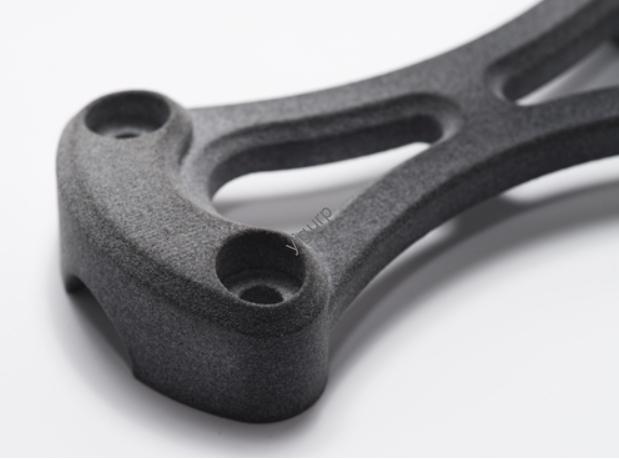
If you’re in design de produto, fabricação industrial, ou prototipagem, choosing between HP Multi-Jet Fusion (mjf) e Sinterização Seletiva a Laser (SLS) 3As tecnologias de impressão D podem parecer esmagadoras. Ambos se destacam na impressão com polímeros e elastômeros, crie peças complexas sem suportes, e fornecem resultados duráveis - mas suas diferenças nos materiais, velocidade, custo, and part quality make them better for specific tasks. This guide breaks down everything you need to know to pick the right one for your project.
What Are MJF and SLS 3D Printing Technologies?
Primeiro, vamos começar com o básico. Both MJF and SLS are powder-based 3D printing technologies—they use fine plastic or elastomer powders to build parts layer by layer. The key difference lies in how they melt (sinter) the powder to form solid layers.
HP Multi-Jet Fusion (mjf) 3Impressão D
mjf (Fusão multijato HP Nylon) is a newer technology, commercialized in 2017. É assim que funciona:
- The printer spreads a thin layer of powder (usually nylon) onto a build platform.
- It heats the powder to near-sintering temperature (just below melting point).
- An inkjet array sprays two liquids: um melting agent (on areas that need to become solid) to boost infrared light absorption, e um refiner agent (on part edges) for sharpness.
- An infrared light source scans the entire layer, sintering only the areas with melting agent.
- The platform lowers, a new powder layer is added, and the process repeats until the part is done.
MJF’s claim to fame? It’s fast—especially for high-volume production—and produces consistent parts with smooth surfaces.
Sinterização Seletiva a Laser (SLS) 3Impressão D
SLS (Sinterização Seletiva a Laser) is a more established technology, patented in 1997. Its process is straightforward:
- A thin layer of powder is spread onto the build platform.
- A high-power CO₂ laser scans the layer, sintering the powder into the shape of the part’s cross-section (from a 3D CAD model).
- The platform lowers, a new powder layer is added, and the laser sinters again.
- This repeats until the part is fully formed.
SLS is loved for its material versatility—you can print with everything from nylon to glass-filled polymers—making it ideal for custom or specialized parts.
Key Similarities Between MJF and SLS
Before diving into differences, let’s highlight what MJF and SLS have in common—these are the reasons both are top choices for polymer 3D printing:
- Powder-based: Both use thermoplastic or elastomer powders, so there’s no need for support structures (unlike FDM or SLA). This lets you print complex geometries like hollow parts or interlocking components.
- Layer-by-layer building: Both build parts one thin layer at a time, ensuring precision for detailed designs.
- Durable end parts: Parts from both technologies are strong enough for functional use (por exemplo, engrenagens, colchetes) or prototypes that mimic final products.
- Thermoplastic focus: Both mainly use materials like nylon (PA 11, PA 12) and TPU (poliuretano termoplástico), though SLS has more options.
Exemplo: A medical device maker could use either MJF or SLS to print a custom nylon surgical tool handle—both would create a strong, sterilizable part without supports.
MJF vs.. SLS: Detailed Comparison
To help you decide, let’s break down their differences across 7 fatores críticos: materiais, velocidade, qualidade da peça, custo, reciclabilidade, tamanho, e acabamento superficial. We’ll use tables and real data for clarity.
1. Opções de materiais
Material choice often dictates which technology you use. SLS has a huge edge here, thanks to its longer history.
| Tecnologia | Available Materials | Notas principais |
| mjf | PA 11 (nylon), PA 12 (nylon), TPU (elastomer) | Limited options—only a few materials are certified for MJF (mostly HP-branded powders). |
| SLS | PA 11, PA 12, PA 12 Cheio de vidro, PEBA 2301 3D (flexível), Alumide (aluminum-filled), TPU | Wide range—great for parts that need extra strength (cheio de vidro), flexibilidade (PEBA), or metal-like properties (Alumide). |
Caso do mundo real: An aerospace company needs a lightweight, heat-resistant part. They choose SLS with PA 12 Cheio de vidro (which SLS supports) because MJF doesn’t offer glass-filled materials—this part can withstand high temperatures in aircraft engines.
2. Processing Time
Time matters, especially for production runs. MJF is faster, but the gap narrows for single parts.
| Cenário | mjf | SLS |
| Single part | ~Same time as SLS (por exemplo, 2 hours for a small bracket). | ~Same time as MJF. |
| Produção em alto volume | Much faster. Can print 50+ small parts simultaneously (por exemplo, 100 phone cases in 8 horas). | Mais devagar. Prints fewer parts at once (por exemplo, 100 phone cases in 12 horas). |
| Total process (imprimir + resfriamento) | Mais rápido. MJF has a detachable build platform—parts cool outside the printer while the next job starts. | Mais devagar. Parts must cool inside the printer (takes extra hours), delaying the next run. |
Exemplo: A consumer electronics brand needs 500 custom nylon headphone earcups. They use MJF—total time is 30 horas, contra. 45 hours with SLS. This lets them launch their product 1 week earlier.
3. Qualidade da peça: Precisão, Força, and Finish
Both make high-quality parts, but there are subtle differences that matter for specific projects.
Precisão Dimensional & Resolução
| Tecnologia | Resolução de recursos | Max Part Size | Min Feature Size |
| mjf | Muito alto (bordas afiadas), but slightly lower than SLS. | 380 x 284 x 380 milímetros (about the size of a small microwave). | 0.5 milímetros (can print tiny details like thin ribs). |
| SLS | Slightly better (finer details). | 600 x 350 x 560 milímetros (about the size of a large cooler). | 0.6 milímetros (still precise, but not as small as MJF). |
Observação: Both can warp if printing large flat surfaces—designers avoid this by adding ribs or curves.
Desempenho Mecânico
Here’s how MJF and SLS parts compare in strength and durability (using PA 12, the most common material for both):
| Métrica de desempenho | mjf (PA 12) | SLS (PA 12) |
| Resistência à tracção (resistance to pulling) | 1700 MPa (X/Y), 1800 MPa (Z) | 1650 MPa (X/Y), 1650 MPa (Z) |
| Tensile Modulus (rigidez) | 48 MPa (X/Y), 48 MPa (Z) | 48 MPa (X/Y), 42 MPa (Z) |
| Elongation at Break (how much it stretches before breaking) | 20% (X/Y), 15% (Z) | 18% (X/Y), 24% (Z) |
| Ponto de fusão | 187°C | 176°C |
What this means: MJF parts are stiffer and stronger in the Z-direction (altura da camada), while SLS parts are more flexible (higher elongation at break). Por exemplo, a SLS-printed TPU gasket would stretch more than an MJF-printed one—great for seals that need to flex.
Acabamento de superfície
| Tecnologia | Surface Texture | Color |
| mjf | Grainy but slightly smoother (like fine sandpaper). | Gray or black (from the dark melting agent)—hard to dye other colors. |
| SLS | Grainy (coarser than MJF). | White or gray—easily dyed to any color (vermelho, azul, preto, etc.). |
Caso: A toy company wants colorful action figure parts. They choose SLS—they print white parts, then dye them bright red or blue. MJF’s dark parts wouldn’t work for their design.
4. Custo
Cost depends on production volume. For small runs, they’re similar—but MJF shines at scale.
| Volume de produção | MJF Cost | SLS Cost |
| Single part | ~Same as SLS (por exemplo, €15 for a small nylon bracket). | ~Same as MJF. |
| Alto volume (1000+ peças) | Lower—MJF prints more parts at once, so per-part cost drops to €8–€10. | Higher—per-part cost stays around €12–€14. |
| Custo de materiais | Um pouco mais alto (MJF-specific powders are often proprietary). | Mais baixo (SLS powders are more widely available from multiple suppliers). |
5. Powder Recyclability
Waste reduction is key for sustainability. MJF is more efficient here.
| Tecnologia | Powder Recovery Rate | Notas |
| mjf | Até 80% | Unused powder can be mixed with new powder for future prints, cortando resíduos. |
| SLS | 30%–50% | More powder is contaminated during printing, so less can be recycled. |
Exemplo: A sustainable packaging company chooses MJF—recycling 80% of their powder saves them €500/month on material costs, compared to SLS’s 40% recovery.
How to Choose Between MJF and SLS
Use this simple checklist to pick the right technology for your project:
| Choose MJF if… | Choose SLS if… |
| You need high-volume production (100+ peças). | You need specialized materials (cheio de vidro, PEBA, Alumide). |
| Speed is critical (tight deadlines). | You want to dye parts custom colors. |
| You need small, peças detalhadas (0.5recursos mm). | You need large parts (over 380mm in any dimension). |
| Sustentabilidade (high powder recyclability) é uma prioridade. | You need flexible parts (higher elongation at break). |
Yigu Technology’s Take on MJF vs. SLS
Na tecnologia Yigu, we see MJF and SLS as complementary, not competing. Para clientes com alto volume, time-sensitive projects (like electronics manufacturers needing 1000+ colchetes), MJF is the clear choice—it’s fast and cost-effective. For clients needing custom or specialized parts (like aerospace firms using glass-filled nylon), SLS’s material versatility is unmatched. We help clients weigh factors like cost, velocidade, and material needs to pick the best option, ensuring their parts meet quality and budget goals. Whether it’s MJF or SLS, we prioritize delivering durable, precise parts that solve real-world problems.
Perguntas frequentes:
1. Can MJF or SLS print flexible parts?
Yes—both can print with TPU (poliuretano termoplástico), a flexible elastomer. No entanto, SLS offers more flexible material options (like PEBA 2301 3D), which stretch further than MJF’s TPU. For super-flexible parts (por exemplo, phone grips), SLS is better; for moderately flexible parts (por exemplo, juntas), MJF works too.
2. Are MJF and SLS parts food-safe?
Depende do material. Some MJF and SLS nylons (like PA 11) are food-safe if they’re certified (look for FDA approval). No entanto, the grainy surface can trap bacteria, so these parts are best for non-contact food uses (por exemplo, food packaging inserts) rather than direct food contact (por exemplo, tigelas).
3. How long do MJF and SLS parts last?
Both produce durable parts that last for years—even in harsh conditions. Por exemplo, an MJF-printed nylon bracket in a car engine can withstand heat and vibration for 5+ anos, while an SLS-printed PEBA part (flexível) can handle 10,000+ stretches without breaking. The lifespan depends on the material and use case, but both outperform 3D printing technologies like FDM for long-term use.