
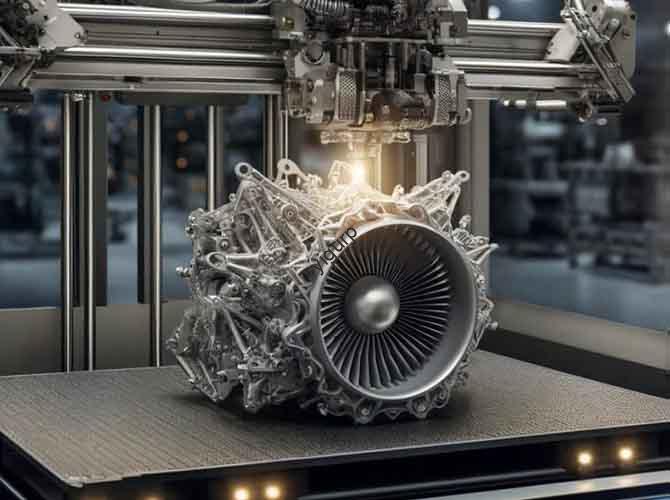
Você está lutando para criar, componentes de alto desempenho que podem suportar temperaturas extremas, produtos químicos, ou estresse mecânico? 3Alumina de impressão D (Al₂O₃) pode ser a solução. This advanced additive manufacturing technique transforms alumina powder into durable, peças personalizadas – resolvendo pontos problemáticos que a fabricação tradicional não consegue. This guide breaks down everything you need to know to leverage 3Alumina de impressão D for your projects.
1. What Is 3D Printing Alumina? A Foundational Breakdown
Em sua essência, 3Alumina de impressão D uses additive manufacturing to build parts layer by layer from alumina powder, guided by a computer-aided design (CAD) modelo. Ao contrário dos métodos tradicionais (like casting or machining), it doesn’t require complex molds or tooling—making it ideal for unique or low-volume parts.
Think of it like building a sandcastle with precision: instead of shaping a big pile of sand all at once, you add tiny layers of sand (alumina powder) one by one, following a detailed blueprint (Modelo CAD). The result is a strong, detailed structure that’s hard to replicate with other methods.
Key Traits of 3D Printed Alumina
| Trait | Descrição | Por que é importante |
| Resistência a altas temperaturas | Withstands temperatures up to 1,700°C (3,092°F). | Critical for aerospace engine parts or industrial furnaces. |
| Inércia Química | Resists corrosion from acids, bases, e solventes agressivos. | Perfect for chemical reactor liners or lab equipment. |
| Isolamento Elétrico | Blocks electrical current while withstanding heat. | Ideal for microelectronic circuit boards or insulators. |
| Resistência Mecânica | Harder than steel (Mohs hardness of 9) and resistant to wear. | Great for durable parts like surgical tools or industrial gears. |
2. 3 Unbeatable Benefits of 3D Printing Alumina
Why choose 3Alumina de impressão D over traditional manufacturing? Here are three game-changing advantages that solve common industry problems:
- No Molds, No Limits: Traditional alumina manufacturing requires expensive molds—especially for complex shapes. Com impressão 3D, you can create parts with intricate designs (like hollow channels or thin walls) without any molds. This cuts tooling costs by 50–70% and lets you iterate on designs in days, não meses.
- Exemplo: A aerospace company used to spend $20,000 on molds for a single engine component. Com impressão 3D, they eliminated mold costs entirely and reduced design time from 3 meses para 2 semanas.
- Pequenos lotes, Big Savings: Precisar 5 peças em vez de 5,000? Traditional methods charge a premium for small runs (due to mold setup). 3Alumina de impressão D lets you print small batches affordably—each part costs roughly the same, whether you print 1 ou 100.
- Question: Why is this a big deal?
- Responder: It’s perfect for custom medical implants (each patient needs a unique size) or prototype parts (where you test a few designs before mass production).
- Design Freedom for High-Performance Parts: Traditional manufacturing struggles with shapes like lattice structures (lightweight but strong) or internal cavities. 3Alumina de impressão D lets you create these designs easily—making parts lighter (saving fuel in aerospace) or more efficient (better fluid flow in chemical reactors).
3. Aplicações do mundo real: Where 3D Printing Alumina Shines
3Alumina de impressão D isn’t just a lab technology—it’s transforming industries by solving tough challenges. Let’s look at four key use cases:
Caso 1: Indústria aeroespacial
Aerospace engineers need parts that are lightweight, resistente ao calor, e forte. 3Alumina de impressão D delivers:
- They print engine components (like combustion chambers) that weigh 30% less than metal parts but handle extreme heat.
- Thermal protection systems (TPS) for rockets use 3D printed alumina tiles—these tiles shield the rocket from 1,600°C (2,912°F) heat during re-entry.
Caso 2: Medical Field
Customization is key in medicine, e 3Alumina de impressão D delivers:
- Surgeons use 3D printed alumina hip implants that match a patient’s exact bone structure. This reduces post-surgery pain and improves implant lifespan by 20%.
- Ferramentas cirúrgicas (like scalpels or forceps) made from 3D printed alumina are sharp, resistente à corrosão, and easy to sterilize—lowering infection risks.
Caso 3: Chemical Industry
Chemical plants need equipment that can handle harsh chemicals and high temperatures. 3Alumina de impressão D solves this:
- Reactor liners made from 3D printed alumina resist corrosion from sulfuric acid and nitric acid—last 3x longer than stainless steel liners.
- Heat exchangers with 3D printed alumina channels transfer heat more efficiently (due to custom channel shapes) e exigem menos manutenção.
Caso 4: Indústria Eletrônica
Microelectronics need parts that insulate electricity and withstand heat. 3Alumina de impressão D é ideal:
- Circuit boards for high-power LEDs use 3D printed alumina insulators—they keep electrical components cool while blocking current.
- Insulators for 5G antennas are 3D printed from alumina—they’re small, leve, and handle the heat generated by 5G signals.
4. Tendências Futuras: What’s Next for 3D Printing Alumina?
The future of 3Alumina de impressão D is all about making it faster, mais acessível, and more versatile. Here’s a timeline of upcoming innovations:
| Linha do tempo | Trend | Impacto |
| 2025 | High-Performance Composites | New alumina-matrix composites (por exemplo, alumina + fibra de carbono) will be stronger and lighter—perfect for next-gen aerospace parts. |
| 2026 | AI-Optimized Printing | AI will analyze CAD models and adjust printing settings (like powder layer thickness or heat) to reduce defects by 40% and speed up printing by 25%. |
| 2027 | Práticas Sustentáveis | Recycled alumina powder will become mainstream (cortando custos de material 30%) and printing processes will use less energy—making 3D printing alumina greener. |
5. Perspectiva da Tecnologia Yigu
Na tecnologia Yigu, nós vemos 3Alumina de impressão D as a cornerstone of next-gen manufacturing. We’re developing AI-driven software that optimizes alumina printing parameters for different industries—from medical to aerospace—reducing trial-and-error and improving part quality. Our recent tests show our software cuts printing time by 30% while increasing part strength by 15%. For businesses looking to adopt 3Alumina de impressão D, now is the time: it’s no longer a niche tech, but a practical solution to build stronger, mais barato, and more custom parts.
Perguntas frequentes
- P: How long does it take to 3D print an alumina part?
UM: It depends on size and complexity. A small part (like a 2x2x2 cm surgical tool) leva de 4 a 6 horas. A larger part (like a 10x10x5 cm aerospace component) takes 24–36 hours.
- P: Is 3D printed alumina safe for medical implants?
UM: Sim! 3D printed alumina is biocompatible (doesn’t react with human tissue) e fácil de esterilizar. It’s approved by the FDA and EU’s CE for use in implants like hips, joelhos, e coroas dentárias.
- P: Can 3D printed alumina be recycled?
UM: Sim! Unused alumina powder from printing can be collected, limpo, e reutilizado em impressões futuras. Novas tecnologias (launching in 2025) will let you recycle up to 80% of the powder—cutting material waste and costs.