
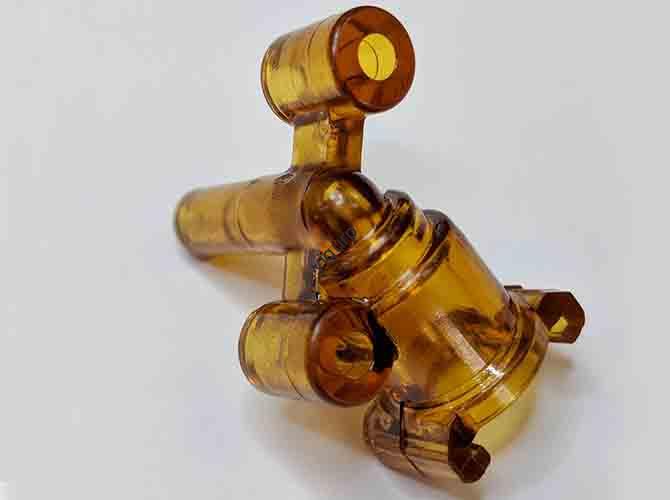
In the fast-paced world of electronic manufacturing, 3Impressão de Circuito D (também chamados de circuitos de fabricação aditiva ou impressão eletrônica 3D) surgiu como uma tecnologia revolucionária. Combina a flexibilidade de design da impressão 3D com a precisão necessária para componentes eletrônicos, abordando limitações de longa data da fabricação tradicional de placas de circuito. Este guia explora seus princípios básicos, materiais principais, vantagens, aplicações do mundo real, desafios, and why it’s becoming a game-changer for industries like electronics, aeroespacial, e dispositivos médicos.
1. Core Principle & Working Process of 3D Circuit Printing
To fully understand 3Impressão de Circuito D, it’s essential to grasp its fundamental principle and step-by-step workflow—two elements that set it apart from traditional circuit manufacturing (por exemplo, subtractive PCB etching).
1.1 Basic Principle
3Impressão de Circuito D operates on an additive layer-by-layer principle: It builds three-dimensional electronic circuits by depositing conductive and non-conductive materials sequentially. Unlike traditional 2D PCBs (printed circuit boards) limited to flat surfaces, this technology enables circuits to be integrated into complex 3D shapes (por exemplo, curved smartphone casings, wearable device frames). The key lies in precise control of material deposition to form conductive paths (for signals/power) and insulating layers (to prevent short circuits).
1.2 Step-by-Step Working Process
The technology follows a structured cycle to turn digital circuit designs into functional 3D electronic parts:
- Digital Circuit Design: Use specialized EDA (Electronic Design Automation) programas (por exemplo, Altium Designer, KiCad) to create a 3D model of the circuit—defining conductive paths, component placement (por exemplo, resistors, capacitors), and insulating layers.
- Material Preparation: Load two core materials into the printer:
- Conductive materials: Pastes or inks containing conductive particles (por exemplo, silver nanoparticles, copper-filled polymers).
- Insulating materials: Polymers or ceramics to separate conductive layers and protect the circuit.
- Printer Setup: Calibrate the printer’s nozzle (diameter: 0.1–0.5 mm) to ensure precise material deposition. Select the appropriate printing method (por exemplo, inkjet for fine details, extrusion for thicker conductive paths).
- Layer-by-Layer Deposition:
- First layer: Deposit an insulating material base (if the circuit is integrated into a 3D structure) or start with a conductive layer for the first circuit trace.
- Subsequent layers: Alternate between conductive and insulating layers—printing conductive paths (matching the digital design) and insulating layers to isolate them. Por exemplo, print a conductive trace, then a thin insulating layer, then another conductive trace above it (creating a 3D stacked circuit).
- Cura: After each layer, cure the material to solidify it—use heat (80–150°C for polymers) or UV light (for UV-curable conductive inks) to enhance conductivity and structural stability.
- Component Assembly & Testing: Mount electronic components (por exemplo, microchips) onto the printed circuit using solder or conductive adhesives. Test the circuit for continuity (signal flow) e funcionalidade (por exemplo, power delivery, data transmission) with a multimeter or oscilloscope.
2. Key Materials for 3D Circuit Printing
The performance of 3Impressão de Circuito D depends heavily on material choice—conductive materials determine signal/power efficiency, while insulating materials ensure circuit safety. Below is a breakdown of the most common materials, their properties, e usos ideais.
2.1 Material Comparison Chart
| Material Type | Specific Examples | Propriedades principais | Ideal Applications |
| Conductive Materials | Silver Nanoparticle Ink | – High conductivity (resistivity: ~10–20 μΩ·cm, close to pure silver). – Low curing temperature (80–120°C, suitable for plastic substrates). – Good adhesion to most materials (plásticos, metais, cerâmica). | Fine conductive paths (por exemplo, signal traces in wearables, sensor circuits). |
| Copper-Filled Polymer Paste | – Cost-effective vs. prata (1/5 the price of silver inks). – Moderate conductivity (resistivity: ~50–100 μΩ·cm). – High mechanical strength (resists bending in flexible devices). | Power circuits (por exemplo, battery connections in IoT devices), large conductive areas. | |
| Graphene-Based Inks | – Ultra-thin (nanoscale thickness) and flexible. – High thermal conductivity (useful for heat dissipation). – Compatible with transparent substrates (por exemplo, vidro, clear plastics). | Transparent circuits (por exemplo, touchscreens, smart windows), flexible electronics (por exemplo, foldable phone circuits). | |
| Insulating Materials | Polyimide Polymers | – High temperature resistance (up to 250°C). – Flexible (can bend without cracking). – Good chemical resistance (resists oils, solvents). | Insulating layers in high-temperature electronics (por exemplo, automotive engine sensors), flexible wearables. |
| Ceramic Coatings (Alumina, Silica) | – Ultra-high insulation strength (prevents short circuits in high-voltage circuits). – Heat-resistant (up to 1,000°C). – Hard and scratch-resistant. | Insulating layers in industrial electronics (por exemplo, power converters), aerospace circuits. |
3. Unmatched Advantages of 3D Circuit Printing
Compared to traditional circuit manufacturing (por exemplo, 2D PCB etching, subtractive machining), 3Impressão de Circuito D offers four key benefits that solve critical industry pain points—from design limitations to production inefficiencies.
3.1 Advantage Breakdown (with Data & Impact)
| Advantage | Key Details & Industrial Impact |
| Exceptional Design Freedom | Enables circuits to be integrated into complex 3D shapes (por exemplo, curved, hollow, or organic structures) that traditional 2D PCBs can’t achieve. Por exemplo, print a circuit directly onto a 3D-printed wearable device frame—eliminating the need for separate PCBs and reducing assembly steps by 40%. |
| Short Production Cycles | Cuts production time by 50–70% compared to traditional PCB manufacturing. A small-batch prototype circuit (10–50 unidades) that takes 2–3 weeks via traditional methods can be produced in 1–3 days with 3D printing. This accelerates product development for electronics startups. |
| High Material Efficiency | Reduces material waste by 80–90% vs. traditional subtractive methods. Traditional PCB etching removes 70–80% of the copper-clad board; 3D circuit printing deposits only the required amount of conductive/insulating material. For expensive materials like silver, this saves \(50–\)200 per batch of circuits. |
| Flexible Personalization | Enables on-demand customization without retooling. Update the digital design to adjust circuit paths, component placement, or 3D shape—no need for new masks (costing \(1,000–\)5,000 for traditional PCBs). Ideal for personalized electronics (por exemplo, custom medical sensors for patients) and small-batch niche products. |
4. Real-World Applications of 3D Circuit Printing
3Impressão de Circuito D is transforming industries that demand compact, flexível, or complex electronic components. Below are its most impactful use cases, com exemplos do mundo real.
4.1 Industry-Specific Applications
| Industry | Application Examples & Case Studies |
| Consumer Electronics | – Wearable Devices: Print circuits directly onto flexible 3D frames (por exemplo, smartwatch bands, fitness trackers) to reduce size and improve comfort. – Smartphones/Tables: Integrate circuits into curved device casings (por exemplo, edge-to-edge screens) to maximize internal space for batteries. Case: A tech giant used 3D circuit printing to produce prototype smartwatch circuits—cutting prototype development time from 4 weeks to 5 days and reducing component size by 30%. |
| Aeroespacial & Defense | – Lightweight Avionics: Print 3D circuits onto lightweight aerospace components (por exemplo, carbon fiber fuselage parts) to reduce weight (critical for fuel efficiency). – Miniaturized Military Electronics: Create compact 3D circuits for drones or portable communication devices (where size/weight are mission-critical). Case: An aerospace firm used 3D circuit printing to produce a 3D-printed sensor circuit for a satellite—reducing the circuit’s weight by 45% contra. a traditional PCB. |
| Medical Devices | – Implantable Electronics: Print biocompatible circuits (using silver or gold inks) for devices like pacemakers or glucose monitors—matching the 3D shape of human organs/tissues. – Biomedical Sensors: Create flexible 3D circuits for wearable health monitors (por exemplo, skin patches that track heart rate) that conform to the body. Case: A medical device company developed a 3D-printed glucose sensor with a curved circuit—improving skin adhesion by 60% and sensor accuracy by 25% compared to flat sensors. |
5. Key Challenges of 3D Circuit Printing
While 3Impressão de Circuito D offers significant advantages, it still faces three critical challenges that need to be addressed for wider adoption—especially in large-scale production.
5.1 Challenge Breakdown
| Challenge | Details & Current Limitations |
| Limited Material Options | Compared to traditional PCB materials (hundreds of options), 3D circuit printing has relatively few conductive and insulating materials. Por exemplo, high-performance conductive materials (por exemplo, gold inks) are costly, and some materials (por exemplo, cobre) are prone to oxidation (reducing conductivity over time). |
| Precisão & Reliability Gaps | In high-precision applications (por exemplo, microchips with 0.1 mm circuit traces), 3D circuit printing still lags behind traditional manufacturing. Print errors (por exemplo, uneven conductive paths) can cause signal loss or short circuits—reliability rates are ~90% for 3D circuits vs. 99.9% for traditional PCBs. |
| Cost-Effectiveness for Large-Scale Production | Para produção de alto volume (10,000+ units), 3D circuit printing is often more expensive than traditional PCB manufacturing. Traditional etching has lower per-unit costs (due to economies of scale), while 3D printing requires specialized materials and slower deposition speeds. |
Yigu Technology’s Perspective on 3D Circuit Printing
Na tecnologia Yigu, we see 3Impressão de Circuito D as a transformative force for next-gen electronics. Our solutions integrate high-precision inkjet printers (optimized for silver and copper inks) with AI-driven quality control—reducing print errors by 35% and improving circuit reliability to 95%. We’ve supported wearable device clients in miniaturizing circuits and medical firms in developing biocompatible 3D-printed sensors. As materials advance (por exemplo, low-cost anti-oxidation copper inks), we’re working to lower production costs—making 3D circuit printing viable for large-scale electronics manufacturing in the next 3–5 years.
Perguntas frequentes: Common Questions About 3D Circuit Printing
- P: Can 3D Circuit Printing be used to produce high-power circuits (por exemplo, for electric vehicles)?
UM: Yes—with the right materials. Use copper-filled polymer pastes (high current-carrying capacity) and heat-resistant insulating materials (por exemplo, polyimide). Por exemplo, 3D-printed copper circuits can handle currents up to 10A (suitable for EV battery management systems). No entanto, for ultra-high-power applications (100A+), traditional thick-film PCBs are still more cost-effective.
- P: How long do 3D-printed circuits last compared to traditional PCBs?
UM: With proper material selection, 3D-printed circuits have a lifespan of 5–10 years—comparable to traditional PCBs. Por exemplo, silver nanoparticle circuits (cured at 120°C) retain 90% of their conductivity after 10,000 hours of use (in normal temperature/humidity conditions). Avoid exposure to extreme heat (>200°C) or moisture (without protective coatings) to extend lifespan.
- P: What’s the minimum circuit trace width achievable with 3D Circuit Printing?
UM: It depends on the printing method and material. Inkjet 3D printers can produce traces as narrow as 0.1 milímetros (100 microns) using silver nanoparticle inks—suitable for small electronics (por exemplo, vestíveis, sensores). Extrusion printers (for thicker pastes) typically produce traces of 0.3–0.5 mm—ideal for power circuits or larger components. For reference, traditional PCBs can achieve 0.05 mm traces, but 3D printing offers the advantage of 3D integration.