
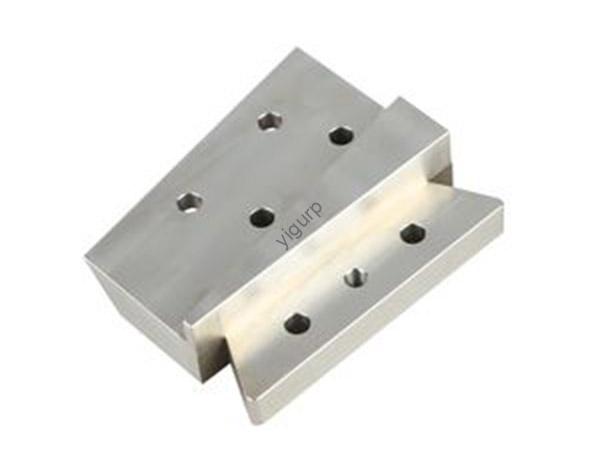
Se você está procurando um versátil, material resistente à corrosão para utensílios de cozinha, ferramentas médicas, ou projetos arquitetônicos, 304 aço inoxidável é o padrão da indústria. Sua mistura única de força, durabilidade, e estética o torna um dos tipos de aço inoxidável mais utilizados em todo o mundo. This guide breaks down everything you need to know—from its chemical makeup to real-world applications—helping you choose and use 304 stainless steel with confidence.
1. 304 Aço inoxidável: Propriedades dos materiais
304 stainless steel’s standout performance comes from its precise alloy composition and natural protective layer. Here’s a detailed breakdown of its key traits:
Propriedades do material principal (Annealed Condition)
| Propriedade | Typical Values | Why It Matters for Your Projects |
|---|---|---|
| Alloy Composition | 18–20% Chromium, 8–10.5% Nickel, ≤0.08% Carbon | Chromium forms apassivation layer (rust-resistant film); nickel boosts ductility |
| Resistência à tracção | 515 MPa (74,700 psi) | Strong enough for structural parts (por exemplo, grades) |
| Força de rendimento | 205 MPa (29,700 psi) | Resists bending in high-use items (por exemplo, appliance doors) |
| Alongamento | 40% (in 50mm) | Bends without cracking—ideal for forming sinks or bowls |
| Dureza | 92 HRB (Rockwell B) / 187 BHN | Soft enough to machine, tough enough for daily wear |
| Resistência à corrosão | Excelente (resiste à água, ácidos suaves) | Won’t rust in kitchens, bathrooms, or outdoor shelters |
| Resistência a altas temperaturas | Up to 870°C (1,600°F) | Safe for ovens, sistemas de exaustão, or industrial heaters |
| Propriedades Magnéticas | Não magnético (recozido) | Perfect for medical tools or electronics (no magnetic interference) |
| Densidade | 7.93 g/cm³ | Lightweight enough for architectural panels, heavy enough for durability |
Vantagem Principal: Opassivation layer (a thin, invisible chromium oxide film) repairs itself if scratched—unlike painted or galvanized steel. A restaurant tested 304 stainless steel sinks: depois 5 years of daily use (scrubbing, água quente), they showed no rust or pitting.
2. 304 Aço inoxidável: Aplicativos
304 stainless steel’s versatility makes it a staple in industries where hygiene, resistência à corrosão, and aesthetics matter. Here are its top uses:
Comida & Beverage Industry
- Equipamento de processamento de alimentos: Mixers, transportadores, and storage tanks use 304 stainless steel—its non-porous surface won’t trap bacteria, and it resists acidic foods (por exemplo, tomates, cítrico). A dairy plant in Wisconsin uses 304 tanks for milk storage—they’re easy to clean and meet FDA standards.
- Utensílios de cozinha: Refrigerator doors, oven interiors, and dishwashers rely on 304’s corrosion resistance and sleek look. Most high-end stainless steel sinks are 304 nota.
Médico & Farmacêutico
- Equipamento médico: Instrumentos cirúrgicos (scalpels, fórceps) and hospital beds use 304—its estabilidade química resists sterilization chemicals (por exemplo, hydrogen peroxide), and it’s non-magnetic (safe for MRI rooms).
- Pharmaceutical machinery: Drug mixing tanks and pill presses use 304 to avoid contaminating medications.
Construção & Arquitetura
- Architectural elements: Fachadas de edifícios, grades, and handrails use 304—its polished finish adds curb appeal, and it resists rain/snow (sem ferrugem). The exterior of a museum in Berlin uses 304 panels—they’ve stayed shiny for 10+ anos.
- Componentes estruturais: Bridges and stadium supports use 304 for outdoor durability—though thicker grades (por exemplo, 304eu) are used for heavy loads.
Automotivo & Industrial
- Peças automotivas: Exhaust systems and trim use 304—its high-temperature resistance handles engine heat, and it resists road salt.
- Máquinas industriais: Válvulas, tubos, and pumps use 304 to resist oil, água, and mild chemicals—ideal for factories.
When to Avoid 304: Skip it for highly corrosive environments (por exemplo, marine saltwater, industrial acids)—use 316 aço inoxidável (higher molybdenum content) instead.
3. 304 Aço inoxidável: Tratamento de superfície
Surface treatment enhances 304 stainless steel’s appearance and performance. Here are the most common methods:
| Treatment Method | Processo | Resultado & Use Case |
|---|---|---|
| Polimento Mecânico | Abrasive pads buff the surface to a shine | Mirror finish for appliances or decorative items |
| Electro-Polishing | Electric current smooths the surface | Ultra-smooth, hygienic finish for medical tools or food equipment |
| Passivação | Acid bath (nitric acid) strengthens the passivation layer | Boosts corrosion resistance for outdoor parts (por exemplo, grades) |
| Jateamento de areia | High-pressure sand creates a matte texture | Non-slip finish for flooring or industrial steps |
| Acid Pickling | Acid removes mill scale (from manufacturing) | Prepares the surface for painting or welding |
Exemplo: A furniture maker useselectro-polishing on 304 stainless steel chair frames—this removes tiny scratches, giving the frames a luxury, fingerprint-resistant finish.
4. 304 Aço inoxidável: Manufacturing Process
304 stainless steel is made through a precise, multi-step process to ensure consistent quality. Here’s how it’s produced:
- Alloy Melting:
Matérias-primas (iron ore, cromo, níquel, carbono) are melted in an electric arc furnace (EAF) at 1,500–1,600°C. The mixture is tested to ensure it meets 304’s alloy specs (18–20% chromium, 8–10.5% nickel). - Fundição & Formando:
The molten steel is cast into slabs (for sheets) or billets (for pipes/bars) via continuous casting. These are then heated and shaped using:- Hot rolling: For thick products (por exemplo, 10mm+ sheets) — heated to 1,100°C and rolled to size.
- Cold rolling: For thin, precise products (por exemplo, 0.5mm sheets) — rolled at room temperature to improve surface finish.
- Tratamento térmico:
- Recozimento: The steel is heated to 1,010–1,120°C and cooled slowly. This softens the steel for machining, removes stress, and restores its não magnético property.
- Stress Relieving: For welded parts (por exemplo, tubos), heating to 800–900°C reduces cracking risk.
- Corte & Fabricação:
304 stainless steel is cut using corte a laser (for precision shapes) ou corte a plasma (for thick sheets). It’s also welded via TIG or MIG welding—though welds need passivation afterward to maintain corrosion resistance. - Controle de qualidade:
Inspectors use testes não destrutivos (END) como testes ultrassônicos (UT) para verificar se há defeitos internos. Chemical analysis confirms alloy composition, and salt spray tests verify corrosion resistance.
5. 304 Aço inoxidável: Technical Specifications
To ensure you’re getting genuine, de alta qualidade 304 aço inoxidável, reference these key specs and standards:
Key Technical Standards
| Standard Organization | Relevant Specs | Focus Area |
|---|---|---|
| ASTM (NÓS.) | ASTM A240 (sheets/plates), ASTM A312 (tubos) | Material quality and dimensional tolerance |
| ISO (Global) | ISO 15510 (classes de aço inoxidável) | Alloy composition and mechanical properties |
| ELE (Japan) | JIS G4305 (stainless steel plates) | Surface finish and corrosion resistance |
| EM (Europa) | EM 10088-2 (stainless steel sheets) | Compliance for architectural and food use |
Typical Dimensional Tolerances (Cold-Rolled Sheets)
| Dimension | Tolerância | Exemplo |
|---|---|---|
| Thickness (0.5-3mm) | ±0,02mm | A 1mm sheet will measure 0.98–1.02mm |
| Largura (1–2m) | ±1mm | A 1.2m sheet will measure 1199–1201mm |
| Comprimento (2–4m) | ±2mm | A 3m sheet will measure 2998–3002mm |
Pro Tip: Always ask for atechnical data sheet (TDS) or mill test report (MTR)—these documents confirm the steel meets 304 specs and includes test results (por exemplo, resistência à tracção, resistência à corrosão).
Yigu Technology’s Perspective
Na tecnologia Yigu, nós recomendamos 304 stainless steel for clients needing corrosion resistance, higiene, and aesthetics—from food equipment to architectural projects. We supply 304 folhas, tubos, and fasteners that meet ASTM A240 and ISO 15510 padrões, with surface treatments like electro-polishing or passivation. For custom orders, we offer laser cutting and TIG welding, ensuring parts fit your exact specs. Nosso 304 stainless steel undergoes strict salt spray testing (500+ horas, sem ferrugem) — giving clients confidence in long-term performance.
Perguntas frequentes
- Is 304 stainless steel rust-proof?
Não, mas é altamente resistente à ferrugem. It won’t rust in most indoor/outdoor environments (água, chuva), but it can pit in highly salty areas (por exemplo, coastal homes) or if exposed to strong acids (por exemplo, ácido clorídrico). Clean it regularly with mild soap to maintain its passivation layer. - Can 304 stainless steel be welded?
Yes—TIG welding is best for clean, strong welds. Depois de soldar, the area needs passivation (acid bath) to restore the passivation layer—otherwise, the weld may rust. Avoid MIG welding for thin 304 folhas (risk of burn-through). - What’s the difference between 304 and 304L stainless steel?
304L has lower carbon content (≤0.03% vs. 304’s ≤0.08%). This makes 304L more resistant to “weld decay” (corrosion near welds) — ideal for large welded parts (por exemplo, tanks). 304 is cheaper and sufficient for non-welded items (por exemplo, pias, eletrodomésticos).