
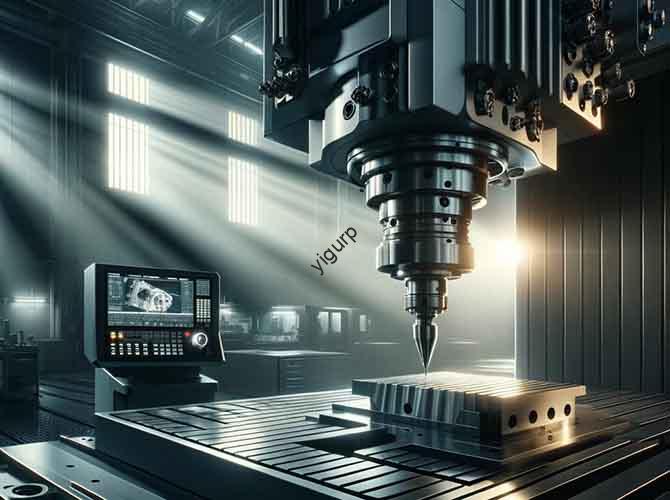
In sectors like mold making, architecture, and fine arts, creating huge, detailed parts is a tough task. Traditional manual carving is often too slow and inconsistent. It simply cannot keep up with complex designs on a large scale. This is where Large-scale CNC Fine Engraving changes the game. This technology uses computer-guided tools to carve large pieces with millimeter-level precision. It offers fast production and works with many materials. This guide will show you how it works and why it is the top choice for modern manufacturing.
What is Large-scale CNC Fine Engraving?
This process uses automated machines to carve and mill large workpieces. These parts can be several meters long. Unlike small engraving tools, these machines handle massive projects like building columns or car molds. They keep the same high accuracy you would expect from small-scale systems.
How does the workflow look?
- Digital Design (CAD): First, you create a 3D model on a computer. For instance, an architect might design a 3-meter tall pillar with floral patterns.
- Toolpath Generation (CAM): Software turns the model into G-code. This tells the machine where to move and how fast to cut.
- Machine Setup: You secure the material—like aluminum or stone—to the machine bed. The operator loads the engraving bits into the machine.
- Engraving Process: The machine uses high-speed tools (up to 24,000 RPM) to carve the design. The servo drive system keeps the movement smooth.
- Quality Check: Finally, we check the part. We use laser scanners to ensure it matches the design within ±0.1mm.
Case Study: Making a Car Bumper Mold
A car parts maker needed a mold for a plastic bumper. The part was 2 meters wide. We used a 3-meter CNC bed to process the aluminum block. The machine finished the job in just 8 hours. The final cavity was accurate to ±0.05mm. This ensured every bumper made from the mold fit perfectly.
What Features Define These Machines?
Large-scale CNC machines are built differently than standard mills. They focus on stability and handling heavy weights. This helps avoid errors on big projects.
Stable Machine Bed
The bed is usually made of high-grade cast iron. Workers grind it by hand to make it perfectly flat. This stops vibration, which can ruin the finish on a large part.
Advanced Servo Drives
These machines use absolute servo motors. They track the tool’s position exactly. This ensures 0.001mm repeatability even across a 5-meter distance.
High-Speed Spindles
The spindle can reach 24,000 RPM. It can handle wood, metal, or stone. Most machines have a tool magazine that holds up to 50 tools. This allows for automatic tool changes.
Machine Comparison Table
| Feature | Large-scale CNC Engraving | Small-scale CNC Engraving |
| Bed Size | 2m x 1m to 10m x 3m | 0.5m x 0.5m to 1m x 1m |
| Max Weight | Up to 10,000kg | Up to 500kg |
| Best For | Large molds, pillars, statues | Jewelry, phone cases, small parts |
| Tool Capacity | 10 to 50 tools | 1 to 10 tools |
Where Does This Technology Shine?
This technology is a hero for industries that need big, detailed parts. Its flexibility makes it a favorite for several fields.
Architectural Decoration
Carving marble columns or wood panels by hand is slow. CNC engraving makes it uniform and fast. For a hotel lobby project, we made 20 wood panels in just 10 days. Manual work would have taken 40 weeks. That is an 80% time saving.
Mold Manufacturing
Large molds for car parts or appliances used to take a month to make. CNC cuts that time down to 3 to 5 days. It handles complex cavities with ease.
Artwork and Aerospace
Artists use it for life-sized sculptures. Aerospace firms use it for aluminum wing frames. It meets the strict rules for safety and accuracy in flight.
What Are the Key Benefits?
Why is this better than manual work? It solves the biggest headaches in large-scale production.
- High Precision: You get millimeter-level accuracy every time. This is vital for parts that must fit together.
- High Efficiency: It is 5 to 10 times faster than hand carving. A stone statue might take 3 days instead of 3 weeks.
- Material Flexibility: One machine can work on wood, metal, and plastic. You do not need multiple machines for different jobs.
- Smart Automation: Modern machines use AI to detect tool wear. If a bit gets dull, the machine slows down to prevent damage.
Which Materials Work Best?
You can carve almost anything with the right settings. Here are the most common materials used today.
| Material | Key Traits | Best Projects |
| Aluminum | Light, strong, rust-free | Aerospace parts, car molds |
| Wood | Easy to carve, natural | Furniture, wall panels |
| Stone | Very hard, beautiful | Monuments, building fronts |
| Plastics | Cheap, light, colorful | Signage, display stands |
How Yigu Optimizes Large Engraving?
At Yigu Technology, we treat large engraving as an art form. We use 5-meter beds and high-torque systems to get the best results. We have helped over 80 clients cut their production time by 70%. For a recent project, we carved 12 marble pillars in only 10 days. Normally, that takes two months. We also use 5-axis movement to handle very complex 3D shapes. For us, this tech is about doing big things with total precision.
Conclusion
Large-scale CNC Fine Engraving is the ultimate tool for big, complex tasks. It offers unmatched speed and dead-on accuracy. Whether you are making a car mold or a giant statue, this technology saves you time and labor costs. It turns your biggest ideas into physical reality with ease.
FAQ
What is the max size these machines can handle?
Most machines go up to 10m x 3m. However, we can build custom setups for even larger ship parts or aircraft frames.
How long does it take to engrave a 3-meter panel?
A simple design takes about 4 to 6 hours. If the design has very tiny details, it could take up to 24 hours.
Is it too expensive for just a few parts?
Actually, it is very cost-effective for small batches. You save so much on labor that the total cost is often lower than manual work.
Discuss Your Projects with Yigu Rapid Prototyping
Do you have a large project in mind? Our team at Yigu Technology is ready to help. We offer expert advice on material choice and design. We focus on cutting your costs while keeping high quality. Reach out to us today to get a quote and start your large-scale project.