
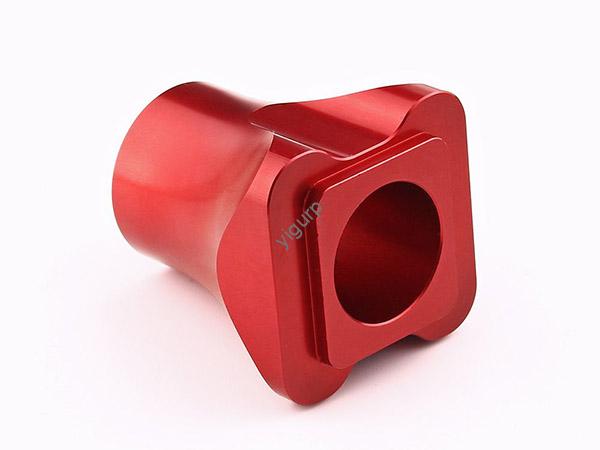
Se hai mai usato un ponte robusto, un asse per auto affidabile, o una trave da costruzione durevole, you’ve likely interacted withAcciaio battuto. A differenza dell'acciaio fuso (che viene versato negli stampi e soggetto a difetti), l'acciaio battuto viene modellato attraverso processi meccanici come la laminazione o la forgiatura, creando una struttura densa, materiale resistente che eccelle in resistenza e flessibilità. In questa guida, analizzeremo le sue proprietà chiave, usi nel mondo reale, come è fatto, e come si confronta con altri materiali. Whether you’re designing structural components or mechanical parts, this guide will help you leverage wrought steel’s advantages for long-lasting, progetti ad alte prestazioni.
1. Material Properties of Wrought Steel
Wrought Steel’s defining trait is itsworked (shaped) struttura—mechanical processes like rolling or forging refine its grain, eliminating voids and boosting strength. Its properties vary slightly by base composition (carbon or alloy), but all variants share core strengths.
Composizione chimica
The makeup of wrought steel depends on its intended use, but common elements include:
- Carbonio (C): 0.05 – 1.00% – Controls hardness and strength; a basso contenuto di carbonio (≤0.25%) per la flessibilità (per esempio., travi strutturali), high carbon (≥0.60%) per la resistenza all'usura (per esempio., ingranaggi).
- Manganese (Mn): 0.30 – 1.50% – Enhances hardenability and reduces brittleness, critical for load-bearing parts like axles.
- Silicio (E): 0.10 – 0.50% – Acts as a deoxidizer (removes oxygen bubbles from molten steel) and adds minor strength without reducing formability.
- Fosforo (P): ≤0.04% – Minimized to avoid “cold brittleness” (cracking in low temperatures), essential for outdoor components.
- Zolfo (S): ≤0.05% – Kept low to maintain toughness; small amounts in “free-machining” variants improve cutting ease.
- Alloying Elements (for specialized uses):
- Cromo (Cr): 0.50 – 18.00% – Boosts corrosion resistance (stainless steel wrought variants) e resistenza all'usura (per esempio., cuscinetti).
- Nichel (In): 0.50 – 5.00% – Enhances impact toughness, ideal for cold environments (per esempio., Arctic construction).
- Molibdeno (Mo): 0.10 – 1.00% – Improves high-temperature strength (per esempio., alberi motore).
- Vanadium (V): 0.05 – 0.50% – Refines grain structure, making the steel stronger and more durable.
- Tungsten (W): 1.00 – 18.00% – Used in high-speed steel wrought parts (per esempio., utensili da taglio) for extreme heat resistance.
Proprietà fisiche
These traits ensure consistency in real-world use, from temperature changes to structural loading:
| Proprietà | Valore tipico | Why It Matters for Engineering |
|---|---|---|
| Densità | ~7.85 g/cm³ | Same as most steels, but wrought processing eliminates voids—so parts are stronger for their weight. |
| Punto di fusione | ~1450 – 1550°C | High enough to withstand welding, lavorazione, and heat treatment without deformation. |
| Conducibilità termica | ~35 – 45 Con/(m·K) | Dissipates heat well—prevents overheating in mechanical parts like gears or bearings. |
| Coefficiente di dilatazione termica | ~11 x 10⁻⁶/°C | Low expansion means parts retain shape in temperature swings (per esempio., bridge beams in summer/winter). |
| Proprietà magnetiche | Ferromagnetico (except stainless steel variants) | Easy to handle with magnetic tools (per esempio., lifting wrought steel plates) or use in magnetic sensors. |
Proprietà meccaniche
Wrought processing transforms base steel into a high-performance material—here’s how it performs:
- Elevata durezza: 150 – 650 HB (Brinell) O 20 – 65 HRC (Rockwell) – Hard enough to resist wear in gears (50–60HRC) or flexible enough for beams (20–30 HRC).
- High Tensile Strength: 500 – 2000 MPa – Can handle extreme loads (per esempio., a wrought steel bridge supporting 100-ton trucks).
- High Yield Strength: 300 – 1800 MPa – Bends only under extreme stress, then returns to shape (critical for safety in structural parts).
- High Impact Toughness: 40 – 150 J/cm² – Absorbs shocks (per esempio., a car axle hitting a pothole) without breaking, unlike brittle cast steel.
- High Fatigue Resistance: Withstands repeated stress (per esempio., a rotating shaft) 2–3x longer than cast steel—reduces maintenance costs.
- High Wear Resistance: Dense grain structure resists abrasion (per esempio., bearings in industrial machinery) better than cast or raw steel.
Altre proprietà
- Good Machinability: Easy to drill, mulino, or grind with standard tools—even high-hardness wrought variants (per esempio., acciaio per utensili) work well with carbide bits.
- Good Weldability: Welds strongly with proper technique (preheating for thick parts) – critical for joining structural components like beams.
- Good Formability: Wrought processing itself is a forming method—parts can be shaped into complex designs (per esempio., elementi architettonici curvi) senza rompersi.
- Heat Treatment Response: Excellent – Hardens evenly with quenching/tempering, letting manufacturers tailor properties (per esempio., harden gears for wear, soften beams for flexibility).
- Resistenza alla corrosione: Varies by composition—stainless steel wrought parts (with chromium) are rust-proof, while carbon steel wrought parts need coatings (zincatura) per la protezione.
2. Applications of Wrought Steel
Wrought Steel’s strength, flessibilità, and durability make it essential for industries where reliability is non-negotiable. Below are its most common uses:
Structural Components
Construction relies on wrought steel for stable, long-lasting framing:
- Beams & Colonne: Support buildings, ponti, and stadiums – High tensile strength handles heavy loads, while flexibility resists wind or seismic activity.
- Rebar (Acciaio di rinforzo): Embedded in concrete to add tensile strength (concrete is weak in tension) – Wrought rebar’s rough surface bonds tightly with concrete.
- Elementi architettonici: Curved rails, pannelli decorativi, or trusses – Good formability lets designers create complex, aesthetic shapes.
Componenti meccanici
Machinery uses wrought steel for moving or load-bearing parts:
- Shafts and Axles: Transmit power in motors, cars, or industrial equipment – High fatigue resistance handles repeated rotation.
- Ingranaggi: Found in transmissions, sistemi di trasporto, or turbines – High wear resistance ensures smooth operation for years.
- Cuscinetti: Inner/outer races for rotating parts (per esempio., fan motors) – Dense structure resists wear better than cast steel.
Elementi di fissaggio
Its strength and machinability make it perfect for securing parts:
- Bulloni, Nuts, & Viti: Used in construction (securing beams) e macchinari (attaching components) – High yield strength avoids stripping under torque.
- Rivets: Join steel plates in bridges or ships – Wrought rivets’ ductility ensures a tight, legame permanente.
General Engineering Applications
Wrought steel is a staple for custom or high-performance parts:
- Hydraulic Cylinders: Lift heavy loads (per esempio., benne per escavatori) – High tensile strength prevents bursting under pressure.
- Tool Blades: Cutting tools like shears or blades – High hardness (from heat treatment) retains sharp edges.
- Pipes and Tubes: High-pressure pipes for oil/gas or water – Wrought processing eliminates leaks, unlike cast pipes.
3. Manufacturing Techniques for Wrought Steel
Wrought Steel is made by shaping molten steel through mechanical processes—no casting molds. Here’s the step-by-step process:
1. Melting and Casting (Pre-Wrought)
- Processo: Primo, base steel is melted in an electric arc furnace (EAF) O basic oxygen furnace (BOF). Alloying elements (cromo, nichel) are added to reach the desired composition. The molten steel is cast into ingots (large blocks) O billets (smaller bars)—the raw material for wrought processing.
- Key Goal: Create pure, uniform steel without impurities (critical for avoiding flaws in later shaping).
2. Hot Working (Core Wrought Processes)
Hot working softens steel with heat, making it easy to shape:
- Hot Rolling: Heated ingots/billets (1100–1250°C) are passed through rollers to create sheets, piatti, bar, or beams. This is the most common wrought process—used for structural steel or pipes.
- Hot Forging: Heated steel is hammered or pressed into shapes (per esempio., assi, ingranaggi). Forging refines grain structure, boosting strength—ideal for high-stress parts.
3. Cold Working (For Precision)
Cold working shapes steel at room temperature, improving precision and hardness:
- Cold Rolling: Cold-rolled steel is passed through rollers to create thin, smooth sheets (per esempio., involucri degli elettrodomestici) or tight-tolerance bars. It’s harder than hot-rolled steel and has a better surface finish.
- Cold Forging: High pressure shapes steel into small, parti precise (per esempio., elementi di fissaggio, gare dei cuscinetti). No heating is needed—saves energy and improves dimensional accuracy.
4. Trattamento termico
Tailors properties for specific uses:
- Ricottura: Heated to 800–900°C, cooled slowly – Softens steel for machining (per esempio., drilling holes in beams).
- Indurimento: Heated to 750–950°C, quenched in oil/water – Increases hardness (per esempio., gears to 55 HRC) per la resistenza all'usura.
- Temperamento: Reheated after hardening (200–600°C) – Reduces brittleness while keeping hardness, fondamentale per la sicurezza.
- Normalizing: Heated to 900–1000°C, cooled in air – Refines grain structure for uniform strength (per esempio., travi strutturali).
5. Lavorazione
- Processo: Wrought steel is machined to final dimensions using:
- Girando: Shapes cylindrical parts (alberi, bulloni) on a lathe.
- Fresatura: Creates gears, slot, or flat surfaces (per esempio., alloggiamenti dei cuscinetti).
- Rettifica: Polishes surfaces to tight tolerances (per esempio., precision shafts for motors).
- Key Benefit: Wrought steel’s dense structure ensures clean, consistent cuts—fewer defects than cast steel.
6. Saldatura
- Metodi: Arc welding (MIG/TIG) is most common. For thick wrought parts (>10 mm), preheat to 150–300°C to avoid cracking.
- Key Tip: Use low-hydrogen electrodes (E7018) for structural welds—prevents brittleness in load-bearing parts.
7. Trattamento superficiale
Protects against corrosion and wear:
- Galvanizzazione: Dip in molten zinc – Protects carbon steel wrought parts (per esempio., rebar, elementi di fissaggio) from rust.
- Verniciatura/Verniciatura a polvere: Adds color and corrosion resistance (per esempio., architectural beams, machinery parts).
- Nitrurazione: Heat in ammonia gas – Creates a hard surface layer (per esempio., ingranaggi) per la resistenza all'usura.
- Placcatura in cromo: For decorative or high-wear parts (per esempio., aste di cilindri idraulici).
8. Quality Control and Inspection
- Ispezione visiva: Checks for surface cracks, dents, or uneven shapes.
- Non-Destructive Testing (NDT):
- Ultrasonic Testing: Detects internal flaws (voids) in thick wrought parts (per esempio., travi del ponte).
- Tensile Testing: Measures strength (500–2000 MPa) to confirm compliance with standards.
- Hardness Testing: Uses Brinell/Rockwell testers to verify heat treatment results (per esempio., 30 HRC for beams).
- Chemical Analysis: Confirms alloy composition (per esempio., chromium levels in stainless steel wrought parts).
4. Casi di studio: Wrought Steel in Action
Real-world examples show how wrought steel solves engineering challenges. Below are three key cases:
Caso di studio 1: Wrought Steel Bridge Beams
A city needed to replace a 50-year-old bridge with cast steel beams—they were cracking under heavy truck traffic.
Soluzione: Installed hot-rolled wrought steel beams (0.25% C, with vanadium), painted for corrosion protection.
Risultati:
- Beam strength increased by 40% contro. cast steel – Handled 120-ton trucks without bending.
- Lifespan projected to 100 anni (double the cast steel beams) – Dense structure resists fatigue.
- Maintenance costs reduced by 70% – No cracks or corrosion after 5 anni.
Why it worked: Wrought steel’selevata resistenza alla trazione (650 MPa) Eresistenza alla fatica handled repeated truck loads, while vanadium boosted durability.
Caso di studio 2: Wrought Steel Gears for Conveyor Machinery
A manufacturing plant had cast steel gears that wore out every 6 months—they needed a longer-lasting solution for their 24/7 conveyor system.
Soluzione: Switched to hot-forged wrought steel gears (0.45% C, with chromium), trattato termicamente a 55 HRC and nitrided.
Risultati:
- Gear life extended to 3 anni (6x longer than cast steel) – High wear resistance from forging and nitriding.
- Downtime reduced by 90% – Fewer gear replacements meant more production time.
- Cost per unit produced dropped by 15% – Long-lasting gears saved maintenance costs.
Why it worked: Wrought forging’s dense grain structure and chromium addedresistenza all'usura, while heat treatment boosted hardness.
Caso di studio 3: Wrought Steel Fasteners for Construction
A construction company used cast steel bolts that stripped under high torque—delaying building projects.
Soluzione: Switched to cold-forged wrought steel bolts (0.30% C), with a zinc coating.
Risultati:
- Bolt stripping reduced by 95% – High yield strength (500 MPa) resisted torque.
- Installation time cut by 30% – No rework from stripped bolts.
- Customer satisfaction rose by 80% – Projects finished on schedule.
Why it worked: Cold forging improved the bolts’yield strength e precisione dimensionale, making them more reliable than cast bolts.
5. Wrought Steel vs. Other Materials
Wrought Steel’s worked structure gives it advantages over cast or raw steels—but it’s important to choose the right material for your project. Here’s how it compares:
Wrought Steel vs. Cast Steel
| Fattore | Acciaio battuto | Cast Steel |
|---|---|---|
| Grain Structure | Dense, refined (no voids) | Porous, grossolano (may have voids) |
| Resistenza alla trazione | 500–2000 MPa | 400–800 MPa |
| Resistenza all'impatto | 40–150 J/cm² | 20–60 J/cm² |
| Formabilità | Eccellente (can be rolled/forged) | Povero (fixed mold shape) |
| Costo | Più alto ($7–$25/kg) | Inferiore ($5–$12/kg) |
| Ideale per | Load-bearing parts, componenti di precisione | Parti non critiche (covers, parentesi) |
Wrought Steel vs. Carbon Steel Variants
| Fattore | Acciaio battuto (Carbonio) | Acciaio a basso tenore di carbonio | Medium Carbon Steel | Acciaio ad alto tenore di carbonio |
|---|---|---|---|---|
| Resistenza alla trazione | 500–1200 MPa | 300–500 MPa | 500–900 MPa | 800–1800 MPa |
| Resistenza all'impatto | 40–120 J/cm² | 60–100 J/cm² | 40–70 J/cm² | 20–50 J/cm² |
| Resistenza all'usura | Alto | Basso | Moderare | Alto |
| Formabilità | Eccellente | Eccellente | Bene | Povero |
| Costo | Moderare ($7–$15/kg) | Basso ($4–$6/kg) | Moderare ($6–$8/kg) | Moderare ($8–$12/kg) |
| Ideale per | Beams, ingranaggi, assi | Panels, tubi | Alberi, elementi di fissaggio | Utensili da taglio, molle |