
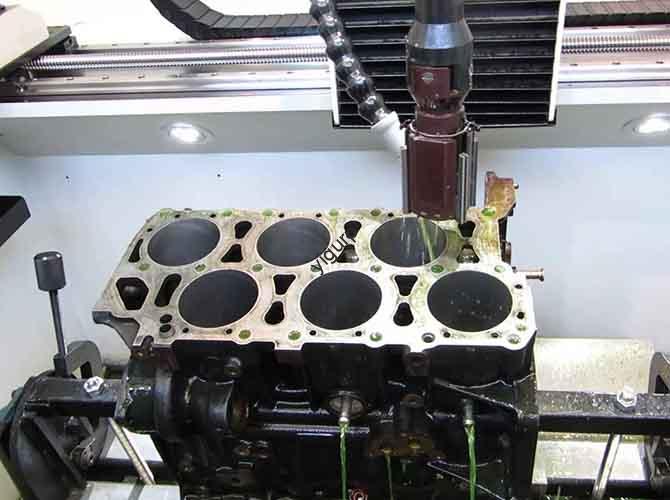
Se sei nuovo nel campo della lavorazione meccanica o desideri espandere le capacità della tua officina, probabilmente hai chiesto: Ciò che rende una fresatrice universale diversa dalle altre frese, e ne ho bisogno?? In poche parole, UN universal milling machine è un versatile, strumento resistente progettato per tagliare, forma, e finitura in metallo (e altri materiali duri) utilizzando frese rotanti. Unlike standard knee mills, it lets you adjust the workpiece’s angle—thanks to a swiveling table—making it ideal for complex jobs like gear cutting, slotting, and creating angular surfaces. Whether you’re a small-shop owner, a hobbyist, o un professionista della produzione, this guide will break down everything you need to know to use, scegliere, and maintain one effectively.
How Does a Universal Milling Machine Work?
To get the most out of a universal mill, it helps to understand its core components and how they work together. Nel suo cuore, the machine uses two key motions: IL rotating cutter (powered by a motor) per rimuovere materiale, e il movable workpiece table to position the material precisely against the cutter.
Here’s a step-by-step breakdown of its operation:
- Cutter Selection: Choose a cutter (per esempio., fresa, face mill, or gear cutter) based on your project—for example, an end mill for slotting or a face mill for flattening surfaces.
- Impostazione del pezzo: Secure the material to the machine’s table using clamps or a vise. The table’s unique feature? It can swivel up to 45 degrees left or right (some models go further), letting you angle the workpiece for bevel cuts or helical features.
- Power On & Adjust Speeds: Turn on the motor and set the cutter speed (measured in RPM) e velocità di avanzamento (how fast the table moves). For soft metals like aluminum, use higher speeds (1,000–3.000 giri/min); per acciaio, velocità più lente (200–1,000 RPM) to avoid overheating.
- Make Cuts: Use the machine’s handwheels or CNC controls (on modern models) to move the table up, down, left, right, or forward/backward. The swiveling table lets you make angular cuts—like a 30-degree chamfer on a metal bracket—without repositioning the workpiece.
Un esempio del mondo reale: A custom bike frame builder might use a universal mill to cut angled slots in aluminum tubing. By swiveling the table to 15 degrees, they can create precise, consistent slots for brake mounts—something a standard mill couldn’t do without multiple setups.
Key Components of a Universal Milling Machine
Every universal mill has 8 essential parts that define its functionality. Understanding these will help you troubleshoot issues and operate the machine safely:
| Component | Scopo |
| Base | Heavy cast-iron foundation that reduces vibration (critical for accuracy). |
| Column | Vertical structure that holds the spindle and motor; keeps components aligned. |
| Mandrino | Hollow shaft that holds the cutter; rotates at variable speeds (50–5,000 RPM typical). |
| Arbor Support | Stabilizes the arbor (a long shaft that holds large cutters like face mills) to prevent wobble. |
| Swiveling Table | The “universal” feature: rotates horizontally to angle the workpiece; also moves longitudinally (back/forth). |
| Knee | Elevates the table up/down to adjust the depth of cut. |
| Saddle | Moves the table left/right (cross-feed) to position the workpiece side-to-side. |
| Controls | Manual handwheels (for traditional models) or CNC panels (for automated operation); adjust speeds and feeds. |
Ad esempio, if you’re cutting a helical gear, the swiveling table, velocità del mandrino, and saddle movement work in sync: the table angles to match the gear’s helix angle, while the saddle moves at a precise rate to create the spiral teeth.
Types of Universal Milling Machines: Which One Fits Your Needs?
Not all universal mills are the same. They’re categorized by size, power, and automation level. Di seguito sono riportati i 3 most common types, with use cases to help you decide:
1. Manual Universal Milling Machines
- Caratteristiche: Operated entirely by hand (handwheels for table movement); no computer controls. Ideal for small-batch jobs or prototyping.
- Pro: Lower cost (\(5,000–)20,000), simple to learn, easy to maintain.
- Contro: Slow for high-volume work; requires skill to achieve consistent accuracy.
- Ideale per: Hobbisti, small workshops, or jobs with unique, one-off designs (per esempio., custom tooling for woodworking).
Caso di studio: A local machine shop specializing in vintage car parts uses a manual universal mill to recreate rare engine brackets. Since they only make 5–10 brackets per order, the manual setup is more cost-effective than CNC.
2. Semi-Automatic Universal Milling Machines
- Caratteristiche: Combines manual control with automated elements (per esempio., power feeds for table movement, preset speed settings).
- Pro: Faster than manual models; reduces operator fatigue; better consistency for medium-batch work.
- Contro: Costo più elevato (\(15,000–)35,000); still requires operator oversight.
- Ideale per: Medium-sized shops producing 50–200 parts per order (per esempio., aerospace components like small brackets).
3. CNC Universal Milling Machines
- Caratteristiche: Fully computer-controlled; programmed via G-code; can run 24/7 con una supervisione minima.
- Pro: 极高的精度 (±0.0001 inches), produzione veloce, perfect for complex designs (per esempio., 3D contours).
- Contro: Highest cost (\(30,000–)200,000+); requires CNC programming skills.
- Ideale per: Large manufacturers, medical device makers, or any shop needing high-volume, parti di precisione (per esempio., componenti di strumenti chirurgici).
Key Data Point: According to a 2024 report by the Association for Manufacturing Technology (AMT), CNC universal mills account for 65% of all universal mill sales globally—up from 45% in 2018—due to growing demand for precision in industries like electronics and healthcare.
What Materials Can You Cut with a Universal Milling Machine?
Universal mills excel at cutting hard materials, but their performance depends on the material’s hardness and the cutter used. Below is a breakdown of common materials, recommended cutters, and tips for success:
| Materiale | Durezza (Rockwell Scale) | Recommended Cutter | Key Tips |
| Alluminio | 20–30 HRB | Acciaio rapido (HSS) or carbide end mills | Use high speeds (1,500–3.000 giri/min) to avoid “gumming” the cutter. |
| Acciaio (Blando) | 60–80 HRB | Carbide face mills or end mills | Velocità lente (300–800 RPM); use cutting fluid to cool the cutter. |
| Acciaio inossidabile | 70–90 HRB | Titanium-coated carbide | Reduce feed rate by 20% to prevent cutter wear; use oil-based coolant. |
| Ghisa | 180–220 BHN | Inserti in carburo | Dry cutting is often possible (cast iron produces less heat); avoid coolant that can cause rust. |
Pro Tip: For non-metallic materials like hard plastics or composites, use HSS cutters with sharp edges to prevent chipping. Adjust speeds to match the material’s density—faster for plastics, slower for fiberglass.
How to Choose the Right Universal Milling Machine: Una guida passo passo
Investing in a universal mill is a big decision. Segui questi 5 steps to pick a machine that fits your budget, spazio, and project needs:
Fare un passo 1: Define Your Project Requirements
Start by answering:
- What materials will you cut most often? (per esempio., aluminum vs. acciaio inossidabile)
- What’s the maximum workpiece size? (Measure length, larghezza, and height—ensure the table can accommodate it.)
- How precise do you need to be? (per esempio., ±0.001 inches for aerospace parts vs. ±0.01 inches for hobby projects)
- Will you make small batches or high-volume runs? (Manual for small batches, CNC for high volume)
Esempio: If you’re making custom jewelry (piccolo, precise parts in brass), a compact manual universal mill (table size: 30” x 6”) would work. If you’re producing 1,000 steel brackets monthly, a CNC model with a 48” x 12” table is better.
Fare un passo 2: Set a Budget
Universal mills range from \(5,000 (used manual models) A \)200,000+ (new CNC machines). Consider hidden costs:
- Installazione: CNC models may need electrical upgrades (220V vs. 110V) or concrete foundations to reduce vibration.
- Utensili & Accessori: Cutters, vises, and coolant systems can add \(1,000–)5,000.
- Manutenzione: CNC machines require annual service (\(500–)2,000/anno); manual models need only lubrication and part replacements.
Fare un passo 3: Evaluate Space & Power Needs
Measure your workshop to ensure the machine fits. Key space considerations:
- Footprint: A small manual mill needs ~4’ x 6’ of floor space; a large CNC mill may need ~10’ x 12’.
- Ceiling Height: Some models have tall columns—ensure there’s 8–10 feet of clearance.
- Power: Most manual mills run on 110V or 220V; CNC mills often require 220V–480V three-phase power.
Fare un passo 4: Compare Brands & Caratteristiche
Stick to reputable brands known for durability:
- Haas: Leading CNC manufacturer; reliable for high-volume production.
- Bridgeport: Iconic manual and semi-automatic mills; easy to find parts for.
- YCM: Taiwanese brand with affordable CNC models; popular for small to medium shops.
Look for must-have features:
- For accuracy: Precision ground table (riduce l'attrito) E digital readout (DRO) (displays exact table positions).
- For safety: Emergency stop button E guard rails around the spindle.
- For versatility: Arbor support (for large cutters) E variable speed control.
Fare un passo 5: Test Before You Buy
If possible, visit a dealer to test the machine:
- For manual mills: Turn the handwheels—they should move smoothly without play. Check if the table swivels easily and locks securely.
- For CNC mills: Run a sample program (per esempio., a simple slot cut) to verify accuracy. Ask the dealer to provide a certificate of accuracy (tests like backlash measurement).
Safety Tips for Operating a Universal Milling Machine
Safety is non-negotiable when working with heavy machinery. Follow these rules to avoid injuries (per esempio., tagli, burns, or crushed fingers) and protect the machine:
- Wear Proper PPE:
- Occhiali di sicurezza (to block flying chips).
- Steel-toed boots (to protect feet from falling parts).
- Gloves (only for handling workpieces—never wear them near rotating cutters, as they can get caught).
- Inspect the Machine Before Use:
- Check for loose parts (per esempio., arbor nuts, clamps).
- Verify coolant levels (if using liquid coolant) per evitare il surriscaldamento.
- Test the emergency stop button to ensure it works.
- Secure the Workpiece Properly:
- Use a vise or clamps that can handle the material’s weight (per esempio., a 50-lb steel plate needs heavy-duty clamps).
- Never hold the workpiece by hand—even small parts can shift and cause the cutter to bind.
- Start Slow:
- Use a lower speed for the first cut to test the setup.
- Avoid rapid movements of the table—slow, steady feeds produce cleaner cuts and reduce wear.
Real-Life Safety Lesson: A hobbyist once tried to cut a 10-lb aluminum block without clamping it. The block shifted, hitting the rotating cutter. The cutter broke, sending 碎片 flying—and the block landed on the hobbyist’s foot, causing a bruise. Always clamp workpieces tightly!
Maintenance Tips to Extend Your Machine’s Life
A well-maintained universal mill can last 20–30 years. Follow this routine to keep it running smoothly:
Daily Maintenance (5–10 Minutes)
- Lubricate moving parts: Use machine oil (check the manual for viscosity) on table slides, handwheels, and the spindle.
- Clean the table: Wipe away chips and coolant with a rag—metal chips can scratch the table’s surface, reducing accuracy.
- Check for leaks: Inspect coolant hoses (if using) for cracks or leaks.
Weekly Maintenance (30 Minutes)
- Tighten loose bolts: Check arbor nuts, clamp bolts, and table locks—vibration can loosen them over time.
- Clean the spindle: Use a soft brush to remove debris from the spindle opening; apply a light coat of oil to prevent rust.
Monthly Maintenance (1–2 Hours)
- Inspect the motor: Check for unusual noises (per esempio., macinazione) or overheating—this could signal a worn bearing.
- Calibrate the DRO (if equipped): Use a precision gauge block to verify the DRO’s accuracy; adjust if needed.
Annual Maintenance (Professional Service for CNC Models)
- Replace worn parts: For manual mills, replace worn handwheel bearings or table slides. For CNC mills, have a technician inspect the control panel and servo motors.
- Level the machine: Col tempo, floors can shift—use a spirit level to check the base and adjust shims if needed.
Cost Savings Tip: Using high-quality lubricants and cutting tools can reduce maintenance costs by 15–20% annually, according to a 2023 study by Machinery Lubrication Magazine.
Yigu Technology’s Perspective on Universal Milling Machines
Alla tecnologia Yigu, we believe universal milling machines are the backbone of modern manufacturing—bridging versatility and precision for shops of all sizes. In our experience, small to medium enterprises (PMI) often overlook the value of semi-automatic universal mills: they offer the perfect balance of cost and efficiency, eliminating the steep learning curve of CNC while boosting productivity over manual models. We also see a growing trend toward “hybrid” machines—CNC universal mills with manual override options—allowing shops to switch between automated production and hands-on prototyping. For businesses looking to stay competitive, investing in a universal mill isn’t just about cutting parts—it’s about future-proofing your capabilities to handle complex designs and changing market demands.
Domande frequenti: Common Questions About Universal Milling Machines
1. What’s the difference between a universal milling machine and a standard knee mill?
A standard knee mill has a fixed table (can’t swivel), so it’s limited to straight cuts. A universal mill’s swiveling table lets you make angular, elicoidale, or gear cuts—making it far more versatile.
2. Can a universal milling machine cut wood or plastic?
SÌ! While designed for metal, it can cut wood, plastica, or composites with the right cutters (per esempio., HSS for wood, carbide for hard plastics). Just adjust speeds to avoid burning (faster for wood, slower for plastic).
3. How much does a used universal milling machine cost?
Used manual models start at \(5,000–)10,000; used CNC models range from \(20,000–)80,000. Always ask for a maintenance history and test the machine before buying.
4. Do I need CNC training to use a universal milling machine?
No—manual and semi-automatic models require only basic training (1–2 days to learn setup and operation). CNC models need G-code programming training (1–4 weeks for beginners).
5. What’s the maximum material thickness a universal mill can cut?
It depends on the machine’s knee travel (how far the table can elevate). Most models handle 6–12 inches of thickness; large industrial models can cut up to 24 pollici.