
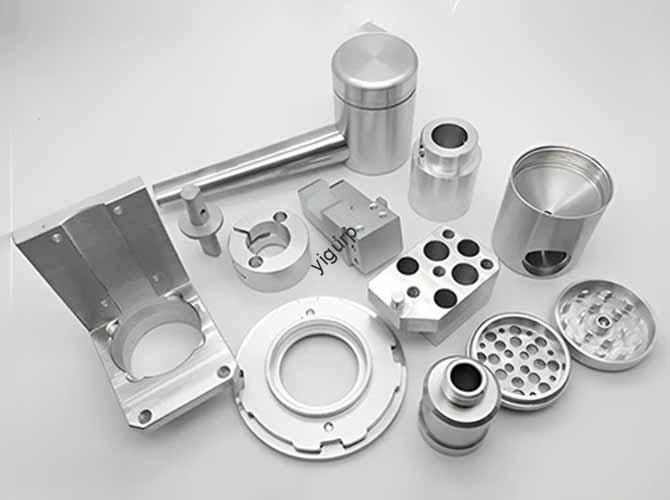
In modern manufacturing—from automotive transmission housings to consumer electronics casings—the processes of die casting determine part quality, efficienza produttiva, ed efficienza in termini di costi. Questi processi non rappresentano una soluzione valida per tutti; si va dai metodi base ad alta pressione alle tecnologie semisolide avanzate, ciascuno su misura per esigenze materiali specifiche (zinco, alluminio, magnesio) e requisiti dell'applicazione (produzione di massa, alta precisione). This article breaks down core process categories, technical principles, scenari applicativi, and selection strategies, helping you match the right die casting process to your production goals.
1. What Are the Basic Processes of Die Casting?
Basic die casting processes form the foundation of industrial production, focusing on high efficiency and cost-effectiveness. High-pressure die casting (HPDC) is the most widely used, with two sub-types based on metal melting points:
1.1 High-Pressure Die Casting (HPDC): The Industry Mainstream
HPDC injects molten metal into closed steel molds at high pressure (30-120MPa) and speed (0.5-120m/s), enabling rapid solidification (0.05-0.5 seconds) for mass-produced parts. It’s divided into two variants:
| Process Variant | Core Principle | Parametri chiave | Suitable Metals | Vantaggi | Limitations | Typical Applications |
| Cold Chamber Die Casting | Molten metal is poured into an independent “cold chamber” (not in direct contact with the furnace) before injection; The chamber is cooled to prevent metal solidification during waiting | – Injection pressure: 50-120MPa- Mold temperature: 150-250°C- Cycle time: 30-120 seconds/part | High-melting-point metals: Alluminio (A380, A356), magnesio (AZ91D) | – Handles large/complex parts (up to 50kg)- Avoids mold overheating (extends mold life to 100,000+ cycles)- Suitable for high-strength parts | – Longer cycle time vs. hot chamber- Higher equipment cost | NEV battery brackets, automotive engine housings, aerospace structural parts |
| Hot Chamber Die Casting | The injection system (plunger, nozzle) is fully immersed in a molten metal furnace; Metal is sucked into the chamber directly for fast injection | – Injection pressure: 30-80MPa- Mold temperature: 100-180°C- Cycle time: 10-30 seconds/part | Low-melting-point metals: Zinc (Zamak5, ZA27), lead, tin | – Ultra-fast production (ideal for mass batches >100,000 parts)- Simple operation (low labor cost)- Low energy consumption (no need to reheat metal) | – Limited to small parts (<5kg)- Mold prone to corrosion (shorter life: 50,000-80,000 cycles) | Zinc alloy toys, electronic sensor housings, decorative trim (per esempio., door handles) |
2. What Are the Improved Die Casting Processes?
Improved processes address flaws in basic HPDC (per esempio., porosità, low precision) by optimizing mold design, gas control, or injection methods. They’re critical for high-quality parts like pressure-bearing components:
| Improved Process | Key Innovation | Technical Details | Problem Solved | Ideal Applications |
| Non-Porous Die Casting | Adds a vacuum system to remove air from the mold cavity before injection | – Vacuum degree: -0.095 A -0.098MPa- Gas removal rate: >95%- Works with cold/hot chamber systems | Reduces porosity by 80-90% (a major cause of leakage in basic HPDC); Eliminates internal voids | Zinc alloy hydraulic valve bodies, aluminum alloy fuel injector nozzles |
| Direct Injection Die Casting | Integrates the furnace with the injection chamber (no separate pouring step); Uses a plunger to push metal directly into the mold | – Metal utilization rate: >98% (contro. 85-90% for basic HPDC)- No sprue waste (cuts material cost by 10-15%) | Reduces material waste; Shortens cycle time by 15-20% | High-volume aluminum parts (per esempio., consumer electronics midframes), zinc alloy hardware |
| Precisione & Dense Die Casting | Invented by General Dynamics; Uses ultra-precise mold machining (cavity tolerance: ±0.01mm) + high-specific-pressure compensation (120-150MPa) | – Rugosità superficiale: Ra ≤0.8μm (no post-polishing needed)- Dimensional accuracy: IT7-IT8 (better than basic HPDC’s IT8-IT10)- Part density: ≥99.5% | Improves surface quality and precision; Enables parts to meet strict assembly requirements | Aerospace aluminum components (per esempio., cabin brackets), medical device casings (per esempio., surgical tool handles) |
3. What Are the Special Die Casting Processes?
Special processes cater to niche needs: multi-material integration, ultra-fast production, or semi-solid forming. They expand die casting’s application scope beyond traditional metals and shapes:
3.1 Multi-Color/Multi-Material Die Casting
- Definizione: Completes die casting of two or more colors/materials in one mold cycle (per esempio., zinc alloy + lega di alluminio, or different colored zinc alloys).
- Come funziona:
- Primo, inject the base material (per esempio., silver zinc alloy) into the first cavity;
- Rotate the mold or move the core to align with the second cavity;
- Inject the second material (per esempio., black zinc alloy) to bond with the base.
- Vantaggi: Eliminates post-assembly (cuts labor cost by 30-40%); Ensures tight material bonding (no gaps).
- Applicazioni: Automotive interior parts (per esempio., two-tone dashboard frames), elettronica di consumo (per esempio., multi-color phone cases).
3.2 High-Speed Die Casting
- Definizione: Uses a high-speed injection system (up to 200m/s) and advanced mold cooling (water channels every 5-10mm) to achieve ultra-fast filling and solidification.
- Parametri chiave:
- Filling time: <0.05 seconds (contro. 0.05-0.2 seconds for basic HPDC);
- Mold cooling rate: 50-100°C/s (accelerates solidification);
- Precisione: Part tolerance ±0.02mm.
- Vantaggi: Produces complex thin-walled parts (minimum wall thickness: 0.3-0.5mm); Maintains dimensional stability (no warping).
- Applicazioni: Thin aluminum alloy heat sinks (for 5G base stations), micro-zinc parts (per esempio., watch gears).
3.3 Semi-Solid Die Casting
- Definizione: Heats metal to a “solid-liquid coexistence” state (40-60% solid phase, 60-40% liquid phase) instead of fully molten; Uses laminar flow filling (0.1-0.5m/s) to avoid turbulence.
- Technical Benefits:
- Microstructure: Fine spherical grains (5-50µm) contro. coarse dendrites in basic HPDC;
- Mechanical properties: Tensile strength +20-30%, elongation +50-80%;
- Mold life: Extended by 30-50% (lower thermal shock from semi-solid metal).
- Applicazioni: High-performance aluminum parts (per esempio., NEV motor housings), magnesium alloy aerospace components (per esempio., small landing gear brackets).
4. How to Choose the Right Die Casting Process?
Process selection depends on 5 core factors—ignoring any leads to poor quality or high costs. Below is a step-by-step decision guide:
Fare un passo 1: Match Process to Material
- Aluminum/Magnesium (High Melting Point): Cold chamber HPDC (basic), non-porous die casting (improved), semi-solid die casting (special).
- Zinc (Low Melting Point): Hot chamber HPDC (basic), non-porous die casting (improved), multi-color die casting (special).
Fare un passo 2: Consider Part Size & Complexity
| Part Characteristic | Recommended Process | Reason |
| Small (<5kg) + Simple Shape | Hot chamber HPDC | Fast cycle time; Basso costo |
| Large (>10kg) + Complex Structure | Cold chamber HPDC + precision mold | Handles size/complexity; Ensures accuracy |
| Thin-Walled (<1mm) + High Precision | High-speed die casting | Ultra-fast filling avoids incomplete forming |
Fare un passo 3: Align with Production Volume
- Low Volume (<10,000 parts): Basic HPDC (low mold cost; no need for advanced equipment).
- Medium Volume (10,000-100,000 parts): Improved processes (per esempio., non-porous die casting) to balance quality and cost.
- High Volume (>100,000 parts): Hot chamber HPDC (zinco) or direct injection die casting (alluminio) for maximum efficiency.
Fare un passo 4: Prioritize Quality Requirements
- Pressure-Bearing Parts (No Leakage): Non-porous die casting (low porosity).
- High-Precision Assembly (Tolerance ±0.02mm): Precisione & dense die casting.
- High Strength (Tensile Strength >300MPa): Pressofusione semisolida.
5. Yigu Technology’s Perspective on Processes of Die Casting
Alla tecnologia Yigu, we see the processes of die casting as a “production strategy toolbox”—the right choice depends on balancing quality, costo, and volume. Our data shows 70% of die casting failures come from process-material mismatches (per esempio., using hot chamber HPDC for aluminum parts).
We recommend a “demand-driven” approach: For NEV battery brackets (large, high-strength aluminum parts), we use cold chamber HPDC + non-porous technology (ensures air tightness); For zinc alloy sensor housings (piccolo, high-volume), we opt for hot chamber HPDC (cuts cycle time to 15 seconds/part). We also integrate AI to monitor process parameters (per esempio., injection pressure, mold temperature) in real time, reducing defect rates to <1%. Looking ahead, semi-solid and multi-material processes will be key to meeting lightweight and integration needs in automotive and electronics.
6. Domande frequenti: Common Questions About Processes of Die Casting
Q1: Can I use non-porous die casting for both aluminum and zinc alloys?
SÌ. Non-porous die casting works with both cold (alluminio) and hot (zinco) chamber systems. For aluminum, it reduces porosity to <0.5% (critical for pressure-bearing parts like hydraulic valves); For zinc, it eliminates internal voids (improving corrosion resistance for outdoor hardware). The only adjustment needed is mold temperature (150-250°C for aluminum, 100-180°C for zinc).
Q2: What’s the difference between precision & dense die casting and basic HPDC in terms of cost?
Precisione & dense die casting has higher upfront costs (mold cost: 2-3x basic HPDC, due to ultra-precise machining) but lower long-term costs. Per esempio, a zinc alloy medical device casing: Basic HPDC requires \(5,000 mold + \)0.5/part post-polishing; Precisione & dense die casting uses \(12,000 mold but no post-processing. For batches >100,000 parts, precision die casting is cheaper (total cost: \)62,000 contro. $55,000 for basic HPDC).
Q3: Is high-speed die casting suitable for thick-walled parts (>5mm)?
NO. High-speed die casting is designed for thin-walled parts: Its fast cooling rate (50-100°C/s) causes thick-walled areas to solidify unevenly, leading to shrinkage cavities. For thick-walled parts (per esempio., automotive engine blocks), use cold chamber HPDC with a high-specific-pressure compensation system (120-150MPa) to ensure uniform solidification and avoid defects.