
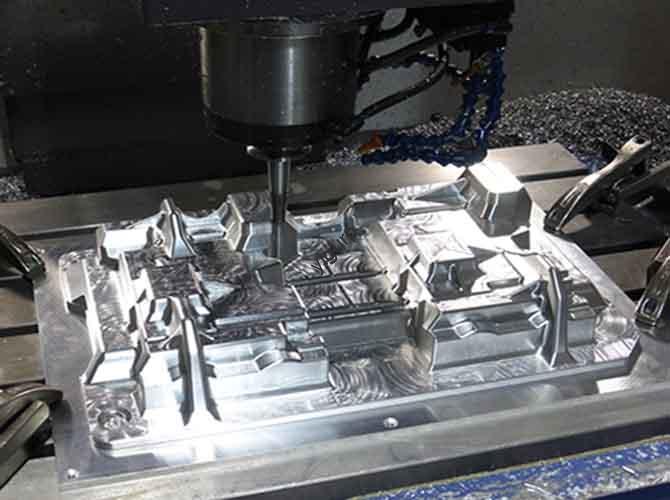
Choosing the right material for plastic prototype molds directly impacts the mold’s durability, velocità di produzione, precisione, e costo. There is no “one-size-fits-all” option—materials vary based on project needs like production quantity, complessità della parte, requisiti di precisione, E bilancio. Questo articolo analizza i materiali più comuni, i loro pro e contro, casi d'uso, and a step-by-step guide to select the best fit.
1. Common Materials for Plastic Prototype Molds (Comparison Table)
Below is a comprehensive overview of 6 widely used materials, including their key traits and application scenarios:
| Material Category | Specific Types | Vantaggi principali | Main Disadvantages | Ideal Application Scenarios |
| Aluminum Alloy | 6061, 7075 | – Lightweight (easy to handle) – Excellent machinability (produzione veloce) – Good thermal conductivity (faster cooling for parts) | – Low hardness (wears quickly) – Not suitable for high-volume production | Small/medium-sized prototypes, trial samples, appearance parts (per esempio., phone case prototypes) |
| Acciaio | P20, H13, 45# Acciaio | – High hardness (wear-resistant) – Suitable for medium/large molds – Heat-resistant (works with thermoplastics) | – Heavy (hard to transport/operate) – Long processing cycle – High cost | Functional parts, complex-structure prototypes, high-volume production molds (per esempio., automotive component molds) |
| Bachelite (Phenolic) | Phenolic resin-based | – Basso costo (budget-friendly) – Easy to process (fast mold making) | – Low strength (prone to breakage) – Poor wear resistance – Low precision | Low-precision, small-batch, non-functional prototypes (per esempio., simple shape test parts) |
| Epoxy/Polyurethane Resin | Epoxy resin, poliuretano | – Prototipazione rapida (fast curing) – Suitable for soft molds – Low cost for small batches | – Low strength (not durable) – Not for high-precision or long-term use | Simple-shape prototypes, exterior parts, temporary molds (per esempio., short-term trial production molds) |
| Copper/Beryllium Copper Alloy | Pure copper, beryllium copper | – Excellent thermal conductivity (fast part cooling) – Good precision retention | – High cost (expensive material) – Difficult to process (needs specialized tools) | Thin-walled parts, precision components, molds requiring fast cooling (per esempio., high-precision electronic part molds) |
| 3D Materiali per la stampa | Photosensitive resin, nylon | – No traditional machining needed (direct 3D printing) – Ideal for complex shapes – Fast prototyping for small batches | – Limited strength (not wear-resistant) – Not suitable for high-volume production | Complex-shape prototypes, small-batch rapid molds (per esempio., intricate medical device prototype molds) |
2. Key Factors to Consider When Selecting Materials
To avoid 选错 materials (and wasting time/money), follow this 4-step, cause-effect driven guide—each factor directly influences your material choice:
Fare un passo 1: Define Production Quantity
- Small batches (1–50 parts): Choose lega di alluminio, epoxy resin, O 3D printing materials (produzione veloce, basso costo).
- Large batches (500+ parts): Opt for acciaio (wear-resistant, durable enough for repeated use).
- Medium batches (50–500 parts): Balance with lega di alluminio (if precision needs are moderate) O low-cost steel (if durability is critical).
Fare un passo 2: Assess Precision Requirements
- High precision (±0.01mm or tighter): Utilizzo acciaio (stable dimension retention) O copper/beryllium copper alloy (excellent precision for small parts).
- Moderate precision (±0.1mm): Aluminum alloy O 3D printing with photosensitive resin works well.
- Low precision (±1mm): Bachelite O epoxy resin is sufficient (budget-friendly).
Fare un passo 3: Evaluate Budget Constraints
- Low budget: Prioritize bakelite, epoxy resin, O entry-level 3D printing materials (nylon/PLA-based).
- Medium budget: Aluminum alloy (balances cost and performance) is the best choice.
- High budget: Invest in acciaio (for durability) O beryllium copper alloy (for high precision and cooling speed).
Fare un passo 4: Analyze Part Complexity
- Complex shapes (per esempio., internal hollows, fine details): 3D printing materials (no need for traditional machining) O lega di alluminio (easy to mill complex features).
- Simple shapes (per esempio., flat panels, basic frames): Bachelite, epoxy resin, O low-cost steel (fast processing, no extra complexity).
3. La prospettiva della tecnologia Yigu
Alla tecnologia Yigu, we believe plastic prototype mold material selection is a “balance of needs” rather than chasing a single “best material.” For most clients—especially startups and small businesses—lega di alluminio (6061) is the most versatile choice: it’s fast to machine, conveniente, and precise enough for 80% of prototype needs. For high-precision projects (per esempio., medical device prototypes), we recommend beryllium copper alloy for its cooling speed and precision retention. For budget-limited, simple tests, 3D printed photosensitive resin molds cut lead time by 50% compared to traditional materials. Il nostro consiglio: Start by listing your top 2 priorities (per esempio., “speed + low cost” or “precision + durability”)—this narrows down materials in minutes.
4. Domande frequenti (Frequently Asked Questions)
- Q: Can I use 3D printing materials for plastic prototype molds that need to produce 100 parts?
UN: It depends on the material. Photosensitive resin molds are only suitable for 10–20 parts (low wear resistance), Ma nylon-based 3D printing materials can handle 50–80 parts. Per 100 parts, we recommend lega di alluminio (more durable and cost-effective).
- Q: Is steel always better than aluminum alloy for plastic prototype molds?
UN: NO. Steel is better for high-volume, high-wear scenarios, but aluminum alloy is superior for small batches: it’s 3x faster to machine, 1/3 the weight, E 50% più economico. Choose steel only if you need 500+ parts or extreme durability.
- Q: Why is beryllium copper alloy used for thin-walled plastic parts?
UN: Its excellent thermal conductivity (2x higher than aluminum) ensures thin-walled parts cool quickly and evenly, reducing warping or deformation. This is critical for thin parts (per esempio., 0.5mm thick electronic casings) where shape accuracy is key.