
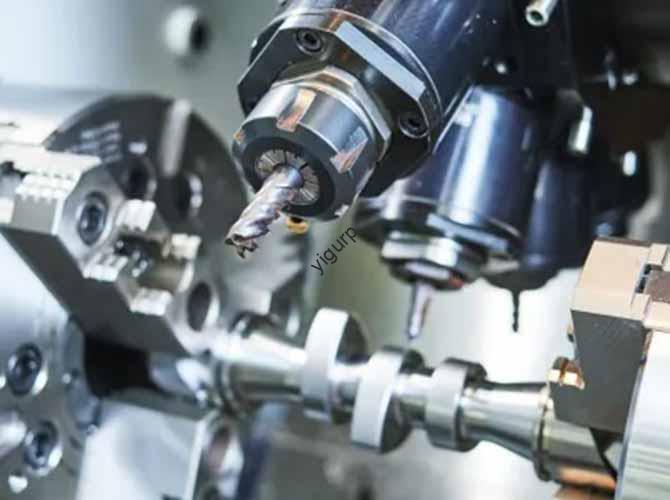
La pressofusione della lega di magnesio è diventata una tecnologia fondamentale per la produzione leggera nel settore automobilistico, elettronica, e industrie aerospaziali, grazie all'elevato rapporto resistenza/peso e all'eccellente modellabilità. Tuttavia, molti ingegneri affrontano sfide nella scelta del giusto tipo di processo o nella risoluzione di problemi come l'ossidazione e la porosità. Questo articolo analizza i processi principali, vantaggi chiave, scenari applicativi, and optimization strategies to help you master this technology.
1. Hot Chamber vs. Pressofusione a camera fredda: Which Suits Your Production?
The two core types of magnesium alloy die casting differ significantly in principle, efficienza, e applicazione. Below is a detailed comparison to guide your process selection:
| Comparison Factor | Pressofusione a camera calda | Pressofusione a camera fredda |
| Core Principle | Pressure chamber is permanently immersed in molten magnesium in a crucible; injection parts are mounted above the crucible. | Molten magnesium is manually or automatically fed into the injection sleeve for each cycle; no permanent immersion. |
| Production Efficiency | High—shorter cycle time (no repeated feeding). | Lower—longer cycle time (feeding required per injection). |
| Metal Consumption | Low—minimal waste due to closed, continuous system. | Higher—some waste from residual metal in injection sleeve. |
| Casting Quality | Better—cleaner molten magnesium (fewer contaminants). | Good—but risk of minor contamination during feeding. |
| Applicable Part Features | Thin-walled, small-to-medium size, high appearance requirements (per esempio., smartphone shells). | Thick-walled, large size, stress-bearing (per esempio., automotive seat brackets, battery boxes). |
| Alloy Adaptability | Limited—optimized for magnesium alloys only. | Wide—works with magnesium, alluminio, and other non-ferrous alloys. |
| Equipment Cost | Higher—complex, heat-resistant design. | Lower—simpler structure, cheaper consumables. |
2. Why Is Magnesium Alloy Ideal for Die Casting? Key Advantages Explained
Magnesium alloy’s unique material properties and process innovations give it distinct advantages over other die-casting materials (per esempio., alluminio). Here’s a breakdown using a 总分 structure:
2.1 Proprietà dei materiali: The “Natural Advantage” for Efficient Molding
Magnesium alloy’s inherent characteristics simplify die casting and improve end-product quality:
- Basso punto di fusione & fast solidification: Pure magnesium melts at ~650°C (lower than aluminum’s 660°C). Its low latent heat of solidification means faster cooling, reducing cycle time by 15-20% rispetto all'alluminio.
- Ottima fluidità: Molten magnesium has low viscosity, allowing it to fill thin mold cavities (as thin as 0.5mm) evenly—critical for small, precision parts like handheld computer shells.
- Mold-friendly: Magnesium has low affinity for iron, so it rarely sticks to mold surfaces. Combined with lower die-casting temperatures, this reduces thermal shock to molds—extending mold life to 2-3 times longer than aluminum die-casting molds.
2.2 Process Innovations: Solving Traditional Pain Points
New technologies address magnesium’s historical challenges (per esempio., porosità, ossidazione), further enhancing its performance:
| Innovazione | Working Mechanism | Vantaggi principali | Target Application |
| Oxygenated Die Casting | Inject oxygen/active gas into the mold cavity to displace air; gas reacts with molten magnesium to form tiny oxide particles. | Eliminates pore defects; improves casting density. | Parts requiring airtightness (per esempio., electronic device housings). |
| Pressofusione sottovuoto | Remove cavity air via vacuum before filling with molten magnesium. | Reduces dissolved gas and porosity by 80%+; boosts mechanical strength (tensile strength increases by ~10%). | Stress-bearing parts (per esempio., automotive steering wheel assemblies). |
| Semi-Solid Die Casting | Use semi-solid (not fully liquid) magnesium alloy for injection. | Lower forming temperature (reduces oxidation risk); refined grain structure; less shrinkage and loosening. | High-precision aerospace components, new energy vehicle structural parts. |
3. Where Is Magnesium Alloy Die Casting Used? Key Industry Applications
Magnesium alloy’s lightweight, termico, and shielding properties make it indispensable across industries. Below is a scene-based breakdown with specific use cases:
3.1 Industria automobilistica: Driving Lightweighting
The automotive sector is the largest user of magnesium alloy die castings, as lightweighting directly improves fuel efficiency and electric vehicle (EV) allineare. Common applications include:
- Parti strutturali: Seat brackets, dashboard brackets, body integrated castings (reduce vehicle weight by 10-15%).
- EV-specific parts: Battery box covers (leggero + resistenza al fuoco), motor housings (good heat dissipation).
3.2 Electronic Communication: Balancing Protection and Performance
Magnesium’s thermal conductivity and electromagnetic shielding make it ideal for electronics:
- Casings: Involucri per utensili elettrici (resistente agli urti + leggero), smartphone/maxicomputer shells (slim design + gestione del calore).
- Heat dissipation parts: 5G base station heat dissipation housings (magnesium’s thermal conductivity is 2-3 times higher than plastic, prevenendo il surriscaldamento).
3.3 Aerospaziale & New Energy: High-Performance Requirements
In high-stakes industries, magnesium’s strength-to-weight ratio is critical:
- Aerospaziale: Structural parts for aircraft (per esempio., interior frames) and satellite electronic devices (reduces launch weight).
- New energy: Components for solar inverters (leggero + resistenza alla corrosione) and wind turbine control systems (assorbimento degli urti).
4. Sfide & Future Developments: How to Overcome Barriers
While magnesium alloy die casting has many advantages, it still faces challenges. Below is a causal chain analysis of key issues and future solutions:
4.1 Current Challenges: Why It’s Not Yet Universal
- Ossidazione & combustion risk: Molten magnesium reacts easily with oxygen, leading to combustion during melting and pouring. This requires strict inert gas (per esempio., Argon) protection—adding cost and complexity.
- Hot cracking tendency: Magnesium alloy’s solidification shrinkage rate is higher than aluminum, making it prone to hot cracks in thick-walled parts. This demands precise temperature control (mold temperature ±5°C).
- High processing cost: While mold life is long, initial equipment investment (especially for hot chamber machines) and inert gas usage increase overall production costs—limiting adoption for low-budget projects.
4.2 Future Development Directions: What’s Next?
- New alloy development: Engineers are developing magnesium alloys with added elements (per esempio., rare earths) to reduce oxidation and hot cracking—targeting a 30% improvement in high-temperature stability by 2026.
- Eco-friendly processes: Replacing argon with low-cost, recyclable protective gases (per esempio., dry air + additivi) to cut costs and reduce carbon footprint.
- Intelligent control: Using AI to optimize process parameters (per esempio., injection speed, temperatura dello stampo) in real time—minimizing human error and improving quality consistency.
Yigu Technology’s Perspective on Magnesium Alloy Die Casting
Alla tecnologia Yigu, crediamo process-material matching is the key to unlocking magnesium alloy die casting’s full potential. Many clients struggle with choosing between hot/cold chamber processes or fixing porosity—often due to ignoring part requirements (per esempio., thin vs. thick walls) or skipping pre-production tests. We advocate a “3-step approach”: 1) Analyze part features (misurare, spessore della parete, funzione) to select the right process; 2) Use small-batch trials with innovative technologies (per esempio., pressofusione sotto vuoto) to test quality; 3) Optimize parameters via intelligent monitoring to reduce costs. Inoltre, we’re investing in eco-friendly protective gas solutions to help clients meet sustainability goals while lowering expenses.
Domande frequenti (Frequently Asked Questions)
- Q: Can hot chamber die casting be used for large, thick-walled magnesium parts (per esempio., automotive battery boxes)?
UN: NO. Hot chamber machines are designed for small, thin-walled parts—their pressure chamber and injection system can’t handle the high metal volume or slow solidification of thick-walled parts. Per grandi, parti a pareti spesse, cold chamber die casting is the only practical option.
- Q: How to prevent oxidation during magnesium alloy die casting?
UN: Utilizzo inert gas protection (per esempio., Argon) during melting and pouring to isolate molten magnesium from air. For advanced applications, adopt oxygenated die casting—where controlled oxygen reaction forms a protective oxide layer that prevents further combustion.
- Q: Is magnesium alloy die casting more expensive than aluminum? Why?
UN: SÌ, but the gap is narrowing. Initial costs are higher (hot chamber equipment, inert gas), but magnesium’s faster cycle time, longer mold life, and weight savings (reducing downstream costs, per esempio., EV battery size) offset this. For high-volume, lightweight-focused projects (per esempio., EV parts), magnesium becomes cost-competitive within 6-12 months of production.