
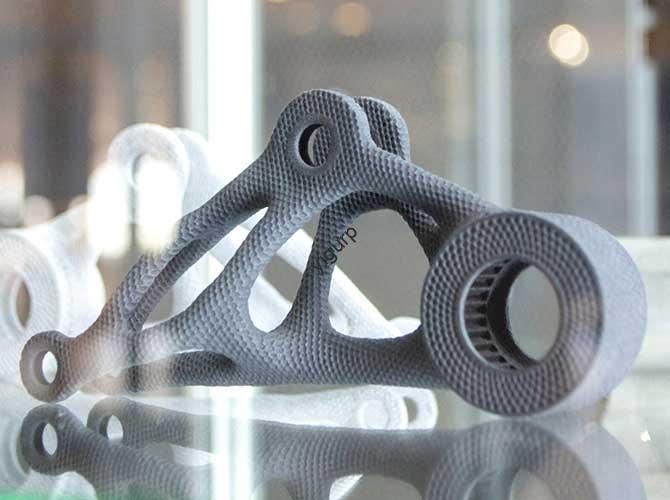
I prodotti pressofusi sono diventati indispensabili nella produzione moderna, thanks to their unique ability to balance complex design freedom, prestazioni leggere, E mass production efficiency. Dai blocchi motore che alimentano le auto ai minuscoli telai centrali degli smartphone, penetrano in ogni angolo della vita industriale e dei consumatori, risolvendo le sfide ingegneristiche critiche di altri processi (per esempio., forgiatura, stampaggio) struggle to address. This article systematically breaks down the core application fields of die casting products, the technical logic behind their adoption, and real-world examples to help you understand why they are the first choice for thousands of manufacturers worldwide.
1. Transportation Industry: The Backbone of Power & Lightweight Innovation
The transportation sector is the largest consumer of die casting products, contabilità 60-70% of global die casting output. Its demand is driven by the need for fuel efficiency (for traditional vehicles) and range extension (for new energy vehicles, NEV)—both of which rely on die casting’s lightweight and high-strength advantages.
1.1 Automobilistico: From Powertrains to Integrated Structures
Die casting products dominate automotive manufacturing, with applications covering three key systems:
- Powertrain Components: Blocchi motore, alloggiamenti di trasmissione, and oil pans are typically made of aluminum alloy die castings (per esempio., ADC12, A380). The rapid solidification of die casting creates a dense microstructure, improving heat dissipation by 20-30% compared to sand casting—critical for engines operating at 90-120°C. Per esempio, BMW’s B58 engine block uses die casting to integrate 12 internal water channels, reducing weight by 15kg vs. a welded steel block.
- NEV-Specific Parts: With the rise of electric vehicles, die casting has expanded to motor shells, battery pack housings, and even integrated body structures. Tesla’s 4680 battery pack shell uses a 9000-ton large-scale die casting machine to form a single piece, eliminating 70+ welding points and reducing weight by 30kg. This not only extends vehicle range by 50-80km but also cuts assembly time by 40%.
- Chassis & Body Parts: High-strength aluminum alloy die castings (per esempio., AlSi10MgMn) are used for suspension brackets and door hinges. Their tensile strength (320-350MPa) meets crash safety requirements, while their lightweight design reduces unsprung mass—improving ride comfort and handling.
1.2 Rail Transit & Aviation
- High-Speed Rail: Seat frames, door system components, and brake calipers rely on die casting’s elevata precisione dimensionale (tolerance ±0.1mm/m). CRRC’s Fuxing high-speed train uses die cast aluminum seat frames that weigh 40% less than steel ones, reducing energy consumption while ensuring long-term reliability (10+ years of service without deformation).
- Aerospaziale (Lightweight Components): While large aircraft structures still use forging, piccole parti di precisione (per esempio., alloggiamenti per l'avionica, fuel system connectors) utilizzo magnesium alloy die castings. Their low density (1.74g/cm³) and excellent electromagnetic shielding make them ideal for weight-sensitive aerospace applications—Boeing’s 787 Dreamliner uses over 100 die cast magnesium parts, cutting overall weight by 500kg.
2. Elettronica & Comunicazione: Miniaturization Meets Heat Dissipation
The electronics industry’s pursuit of “thinner, più leggero, more powerful” devices has made die casting products a necessity. They solve the core contradiction between compact design and functional performance—especially in heat management and signal integrity.
2.1 Elettronica di consumo
- Smartphone & Tablets: The middle frame (a critical structural and functional component) is almost exclusively made of magnesium alloy die castings (per esempio., AZ91D). It integrates antenna signal channels, key slots, and heat dissipation paths in a space as small as 60cm². Apple’s iPhone 15 Pro middle frame uses die casting to achieve a wall thickness of 0.8mm, while maintaining EMI (Electromagnetic Interference) shielding effectiveness of >80dB—ensuring no signal loss.
- Laptop & Indossabili: Laptop shells and smartwatch cases use aluminum alloy die castings (per esempio., A356) with embedded heat dissipation fins. Dell’s XPS 17 laptop shell, Per esempio, uses die casting to form a 1mm-thin body with integrated fins—solving the thermal management problem of 45W high-performance processors without adding weight.
2.2 Communication Infrastructure
- 5G Base Stations: RF (Radio Frequency) device housings and power supply enclosures use aluminum alloy die castings (per esempio., ADC12) with corrosion-resistant coatings. They must withstand harsh outdoor environments (temperature ranges of -40°C to 60°C, humidity >90%) while meeting EMI shielding requirements. Huawei’s 5G base station RF housing uses die casting to achieve an IP67 waterproof rating, ensuring no signal leakage or water damage for 5+ anni.
3. Elettrodomestici & Household Products: Funzionalità & Aesthetics in Balance
Die casting products in home appliances excel at integrating complex functions (per esempio., water flow control, heat conduction) with sleek designs—meeting both practical and aesthetic needs of consumers.
3.1 Cucina & Heating Appliances
- Cooking Equipment: Rice cooker liners, coffee machine heating plates, and induction cooktop panels use aluminum alloy die castings (per esempio., A380) for their excellent thermal conductivity (150-180 W/m・K). Xiaomi’s 米家 rice cooker liner uses die casting to form a 3mm-thick wall with a non-stick coating—ensuring uniform heat distribution (temperature variation <5°C) and easy cleaning.
- Water Heaters & Air Conditioners: Compressor shells and heat exchanger manifolds use high-strength aluminum die castings (per esempio., AlSi12Cu) to withstand high pressure (up to 3MPa for air conditioner compressors). Gree’s air conditioner compressor shell uses die casting to eliminate porosity, ensuring no refrigerant leakage for 10+ anni.
3.2 Bagno & Security Products
- Bathroom Accessories: Shower head housings and faucet handles use zinc alloy die castings (per esempio., ONERI 5) with chrome plating. They can be precisely shaped to control water flow patterns (per esempio., rainfall, massage) while achieving a mirror-like surface finish (Ra <0.8µm). Kohler’s shower head housing uses die casting to form 0.5mm-thin water channels—ensuring consistent water pressure.
- Smart Door Locks: Lock bodies and gear mechanisms use zinc alloy die castings (per esempio., ONERI 3) for their wear resistance and precision. The lock body of Xiaomi’s smart door lock uses die casting to accommodate a complex 6-gear transmission system, while ensuring the key insertion force is <5N—smooth and easy to use.
4. Macchinari industriali & Attrezzature mediche: Reliability Under Extreme Conditions
In industrial and medical fields, die casting products must meet strict requirements for durability, precisione, and safety—often operating in high-pressure, high-vibration, or sterile environments.
4.1 Macchinari industriali
- Hydraulic & Pneumatic Systems: Alloggiamenti della pompa, corpi valvola, and cylinder blocks use aluminum alloy die castings (per esempio., A356) with dense structures (porosità <1%). They must withstand high-pressure liquid impact (up to 30MPa for hydraulic valves) without leakage. Bosch Rexroth’s hydraulic valve body uses die casting to achieve a dimensional tolerance of ±0.05mm—ensuring precise control of fluid flow.
- Robotica: Industrial robot joint housings and cycloidal wheels use high-strength aluminum alloy die castings (per esempio., AlSi10MgMn). ABB’s IRB 6700 robot joint housing uses die casting to reduce weight by 30% contro. steel—lowering the robot’s motion inertia and improving positioning accuracy (±0,02 mm).
4.2 Attrezzature mediche
- Diagnostic Devices: CT machine rotating frames and ultrasound probe housings use aluminum alloy die castings (per esempio., A356) with lead alloy inlays for radiation protection. Siemens’ SOMATOM CT machine rotating frame uses die casting to form a large-span (1.2M) lightweight structure—reducing rotation noise to <50dB (critical for patient comfort) while meeting radiation shielding standards.
- Strumenti chirurgici: Small precision components (per esempio., forceps handles, scalpel holders) utilizzo stainless steel die castings (per esempio., 316l) for their biocompatibility and corrosion resistance. They meet ISO 13485 norme sui dispositivi medici, ensuring no bacterial growth or rusting after repeated sterilization.
5. Emerging Industries: Pushing the Boundaries of Die Casting Applications
As new technologies (per esempio., new energy, unmanned systems) develop, die casting products are expanding into innovative fields—solving unique engineering challenges with new materials and structures.
5.1 New Energy (Photovoltaics & Stoccaggio dell'energia)
- PV Inverters: Heat sinks for inverter power modules use aluminum alloy die castings (per esempio., A356) with parallel fin structures. JinkoSolar’s PV inverter heat sink uses die casting to form 2mm-thin fins with a density of 5 fins/cm—improving heat dissipation efficiency by 40% contro. traditional extruded heat sinks.
- Energy Storage Systems: Battery pack housings for home energy storage use large-scale aluminum die castings (per esempio., AlSi10MgMn) with fire-resistant coatings. Tesla’s Powerwall 3 housing uses die casting to integrate cooling channels and fire barriers—ensuring safe operation even in high-temperature environments.
5.2 Unmanned Systems & VR/AR
- UAVs (Drones): Gimbal brackets and fuselage frames use magnesium alloy die castings (per esempio., AZ31B) to balance lightweight and vibration resistance. DJI’s Mavic 3 drone gimbal bracket uses die casting to achieve a weight of <50g while withstanding vibration frequencies of 200-500Hz—ensuring stable camera footage during flight.
- VR/AR Devices: Helmet ring brackets and controller shells use aluminum alloy die castings (per esempio., A380) with special-shaped curved surfaces. Meta’s Quest 3 VR helmet ring bracket uses die casting to form a 1.2mm-thin curved structure—fitting the human head contour perfectly and improving wearing comfort for 2+ ore di utilizzo.
6. Special & Strategic Applications: Customized Solutions for Demanding Needs
In special fields (per esempio., explosion-proof, per uso alimentare, militare), die casting products provide customized solutions that meet the most stringent standards—relying on specialized materials and precision control.
| Application Field | Die Casting Product Example | Materiale chiave & Standard | Core Advantage |
| Explosion-Proof Environments | Mining lamp housings, oil field sensor enclosures | Copper-based alloys (per esempio., CuZn37); IECEx explosion-proof standard | Non-flammable material prevents ignition; dense structure avoids gas leakage |
| Cibo & Pharmaceutical Machinery | Capsule filling machine metering pumps, food mixer blades | 316L acciaio inossidabile; FDA food-grade standard | Superficie liscia (Ra <0.4µm) prevents bacterial growth; corrosion resistance to cleaning agents |
| Military & Difesa | Fuze shells, communication equipment housings | Lega di alluminio (per esempio., 7075); MIL-STD-883H military standard | Micron-level dimensional tolerance (±0,01 mm) ensures detonation accuracy; lightweight design for portability |
7. Yigu Technology’s Perspective on Die Casting Product Applications
Alla tecnologia Yigu, we believe the value of die casting products lies in their cross-industry adaptability—they don’t just “make parts,” but solve industry-specific pain points. Many manufacturers underutilize die casting by limiting it to traditional applications (per esempio., simple brackets) instead of exploring its potential in new fields (per esempio., 5G, medico).
We recommend a application-driven material & process matching approach: Per esempio, NEV battery packs need large-scale aluminum die casting with vacuum degassing (to reduce porosity); 5G base stations need corrosion-resistant aluminum with EMI shielding coatings. Our team works with clients to customize die casting solutions—from material selection to mold design—ensuring products meet both functional and cost goals.
Looking ahead, with the development of semi-solid die casting and AI-driven process control, die casting products will expand into more high-end fields (per esempio., aerospace structural parts, quantum computing enclosures). By focusing on “application innovation first,” die casting will remain a core technology for the next decade of manufacturing.
8. Domande frequenti: Common Questions About Die Casting Product Applications
Q1: Can die casting products be used in high-temperature environments (per esempio., >300°C) like industrial furnaces?
SÌ, but material selection is critical. For temperatures 300-500°C, utilizzo aluminum-silicon alloys with high silicon content (per esempio., AlSi17CuMg) O leghe a base di rame (per esempio., CuCrZr). Per esempio, die cast copper alloy furnace brackets can withstand 450°C for long periods. Avoid magnesium alloys (which soften above 200°C) in high-temperature scenarios.
Q2: Are die casting products suitable for load-bearing structural parts (per esempio., building supports)?
Die casting products are not ideal for large-scale building load-bearing parts (which require ultra-high strength, >500MPa). Tuttavia, they are used for small structural components in prefabricated buildings (per esempio., curtain wall connectors, pipe brackets). These parts use high-strength aluminum alloys (per esempio., 6061 die castings) with heat treatment (T6) to meet load requirements of 10-20kN.
Q3: How to choose between aluminum, magnesio, and zinc die casting products for a new application?
Use this simple guide: 1. Leggero + Schermatura EMI: Choose magnesium (per esempio., cornici per smartphone). 2. Alta resistenza + heat conduction: Choose aluminum (per esempio., blocchi motore). 3. Basso costo + piccole parti di precisione: Choose zinc (per esempio., door lock gears). For complex needs (per esempio., resistenza alla corrosione + alta temperatura), consult a die casting engineer to test material samples under real application conditions.