
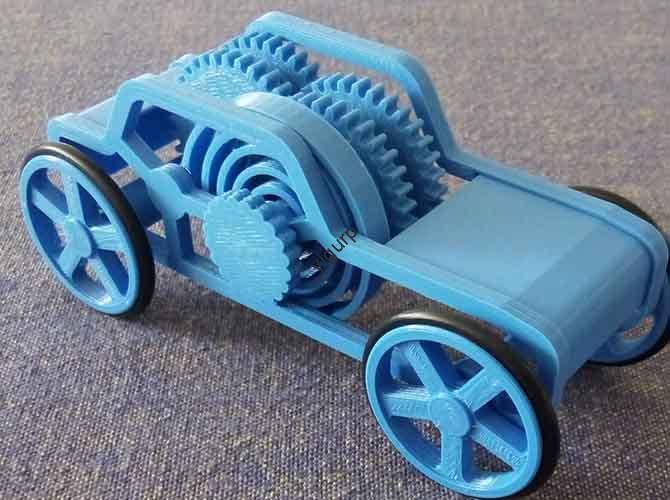
Sia che tu stia creando prototipi, parti funzionali, o dispositivi medici di precisione, l'accuratezza della stampa 3D influisce direttamente sull'usabilità e sulla qualità del prodotto finale. But 3D printing accuracy isn’t a one-size-fits-all metric—it ranges from ±0,02 mm (altissima precisione) A ±0,5 mm (prototipi di base) a seconda della tecnologia, materiali, e parametri. This guide breaks down accuracy ranges for common technologies, fattori chiave che influenzano, application-specific standards, and actionable tips to boost precision.
1. Accuracy Ranges of Mainstream 3D Printing Technologies
Different 3D printing technologies are designed for varying levels of precision. Below is a detailed comparison of accuracy ranges, typical use cases, and key advantages:
| Tipo di tecnologia | Gamma di precisione (Dimensionale) | Industrial-Grade Accuracy | Typical Use Cases | Key Advantage for Accuracy |
| FDM (Modellazione della deposizione fusa) | ±0.1mm ~ ±0.5mm | ±0,1 mm (per esempio., Stratasys Fortus) | Prototipi di base, low-cost functional parts (per esempio., parentesi) | Basso costo; easy to access |
| SLA (Stereolitografia) | ±0.05mm ~ ±0.1mm | ±0,05 mm (per esempio., Modulo Formlabs 4) | Parti ad alto dettaglio (per esempio., gioielli, modelli dentali) | Superfici lisce; fine feature resolution |
| DLP (Elaborazione digitale della luce) | ±0.05mm ~ ±0.1mm | ±0,05 mm (High-Resolution 4K DLP) | Rapid high-precision parts (per esempio., piccoli stampi) | Fast printing; near-SLA accuracy |
| SLS (Sinterizzazione laser selettiva) | ±0.1mm ~ ±0.3mm | ±0,1 mm (Industrial SLS) | Durable functional parts (per esempio., nylon gears) | Non sono necessari supporti; good for complex geometries |
| Stampa 3D in metallo (SLM/EBM) | ±0.02mm ~ ±0.1mm | ±0,02 mm (High-Precision SLM) | Parti critiche (per esempio., impianti medici, componenti aerospaziali) | Altissima precisione; suitable for metal alloys |
Nota: Accuracy is often measured as dimensional deviation (how much the final part differs from the 3D model) E feature resolution (smallest detail the technology can print). Per esempio, SLA can print features as small as 0.1mm, while FDM typically struggles with details under 0.5mm.
2. 5 Core Factors That Impact 3D Printing Accuracy
Achieving consistent accuracy requires controlling key variables. Below is a breakdown of each factor, with specific examples and solutions to mitigate issues:
(1) Tipo di tecnologia & Equipment Performance
The foundation of accuracy lies in the technology and hardware:
- Consumer vs. Attrezzature industriali: Consumer-grade FDM printers (per esempio., Prusa, Creality) have accuracy limits of ±0.2mm ~ ±0.5mm, while industrial machines (per esempio., Stratasys, 3D Systems) use better motors, sensori, and build plates to reach ±0.02mm ~ ±0.1mm.
- Technology Strengths: Resin-based technologies (SLA/DLP) excel at fine details because UV light cures resin in precise layers, while extrusion-based FDM is limited by nozzle size and material flow.
(2) Parametri di stampa
Even top-tier equipment will produce inaccurate parts with poor parameter settings. The three most critical parameters are:
Spessore dello strato
Thinner layers reduce visible layer lines and improve dimensional consistency—but overly thin layers cause issues:
| Spessore dello strato | Impact on Accuracy | Ideale per |
| 0.025mm ~ 0.05mm | Alta precisione; minimal layer lines | SLA/DLP metal parts (per esempio., impianti medici) |
| 0.1mm ~ 0.2mm | Balanced accuracy and speed | FDM/SLS functional parts (per esempio., ingranaggi) |
| > 0.2mm | Lower accuracy; visible layer lines | Rough prototypes (per esempio., modelli concettuali) |
Nozzle Diameter (FDM Specific)
Smaller nozzles print finer details but slow down production:
- 0.2mm nozzle: Prints details as small as 0.2mm (accuracy ±0.1mm ~ ±0.2mm) but takes 2x longer than a 0.4mm nozzle.
- 0.4mm nozzle: Standard choice (accuracy ±0.2mm ~ ±0.3mm) for balance of speed and precision.
0.6mm nozzle: Fast but limited to large parts (accuracy ±0.3mm ~ ±0.5mm).
Controllo della temperatura (FDM/Metal Printing)
Temperature fluctuations warp parts and reduce accuracy:
- FDM: ABS shrinks 4% ~ 8% when cooling—uneven bed or nozzle temperatures (±5°C) can cause dimensional 偏差 of 0.2mm ~ 0.5mm. Soluzione: Use an enclosed printer and calibrate temperatures to the material’s specifications.
- Metal Printing: SLM machines require precise laser and build chamber temperatures (±1°C) to prevent metal powder warping. Even small deviations can lead to ±0.05mm inaccuracies.
(3) Proprietà dei materiali
Material behavior during printing directly affects accuracy:
- Restringimento: Most materials shrink when cured or cooled:
- Resine (SLA/DLP): Shrink 2% ~ 8%—low-shrinkage resins (per esempio., dental-specific resin) reduce this to <2%, cutting accuracy 偏差 by half.
- Metalli (SLM): Shrink 5% ~ 10%—suppliers compensate by scaling the 3D model up by 5% ~ 10% to match the final part size.
- Powder Particle Size (SLS/Metal): Finer powder (20 μm ~ 50 µm) sinters more uniformly, leading to ±0.1mm accuracy. Coarser powder (50 μm ~ 100 µm) causes ±0.2mm ~ ±0.3mm deviations.
(4) Strutture di supporto
Poorly designed supports introduce stress and deformation:
- Over-Supporting: Too many supports create hard-to-remove material, leaving indentations that reduce accuracy by ±0.1mm ~ ±0.2mm.
- Under-Supporting: Parts sag during printing—for example, a 100mm-long FDM bridge without supports may droop 0.3mm ~ 0.5mm, ruining dimensional accuracy.
- Soluzione: Use software (per esempio., Cura, PrusaSlicer) to generate tree supports or lattice structures that minimize contact with the part.
(5) Post-elaborazione
Post-processing can either improve or reduce accuracy:
| Post-Processing Step | Impact on Accuracy | Caso d'uso |
| Lavorazione CNC (Rifilatura) | Improves accuracy by ±0.01mm ~ ±0.05mm | Metal parts (per esempio., impianti medici) |
| Polishing/Sanding | Reduces accuracy by ±0.05mm ~ ±0.1mm (rimuove il materiale) | Aesthetic parts (per esempio., gioielli) |
| Secondary UV Curing (Resina) | Stabilizes dimensions; reduces shrinkage by 1% ~ 2% | SLA/DLP parts (per esempio., modelli dentali) |
| Trattamento termico (Metallo) | Reduces warping; migliora la stabilità dimensionale | SLM/EBM parts (per esempio., componenti aerospaziali) |
3. Accuracy Standards for Practical Applications
Different use cases demand different accuracy levels. Below is a guide to matching technology to your needs:
| Application Type | Required Accuracy | Recommended Technology | Ragionamento chiave |
| Basic Prototypes (Concept Checks) | ±0.2mm ~ ±0.5mm | FDM (Consumer-Grade) | Basso costo; accuracy sufficient for fit testing |
| Aesthetic Parts (Gioielli, Figurines) | ±0.05mm ~ ±0.1mm | SLA/DLP (High-Resolution) | Fine details and smooth surfaces matter |
| Parti funzionali (Ingranaggi, Snaps) | ±0.05mm ~ ±0.1mm | SLS/Industrial FDM | Durabilità + precision for mechanical fit |
| Impianti medici (Dental Crowns, Bone Plates) | ±0.02mm ~ ±0.05mm | High-Precision SLM/SLA | Critical for biocompatibility and patient safety |
| Componenti aerospaziali (Parti del motore) | ±0.02mm ~ ±0.1mm | Metal SLM/EBM | Ultra-high precision for extreme environments |
4. 6 Step-by-Step Tips to Improve 3D Printing Accuracy
If your parts are inconsistent or off-dimension, follow these actionable steps:
- Choose the right technology: Use SLA/DLP for high detail, metal SLM for critical parts, and FDM only for basic prototypes.
- Calibrate your equipment: Per FDM, calibrate nozzle height, portata, and temperature to reduce 偏差 by 0.1mm ~ 0.2mm. For SLA, level the build plate and test resin exposure times.
- Optimize layer thickness: Use 0.025mm ~ 0.05mm layers for precision parts; avoid layers thicker than 0.2mm unless speed is prioritized.
- Select low-shrinkage materials: Choose dental resin (SLA) or high-grade metal powder (SLM) to minimize curing/cooling warping.
- Design smart supports: Use minimal, tree-style supports to reduce stress on the part—avoid over-supporting delicate features.
- Add post-processing strategically: Use CNC trimming for metal parts to boost accuracy; skip aggressive sanding for dimension-critical components.
Yigu Technology’s Perspective on 3D Printing Accuracy
Alla tecnologia Yigu, crediamo matching accuracy to application needs is the key to cost-effective 3D printing. Many clients overspecify accuracy—for example, using metal SLM (±0,02 mm) for basic prototypes that only need ±0.2mm. Our team helps clients select the right technology: for dental models, we recommend 4K DLP (±0,05 mm) instead of SLA to save 30% in tempo; for industrial gears, we suggest SLS (±0,1 mm) over FDM to improve durability. We also provide calibration services—our experts fine-tune FDM printers to reduce 偏差 from ±0.3mm to ±0.1mm, and optimize SLM parameters for metal parts to hit ±0.02mm targets. By balancing precision, costo, e velocità, we help clients get the most value from 3D printing.
Domande frequenti
- Why is FDM less accurate than SLA/DLP?
FDM uses a nozzle to extrude melted plastic, which is prone to inconsistencies like stringing (thin plastic strands between features) and layer adhesion issues. SLA/DLP, per contrasto, cure resin with precise UV light—this eliminates nozzle-related errors, allowing for finer details and tighter dimensional control (±0,05 mm rispetto a. FDM’s ±0.1mm ~ ±0.5mm).
- Can post-processing improve 3D printing accuracy?
Yes—CNC machining is the most effective method. Per esempio, a metal SLM part with initial accuracy of ±0.05mm can be trimmed with CNC to reach ±0.02mm. Secondary UV curing for resin parts also stabilizes dimensions by reducing residual shrinkage, cutting 偏差 by 1% ~ 2%.
- What’s the smallest feature a 3D printer can accurately print?
Dipende dalla tecnologia: SLA/DLP can print features as small as 0.1mm (per esempio., tiny holes or raised details), while FDM typically struggles with features under 0.5mm. High-precision metal SLM machines can print features as small as 0.05mm, making them ideal for medical implants with fine structures.