
Our Vacuum Die Casting Services
Looking for a manufacturing process that delivers high strength, low porosity, and exceptional dimensional accuracy? Look no further than vacuum die casting! At Yigu Technology, we combine cutting-edge casting technology with decades of expertise to provide customized solutions for industries ranging from automotive to aerospace. Whether you need complex parts with tight casting tolerances or cost-effective production runs, our vacuum die casting capabilities ensure top-tier quality every time.
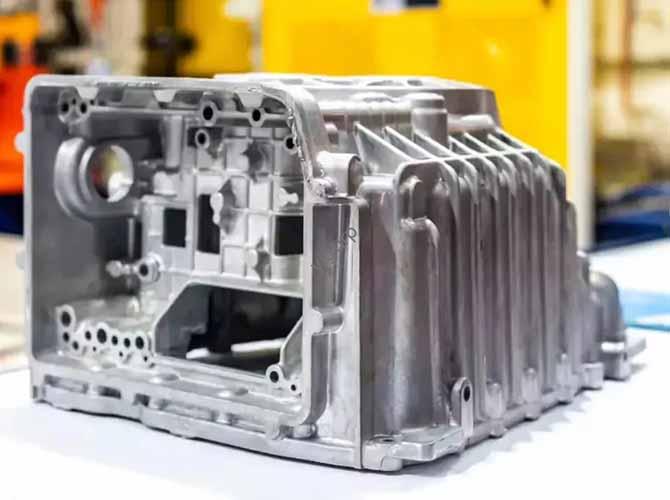
Definition: Understanding Vacuum Die Casting
Vacuum die casting is an advanced casting technology that eliminates air from the mold cavity during the casting process, resulting in parts with minimal defects. Unlike traditional die casting, this method uses a vacuum to remove trapped air, which significantly reduces porosity and improves overall part integrity.
The basic principles of vacuum die casting involve four key steps: preparing the mold, creating a vacuum within the cavity, injecting molten metal under pressure, and cooling the part before ejection. This process explanation highlights why the technology is preferred for applications where strength and precision are critical.
| Aspect | Vacuum Die Casting | Traditional Die Casting |
| Porosity Level | Low (≤ 2%) | High (5-10%) |
| Strength (Tensile) | 250-350 MPa | 180-280 MPa |
| Dimensional Accuracy | ±0.05 mm | ±0.15 mm |
Our Capabilities: What Yigu Technology Offers
At Yigu Technology, our vacuum die casting capabilities are designed to meet the most demanding industry needs. We pride ourselves on our technical expertise, which allows us to handle complex projects with ease. Our production capacity includes up to 50,000 parts per month, making us a reliable partner for both small-batch and large-scale orders.
We specialize in customized solutions tailored to your specific requirements, whether you need parts for medical equipment or consumer goods. Our quality assurance process includes rigorous testing at every stage, from material selection to final inspection. This ensures that every part meets or exceeds international quality standards.
| Capability | Details |
| Technical Expertise | 20+ years of experience in die casting |
| Production Capacity | 50,000 parts/month |
| Customization | CAD/CAM design support |
| Quality Assurance | ISO 9001 & IATF 16949 certified |
Process: Step-by-Step Vacuum Die Casting
The vacuum die casting process consists of six clear step-by-step process stages, each designed to ensure precision and quality.
- Mold Preparation: The mold is cleaned and preheated to the optimal temperature (150-250°C) to prevent metal sticking.
- Vacuum Creation: A vacuum pump removes air from the mold cavity, achieving a pressure of ≤ 50 mbar.
- Metal Melting: The selected alloy (e.g., aluminum, magnesium) is melted in a furnace at temperatures ranging from 650-750°C.
- Injection: Molten metal is injected into the mold cavity at high pressure (80-120 MPa) to fill all details.
- Cooling: The part is cooled for 10-30 seconds to solidify, depending on its thickness.
- Ejection & Finishing: The part is ejected from the mold, and any excess material (flash) is removed.
Quality control in process is implemented at each stage. For example, we monitor mold temperature and injection pressure in real time to ensure consistency. Our process optimization efforts have reduced production time by 15% while maintaining high quality.
Materials: Choosing the Right Alloy for Your Project
Selecting the right casting materials is crucial for the success of your vacuum die casting project. At Yigu Technology, we work with three primary alloys, each offering unique benefits:
- Aluminum alloy: The most popular choice, known for its lightweight (density: 2.7 g/cm³) and high strength-to-weight ratio. It is ideal for automotive parts (e.g., engine components) and electronics housings. Common grades include A380 and ADC12.
- Magnesium alloy: Even lighter than aluminum (density: 1.8 g/cm³) and offers excellent thermal conductivity. It is often used in aerospace parts and high-performance electronics. Grades like AZ91D are widely used.
- Zinc alloy: Offers high dimensional stability and is easy to cast into complex shapes. It has a density of 6.4 g/cm³ and is suitable for consumer goods (e.g., zippers, toys) and medical devices. Common grades include Zamak 3 and Zamak 5.
Our material selection process involves analyzing your project’s requirements, such as strength, weight, and cost, to recommend the best alloy. The table below compares the key properties of these materials:
| Material | Density (g/cm³) | Tensile Strength (MPa) | Melting Point (°C) | Cost (USD/kg) |
| Aluminum Alloy | 2.7 | 250-320 | 600-650 | 2.5-3.5 |
| Magnesium Alloy | 1.8 | 220-280 | 590-650 | 4.0-5.5 |
| Zinc Alloy | 6.4 | 280-350 | 380-420 | 2.0-3.0 |
Surface Treatment: Enhancing Aesthetics and Performance
After casting, surface treatment is essential to improve the appearance, durability, and functionality of your parts. At Yigu Technology, we offer a range of surface treatment methods to meet your needs:
- Painting: Adds color and protects against corrosion. We use high-quality paints that are resistant to chemicals and UV rays. Common types include acrylic and epoxy paints, which provide a smooth, even finish.
- Plating: Enhances conductivity and wear resistance. We offer chrome, nickel, and zinc plating. Chrome plating, for example, increases hardness by up to 50 HRC, making it ideal for parts that experience friction.
- Anodizing: Creates a protective oxide layer on aluminum parts. This layer is porous, allowing for dyeing in various colors. Anodized parts have excellent corrosion resistance and can withstand temperatures up to 200°C.
- Surface finishing: Includes polishing, sandblasting, and deburring. Polishing creates a mirror-like finish, while sandblasting provides a matte texture. Deburring removes sharp edges, improving safety and fit.
The choice of surface treatment depends on your application. For example, automotive parts often require painting or anodizing for corrosion protection, while electronics parts may need plating for conductivity. Our team will help you select the best option based on your project’s goals.
Tolerances: Achieving Precision in Every Part
Casting tolerances are a measure of how closely a part’s dimensions match the design specifications. At Yigu Technology, we understand the importance of dimensional accuracy in industries like aerospace and medical equipment, where even small deviations can cause performance issues.
Our precision levels are among the best in the industry. We can achieve tolerances as tight as ±0.05 mm for small parts and ±0.10 mm for larger parts (up to 500 mm in length). This is made possible by our advanced mold design, real-time process monitoring, and strict tolerance control measures.
We adhere to international quality standards such as ISO 8062, which defines tolerances for castings. The table below shows the tolerances we can achieve for different part sizes:
| Part Size (Length) | Tolerance (mm) |
| ≤ 50 mm | ±0.05 |
| 51-200 mm | ±0.08 |
| 201-500 mm | ±0.10 |
| > 500 mm | ±0.15 |
To ensure consistency, we use coordinate measuring machines (CMMs) to inspect every batch of parts. This non-destructive testing method provides accurate measurements of up to 100 data points per part.
Advantages: Why Vacuum Die Casting Stands Out
The benefits of vacuum die casting make it a top choice for manufacturers across industries. Here are the key advantages:
- High strength: Parts produced using vacuum die casting have a tensile strength of 250-350 MPa, which is 20-30% higher than traditional die casting. This makes them suitable for load-bearing applications.
- Low porosity: The vacuum removes up to 95% of trapped air, resulting in porosity levels of ≤ 2%. Low porosity improves corrosion resistance and allows for post-processing like welding and heat treatment.
- Improved quality: With fewer defects, vacuum die casting parts require less rework, reducing production costs and lead times. Our defect rate is less than 0.5%, compared to the industry average of 2-3%.
- Cost-effectiveness: Despite its advanced technology, vacuum die casting is cost-competitive for high-volume production. The reduced rework and longer mold life (up to 100,000 cycles) lower per-unit costs.
Reduced defects: Common defects like shrinkage, air bubbles, and cold shuts are significantly reduced. This is especially important for critical applications like medical devices, where defects can have serious consequences.
Applications Industry: Where Vacuum Die Casting Shines
Vacuum die casting is used in a wide range of industry applications, thanks to its versatility and precision. Here are the key industries we serve:
- Automotive industry: Produces engine components (e.g., cylinder heads, intake manifolds), transmission parts, and chassis components. The lightweight and high strength of aluminum and magnesium alloys help improve fuel efficiency.
- Aerospace industry: Manufactures parts for aircraft engines, landing gear, and structural components. The low porosity and high precision meet the strict safety standards of the aerospace sector.
- Electronics industry: Creates housings for smartphones, laptops, and other devices. The dimensional accuracy ensures a perfect fit for internal components, while surface treatments like anodizing enhance aesthetics.
- Medical equipment: Produces parts for surgical instruments, diagnostic devices, and implantable devices. The biocompatibility of certain alloys (e.g., titanium-coated aluminum) and low porosity make them suitable for medical use.
Consumer goods: Makes parts for appliances (e.g., washing machine drums), tools, and toys. The cost-effectiveness of vacuum die casting allows for mass production of high-quality consumer products.
Manufacturing Techniques: Comparing Die Casting Methods
Vacuum die casting is one of several manufacturing techniques used in die casting. Understanding the differences between these methods can help you choose the right one for your project:
- Injection molding: Uses plastic or resin instead of metal. It is ideal for high-volume production of plastic parts but cannot match the strength of metal castings.
- High-pressure die casting: Similar to vacuum die casting but does not use a vacuum. It is faster and more cost-effective for simple parts but has higher porosity.
- Low-pressure die casting: Uses lower pressure (0.5-5 MPa) to inject molten metal. It is suitable for large, complex parts like wheel rims but has longer cycle times.
- Tooling techniques: The design and manufacturing of molds (tooling) are critical for all die casting methods. At Yigu Technology, we use computer-aided design (CAD) and computer-aided manufacturing (CAM) to create high-precision molds that can withstand high temperatures and pressures.
The table below compares the key features of these manufacturing methods:
| Technique | Pressure (MPa) | Cycle Time (seconds) | Porosity Level | Best For |
| Vacuum Die Casting | 80-120 | 15-30 | Low (≤2%) | Precision parts |
| High-Pressure Die Casting | 70-100 | 10-20 | High (5-10%) | Simple, high-volume parts |
| Low-Pressure Die Casting | 0.5-5 | 30-60 | Medium (3-7%) | Large, complex parts |
| Injection Molding | 10-50 | 5-15 | N/A | Plastic parts |
Case Studies: Success Stories from Our Clients
Our case studies showcase how we have helped clients across industries achieve their manufacturing goals. Here are two examples:
Case Study 1: Automotive Engine Component
Client: A leading automotive manufacturer.
Challenge: Need to produce lightweight engine intake manifolds with low porosity and tight tolerances (±0.08 mm).
Solution: We used vacuum die casting with aluminum alloy A380. Our process optimization reduced cycle time by 12%, and quality control in process ensured porosity levels of ≤1.5%.
Outcome: The client received 10,000 parts per month with zero defects. The lightweight manifold improved fuel efficiency by 5%, and the client extended their contract for another 3 years.
Case Study 2: Medical Device Housing
Client: A medical equipment company.
Challenge: Require biocompatible housings for a new diagnostic device with anodized surface treatment.
Solution: We selected magnesium alloy AZ91D for its lightweight and biocompatibility. The surface treatment (anodizing) provided corrosion resistance, and tolerance control ensured a perfect fit for internal components.
Outcome: The device passed all regulatory tests, and the client reported a 20% increase in sales due to the device’s improved design and durability. Client testimonials praised our responsiveness and attention to detail.
Why Choose Us: Yigu Technology’s Competitive Edge
There are many reasons to choose us for your vacuum die casting needs. Here’s what sets us apart:
- Expertise: Our team has 20+ years of technical expertise in vacuum die casting. We stay updated on the latest casting technology and industry trends to provide the best solutions.
- Experience: We have worked with over 500 clients across 20 countries, giving us a deep understanding of global industry applications and standards.
- Customer service: We provide end-to-end support, from material selection to post-production surface treatment. Our team is available 24/7 to address any questions or concerns.
- Innovation: We invest 10% of our revenue in R&D to improve our manufacturing techniques and develop new customized solutions. For example, we recently introduced a new mold design that reduces production time by 15%.
Value proposition: We offer competitive pricing without compromising on quality. Our cost-effectiveness is achieved through efficient processes and high production capacity, allowing us to meet even the tightest budgets.